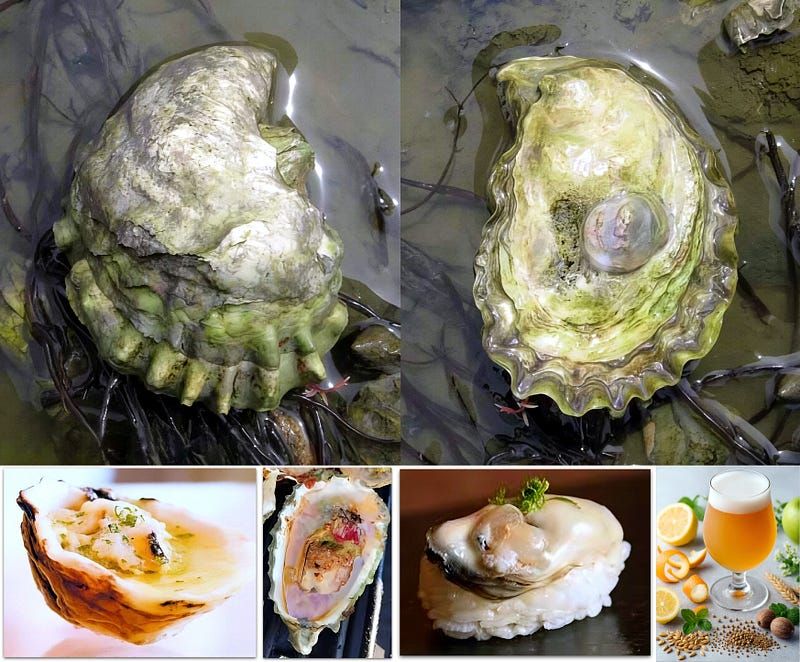
The Journey of Unagi: From Ocean Depths to Culinary Delight
Introduction
Introduction
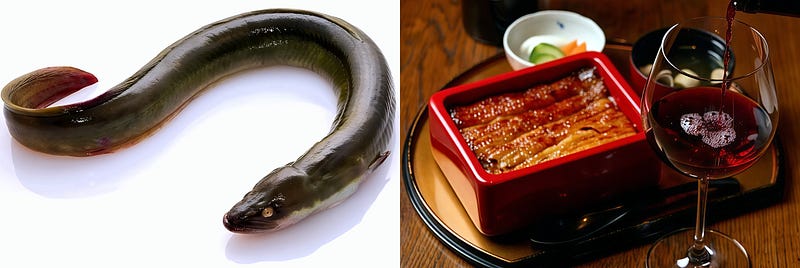
Unagi, the Japanese freshwater eel known scientifically as Anguilla japonica, is a creature that seems stitched from myth as much as from biology. It has swum through both rivers and centuries, feeding not only ecosystems but also imaginations, cuisines, and economies. Revered in Japanese culture and increasingly scrutinized by environmentalists, unagi represents the uneasy balance between human appetite and natural limits. To explore it is to wade through taxonomy and migration, culture and conservation, flavor and philosophy.
Taxonomy
Anguilla japonica belongs to the family Anguillidae, the freshwater eels. While unagi is the common Japanese term, the species is distributed widely across East Asia, where it takes on different names. Closely related cousins include the European eel (Anguilla anguilla) and the American eel (Anguilla rostrata), forming a global family bound by one extraordinary trait: a mysterious, ocean-spanning life cycle. Among edible varieties, the Japanese eel is prized for its fat content and flavor complexity, distinguishing it from other regional eels often considered too lean or less delicate.

Biology
The body of Anguilla japonica is elongated and muscular, its skin smooth and coated in mucus rather than scales. Adults typically reach about 2.5 ft to 3.3 ft (76 cm to 100 cm), with some growing longer in favorable conditions. They are catadromous: born in the salty Sargasso Sea, they migrate thousands of miles to freshwater rivers across East Asia, where they mature. After 10 to 15 years, they return to the sea to spawn, a journey few have ever witnessed. This secretive reproductive cycle remains one of biology’s unfinished puzzles, as no one has directly observed their spawning in the wild.
Ecology
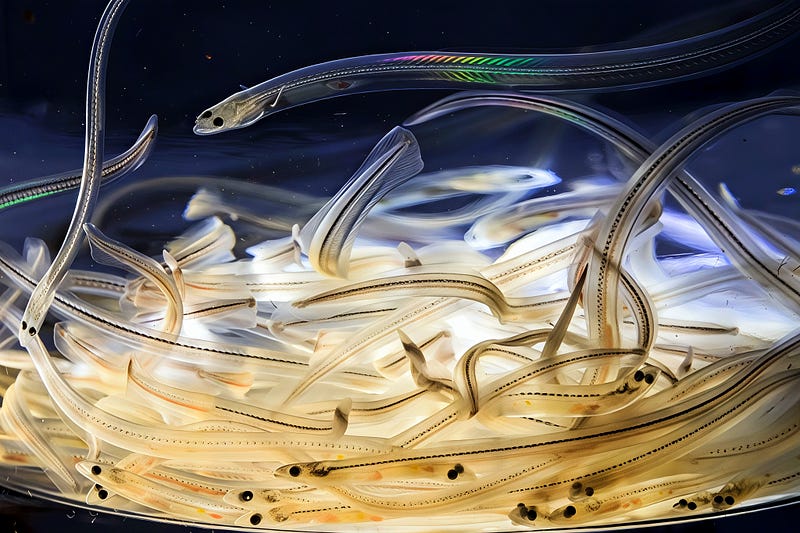
Unagi plays a vital role in riverine and estuarine ecosystems, serving as both predator and prey. Juvenile eels, known as glass eels, are vulnerable to overharvesting as they migrate inland, and populations have plummeted in recent decades. Once abundant, their numbers have declined by more than 90% since the 1970s. Overfishing, climate change, and habitat loss have put Anguilla japonica on the International Union for Conservation of Nature’s endangered list. Sustainability now haunts every bite of unagi, forcing governments and culinary traditions to wrestle with supply and ethics.
Uses
Economically, unagi is a cornerstone of Japanese cuisine, especially during midsummer festivals when it is eaten to combat fatigue. The unagi industry generates billions of dollars annually, with glass eels fetching extraordinary prices: as much as $5,000 per pound (about 2.2 lb equals 1 kg). Aquaculture provides most of today’s market supply, but it relies on capturing wild juveniles, perpetuating the strain on natural populations. Efforts to artificially breed unagi in captivity have had partial success, yet scaling it into a sustainable industry remains elusive.
Culinary Aspects
Unagi’s taste profile is lush, fatty, and umami-rich. Its flavor carries sweet undertones balanced by smoky char when grilled.The aroma is earthy, almost oceanic, while the mouthfeel is buttery, yielding to a firm bite. The texture is delicate without being fragile, its complexity unfolding across layers of sweetness, smokiness, and faint mineral notes. The aftertaste lingers with a savory finish, warming and restorative. Visually, its caramelized glaze of tare sauce shines deep amber, while the flesh inside stays pale and glistening. In terms of chemesthesis, the subtle heat of the grill interacts with the eel’s natural oils, stimulating not just taste buds but sensory nerves.
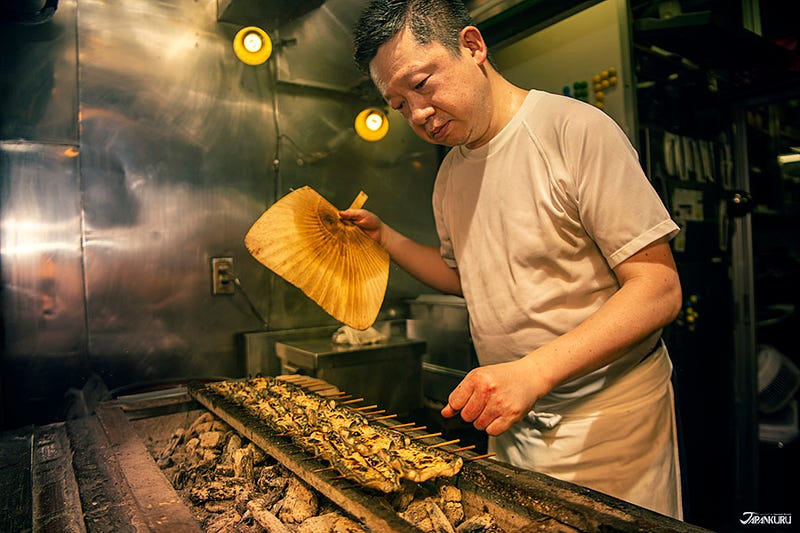
Culturally, unagi is inseparable from Japanese identity. Dishes like unadon (eel over rice) and kabayaki (grilled eel with sauce) are culinary icons. Nutritionally, a serving of 3.5 oz (100 g) provides about 250 kcal, 20 g of protein, and abundant omega-3 fatty acids, contributing to cardiovascular health.
Wine Pairings
The richness of unagi demands wines that cut through fat while complementing sweetness. A dry Riesling from Germany balances acidity with a touch of fruit, harmonizing with the eel’s caramelized glaze. A crisp Sauvignon Blanc from New Zealand provides citrus sharpness to cleanse the palate. For red lovers, a light Pinot Noir from Burgundy offers earthy notes that echo unagi’s smoky depths without overwhelming its delicacy. Sake, of course, remains the traditional companion, particularly junmai varieties that echo umami with their clean finish.
Conclusion
Unagi embodies the paradox of human appetite: we revere it as a cultural treasure yet consume it to the brink of extinction. Its life cycle reminds us of mysteries still hidden in the ocean, and its decline forces us to confront our unsustainable appetites. To eat unagi today is to taste both delight and danger, a flavor that lingers as much in conscience as on the tongue. If humanity can sustain its populations without erasing them, then perhaps unagi can continue to swim in both our rivers and our imaginations.