The Spice That Thinks It’s All of Them: The Story of Allspice (Pimenta dioica)
Imagine a single spice that masquerades as cinnamon, whispers like cloves, hints at nutmeg, and lingers with peppery warmth. That’s not a sorcerer’s trick but the everyday magic of Pimenta dioica, better known as allspice.
Introduction
Imagine a single spice that masquerades as cinnamon, whispers like cloves, hints at nutmeg, and lingers with peppery warmth. That’s not a sorcerer’s trick but the everyday magic of Pimenta dioica, better known as allspice. Indigenous to the lush forests of the Caribbean and Central America, this remarkable berry has enchanted cooks, perfumers, and healers for centuries. Its story is one of biology and botany, but also trade, culture, and sustainability — a crossroads where science and the senses collide.
Taxonomy
Pimenta dioica belongs to the family Myrtaceae, a clan of aromatic plants that includes guava and eucalyptus. Its genus, Pimenta, carries the legacy of colonial encounters: Europeans confused it with black pepper (Piper nigrum), lending the name. The species name “dioica” refers to its sexual system, where male and female flowers are borne on separate trees. Common names abound: Jamaican pepper, pimento (not to be confused with the red pepper stuffed into olives), and allspice, the culinary moniker bestowed because its complex bouquet recalls several spices at once. Unlike many crops, there are no notable edible subspecies — the Jamaican and Central American cultivars dominate the world market.
Biology
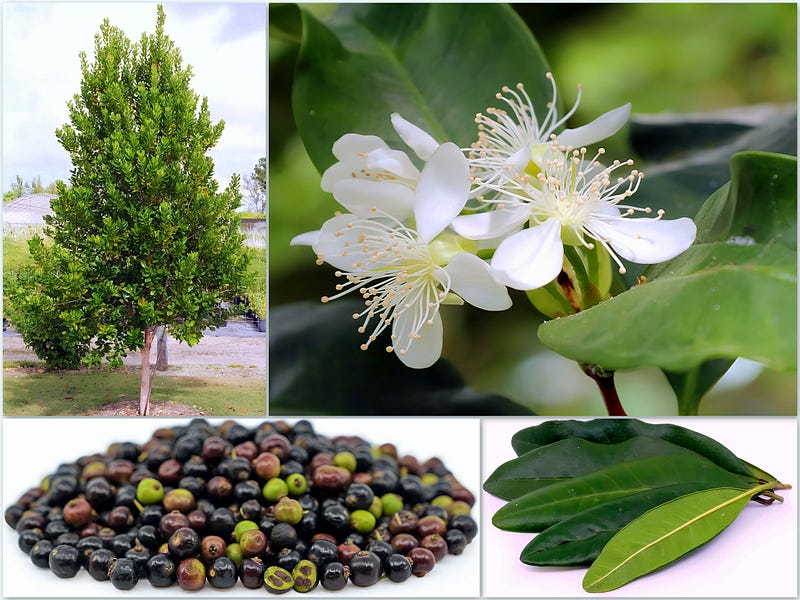
The allspice tree is evergreen, reaching 30 to 60 feet (about 9 to 18 m) in height. Its leathery, glossy leaves are rich in aromatic oils, giving off a warm scent when crushed. In early summer, clusters of small white flowers burst forth, releasing a faintly sweet fragrance that attracts pollinators. The berries, harvested when green and unripe, measure about 0.2 inches (5 mm) in diameter, ripening to a deep purple-black. When dried, they wrinkle into the familiar spice. The tree is remarkably hardy, capable of thriving in limestone-rich soils and withstanding hurricane-force winds, an adaptation that has allowed it to anchor itself across the Caribbean.
Ecology
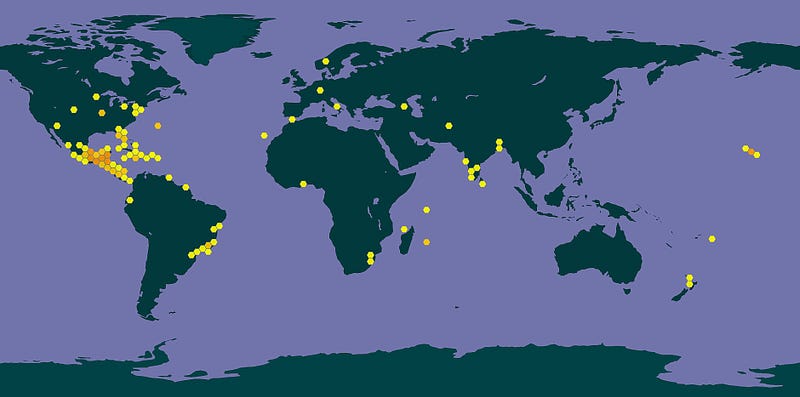
Native to Jamaica, southern Mexico, and Central America, Pimenta dioica thrives in tropical forests with annual rainfall ranging from 60 to 120 inches (about 1,500 to 3,000 mm). Its role in the ecosystem is multifaceted: the flowers feed bees and butterflies, while the ripe fruits attract birds that aid in seed dispersal. Yet wild populations face threats from deforestation and climate change. Sustainable cultivation — such as shade-grown agroforestry systems — offers a way forward, ensuring both habitat conservation and rural livelihoods. In Jamaica, the heartland of allspice production, community-based cooperatives have turned to organic certification as a way to preserve both biodiversity and tradition.
Uses
Economically, allspice is one of Jamaica’s most prized exports, rivaling rum and coffee in cultural importance. Beyond the kitchen, its essential oil — rich in eugenol — is used in perfumery, cosmetics, and even dentistry as an antiseptic. The timber, though less celebrated, serves in carpentry. Market demand is steady but niche, as true allspice competes with synthetic flavorings and substitutes. Sustainable practices, such as certified fair-trade sourcing, are helping it maintain relevance in a global spice economy increasingly concerned with traceability and ethical production.
Culinary Aspects
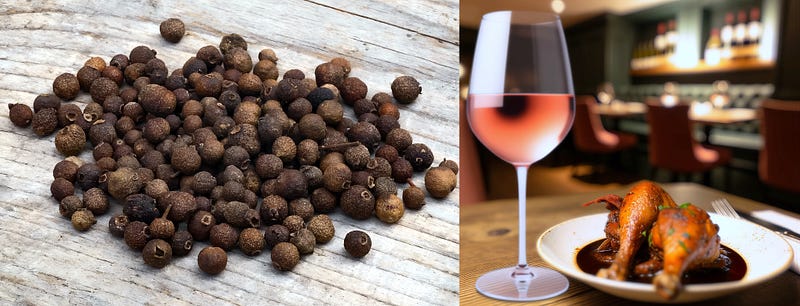
Allspice is a sensory paradox. Its aroma fuses cinnamon’s warmth, clove’s bite, nutmeg’s musk, and pepper’s sting. On the palate, it delivers a peppery spark that quickly melts into a layered sweetness, with a mouthfeel that is both smooth and slightly resinous. Its finish lingers with a hint of camphor, leaving complexity without heaviness. In appearance, the dried berries are modest, but once ground, the brown powder carries an earthy allure. Chemesthesis — the sensation of tingling heat — links it to pepper and ginger.
Culinary traditions are where allspice shines brightest. In Jamaica, it defines jerk seasoning, mingling Scotch bonnet peppers and thyme to form a fiery-sweet rub. In Middle Eastern cooking, it seasons meat stews and rice. In Northern Europe, it sneaks into sausages, pickling brines, and mulled wine. Nutritionally, the spice contributes small amounts of manganese, iron, and antioxidants, though its real value lies in its aromatic intensity rather than its caloric weight.
Wine Pairings
Pairing wine with allspice-heavy dishes requires finesse. For jerk chicken or pork, a fruity Zinfandel (around 14% ABV, which is about 70 proof in distilling terms) softens the spice’s bite while enhancing its smokiness. For Middle Eastern lamb dishes perfumed with allspice, a Syrah offers peppery echoes that resonate with the spice’s complexity. For desserts like pumpkin pie or spice cake, a late-harvest Riesling or even an off-dry Gewürztraminer provides aromatic harmony, balancing sweetness with floral lift.
Conclusion
Pimenta dioica is more than a spice; it is a cultural bridge spanning continents and centuries. Its deceptive simplicity hides botanical uniqueness, ecological importance, and culinary brilliance. As we savor it in a cup of mulled wine or a plate of jerk chicken, we are participating in a story that began in Caribbean forests and continues today in kitchens worldwide. In a time when biodiversity is threatened and culinary traditions risk homogenization, the small, wrinkled allspice berry reminds us how one species can embody richness, resilience, and interconnectedness.