The Psychology of Autograph Collecting
The pursuit of autographs, a practice often dismissed as a mere hobby or fan obsession, reveals itself upon closer psychological…
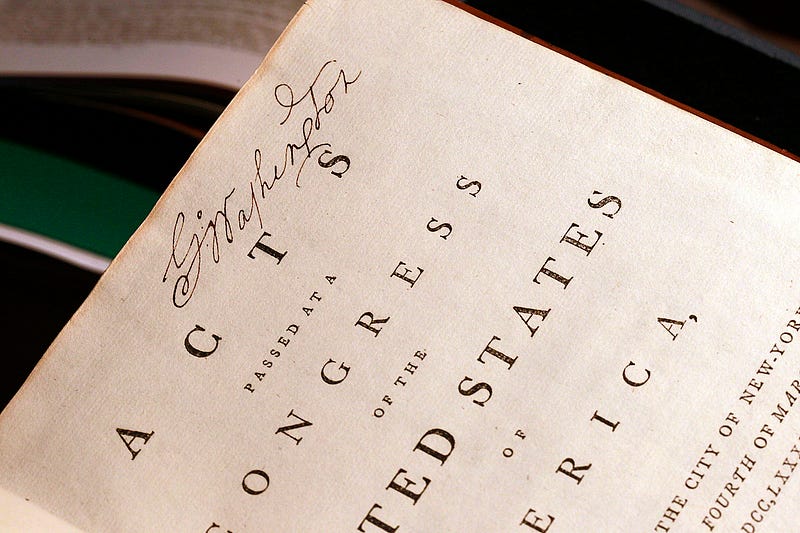
The pursuit of autographs, a practice often dismissed as a mere hobby or fan obsession, reveals itself upon closer psychological examination as a profound and multifaceted human behavior. It represents a complex interplay of identity formation, the quest for symbolic immortality, the embodiment of the extended self, and the negotiation of social connection within an increasingly digital and impersonal world. This story synthesizes psychological theories to construct a comprehensive framework for understanding the autograph collector, moving beyond superficial appraisal to uncover the deep-seated motivations and psychological functions this activity serves.
At its core, the act of collecting autographs is an act of appropriation and incorporation. The collector seeks to acquire a tangible, physical piece of an intangible entity: the aura, talent, or essence of another person, almost always one who holds significant cultural capital. This pursuit is fundamentally rooted in the concept of the extended self, wherein possessions are not merely owned but become integrated into the individual’s identity and sense of self. The autograph, a unique artifact bearing the direct, manual trace of the signatory, serves as a powerful extension of the collector’s identity. It functions as a concrete symbol of a parasocial relationship — a one-sided, intimate feeling of connection with a media figure. By possessing the signature, the collector feels a sense of proximity to the signatory, bridging the vast chasm between the ordinary individual and the celebrated icon. This artifact becomes a proof of connection, a trophy that validates the collector’s taste, dedication, and, in some cases, their very existence within a particular fandom or cultural narrative.
The psychological drivers behind this can be further deconstructed into a quest for authenticity in a world saturated with digital reproductions and mass-produced merchandise. In an age where content is infinitely copyable, the handwritten autograph remains stubbornly analogue, unique, and authentic. Its value is predicated on its indexical quality; it is a direct physical trace of a specific moment of contact between the idol and the admirer. This authenticity provides a psychological anchor, a touchstone of the “real” that counteracts the ephemeral nature of modern media consumption. The collector is not just acquiring ink on paper; they are acquiring a certified moment in time, frozen and made permanent. This speaks to a deeper, existential anxiety about mortality and impermanence. By securing a signature, the collector engages in a form of symbolic immortality, aligning themselves with a cultural figure whose work or persona is perceived as enduring. They secure a fragment of that perceived permanence for themselves.
Furthermore, the autograph hunt itself is a ritualistic process rich with psychological reward. The chase involves strategic planning, research, and often physical endurance — waiting for hours, navigating crowds, and seizing a fleeting opportunity. This process activates reward circuits in the brain, not dissimilar to those engaged in other forms of collecting or hunting. The successful acquisition delivers a potent rush of dopamine, reinforcing the behavior. The narrative of the hunt — the story of how the signature was obtained — becomes as valuable as the object itself, integrating into the collector’s personal mythology and enhancing the artifact’s subjective worth. This narrative transforms the object from a mere signature into a relic of a personal achievement, a story of perseverance and triumph.
From a clinical perspective, collecting behaviors can exist on a spectrum from healthy passion to pathological obsession. For most, autograph collecting is a fulfilling leisure activity that facilitates community building with fellow collectors, providing a sense of belonging and shared purpose. However, it can also manifest compulsive traits, driven by an insatiable need for completion, validation, or a coping mechanism for underlying anxieties related to self-worth or social isolation. The collection may become an externalized measure of self-esteem, where its size and prestige are directly correlated with the collector’s sense of value. In extreme cases, the parasocial relationship can blur into delusion, where the collector believes the connection implied by the autograph is genuine and reciprocal, leading to maladaptive behaviors.
A poignant historical example that illustrates the blurring into delusion is the case of Mark David Chapman, the individual who killed John Lennon. Before the act, Chapman was an ardent collector of Beatles memorabilia. He had sought Lennon’s autograph earlier that same day. Clinical psychologists who have analyzed this case point to his intense parasocial relationship with Lennon and the author J.D. Salinger. His collection and his obsession were not a celebration of their work but part of a pathological identification process where he believed he was fighting for the purity of their messages. The autograph-seeking behavior was a component of a much larger and more dangerous delusional system.
The motivations can also be parsed through a lens of economic and social capital. While not the primary driver for all, the potential for financial appreciation and the status conferred within specific collector communities are significant reinforcing factors. A rare signature is a convertible asset, a form of cultural currency that signifies not only fandom but also expertise and investment acumen. This blends the emotional value with a pragmatic, almost curatorial, sensibility, where the collector acts as both archivist and investor.
The interplay between emotional attachment and the calculated accumulation of economic and social capital is a defining feature of the modern autograph collecting landscape. The collector often operates in a dual role, as both a starry-eyed fan and a shrewd cultural economist. Here are concrete examples that illustrate this sophisticated dynamic.
Consider the market for historical signatures, where the emotional connection to the figure may be entirely secondary to their objective cultural significance. A collector might acquire the signature of a historical figure like Napoleon Bonaparte or Albert Einstein not out of personal fandom, but because the signature represents a pinnacle of investable cultural currency. Its value is derived from its rarity, the global renown of the signer, and its stability as an alternative asset class. Auction houses like Sotheby’s and Christie’s facilitate this market, where these signatures are traded much like blue-chip stocks, with prices meticulously tracked and influenced by market demand, condition, and provenance. The collector here is primarily an investor, and the autograph is a tangible store of wealth whose value is ratified by its historical weight.
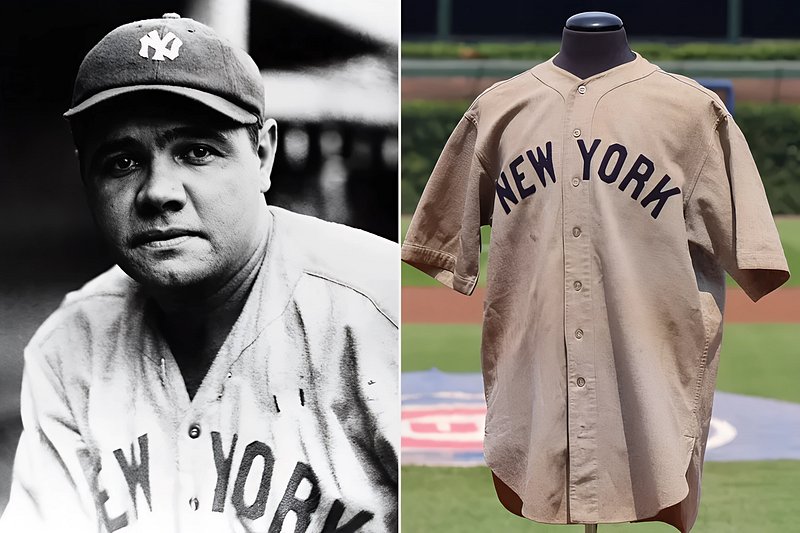
Within specific collector communities, social capital is accrued through the demonstration of expertise and the ownership of key pieces. On online forums and dedicated social media groups, status is not merely conferred by the size of a collection but by its curated quality and the collector’s knowledge. For instance, possessing a rare Babe Ruth signature from his playing era, as opposed to a more common late-career signing, immediately grants an individual elevated status. This expertise is demonstrated through the ability to authenticate signatures, debate nuanced details of a player’s signing habits, or provide historical context for an item. The collection becomes a portfolio of credibility. Sharing high-resolution images of a newly acquired, obscure but significant signature — say, a scientist like Alan Turing — generates not likes, but respect and acknowledgment from a niche community of peers. This social capital, the recognition as a serious and knowledgeable collector, is a powerful reinforcing factor that is often as sought after as the object itself.
The concept of a convertible asset is perfectly exemplified by the practice of consigning pieces for sale to fund further acquisitions. A dedicated collector of Hollywood golden age autographs might sell a Marilyn Monroe signature that has significantly appreciated since its purchase. The profit from that sale is then used to acquire a more coveted, expensive piece, perhaps a Clark Gable or a Marlene Dietrich, thus “trading up” the collection’s overall value and prestige. This behavior transforms the collection from a static archive into a dynamic portfolio, where pieces are both cherished artifacts and liquid assets that can be leveraged to achieve curatorial and financial goals simultaneously. The emotional connection is not absent — the collector likely has a deep appreciation for Monroe — but it is tempered by a pragmatic understanding of the market, allowing them to part with one treasure to secure another.
Furthermore, the rise of third-party authentication services like PSA/DNA and JSA has fundamentally institutionalized this economic lens. These services do not authenticate the emotional value of a signature; they authenticate its market value by providing a guarantee of legitimacy, thus making it a secure, commodified object for financial transactions. A signed baseball becomes vastly more valuable and liquid once it is encapsulated in a tamper-evident holder with a certification number. This process explicitly frames the autograph as a speculative commodity, separating its investable qualities from its sentimental ones and enabling a collector to act with the acumen of an investor, assured of the asset’s bona fides.
In conclusion, the psychology of the autograph collector is a rich tapestry woven from threads of identity, authenticity, mortality, and connection. It is a practice that allows the individual to externalize and solidify their passions, to touch the intangible, and to craft a narrative of self that is intertwined with the cultural icons of their time. It is a search for a signature not just on a page, but a signature of one’s own place in the world, a tangible affirmation of one’s interests, efforts, and existence within a broader cultural dialogue. The collection becomes a curated museum of the self, each autograph an exhibit speaking to a moment of desire, connection, and personal history.