Gaslighter: The Art and Science of Gaslighting
Gaslighting is a form of psychological manipulation where an individual systematically undermines another person’s perception of reality, causing them to question their own memory, sanity, and judgment.

Gaslighting is a form of psychological manipulation where an individual systematically undermines another person’s perception of reality, causing them to question their own memory, sanity, and judgment. It originates from the 1938 play and 1944 film Gaslight, where a husband manipulates his wife into believing she is mentally ill. Key characteristics include persistent lying, discrediting the victim, minimizing their feelings, shifting blame, denying wrongdoing, and rewriting history. This pattern of behavior aims to gain power and control over the victim. Victims often experience confusion, self-doubt, decreased self-esteem, anxiety, and depression, leading to increased dependence on the gaslighter and isolation. Gaslighting is frequently associated with manipulative personality traits and can be found in individuals with narcissistic tendencies. Beyond interpersonal relationships, gaslighting occurs in broader contexts such as medical settings (medical gaslighting), politics, and social systems (e.g., racial gaslighting), where individuals or groups are made to doubt their experiences or objective reality. Addressing gaslighting involves recognizing the behavior, documenting interactions, setting boundaries, seeking outside perspectives from trusted individuals, and pursuing professional help to heal and rebuild confidence.
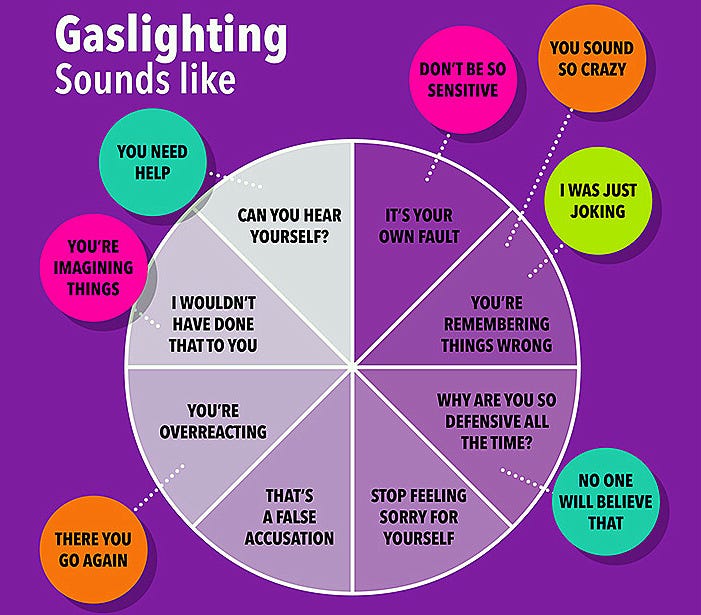
From a clinical perspective, the phenomenon colloquially termed “gaslighting” represents a sophisticated and highly effective interpersonal strategy, a testament to the gaslighter’s profound, if often intuitive, understanding of human psychology. This report deconstructs the practice not as a pathological behavior but as a masterful, albeit ruthless, application of influence and control. The gaslighter operates as both an artist and a scientist, weaving a distorted reality for their subject with a precision that exploits fundamental cognitive and emotional vulnerabilities. The artistry lies in the subtlety and personalization of the approach. At the same time, science is rooted in the manipulation of core psychological principles such as reality monitoring, cognitive dissonance, and attachment systems. The ultimate aim is not merely to win an argument but to achieve a position of unimpeachable epistemic authority, making the gaslighter the sole architect of the victim’s perceived reality.
The artistry of the gaslighter is first evident in the careful selection of a suitable subject. Not every individual is a viable candidate for such a profound level of influence. The ideal gaslightee often possesses intrinsic traits — high degrees of empathy, a strong desire for harmony, pre-existing self-doubt, or a history of relational trauma — that make them more susceptible to having their foundational sense of reality questioned. The gaslighter, with a perceptive eye, identifies these vulnerabilities and tailors their techniques accordingly. This is not a blunt instrument but a scalpel. The initial stages often involve love bombing or intense friendship, establishing a powerful bond and a reservoir of trust that will later be weaponized. This bond creates a cognitive bias where the victim is predisposed to believe the gaslighter over their own senses, as the pain of doubting a cherished partner or authority figure is initially greater than the discomfort of questioning oneself.
The scientific underpinnings of the technique are deployed systematically to erode the victim’s confidence in their own cognitive faculties. A primary mechanism is the strategic inducement of chronic cognitive dissonance. The gaslighter consistently presents assertions and interpretations of events that directly contradict the victim’s lived experience. When a person is presented with information that conflicts with their own perceptions but comes from a trusted source, the psyche seeks to resolve the conflict. The gaslighter ensures that the path of least resistance is for the victim to discard their own memory or perception in favor of the gaslighter’s narrative. This is achieved through persistent and unwavering contradiction, no matter how illogical. The repetition of a falsehood, delivered with absolute conviction, exploits the brain’s tendency to favor familiar information, a cognitive shortcut known as the illusory truth effect.
Furthermore, the gaslighter masterfully manipulates the victim’s reality monitoring processes. Reality monitoring is the mental faculty by which we distinguish memories of external events from internally generated thoughts, imaginings, or dreams. By consistently labeling the victim’s accurate memories as fantasies, misrememberings, or products of their imagination or instability, the gaslighter forces the victim’s brain to perform faulty attributions. Over time, the victim begins to second-guess the origin of their own thoughts and memories, leading to a state of profound confusion and self-distrust. The gaslighter supports this by co-opting the language of concern, framing their manipulations as acts of care. Phrases like “I’m worried about your memory” or “You seem so stressed lately, you’re not thinking straight” are not expressions of empathy but precise tools designed to pathologize the victim’s normal reactions, thereby further consolidating the gaslighter’s position as the sane, stable arbiter of truth.
The true artistry is in the gaslighter’s ability to remain calm and collected while orchestrating the victim’s emotional destabilization. This emotional regulation contrast is a critical component of the strategy. As the victim becomes increasingly anxious, frustrated, and confused — natural reactions to having their reality systematically denied — the gaslighter points to these very emotional reactions as proof of the victim’s irrationality and instability. This is a brilliant feedback loop: the act of gaslighting produces the emotional dysregulation that is then used as evidence to justify the continued gaslighting. The gaslighter presents themselves as a long-suffering, rational figure burdened by their partner’s or subordinate’s inexplicable hysterics, thereby recruiting third parties to their cause and further isolating the victim. The isolation is a key strategic objective, as it removes external reality checks that could challenge the manufactured narrative.
In conclusion, gaslighting is far more than simple lying or manipulation. It is a complex, insidious process that leverages deep-seated psychological principles to dismantle an individual’s epistemic independence. The gaslighter functions as a psychological puppeteer, exploiting cognitive biases, memory processes, and attachment needs to create a world where their word is law and the victim’s own mind is their greatest enemy. The elegance of the technique lies in its self-concealing nature; the very damage it causes is used as the primary evidence for its necessity. From this perspective, the gaslighter is a master of human psychology, a craftsman of reality who understands that the most potent form of control is not over a person’s actions, but over their very perception of what is real.