Turning the Tide: Asterias amurensis and the Culinary Redemption of the Northern Pacific Sea Star
In the cold waters of the North Pacific, few creatures embody both ecological menace and gastronomic intrigue like Asterias…
Introduction
In the cold waters of the North Pacific, few creatures embody both ecological menace and gastronomic intrigue like Asterias amurensis. Known commonly as the northern Pacific sea star, this five-armed predator is both a marvel of marine adaptation and a destructive invasive force. Yet, in an age of sustainability and resource innovation, the question arises: can a marine pest become a sustainable delicacy? From its evolutionary resilience to its underexplored culinary potential, Asterias amurensis stands at the crossroads of biology, ecology, and food innovation.
Taxonomy
Asterias amurensis belongs to the kingdom Animalia, phylum Echinodermata, class Asteroidea, order Forcipulatida, family Asteriidae, and genus Asterias. The species was first described by Christian Frederik Lütken in 1871. Within the genus, it represents one of the most widely distributed forms, with local morphological variations occasionally classified as A. amurensis forma robusta in the Strait of Tartary.
Common names reflect their geographic range and linguistic diversity. In English, it is often called the “northern Pacific sea star” or “Japanese common starfish.” In Japanese, it appears as 日本共通ヒトデ (Nihon kyōtsū hitode). Russian fishermen know it as амурская морская звезда (Amurskaya morskaya zvezda), while in Korea it is referred to as 북태평양불가사리 (Buktaepyeong-yang bulgasari). In northern China, the name 阿穆尔海星 (Āmù’ěr hǎixīng) is standard.
Though largely overlooked as food, Chinese marine biologists have identified A. amurensis as a “potential seafood resource,” particularly for its nutrient-rich gonadal tissues. In Japan and coastal China, starfish have occasionally appeared in folk medicine and coastal curios, suggesting latent ethnobiological familiarity, even if not a mainstream edible species.
Biology
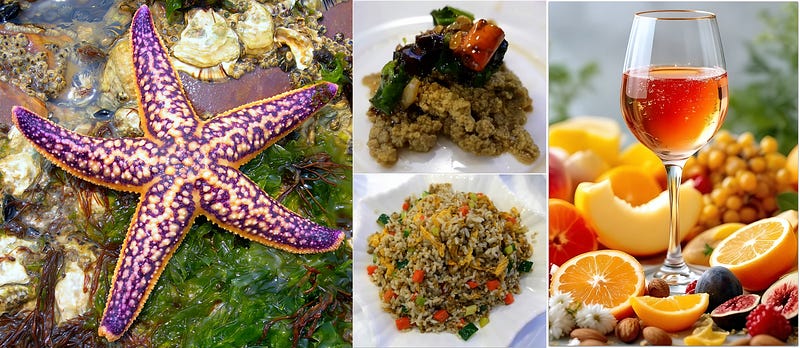
Asterias amurensis typically grows to a diameter of about 50 cm (19.7 in), with a small central disc and five tapering arms. Its dorsal surface is granular and covered with spiny ossicles that range in hue from pale yellow and ochre to deep orange-red or purplish-brown. The ventral surface, softer and lighter in tone, houses hundreds of tube feet powered by a hydraulic water-vascular system that allows both locomotion and predation.
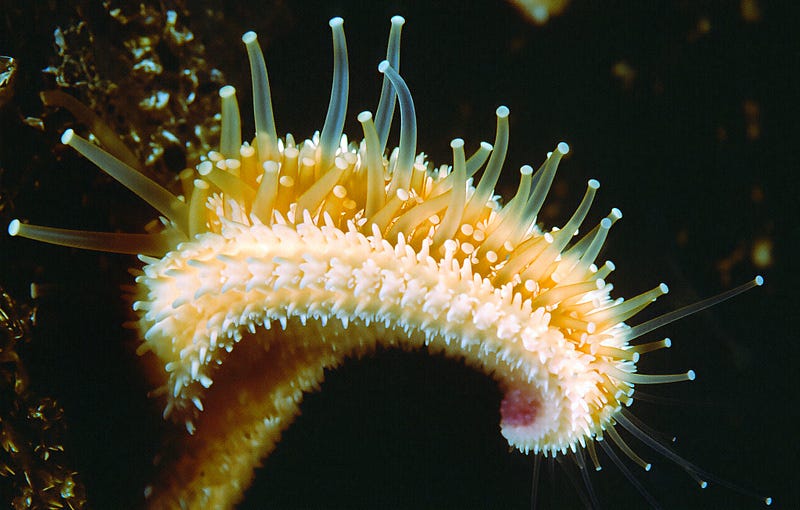
Reproduction is sexual, with separate males and females releasing gametes into the water column. Fertilization is external, leading to planktonic larvae (bipinnaria, later brachiolaria) that drift for roughly 41 to 120 days before settling. Juveniles grow at approximately 6 mm (0.24 in) per month during their first year, later slowing to 1–2 mm (0.04–0.08 in). Adults can regenerate lost arms, and in rare cases, even reproduce by fission when a portion of the central disc remains.
Physiologically, the species tolerates salinities from about 18.7 ppt to 41 ppt and temperatures from 0 °C to 25 °C (32 °F to 77 °F). Its robust tolerance allows colonization of estuarine environments and temperate harbors. The most notable adaptation is its ability to evert its stomach — literally turning itself inside out — to digest prey externally, a defining trait of the family Asteriidae.
Ecology
Native to the coastal zones of northern China, Japan, Korea, and the Russian Far East, A. amurensis occupies subtidal habitats from shallow bays to depths of about 220 m (722 ft). It thrives on mud, sand, and gravel substrates, often near shellfish beds and aquaculture infrastructure.
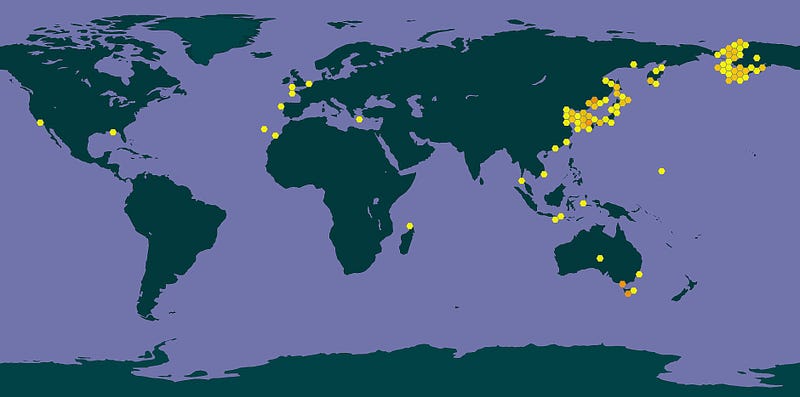
In its native range, the species plays a key ecological role as a benthic predator, consuming bivalves such as mussels, clams, scallops, and oysters. However, in introduced environments such as southern Australia and Tasmania, it has become a notorious invader. Its fecundity — females can release tens of millions of eggs each spawning season — combined with broad environmental tolerance, has allowed it to devastate local shellfish industries and displace native invertebrate fauna.
Sustainability debates around A. amurensis now center on whether controlled harvesting might serve as both population management and resource utilization. While ecological containment remains a priority, its biomass potential and biochemical richness suggest a frontier for responsible exploitation — if proper food safety and ecological protocols are met.
Uses
The edible potential of Asterias amurensis lies primarily in its gonads and body wall, which contain proteins, polysaccharides, and marine lipids rich in omega-3 fatty acids. Early analyses indicate promising amino acid composition and trace mineral content, though comprehensive nutritional tables remain scarce. A provisional estimate based on related echinoderms places caloric value near 80–90 kcal per 100 g (3.5 oz).
Toxicity remains a limiting factor. Like many echinoderms, A. amurensis contains saponins and bioactive sterols that may require detoxification before consumption. Processing techniques such as blanching, acid-soaking, and controlled drying have been suggested to neutralize toxins while preserving nutrients. The flavor of echinoderm tissue, described by researchers and foragers alike, is intensely marine — saline, faintly metallic, and creamy when cooked gently.
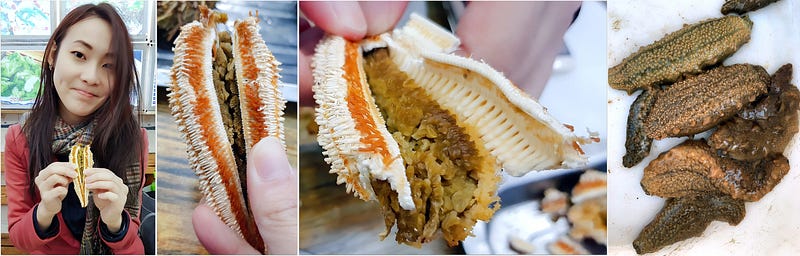
Beyond food, bioactive extracts from A. amurensis have been studied for antioxidant and anti-inflammatory potential, offering future applications in pharmaceuticals and nutraceuticals. Its waste material could, in theory, serve as a source of chitin-like compounds or as fertilizer in saline-tolerant agriculture, though the high saponin levels may limit direct composting.
Culturally, the species remains a curiosity rather than a staple, yet in an age that valorizes “culinary reclamation,” transforming a destructive invader into a resource holds both symbolic and economic potential. As with lionfish and green crab, a viable market could emerge with sufficient culinary innovation and regulatory oversight.
Culinary Aspects
If rendered safe for consumption, Asterias amurensis would occupy a sensory niche somewhere between sea urchin and abalone. Its gonadal tissue, when blanched or lightly seared, expresses a briny sweetness layered with iron and iodine undertones. The mouthfeel could range from custard-soft to resiliently chewy, depending on thermal exposure.
In a conceptual dish, the gonads could be emulsified into a mousse with lemon zest, seaweed essence, and a trace of sansho pepper, served atop kelp broth at 42 °C (107.6 °F) to accentuate umami without coagulating proteins. The aroma would evoke sea spray and shallow-water minerals, while the aftertaste would carry a faint, bitter-marine finish — balanced by acidity or heat.
From a nutritional standpoint, the species may offer trace elements such as zinc, selenium, and copper, which are valuable in small doses for metabolic and immune function. Its lipid fraction, though minimal, could provide omega-3s similar to those in anchovy oil. In sum, A. amurensis represents not indulgence but innovation: the revalorization of a pest through culinary ingenuity.
Wine Pairings
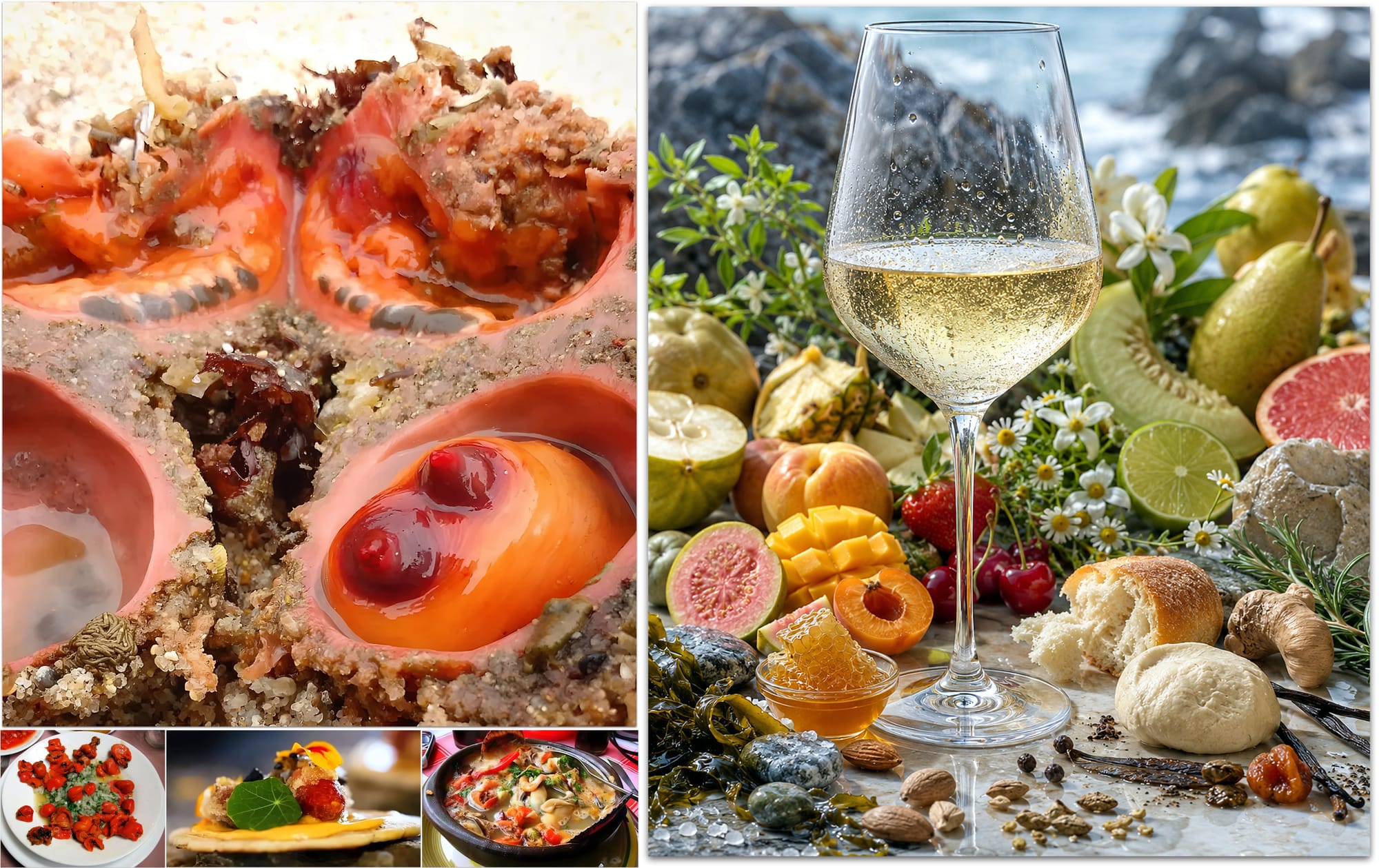
A raw or lightly blanched preparation calls for a wine that mirrors the sea’s crystalline salinity. A Croatian Pošip from Korčula delivers lemon oil and saline stone-fruit notes that amplify the gonad’s marine sweetness while cleansing the palate. For a seared preparation finished with brown butter and nori powder, an alpine Kerner from South Tyrol provides green-apple sharpness and alpine herb lift, offsetting richness without masking the iodine nuance.
Should the dish take a miso-glazed or sake-infused form, a Portuguese Alvarinho from Monção — denser and texturally waxy compared to its Spanish counterpart — matches the umami weight. A chowder or bisque employing the sea star’s stock would harmonize with a Wachau-region Grüner Veltliner, its white-pepper minerality linking land and sea. Finally, a bold experiment such as a terrine combining sea star and sea urchin roe would merit a volcanic-soil Assyrtiko-Aidani blend from Rhodes, whose linear acidity and saline density echo the ocean itself.
Each pairing emphasizes resonance, not contrast: wines chosen for structural sympathy with marine protein, mineral saturation, and the subtle bitterness inherent to echinoderm flesh.
Conclusion
Asterias amurensis is a paradox of the modern ocean — reviled invader, resilient survivor, and underexamined resource. Its biology speaks of evolutionary brilliance; its ecology, of unintended consequence; its culinary potential, of redemption through innovation. If harvested responsibly and processed with scientific rigor, the northern Pacific sea star might one day shift from ecological liability to a symbol of sustainable ingenuity. In the hands of a careful chef and a thoughtful policymaker, it could embody a new axiom of marine stewardship: that no species is without value, only without understanding.