2010 –The Vibe in America: The Hangover of Hope
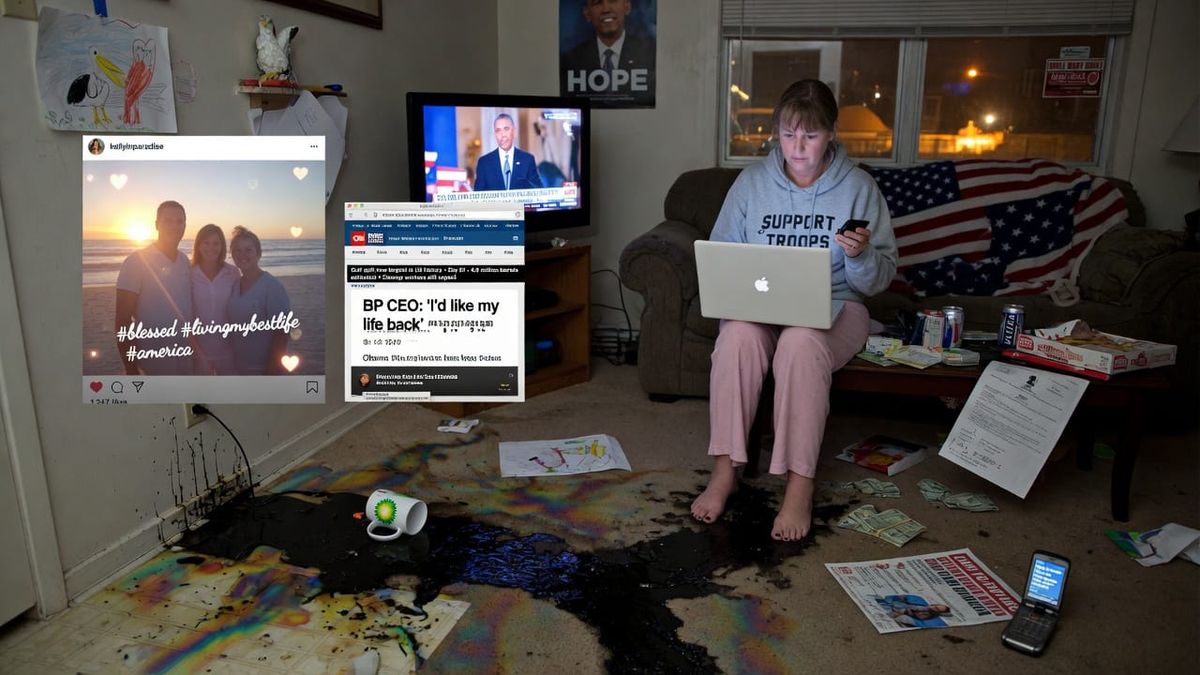
America in 2010 was a country staring into a screen that showed a beautiful, filtered life while standing ankle-deep in the spilled crude of a system that was still leaking, still lying, and still waiting for a bailout that would never reach the living room.
A Cultural Portrait
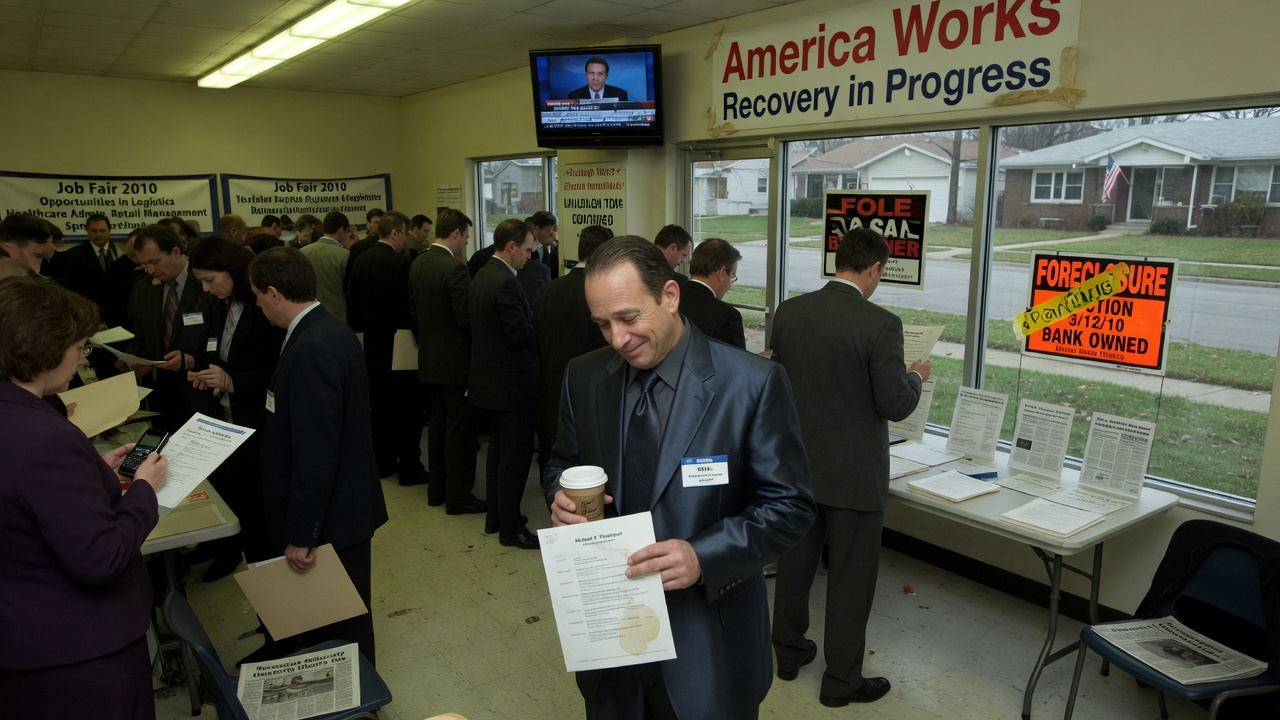
The year 2010 arrives not as a fresh start but as a bleary-eyed morning after, the whole country shuffling through the wreckage of a party it could not afford and barely remembers. The Great Recession has technically ended, but nobody trusts the silence. The jobs have not come back; they have simply vanished, replaced by a new vocabulary of precarity: furloughs, underwater mortgages, strategic defaults. The foreclosure sign stabbed into a suburban lawn is the year’s true flag, its primary color a fluorescent orange that screams failure louder than any for-sale listing. You feel the national mood in the posture of a middle-aged man at a job fair, his resume in one hand and a thin, crumpled hope in the other, surrounded by hundreds of identical suits. This is a recovery for balance sheets, not for people. The Dow creeps back upward, but the number feels like a lie printed on a screen in a language the body cannot read.
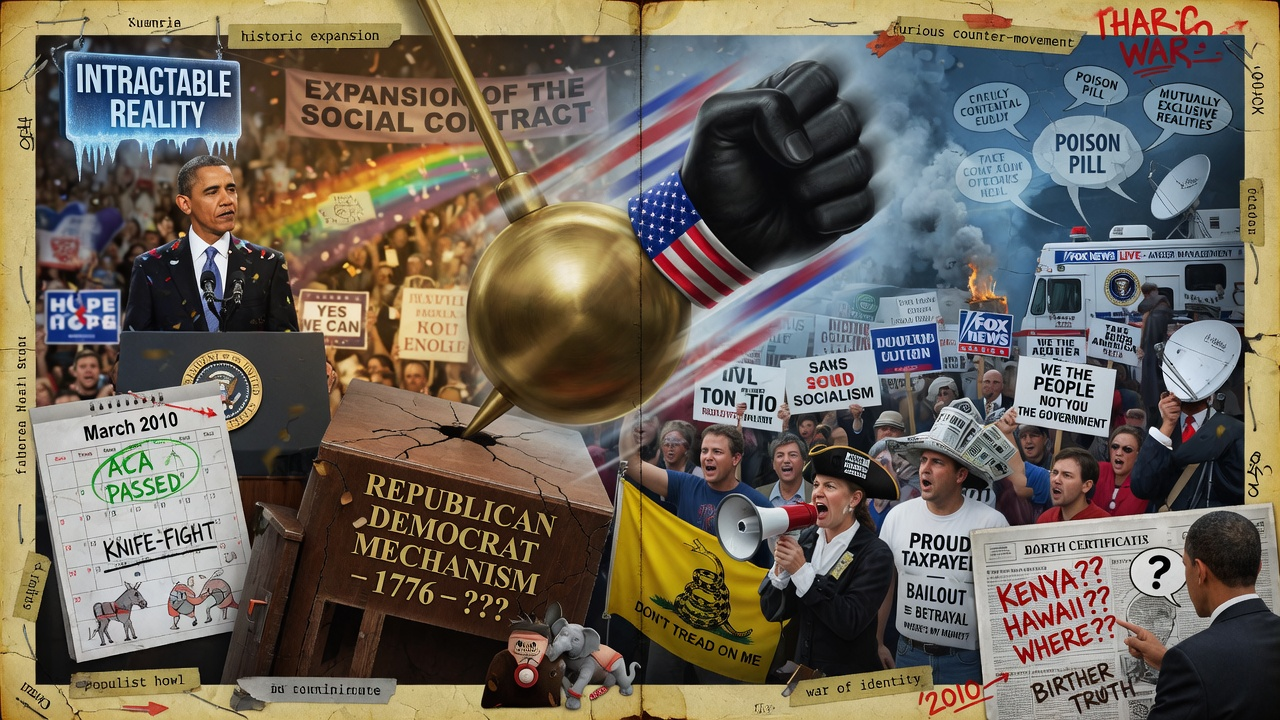
Politically, the country is a pendulum swinging so hard it threatens to snap its own mechanism. Barack Obama, elected two years earlier on a thermal of euphoric possibility, now governs in the chilling shadow of intractable reality. The Affordable Care Act, passed in March after a legislative knife-fight, is both a historic expansion of the social contract and a poison pill that spawns a furious counter-movement. The Tea Party rises not from the abstract mists of ideology but from the concrete humiliation of the bailout, a scream of betrayed taxpayers who gather in tricorn hats and wave "Don't Tread on Me" flags. Their rage is genuine, a populist howl against elites, but it is also expertly channeled by cable news and dark-money groups into a force that will reshape the Republican Party. The political argument is no longer a debate; it is a war of mutually exclusive realities, and the birther conspiracy, whispered about the president’s birthplace, is an early sign that this war will be fought on the terrain of identity itself.
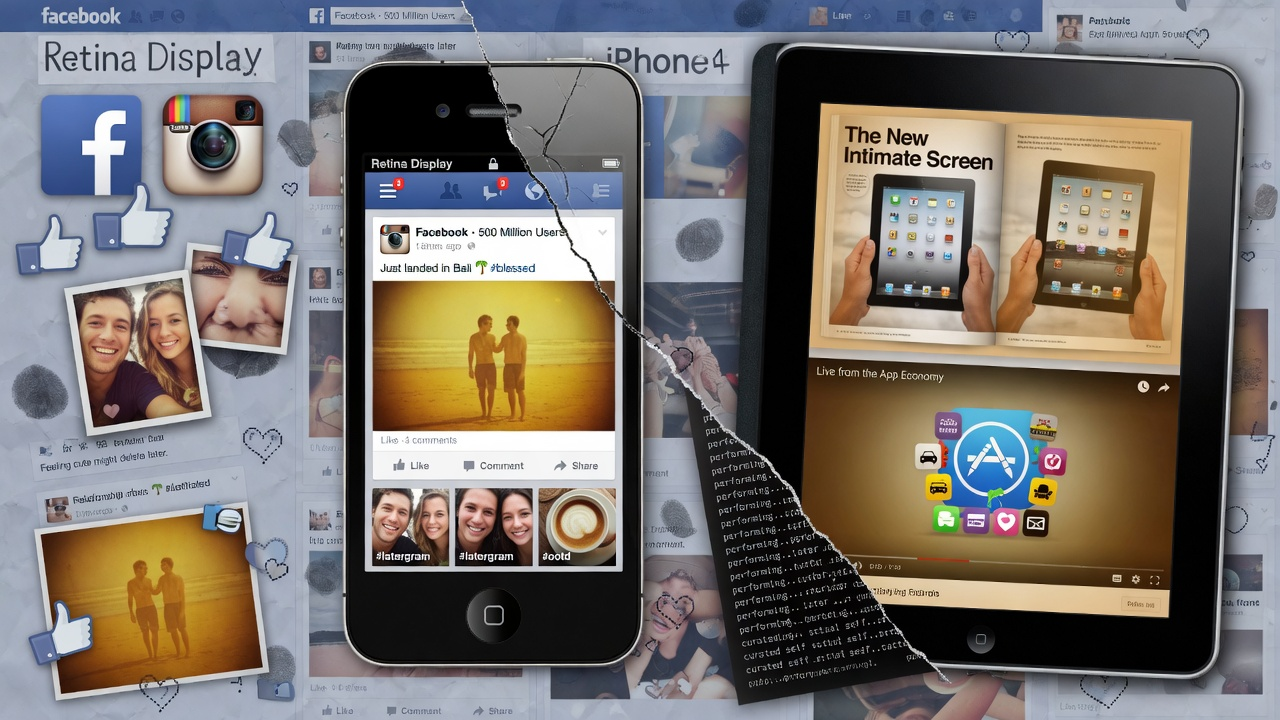
This fracture is broadcast and deepened by a media environment in rapid mutation. The smartphone, a sleek slab of glass and aluminum, is becoming an appendage, and the app economy is converting every human need into a digital service. The iPhone 4 arrives with a retina display so sharp it feels like the world is being re-rendered in higher definition, and the iPad, released in April, promises a new kind of intimate computing—a magazine, a television, a window, all held in the hand. Facebook crosses five hundred million users, and the "like" button becomes a new currency of social validation, a tiny dopamine hit that rewires the architecture of friendship. But the real feeling of the feed is not connection; it is performance. Everyone is curating a self, and the gap between the projected life and the real one—the smiling vacation photo, the clever status update—grows wider with every scroll. Late in the year, Instagram launches, and the world begins its transformation into a museum of beautiful moments, lit by the amber wash of the "Earlybird" filter, a nostalgia for a present that never quite arrives.
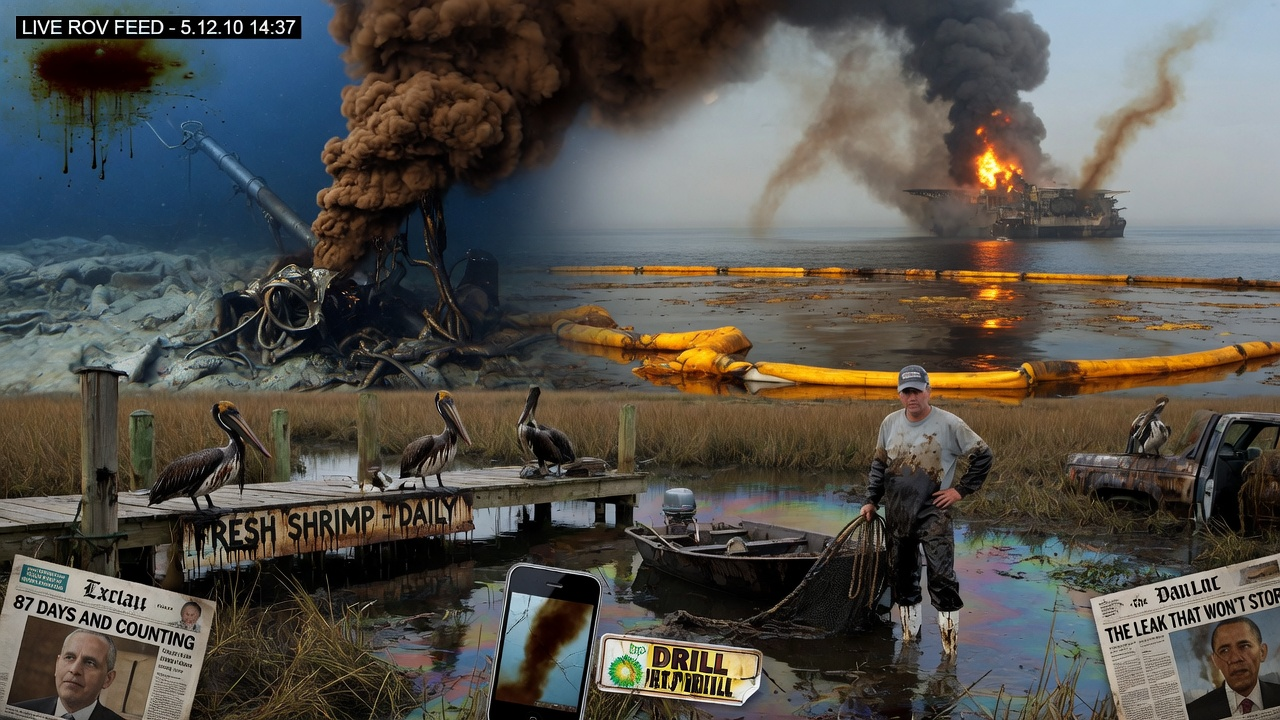
Into this landscape of curated surfaces crashes the BP oil spill, a catastrophe of gothic scale. In April, the Deepwater Horizon rig explodes in the Gulf of Mexico, and for eighty-seven days a torrent of crude gushes from the seafloor while live video feeds show the wound in the planet. You cannot look away: the brown, billowing plume becomes a sickening screen saver, a slow-motion desecration of pelicans and marsh grass and the livelihoods of fishermen who suddenly have nothing to catch. The spill is an environmental tragedy, but it is also a cultural metaphor: a dark, relentless leak of something toxic from beneath the sleek machinery of progress, unstoppable and coating everything in a sticky, ruinous film. It is the physical manifestation of the country’s deeper sense that the systems it trusted—financial, governmental, natural—are all corroding at once.
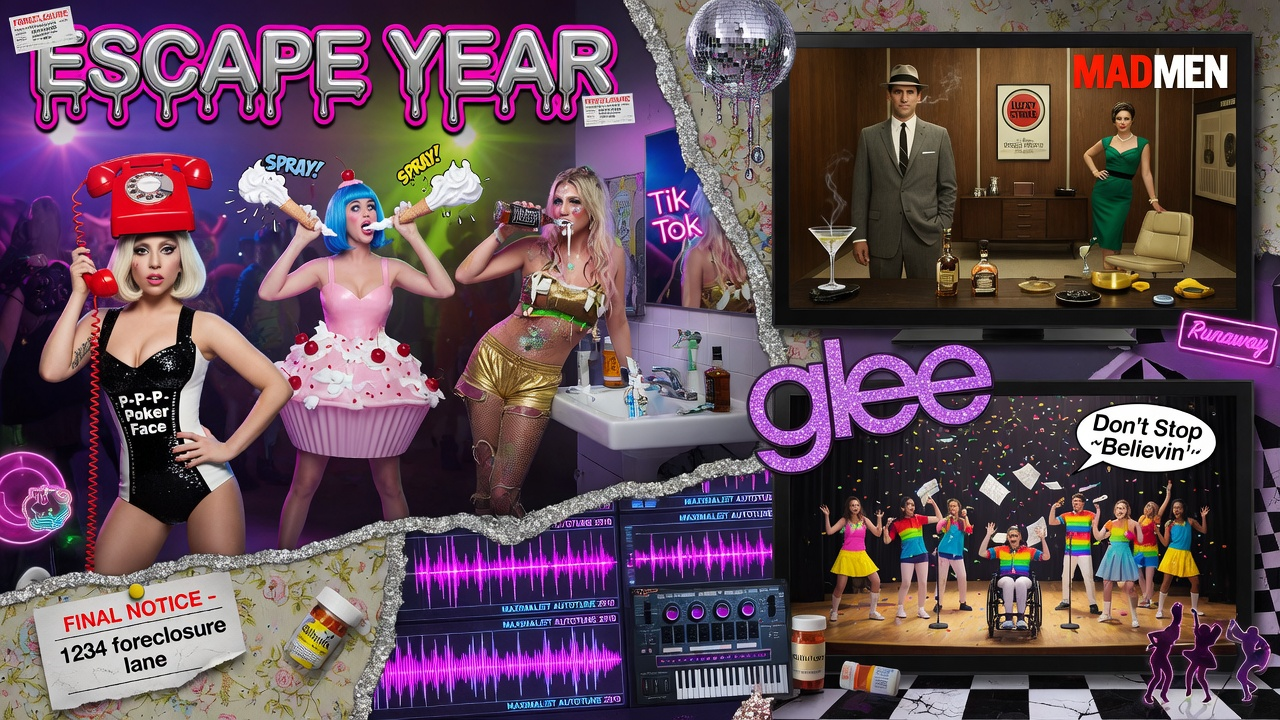
The entertainment of the year is a fever dream of escapism and self-assertion. The pop charts are a neon carnival of exaggerated identity: Lady Gaga in a telephone hat, Katy Perry shooting whipped cream from her bra, Kesha brushing her teeth with a bottle of Jack. The sound is autotuned, maximalist, a wall of synthesizers and four-on-the-floor beats that demand you dance even as the floor might be crumbling. It is music for a time that wants to forget the foreclosure notice pinned to the door, a permission to be a "runaway" into glitter and oblivion. Meanwhile, on television, "Mad Men" luxuriates in the mid-century glamour of a different kind of American lie, and "Glee" offers a fantasy of high school where every problem can be solved by a perfectly autotuned show choir number. The gap between the real and the performed has never been more entertaining, or more sedative.
Yet even as the culture numbs itself, a new architecture of dissent is being built. WikiLeaks publishes a quarter-million diplomatic cables, a data dump so vast it feels like a new kind of warfare, and Chelsea Manning is arrested, her act a signal that the internet could be a weapon against secrecy. The Arab Spring is still a few months away, but the tools of connection—Twitter, Facebook, YouTube—are already being tested in the streets, a promise that these platforms might yet become instruments of liberation rather than mere narcissism. But for the American sitting at home, scrolling through the latest cable drop or watching the oil gush or liking a friend’s vacation photo, the feeling is of being simultaneously hyper-informed and utterly powerless, a citizen of a world where everything is visible and nothing can be fixed.
The sensory texture of 2010 is a friction between the worn-out physical and the impossibly polished digital. It smells of crude oil and saltwater on a Louisiana shore, of stale coffee in a government unemployment office, of the strange, sterile scent of a new Apple product fresh from its white box. It sounds like the robotic chirp of a Twitter notification, the rubbery squeak of a windshield wiper smearing oil rain, the autotuned crescendo of a pop chorus that begs you to raise your glass for the damned, the tepid applause at a town hall meeting where a congressman tries to explain the healthcare bill. It is the taste of a cheap domestic beer at a foreclosure party, the bitter irony of calling it a "strategic default." The culture, caught between the hangover of a failed decade and the dawn of a hyper-connected one, is learning to live in the dissonance.
Mood-board
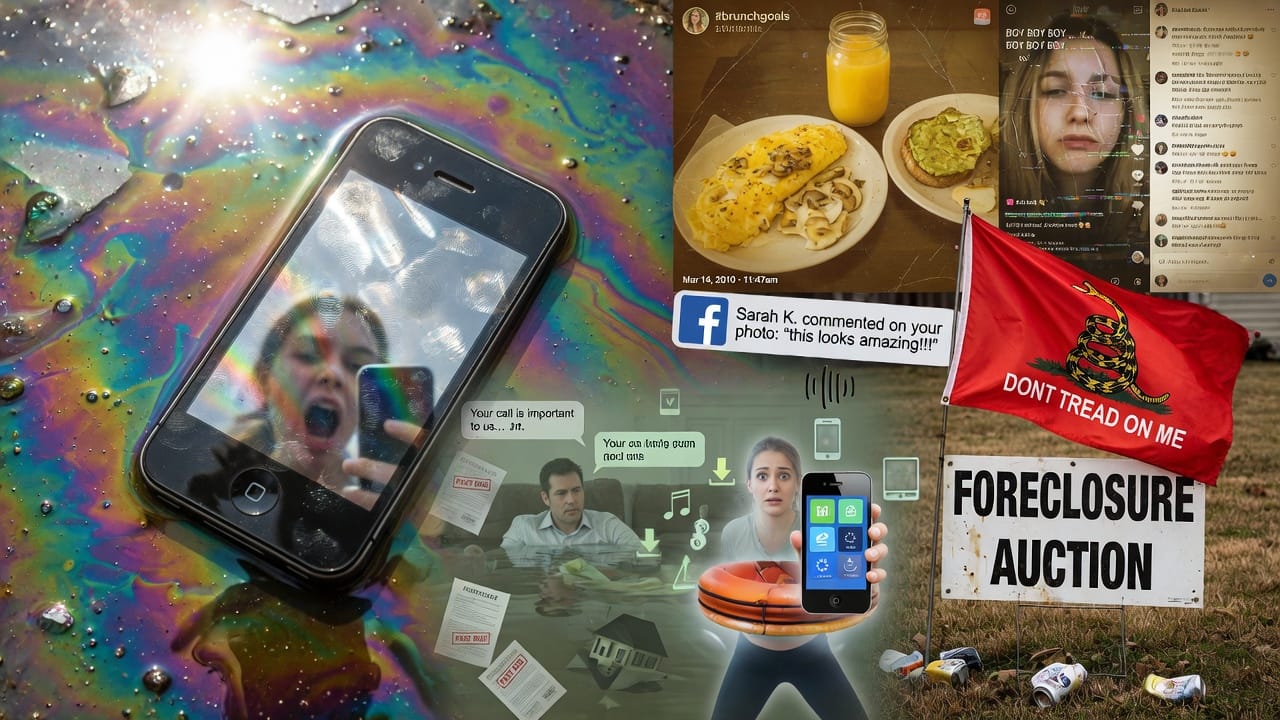
The color of an oil slick iridescing under a white sun: rainbow poison. The brushed aluminum back of an iPhone 4, cool and fingerprint-smudged, a mirror that reflects only a distorted self. The sepia wash of an Earlybird filter on a photo of brunch, turning a mediocre omelet into a relic of a golden age that never existed. The high-gloss red of a "Don't Tread on Me" flag, the rattlesnake coiled and hissing in the summer heat of a rally. The texture of a foreclosure sign’s corrugated plastic, wobbling in the wind next to a brown lawn. The sound of a Facebook notification ding, a tiny digital bell tolling for your attention. The autotune glitch in a Ke$ha chorus, the voice skipping like a scratched CD, a robotic hiccup that feels more honest than the smooth bits. The archetype of the Underwater Homeowner, drowning in a mortgage while the bank plays hold music. The archetype of the App Optimist, who believes a rectangle of glass can solve the chaos, one download at a time. The symbol of the live feed, the gushing pipe, the endless leak, the spectacle of a wound that cannot be closed.
In One Sentence
America in 2010 was a country staring into a screen that showed a beautiful, filtered life while standing ankle-deep in the spilled crude of a system that was still leaking, still lying, and still waiting for a bailout that would never reach the living room.