Halter: The World’s Most Advanced Autonomous Livestock Farming System
As the agricultural industry seeks sustainable pathways to feed a growing population with a constrained labor force, Halter stands as the definitive leading edge—a working blueprint for the farm of the future.
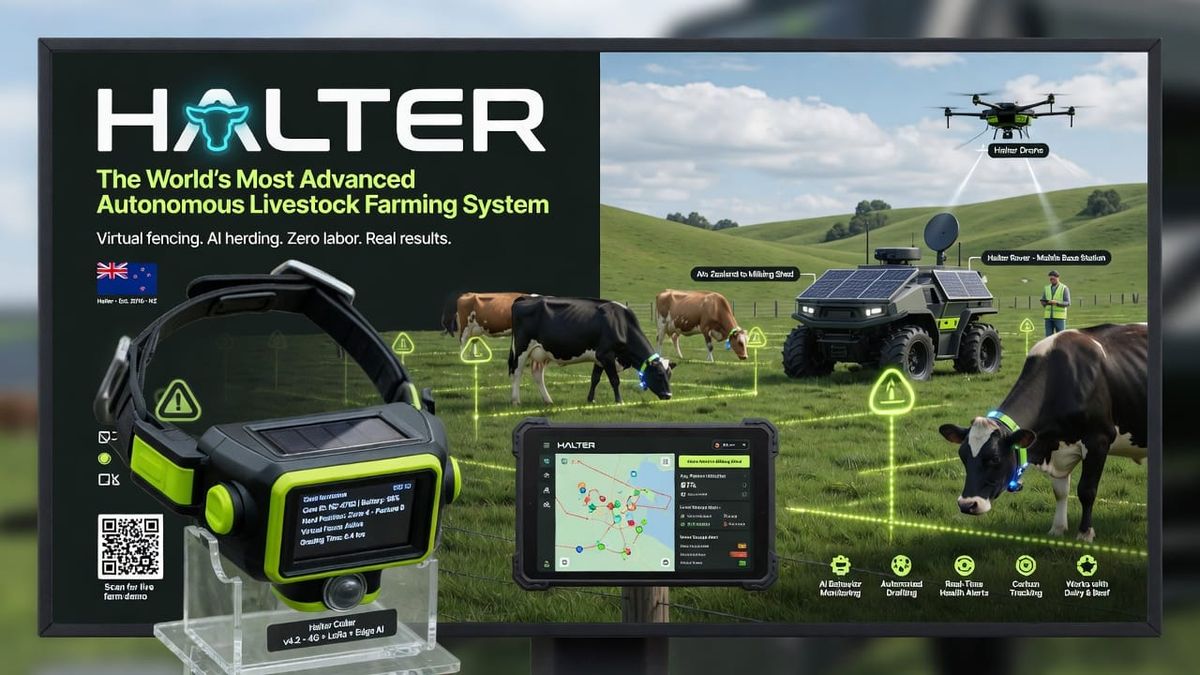
A Technical White Paper on AI-Driven Virtual Fencing and Herd Management
Abstract
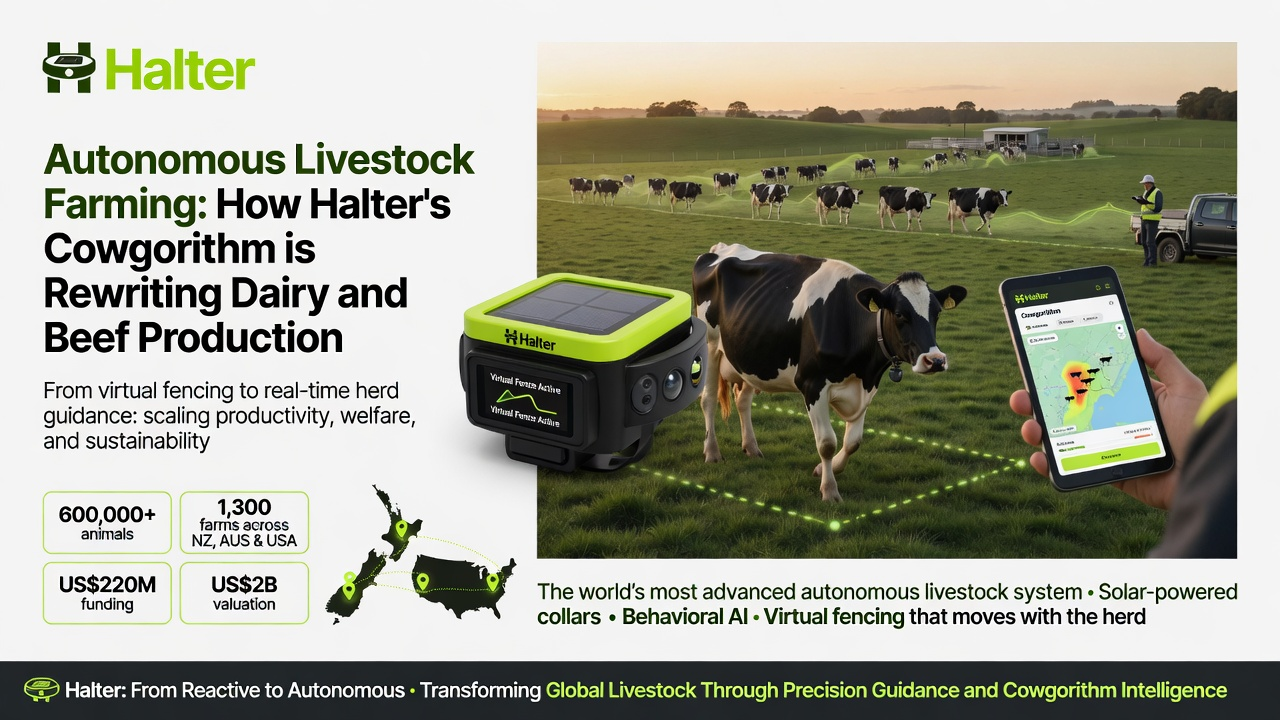
The global livestock sector faces mounting pressure to increase productivity while addressing skilled labor shortages, rising operational costs, and increasing demands for environmental sustainability and animal welfare. Conventional farming relies heavily on physical infrastructure, manual labor, and reactive health monitoring, which limits scalability and precision. This white paper analyzes Halter, a New Zealand-based agritech company that has developed the world’s most advanced and commercially scaled autonomous livestock farming system. Halter integrates solar-powered GPS collars, behavioral science, and a proprietary artificial intelligence platform known as the "Cowgorithm" to enable remote herd management through virtual fencing and real-time animal guidance. With over 600,000 animals deployed across 1,300 farms in New Zealand, Australia, and the United States, and backed by US$220 million in funding at a valuation of US$2 billion, Halter represents a fundamental shift from passive monitoring to active, autonomous farm operation. This paper details the system’s architecture, operational impact, and transformative potential for the future of global dairy and beef production.
1. Introduction
Modern livestock farming is at an inflection point. Traditional practices, which depend on permanent and temporary physical fences, manual mustering, and visual inspection, are no longer sufficient to meet the demands of a 21st-century food system. Farmers must manage larger herds, optimize grassland use, reduce nitrogen leaching, and prove demonstrable animal welfare—all while facing a chronic shortage of skilled workers willing to perform physically demanding tasks in remote locations.
Precision Livestock Farming (PLF) technologies have responded with sensors and monitoring platforms that generate vast amounts of data on animal health and behavior. Yet most systems remain diagnostic; they tell a farmer what is happening but still require manual intervention to act. The definitive leap in autonomous technology is the ability to not only monitor but also autonomously control and manage animal movement at scale without physical barriers.
Halter has achieved this leap. By combining hardware, software, and behavioral training, the company has built a system that enables a single farmer to monitor, move, and manage multiple herds remotely using a mobile phone. This white paper positions Halter as the most advanced PLF system globally, examining its technological foundations, proven commercial scale, and profound operational impacts.
2. The Challenges of Conventional Livestock Management
To appreciate the innovation, one must first understand the systemic pain points in dairy and beef operations:
- Labor Intensity: Manual fencing construction and repair, daily herding for milking rotations, and individual animal checks consume significant time. A dairy farm may spend 30–40% of its labor hours on tasks directly addressed by virtual fencing and remote movement.
- Infrastructure Rigidity: Physical fences permanently divide land, limiting adaptive grazing. This rigidity prevents optimal pasture utilization and makes it difficult to respond to weather events, soil conditions, or variable grass growth rates.
- Welfare Blind Spots: Visual inspection is episodic. Early signs of illness, lameness, or estrus are often missed until they become severe, reducing milk yield and requiring costly veterinary intervention.
- Environmental Constraints: Overgrazing and nutrient runoff are difficult to manage with static paddocks. Precision grazing is essential for meeting regulatory requirements on water quality and carbon footprint.
3. The Halter Solution: System Architecture and Core Technologies
Halter’s system is a tightly integrated ecosystem comprising four key layers: intelligent wearables, a behavioral guidance mechanism, an AI-driven cloud platform, and a farmer-facing mobile interface.
3.1 Solar-Powered GPS Collars
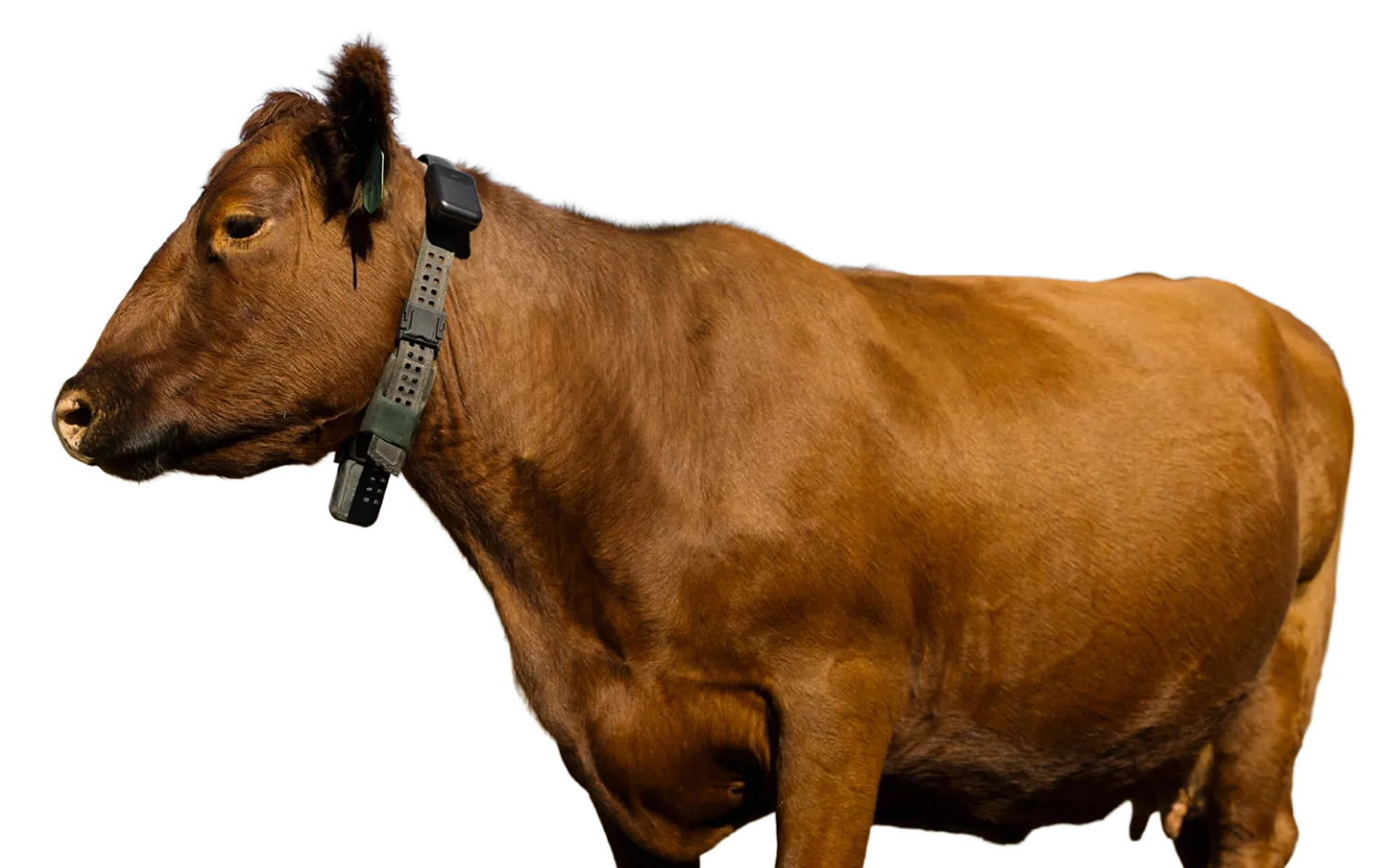
Each animal wears a lightweight, ruggedized collar equipped with high-precision GPS, an accelerometer, and a low-power long-range radio. The collar’s solar panel ensures maintenance-free operation without battery swapping. Onboard processors deliver real-time position tracking, activity classification, and localized decision-making even in patchy cellular connectivity environments.
3.2 The Cowgorithm™ AI Platform
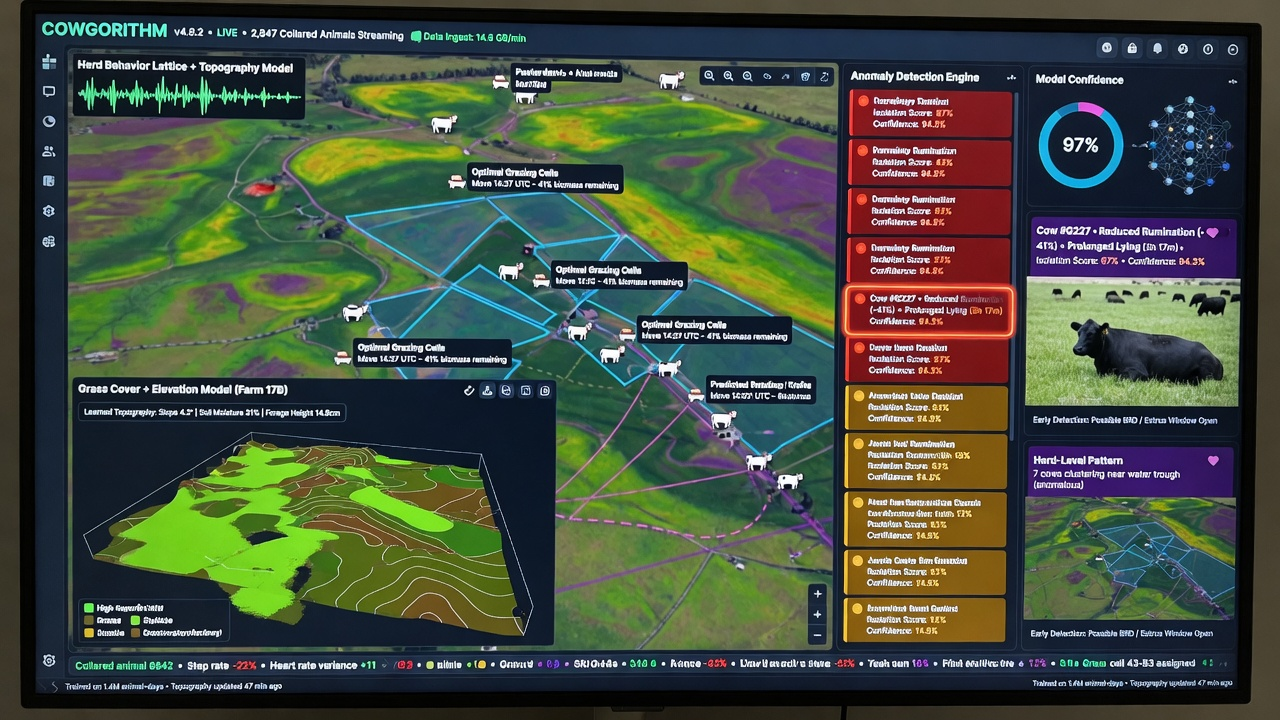
At the system’s core is the "Cowgorithm," a deep learning platform that ingests streaming data from every collared animal. It models individual and herd-level behavior patterns, learns the topography and grass cover of each farm, and calculates optimal grazing cells and movement timing. The Cowgorithm’s predictive analytics layer flags anomalies—such as reduced rumination, prolonged lying times, or isolation from the herd—with high accuracy, enabling early disease and estrus detection.
3.3 Virtual Fencing and Guidance
The system’s most revolutionary feature is its non-physical boundary and cueing mechanism. A farmer can draw a virtual fence line on a digital map. As an animal approaches the boundary, the collar emits a graduated audio warning; if the animal continues, a harmless vibration is applied. Through rapid associative learning (typically 4–5 exposures), cattle learn to respond to the audio cue alone, staying within invisible paddocks. For herding, the collars issue directional cues that guide the herd to a new location, such as a milking shed or fresh pasture break, without any human presence. This enables fully autonomous rotational grazing.
3.4 Data Integration and Farm Management
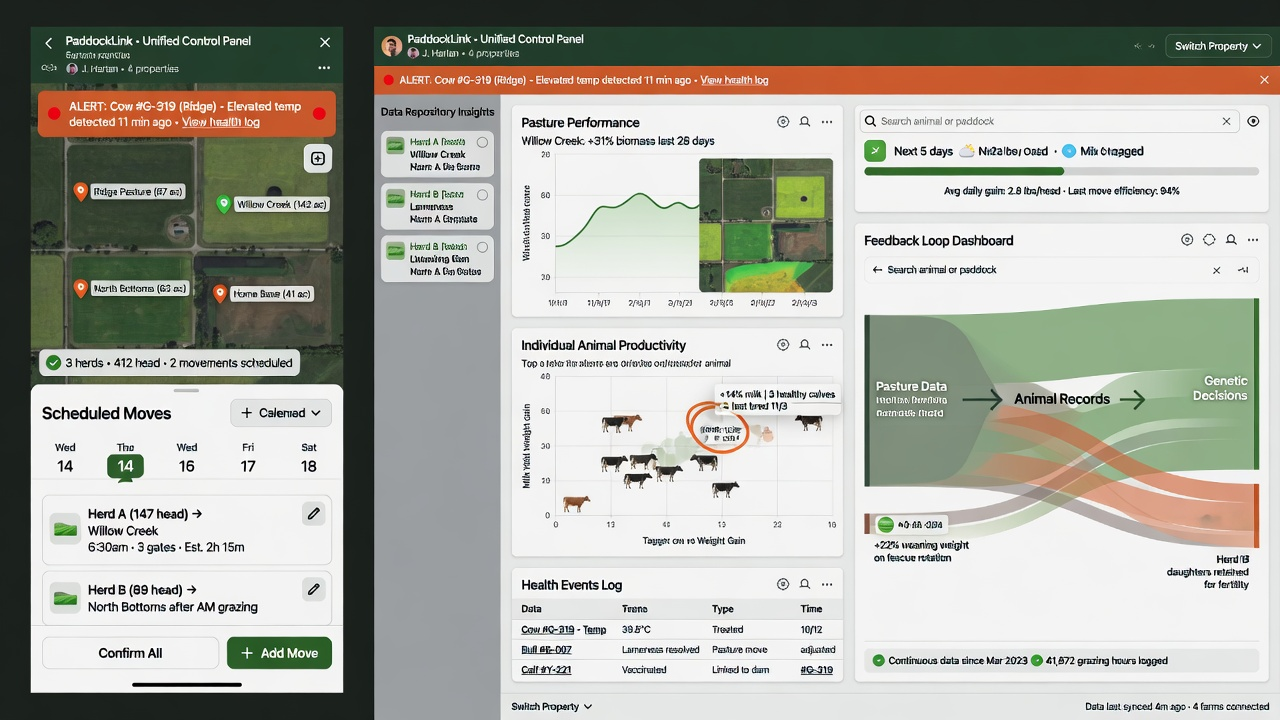
The mobile and desktop app provides a unified control panel. One farmer can oversee multiple distinct farm properties, schedule herd movements days in advance, and receive instant alerts. The system accumulates a rich data repository linking pasture performance, individual animal productivity, and health events, creating a continuous feedback loop for genetic and operational decisions.
4. Operational Impact and Benefits
4.1 Labor Efficiency and Autonomous Herding
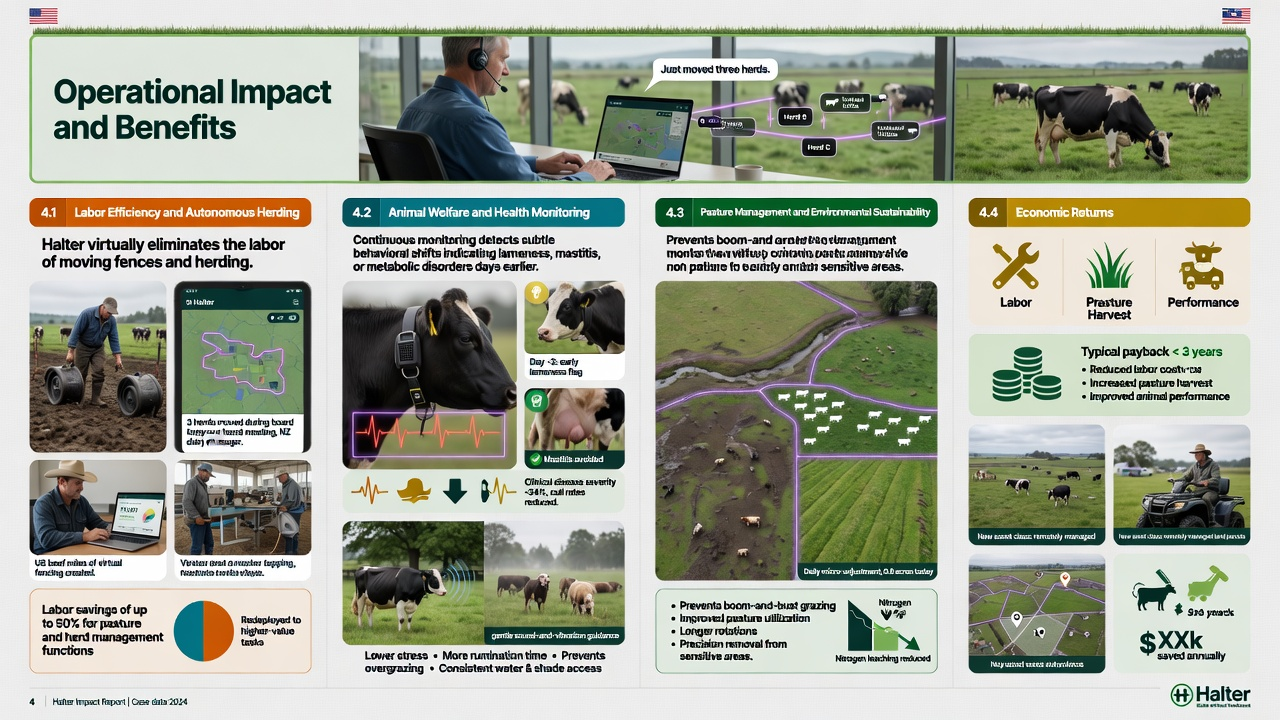
Halter virtually eliminates the labor of moving fences and herding. A New Zealand dairy manager can shift three separate herds to fresh pasture during a board meeting. US beef producers have generated over 11,000 miles of virtual fencing, redeploying staff from fence-building to higher-value tasks. The technology allows labor savings of up to 50% for pasture and herd management functions.
4.2 Animal Welfare and Health Monitoring
Continuous monitoring detects subtle behavioral shifts indicating lameness, mastitis, or metabolic disorders days earlier than visual observation. Case studies report a measurable reduction in clinical disease severity and cull rates. Crucially, the gentle nature of the sound-and-vibration guidance results in lower stress and greater time spent ruminating compared to traditional handling with dogs and vehicles. The system also prevents overgrazing and ensures consistent access to fresh water and shade.
4.3 Pasture Management and Environmental Sustainability
Virtual fencing allows daily micro-adjustments to grazing cell size and shape, matching animal demand precisely to pasture supply. This prevents the "boom and bust" grazing pattern that degrades swards and increases nutrient runoff. Farms report improved pasture utilization rates, longer grazing rotations, and a documented path to reducing nitrogen leaching by enabling precision removal of animals from sensitive areas.
4.4 Economic Returns
The value proposition rests on three pillars: reduced labor costs, increased pasture harvest (through more frequent, accurate allocations), and improved animal performance. While individual farm results vary, the company reports typical payback periods of under three years. The system’s ability to enable remote management also unlocks a new asset class for investors and allows experienced farmers to scale operations across multiple disjointed land parcels without proportionally increasing headcount.
5. Deployment Scale and Commercial Validation
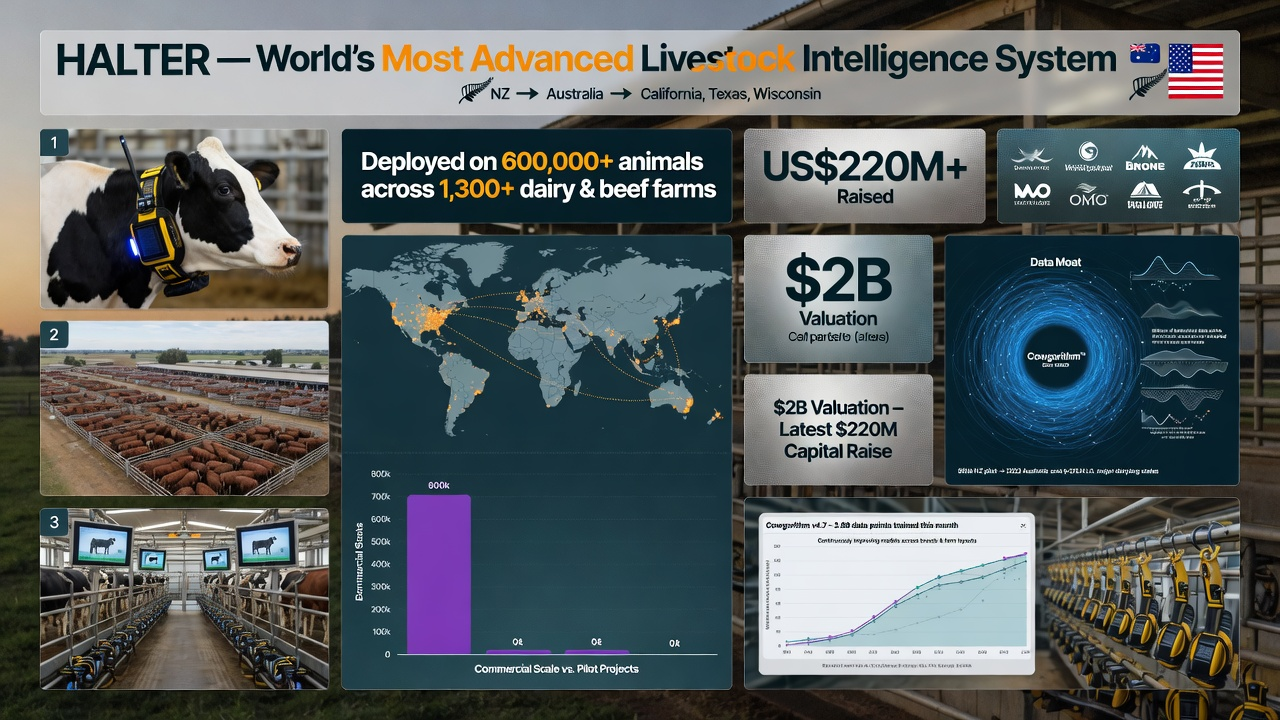
Halter’s claim as the world’s most advanced system is underpinned by its commercial scale, a rarity in a sector dominated by pilot projects. To date, the technology has been deployed on over 600,000 animals across more than 1,300 dairy and beef farms. The company’s rapid expansion from New Zealand into Australia and major U.S. dairying states demonstrates the system’s adaptability to different breeds, farm layouts, and management styles. Investor confidence is reflected in over US$220 million raised. A $220 million capital raise, at a $2 billion valuation, provides the foundation to drive hardware refinement and global growth. This scale creates a data moat: the "Cowgorithm" learns from billions of behavioral data points, continuously improving its models.
6. Comparative Analysis with Conventional and Alternative Systems
| Feature | Conventional Farming | Monitoring-Only PLF (e.g., bolus, collars) | Halter Autonomous System |
|---|---|---|---|
| Herd Movement | Manual (dogs, vehicles) | Manual | Autonomous, phone-directed |
| Fencing | Physical, fixed | Physical, fixed | Virtual, dynamic |
| Health Detection | Visual, episodic | Sensor-based alerts | Sensor-based alerts + behavioral context |
| Labor Profile | High, routine physical | Medium, requires response labor | Low, strategic oversight |
| Scalability | Limited by labor and land | Limited by labor response | High, centralized remote management |
Other virtual fencing solutions exist, but none rival Halter’s integration of autonomous herding commands, a unified animal health and grazing platform, and a proven at-scale commercial footprint. Competitors often focus purely on containment, lacking the two-way movement guidance that fully replaces manual labor.
7. Future Directions
The roadmap for Halter points toward deeper autonomy. Integration with autonomous milking rotary systems and robotic feed pads will allow fully unattended "cow traffic" from pasture to production. Enhanced on-collar sensors are anticipated to add body temperature and rumen motility monitoring. On the environmental front, integration with satellite-based pasture measurement and methane-tracking systems will allow per-cow carbon footprinting and automated carbon-optimized grazing. The company’s entry into the US market signals an ambition to become the de-facto operating system for pastoral livestock farming globally.
8. Conclusion
Halter has successfully commercialized a system that transforms livestock farming from a labor-intensive, reactive practice into a precise, proactive, and remotely managed enterprise. Its fusion of behavioral science, robust solar-powered hardware, and a scalable AI platform has achieved a level of autonomous operation and commercial adoption unmatched by any other solution worldwide. As the agricultural industry seeks sustainable pathways to feed a growing population with a constrained labor force, Halter stands as the definitive leading edge—a working blueprint for the farm of the future.
This white paper is prepared for informational purposes and reflects data and deployments reported as of early 2026. For specific technical specifications or on-farm case study data, direct engagement with Halter is recommended.