
1850 – The Vibe in America: The Fugitive Heart
America in 1850 was a country running headlong into its own vastness, already certain of its greatness and yet terrified by the sound of its own conscience, which beat like a fugitive’s heart against the floorboards of every law it had made.
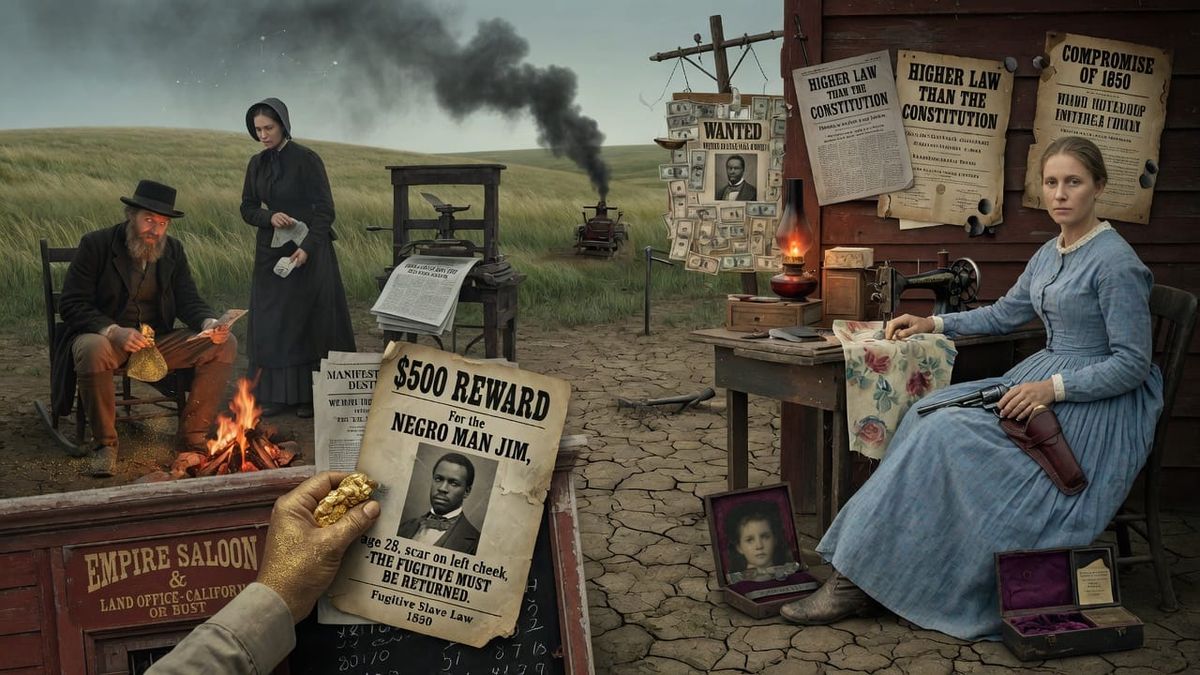
A Cultural Portrait
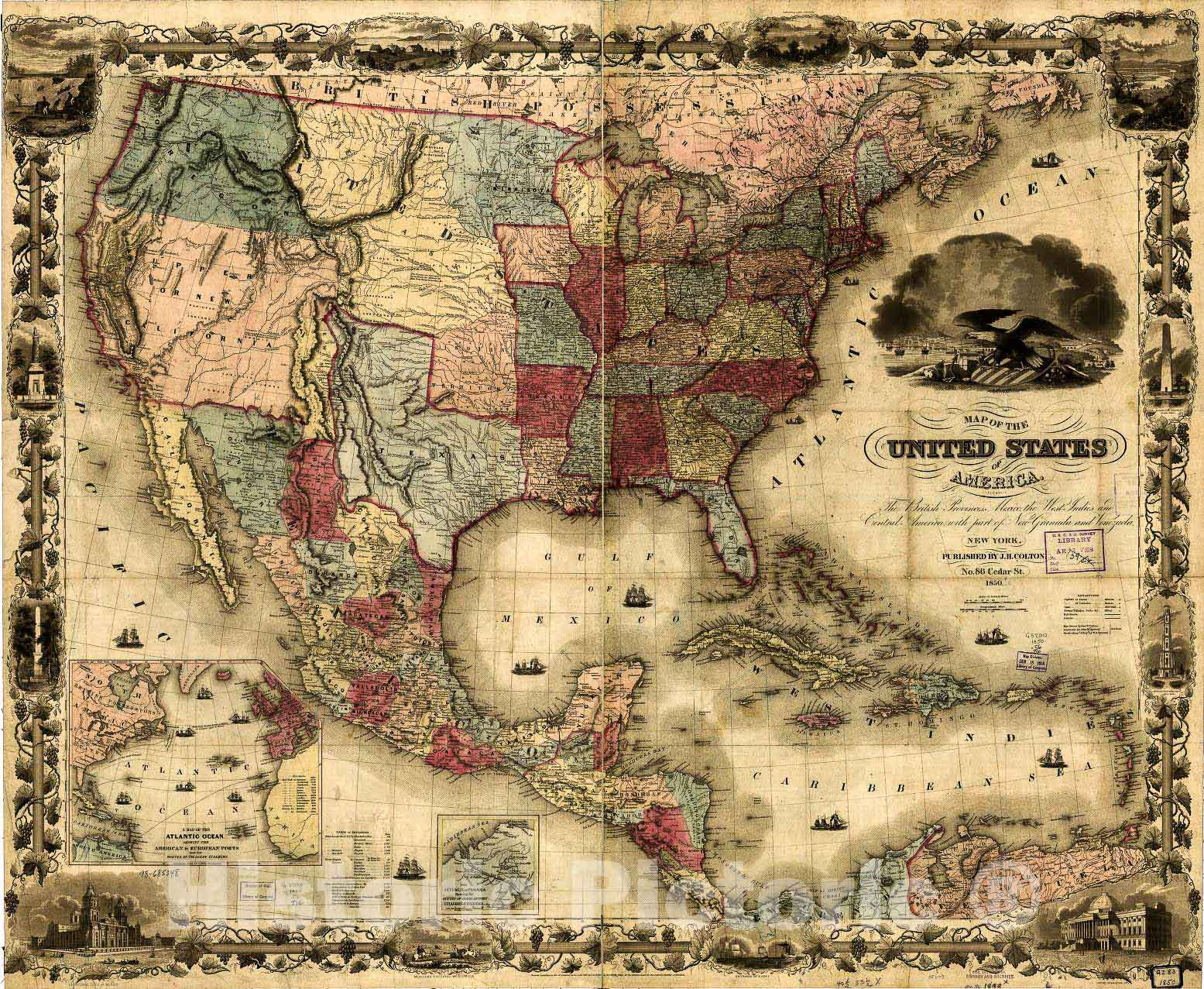
In 1850, the United States does not breathe—it holds a lungful of hot, metallic air and waits to see which way the scales will tip. The year is a long wince. Every certainty is double-jointed: liberty is a statute with a bounty clause, expansion is a grave-digging, and the scream of a locomotive whistle sounds exactly like a promise and a threat wound into one shriek. The country has just swallowed half of Mexico and is now suffering the indigestion of that feast, trying to digest gold, desert, and the question of human chattel all at once. California rushes into the Union as a free state, a fistful of glittering Sierra silt thrown onto the delicate scale, and the whole political apparatus shudders in response. The feeling is not anticipation, but a low, thrumming terror dressed in the sober broadcloth of compromise.
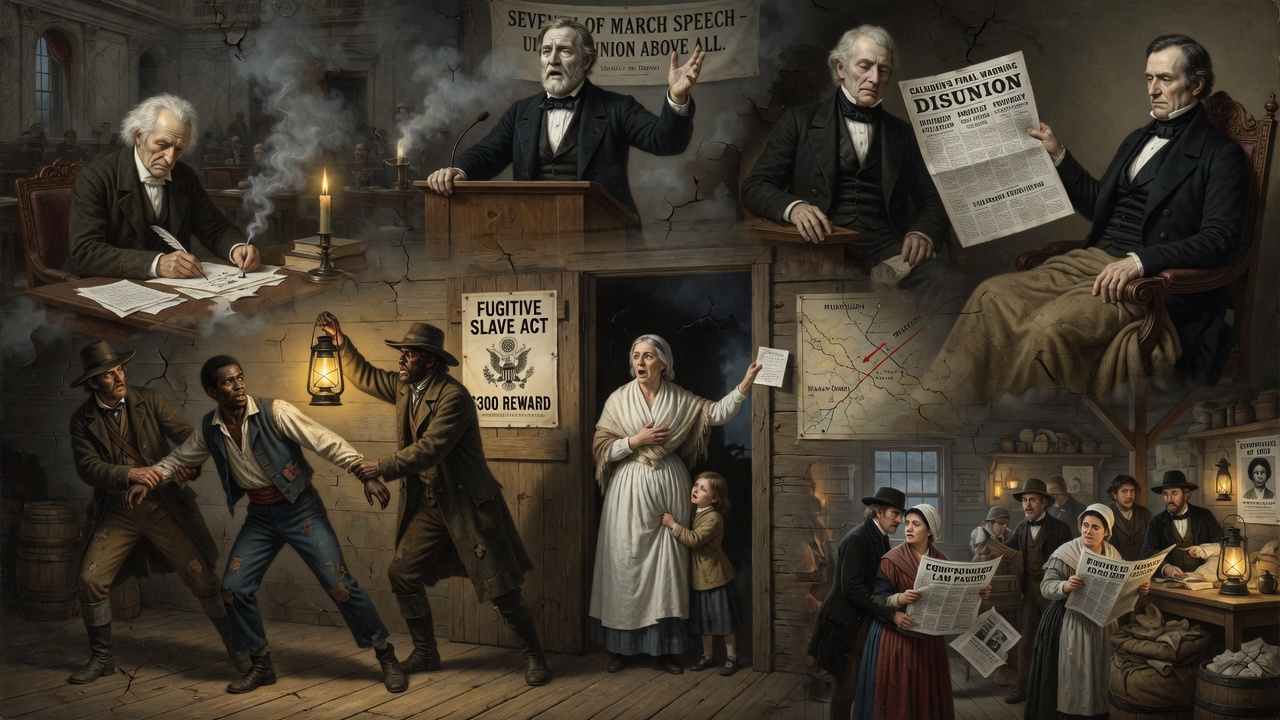
You hear this tension most clearly in the arguments, which are no longer confined to the marbled Senate chamber but spill into every post office, general store, and farmhouse kitchen. Henry Clay, a ghost already haunting his own body, patches together a set of measures that are less a treaty than a tourniquet, and Daniel Webster rises on the Seventh of March to place the Union above his own abolitionist sympathies, his voice a granite idol crumbling into sand. John C. Calhoun, too weak to speak, has his final warning read aloud—a prophecy of disunion delivered from a chair, like a curse from a dying oracle. But it is the Fugitive Slave Act, signed into law in September, that transforms politics from a spectator sport into a visceral bodily intrusion. Suddenly, the law reaches into free-state bedrooms and barns, deputizes the bystander, and turns every Black body into a walking piece of disputed property. The scent of the hunt crosses the Mason-Dixon line, and the nation learns a new sensation: the intimate, stomach-churning knowledge that justice now wears the face of a slave-catcher’s lantern moving through the dark.
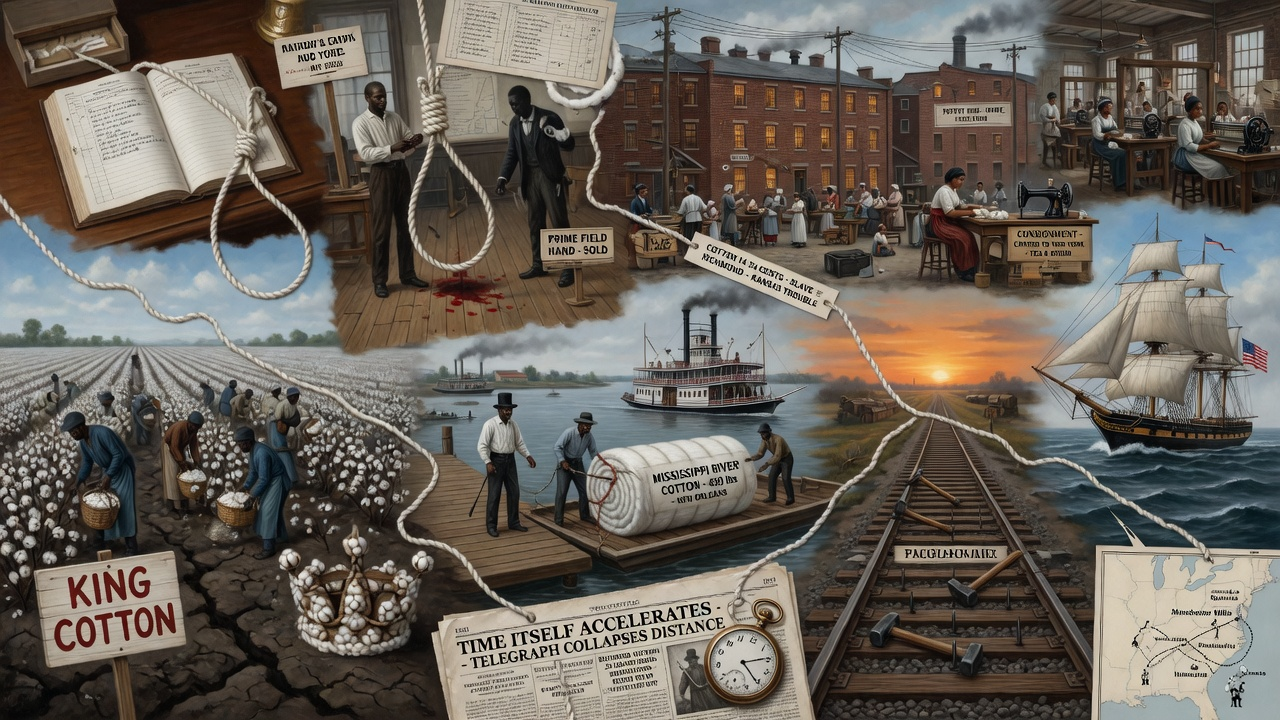
This brutal legal architecture is built on an economic one, and the economics are all movement. Cotton is king, and his subjects toil in a kingdom of rich, black soil that stretches from the Carolinas to the new territories. The bale that leaves a Mississippi dock is the same bale that feeds the spindles of Lowell, Massachusetts, and the mills of Manchester, England; the thread that stitches a planter’s wealth to a factory owner’s ledger also sews a noose around the throat of the enslaved. In the North, the machine age is accelerating: Elias Howe’s sewing machine clicks in tenement windows, the telegraph’s copper nerves pulse with crop prices and political dispatches, and the railroad ties are laid down like the rungs of a fever dream stretching toward the Pacific. The clipper ship Sea Witch can ghost from Canton to New York in seventy-four days, bringing tea and opium and a sense that the world is shrinking into a marketplace. Time itself feels faster now, because the telegraph collapses distance into an instantaneous spark, and a man in Baltimore can know the price of a slave in Richmond before the blood on the auction block has dried.
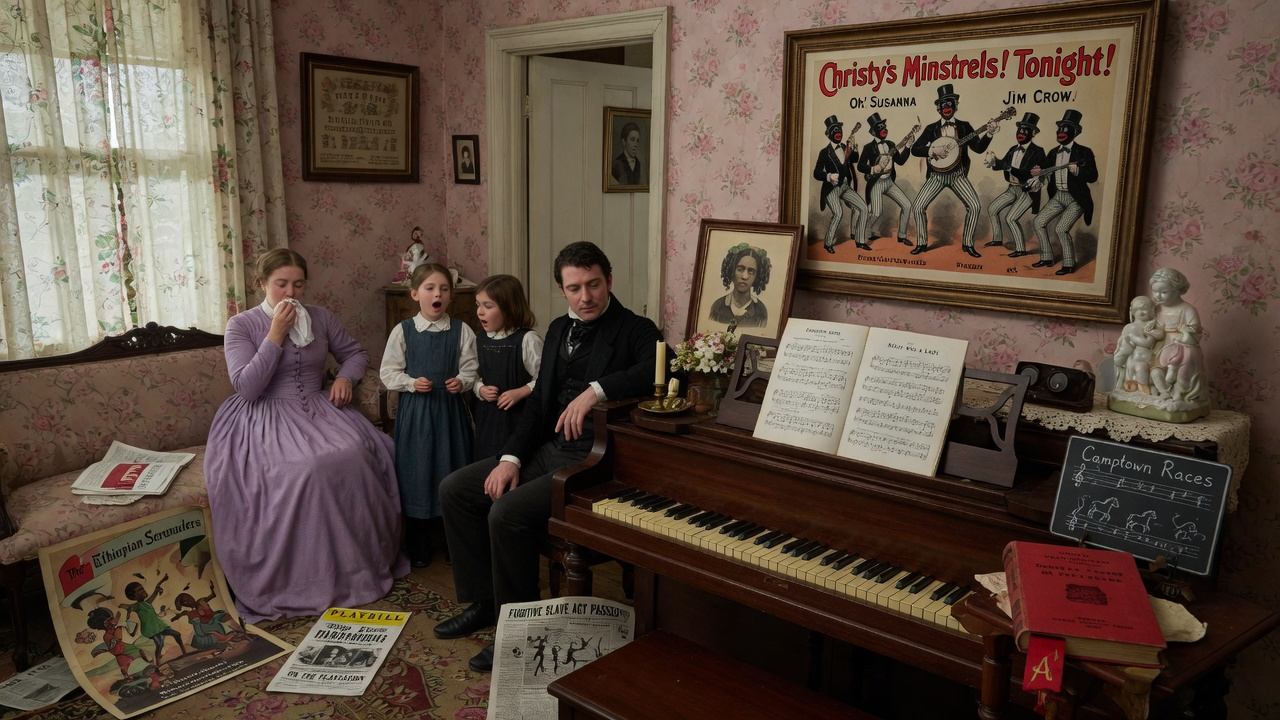
To calm the tremors of this world, the people turn to a culture of extravagant sentimentality and jarring dissonance. In the parlor, the piano is a shrine, and Stephen Foster’s newest melodies—"Camptown Races" hummed by a thousand schoolchildren, "Nelly Was a Lady" mourning a Black woman in language that is both tender and grotesquely appropriative—drift through lace curtains and settle in the hearts of families who will never see a plantation. This is the year Nathaniel Hawthorne publishes The Scarlet Letter, a novel that peels back the Puritan past to reveal an adulteress’s shame and a minister’s secret guilt, and its true subject is the same hidden sin gnawing at the nation: the way a community brands and devours its own conscience. In the theaters, minstrel shows are at the height of their appalling popularity, white men blackening their faces with burnt cork to perform a pantomime of joyful, brainless servitude while enslaved people are running toward swamps and northern stars. The nation’s favorite entertainment is a lie it tells itself about the people it holds in chains, a lie so pervasive it becomes a rhythm you can dance to.
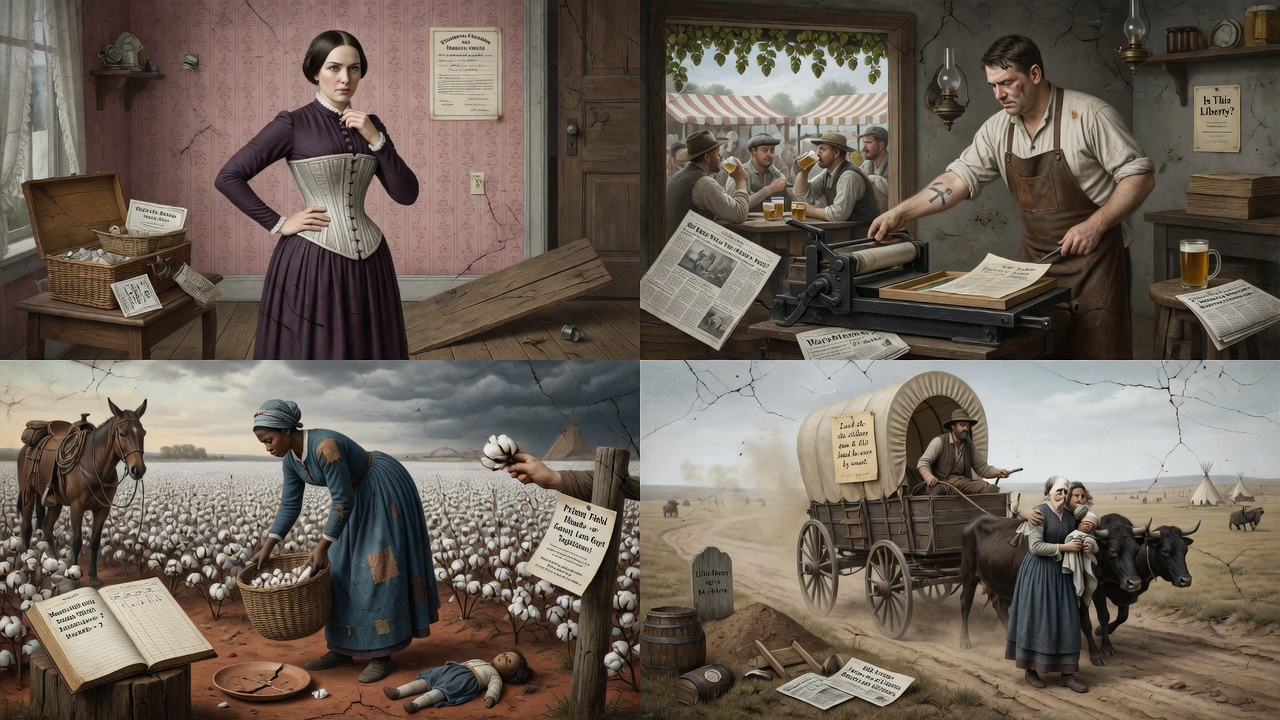
Daily life is a study in how to stand upright while the floor tilts. For a woman, the day is shaped by whalebone and duty: her corset is a cage of self-restraint, her world legally an extension of her husband’s, yet the echoes of Seneca Falls from two years earlier still hum in certain gatherings, a whispered declaration that she too possesses an inalienable self. For the free workingman in a northern city, the day is a span of hours at a machine or a printing press, a pint of lager in a beer garden, and the growing suspicion that wage labor might be just another name for a different kind of bondage. For the enslaved, the day is an unbroken calculus of survival, a bodily negotiation with the lash, the ledger, and the ever-present threat of sale that can shatter a family like a dropped plate. And for the westward migrant, lurching in a wagon over the Platte, the day is dust and axle grease and a prayer that the cholera will pass them by—a belief that the future is a piece of land you can patent with your own sweat, even if it was already somebody else’s home.
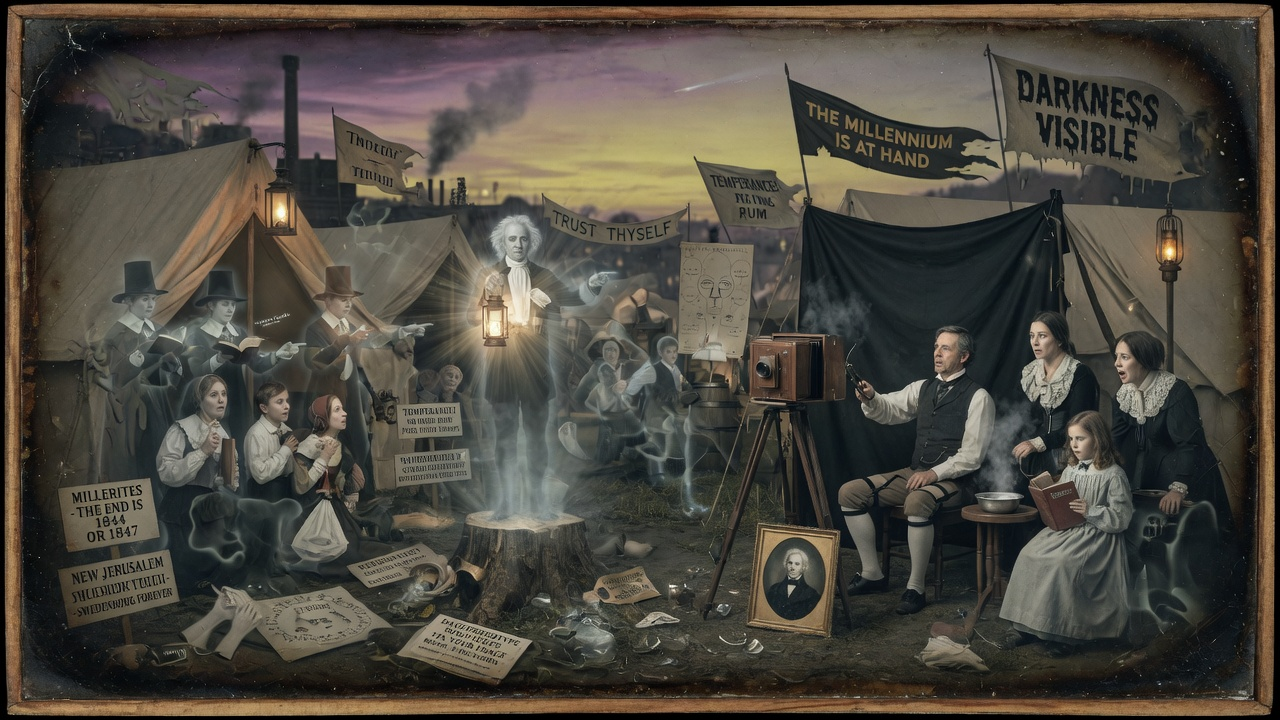
Spiritually, the country is a camp meeting of contending ghosts. The old Puritan God has been diluted by the watery optimism of Transcendentalism, Emerson urging men to trust their inner light even as the external world grows darker, while the Second Great Awakening has left a landscape strewn with new denominations, each one certain of its own millennium. There is a fervent belief in progress—in phrenology, in hydropathy, in the perfectibility of society through temperance and moral reform—but it jostles against a deepening dread. The daguerreotype, that miracle of silver and mercury vapor, captures faces in exquisite, permanent detail, and perhaps that is the truest gesture of the age: an urgent attempt to fix an image, to hold a person still, before the motion of events carries them away.
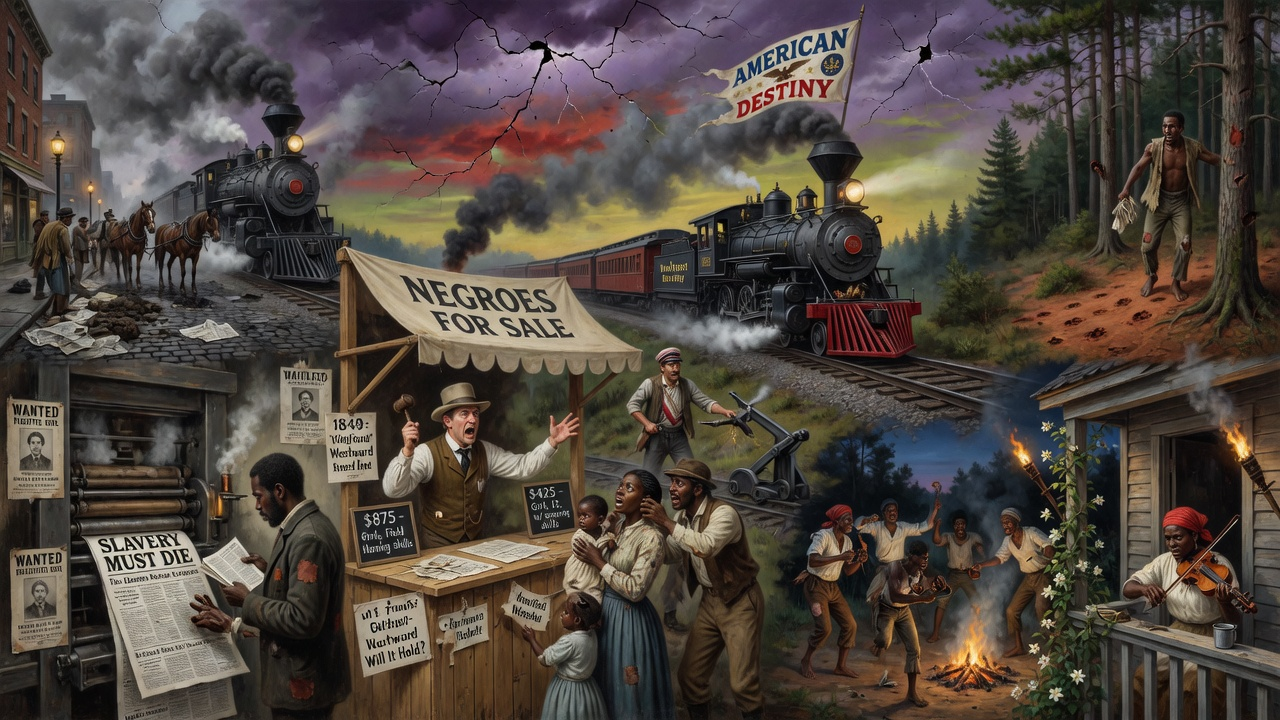
The sensory world itself is an overloaded canvas. It smells of coal smoke and horse dung in the city, of pine sap and raw earth on the frontier, of sweat and jasmine on a southern porch. It sounds like the clatter of a printing press churning out a new edition of The Liberator, the metallic click of a railroad switch, the soft brush of a fugitive’s bare feet on a forest floor, the fiddle and bone-castanet rhythm of a slave quarter’s midnight dance, the auctioneer’s chant reducing a human being to a dollar amount. The national mood is a paradox: a brash confidence in the destiny written in the sky, undercut by a panicked suspicion that the writing might actually be a fissure opening in the firmament. To be alive in 1850 is to feel the future coming at you like a locomotive with no brakes, and to not know whether you should raise your hand to wave it on or cover your face and weep.
Underlying Theme
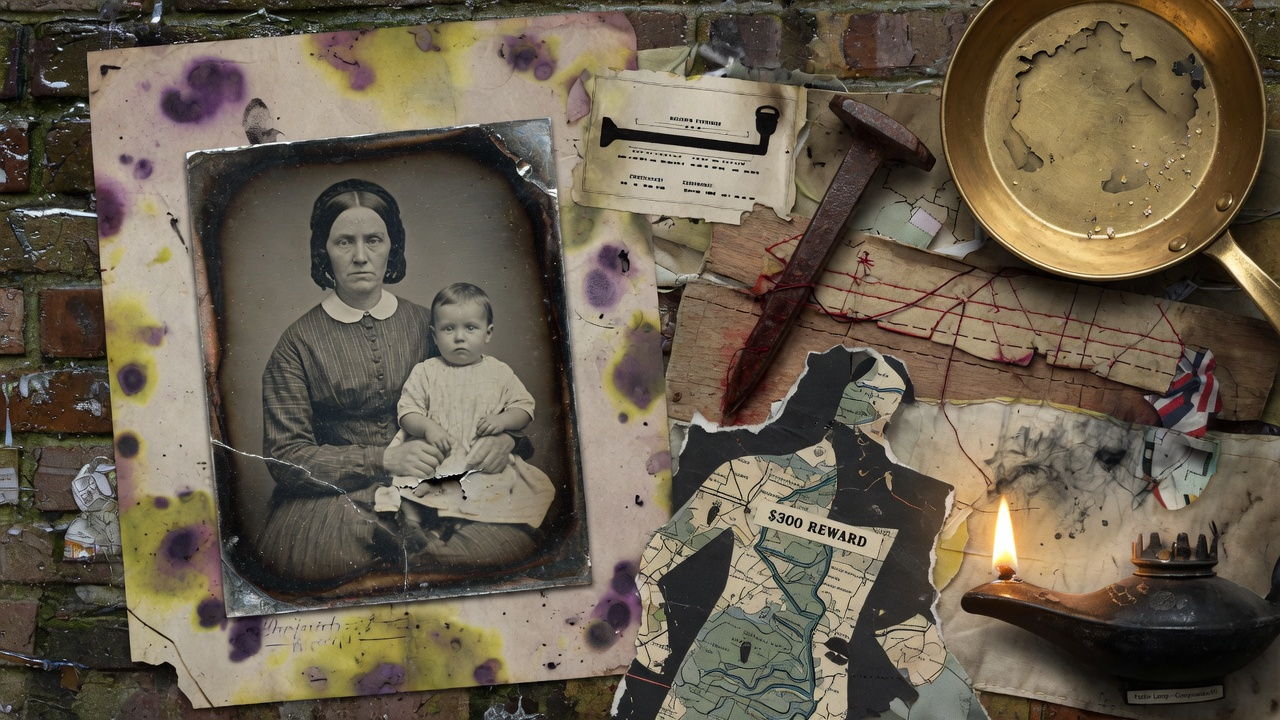
The color of a bruise forming beneath the skin of the Union: purple and yellow and the dull grey of a Senate frock coat. The texture of a wanted poster pasted to a damp brick wall, ink still sticky as a wound. The glint of a gold pan catching nothing but mountain light. The sound of a telegraph key tapping out cotton futures, the clicks like a nervous heartbeat in a quiet post office. The smell of whale oil burning in a parlor lamp, a sweet and smoky compromise against the dark. A daguerreotype of a mother and child, their faces silvered and still as a held breath, one of them about to be sold. The archetype of the Compromiser, stitching a quilt that will never hold warm. The archetype of the Fugitive, whose body is a map of contraband paths. The symbol of a railroad spike driven into a new tie, piercing the continent like a needle through a nerve.
In One Sentence
America in 1850 was a country running headlong into its own vastness, already certain of its greatness and yet terrified by the sound of its own conscience, which beat like a fugitive’s heart against the floorboards of every law it had made.