A Critical Examination of the Perceived Deficiencies in WNBA Officiating: Structural, Cognitive, and Sociocultural Dimensions
WNBA officiating problems reflect a stressed system shaped by underinvestment, a flawed rulebook, cognitive bias, and sociocultural pressure. Fixing it requires professionalized refs, rebuilt rules, data transparency, and treating officiating as a strategic asset.
Abstract
The perceived incompetence of officiating in the Women’s National Basketball Association has become a dominant narrative among players, coaches, media, and fans, threatening the league’s legitimacy and growth. This report deconstructs the phenomenon not as a simple matter of individual referee error but as the emergent property of a complex interplay of structural, cognitive, and sociocultural forces. It examines the historical resource constraints that shaped a part-time officiating workforce, the misalignment between a rulebook inherited from the men’s game and the distinct physicality of women’s basketball, the universal cognitive biases that afflict all sports officials, and the amplifying effect of gender and racial stereotyping. By synthesizing research from sports science, social psychology, and organizational behavior, the report argues that the officiating crisis is a systemic problem requiring holistic reform rather than a problem of individual incompetence. The analysis situates WNBA officiating within a broader ecosystem of underinvestment, inadequate training feedback loops, and a media environment that exploits controversial calls, concluding with evidence-based pathways toward improvement that address root causes.
Introduction
A persistent and corrosive belief haunts the WNBA: that the officiating is not merely occasionally flawed but fundamentally, structurally, and unacceptably bad. This perception is not confined to partisan social media accounts; it echoes in post-game press conferences where head coaches risk fines to levy pointed critiques, in player union statements demanding accountability, and in mainstream sports commentary that frames botched calls as existential threats to the league’s credibility. High-profile incidents, such as a decisive missed call in the closing seconds of a WNBA Finals game or a series of technical fouls assessed for gestures as benign as clapping, crystallize the outrage and lend it an air of objective truth. Yet officiating error is a universal feature of sport. The question is why the WNBA is uniquely defined by its perceived failure, and what specific mechanisms produce the spectacle of error that fans and stakeholders find so galling. This report undertakes a comprehensive, multi-level analysis to answer that question, moving beyond anecdote to investigate the structural, cognitive, and cultural architectures that render the officiating product vulnerable to the charge of being “so bad.”
Historical Underpinnings and Resource Asymmetries
The roots of the contemporary officiating crisis lie in the league’s founding conditions. Launched in 1997 as a single-entity venture backed by the NBA, the WNBA was an entrepreneurial experiment in women’s professional team sports, not a lavishly capitalized institution. Every operational aspect, including officiating, was built on a model of fiscal minimalism. For the majority of its existence, WNBA referees were part-time independent contractors, earning per-game fees that paled in comparison to their NBA counterparts and lacking the salaried, year-round professional structure that defines elite sports officiating. This economic reality shaped the entire pipeline of talent acquisition, training, and retention. The pool of available officials was drawn heavily from the collegiate and high school ranks, many of whom officiated men’s and women’s games indiscriminately to assemble a livable income. Consequently, specialization in the women’s game was rare, and career progression did not incentivize deep, league-specific expertise.
While the NBA invested heavily in a dedicated referee operations department, a state-of-the-art replay center, and continuous professional development, the WNBA’s officiating infrastructure remained comparatively threadbare. The league lacked a robust minor-league or development system that could serve as a proving ground for officials, meaning that referees often learned the nuances of the professional women’s game while on the job, under the brightest lights. The transition to full-time officials, a landmark reform finally implemented in recent years, was belated and remains incomplete in its cultural integration. This historical legacy means that the officiating workforce today is still overcoming a decades-long deficit in institutional knowledge, mentoring, and systematic performance feedback. The specter of amateurism in a professional league generates a performance ceiling that manifests as inconsistency, poor game management, and a perceived lack of feel for the flow and physicality of the women’s elite game.
The Rulebook as a Source of Mismatch
A central, yet underappreciated, source of officiating dysfunction is the very rulebook that referees are sworn to enforce. The WNBA operates under a set of playing rules that, despite periodic modifications, remains substantially modeled on the NBA framework. This inheritance creates a profound interpretive burden because the athletic execution of those rules by female bodies produces a qualitatively different game. The geometry of the court is identical, but the physics of player movement, collision, and spacing diverge significantly. Female athletes, on average, generate less absolute vertical explosiveness and horizontal closing speed, altering the timing and visual signature of fouls, blocks, and charges. A marginal contact that would constitute a defensive foul in the men’s game due to the greater momentum of the players involved may look dramatically different when performed by women, yet officials are asked to apply a binary standard derived from a men’s athletic context.
The league’s explicit emphasis on “freedom of movement,” articulated as a point of officiating emphasis to increase scoring and aesthetic flow, exacerbates the mismatch. Referees are instructed to penalize hand-checking, bumping cutters, and restricting off-ball movement with a low tolerance. However, the women’s game is characterized by a physicality grounded in leverage, lower body strength, and positional wrestling, rather than the high-velocity perimeter collisions of the NBA. When officials strictly enforce a freedom-of-movement doctrine designed for a faster, more aerial game, they risk fragmenting the natural physical rhythm of a WNBA contest into a parade of whistles. The resulting foul trouble, especially on star post players, infuriates coaches and fans who perceive the standard as alien to the game’s true nature. Conversely, when officials attempt to “let them play” to preserve flow, they can miss genuinely restrictive defensive contact, creating an inescapable inconsistency. The rulebook thus operates not as a neutral arbiter but as a structural mismatch that forces officials into an impossible hermeneutic task, amplifying the perception of incompetence with every whistle that seems to misread the game’s physical poetry.
Cognitive Biases and the Psychology of Officiating Error
Beneath structural conditions, universal cognitive mechanisms that affect all sports officials are intensified in the WNBA environment. Refereeing demands real-time decision-making under conditions of extreme perceptual uncertainty and high consequence. Research in sports officiating psychology has firmly established that officials rely on heuristics, such as the “representativeness heuristic,” where a play is judged by how closely it resembles a prototypical foul, and the “availability heuristic,” where recent or vivid incidents shape judgment. In the WNBA, a style of play that features more lateral movement, intricate post positioning, and continuous off-ball grappling creates a stream of ambiguous stimuli that resist easy classification. The prototypical foul image in many officials’ mental libraries may be subconsciously calibrated on the men’s game, where a charge or block has a distinct kinematic signature. When a WNBA collision does not match that template, officials must deploy slower, more deliberative cognition, increasing the probability of error and, crucially, inconsistency between individual officials with different internal models.
The phenomenon of “inattentional blindness” is another factor. WNBA officials, like all referees, must monitor ten players in a complex dynamic environment. Research demonstrates that when attention is focused on the ball or a primary matchup, officials can literally fail to see a secondary infraction occurring in peripheral vision. The women’s game, with its emphasis on ball movement, screening actions, and off-ball motion, maximizes the cognitive load in precisely the way that induces inattentional blindness. When a crucial off-ball foul away from the ball is missed, the broadcast replay exposes the error with a clarity that the official’s attentional system could not access in the moment. The home crowd bias, well-documented across sports, is also operative. The social pressure of a partisan arena subtly shifts officials’ threshold for calling fouls in favor of the home team, particularly in ambiguous situations. In the WNBA, where crowds are smaller but intensely invested, this dynamic can be especially pronounced, contributing to league-wide perceptions of uneven treatment.
The “gambler’s fallacy” and “make-up call” phenomenon further erode perceived competence. Aware of an earlier mistake, an official may unconsciously compensate on a subsequent possession, creating a cascade of problematic calls that undermine the integrity of the contest. This pattern is particularly toxic in the WNBA, where one bad call often metastasizes into a series of compensatory decisions, inflaming players and coaches who sense that the game is being managed rather than officiated. The cognitive system of the official, working without the benefit of instantaneous, multi-angle replay on most decisions, becomes a generator of apparent randomness, a state that players interpret as either malice or profound inadequacy.
The Sociocultural Dimension: Gender, Race, and Authority
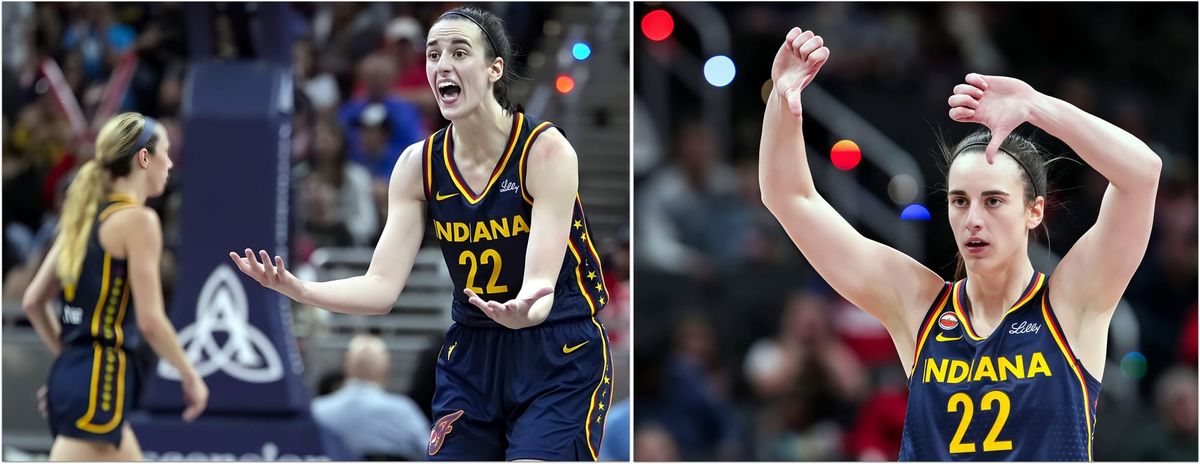
Officiating does not occur in a cultural vacuum. The WNBA operates at the intersection of gender, race, and sexuality, and these dimensions profoundly shape how officials perceive players, how players react to officials, and how the viewing public interprets those interactions. A substantial body of scholarship on implicit bias in sports indicates that referees, like all individuals, can be influenced by stereotypes related to race and gender, especially under cognitive load. In the WNBA, where the majority of players are Black women, officials must navigate a landscape layered with stereotypes about assertiveness, emotionality, and athleticism. The same gesture of frustration that might be interpreted as acceptable competitive intensity in a men’s league can be coded as “unsportsmanlike” or “confrontational” when performed by a female athlete, particularly a Black woman. This leads to an array of technical fouls that fans perceive as capricious, tone-policing, and fundamentally disrespectful to the players’ emotional experience of the game.
The authority dynamic is further complicated by societal scripts about gender and power. Male officials, who historically constituted the overwhelming majority of the WNBA officiating corps, are positioned within a patriarchal structure that can unconsciously cast female players as needing more stringent behavioral control. Even when female officials are present, they operate within the same internalized cultural frameworks. The result is a body of officiating that appears disproportionately punitive toward emotional expression that deviates from a narrow band of quiet stoicism. The league’s own emphasis on “respect for the game” as a point of emphasis, while well-intentioned, can be weaponized as a tool of suppression, leading to a bewildering pattern where clapping in frustration, tossing the ball to an official rather than handing it, or a momentary facial expression of disbelief becomes a technical foul. These incidents, shared widely on social media, crystallize the narrative that officiating is not simply error-prone but actively hostile to the players’ humanity.
Racial dynamics compound the problem. International research on referee bias has demonstrated that officials in various sports tend to call more fouls against players of a different racial background. In a league where the player population is predominantly Black and the officiating roster, while diversifying, has long been majority white, the potential for cross-racial perceptual bias is a deeply uncomfortable but necessary object of analysis. Even without conscious prejudice, the micro-level decisions about who initiated contact, who was out of control, and who embellished can be subtly skewed by racialized schemas of aggression. This layer of potential bias does not imply that officials are intentionally racist; rather, it points to the inescapable cognitive ecology in which fast, intuitive judgments are made. The perception of bias, even where intent is absent, is magnified when players see patterns that align with broader societal injustices, fueling a profound mistrust that corrodes the on-court relationship.
Structural Failures in Evaluation, Accountability, and Transparency
The machinery of officiating accountability in the WNBA has historically lacked the transparency and rigor necessary to build trust. For years, the league’s process for evaluating, grading, and disciplining officials was opaque, with limited public communication about corrective measures. Coaches and players expressed persistent frustration that they submitted play-by-play critiques with video evidence, only to receive generic responses, or no response at all. This information vacuum creates a space where the worst assumptions flourish; without credible evidence of internal accountability, the public infers that incompetence is tolerated or even protected. A formal system of last-two-minute reports, while eventually adopted, often served to highlight and confirm the very errors that had already enraged stakeholders, without an accompanying narrative of robust remediation.
The lack of a full-time professional structure for most of the league’s history meant that the levers of accountability were weak. A part-time official whose primary income came from other leagues could not be subjected to the same intensive, year-round training, physical conditioning standards, and performance improvement plans as a full-time NBA referee. Demotion or dismissal from the WNBA roster, while possible, was a lower-stakes proposition within a part-time workforce that already struggled with recruitment and retention. This created a permissive environment where substandard performance persisted across seasons because the cost of overhauling a fragile officiating ecosystem was perceived as too high. Even after the transition to full-time status, the cultural hangover of this era remains. The pipeline of new, high-caliber officials entering the WNBA is narrow, meaning that the same faces and the same patterns reappear, reinforcing the narrative of stasis.
The absence of a robust, transparent data-driven analysis of officiating patterns is another critical weakness. In elite sports, officiating performance can be benchmarked using tracking data to measure accuracy, positioning, and consistency relative to league-defined standards. While the WNBA has made strides in adopting player tracking technologies, the public-facing and stakeholder-facing deployment of such data to audit officiating quality is minimal. Without a common evidence base, discussions about officiating remain mired in anecdote and viral clip culture. The league’s own video rulebook and training clips are not integrated into a public accountability dashboard that shows error rates, improvement over time, or league-wide trends. This opacity cedes the narrative to those who accuse the officiating of being uniquely terrible, because the league has not provided the empirical tools to contextualize, compare, and improve.
Media Amplification and the Social Media Ecology
The contemporary perception of WNBA officiating is inseparable from the media environment in which it is consumed. The WNBA exists in an era where every possession is clipped, annotated, and disseminated within seconds. A controversial call is not just a moment in a game; it is a sharable artifact, often stripped of its full sequence, edited to maximize outrage, and amplified by players, fans, and journalists. This dynamic creates a powerful feedback loop: officials become hyper-visible, every mistake immortalized and aggregated into a catalog of apparent incompetence. Unlike the pre-social media era, where a bad call might be debated locally and fade, today’s ecosystem preserves and weaponizes error. The ratio of attention given to egregious mistakes versus the thousands of correct, invisible calls that constitute a typical game is wildly skewed, producing a false impression of an epidemic of failure.
This media dynamic is not merely a passive reflector but an active shaper of officiating behavior. Officials are human beings who consume media and are aware of the ridicule and criticism directed at their profession. Research on stereotype threat and performance under pressure indicates that awareness of a negative stereotype about one’s group can increase cognitive load and impair performance. When officials step onto the court already burdened by the meta-narrative that “WNBA officiating is a joke,” the anxiety of confirming that stereotype may paradoxically increase the very inconsistency and tightness that the narrative criticizes. A hyper-vigilant official, terrified of missing a freedom-of-movement violation or being perceived as losing control, calls the game tighter, which then generates more whistles, more stoppages, and more opportunities for visible error. The media ecosystem thus functions as a systemic stressor, degrading the cognitive performance of the very actors it judges.
Furthermore, the narrative of exceptionally bad officiating can become a convenient, all-purpose explanation for the league’s broader struggles, deflecting attention from other structural issues such as travel conditions, marketing, or competitive balance. Players and coaches, frustrated by a range of systemic inequities, may channel that frustration onto the most visible and immediate symbol of authority: the referee. The official becomes a scapegoat for a constellation of grievances, and the media narrative of catastrophic officiating provides a socially acceptable script for expressing anger that might otherwise be directed at league ownership or the commissioner’s office. This displacement, while psychologically understandable, further entrenches the cycle, making it increasingly difficult for officiating to be evaluated on its own, dispassionate terms.
Comparative Context and Pathways to Reform
Placing WNBA officiating in comparative context reveals both its unique challenges and the misleading nature of certain comparisons. NBA officiating, despite vastly greater resources, is also the subject of relentless criticism, with fans, players, and coaches routinely decrying an officiating crisis. The error rates in the NBA, measured by the league’s own last-two-minute reports, are not negligible. Yet the WNBA is perceived as distinctively worse, a perception driven partly by the higher visibility of its mistakes relative to its smaller inventory of games and the broader cultural disposition to scrutinize women’s sports more harshly. The critical difference is not necessarily the raw frequency of errors but the systemic resilience surrounding those errors. The NBA has built an institutional apparatus that absorbs and contextualizes mistakes: a deep referee pipeline, constant technological augmentation, and a media ecosystem that, while critical, also includes detailed exculpatory analysis by former officials. The WNBA possesses a thinner institutional cushion, so every error lands with a more damaging thud.
Reform must therefore be architectural rather than cosmetic. A full transition to a year-round, well-compensated, and professionally developed officiating cohort is a necessary foundation but not a complete solution. The league must invest in a dedicated WNBA officiating academy that recruits, trains, and immerses officials in the specific physical and tactical signatures of the women’s elite game from the earliest stages of their careers. This academy would not merely teach rules but would build the pattern-recognition libraries that enable rapid, accurate intuitive judgment in a female athletic context. It would incorporate cognitive training to mitigate implicit bias, manage the home crowd effect, and build resilience against stereotype threat. The league should pioneer a transparent, data-rich officiating dashboard, updated in real time, that tracks key performance indicators such as accuracy on block/charge calls, consistency of freedom-of-movement enforcement across quarters, and technical foul rates disaggregated by official, team, and player demographics. Such a system would transform the discourse from an unresolvable shouting match into an evidence-based conversation about standards.
Rulebook reform must be a collaborative endeavor with players and coaches at the center. A joint committee should be tasked with a fundamental review of playing rules, not to make the game easier to officiate, but to align the rulebook with the kinetic reality of the women’s game. This may mean redefining legal guarding position on drives to account for lateral quickness differences, revising the point of emphasis on marginal contact to reduce the foul burden on post defenders, and crafting a behavioral technical foul standard that respects the emotional expressiveness of players while maintaining order. The goal is a rulebook that feels native to the WNBA, not a borrowed language that requires constant translation.
Finally, the league must address the cultural dimension with a sustained, public commitment to diversity, equity, and inclusion within the officiating ranks themselves. A diverse officiating corps that reflects the demographics of the players is not a panacea for bias, but it alters the perceptual field and reduces the interpretive space in which accusations of systemic prejudice can fester. Coupled with mandatory, empirically grounded implicit bias training and a transparent misconduct review process, this can begin to rebuild the trust that is the essential lubricant of on-court interaction. The WNBA has long been a leader in social justice off the court; extending that ethos to the management of its own internal authority structures is both a logical and necessary evolution.
Conclusion
The perception that officiating in the WNBA is profoundly deficient is neither baseless nor a simple reflection of reality. It is an emergent signal of a system under duress, where historical underinvestment created a fragile workforce, a mismatched rulebook generated interpretive chaos, universal cognitive biases were amplified by unique game features, and sociocultural dynamics transformed every misjudgment into evidence of disrespect. The crisis is not reducible to a few bad referees; it is a property of the entire officiating ecosystem. Addressing it requires a holistic intervention that matches the league’s ambition: professionalizing and specializing the officiating pathway, redesigning the rulebook from the ground up, leveraging data for radical transparency, and confronting the subtle yet pervasive role of bias. Only by treating officiating as a core strategic asset rather than an operational afterthought can the WNBA dissolve the toxic narrative and allow the breathtaking athleticism of its players to command the spotlight it deserves. The path forward is demanding, but the cost of inaction is the continued erosion of trust in a league whose very identity is built on the pursuit of excellence and equity.