The Sports Psychology of Muay Thai
Muay Thai psychology shows performance emerges from a fighter’s cultural and spiritual world, not generic techniques. Ritual, identity, and embodied fear-shaping define agency, while future research must map how mind, body, and meaning co‑evolve across a fighter’s career.
Abstract
Muay Thai, the ancient combat art of Thailand, presents a unique confluence of physical brutality and profound cultural spirituality, offering a rich yet underexplored domain for sports psychology research. This report provides a comprehensive examination of the psychological dimensions inherent in Muay Thai competition and training. It explores the distinctive mental demands imposed by the sport’s full-contact nature, its diverse striking arsenal, and the ritualistic practices that frame every bout. The analysis delves into the cognitive and affective processes governing performance, including arousal regulation, fear management, aggression modulation, and the attainment of flow states. Further, it investigates the role of culturally embedded rituals such as the Wai Kru Ram Muay, the significance of the traditional Sarama music, and the psychological construction of the fighter identity. By synthesizing principles from mainstream sport psychology with the ethnographic particularities of Muay Thai, the report highlights how mental skills training, mindfulness, and culturally sensitive interventions can be tailored to this population. The findings underscore the necessity of viewing the Muay Thai athlete not merely as a combatant, but as an individual navigating a complex psychocultural landscape, with significant implications for coaching, mental health support, and the broader understanding of human performance under extreme duress.
Introduction
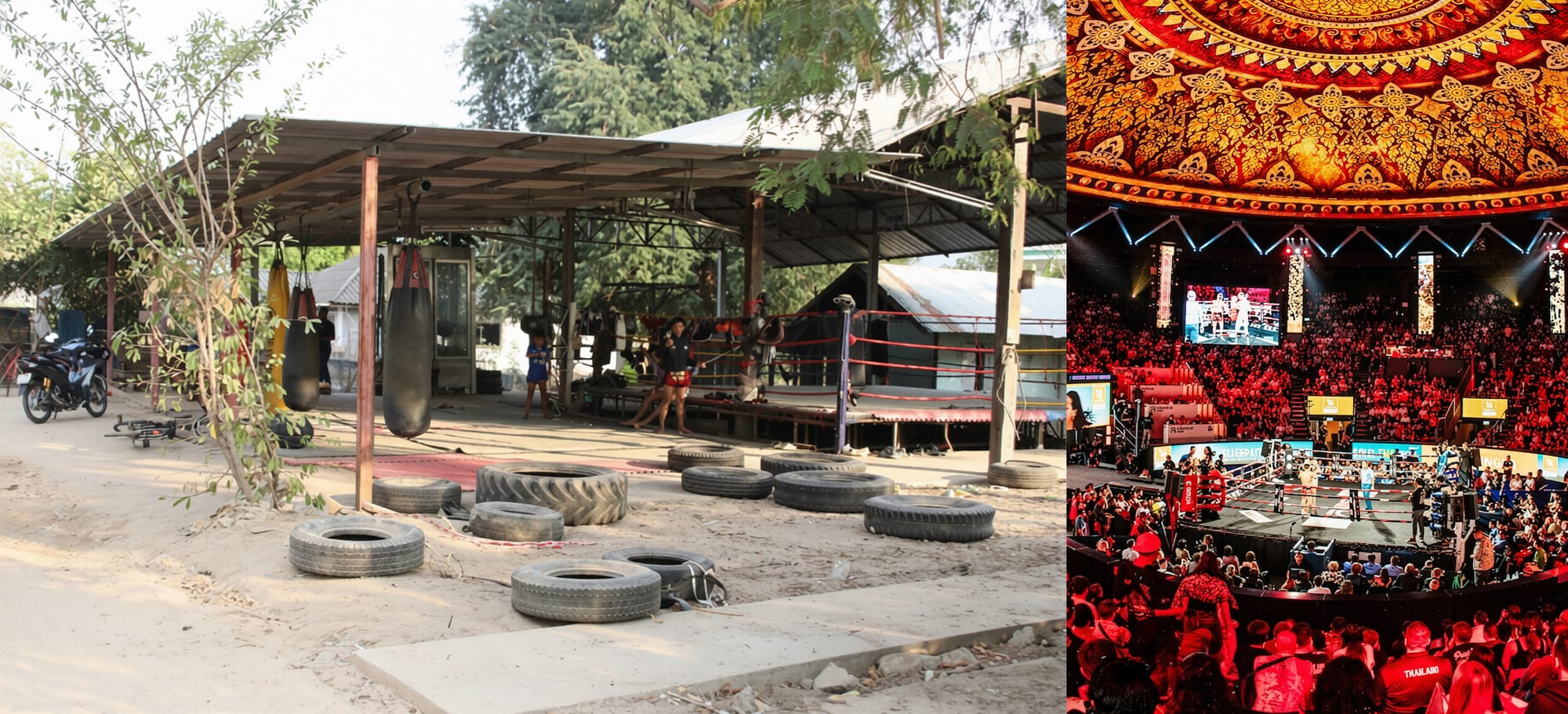
Within the global pantheon of combat sports, Muay Thai occupies a position of singular intensity. Known as the “Art of Eight Limbs” for its combined use of fists, elbows, knees, and shins, it demands a level of physical conditioning and pain tolerance that rivals, indeed, surpasses, any athletic discipline. However, the sport’s true depth extends far beyond the canvas of the ring, embedding itself in centuries of Thai history, spirituality, and communal identity. The rhythmic pulse of the Sarama, the ceremonial grace of the Wai Kru, and the sacred bonds between fighter, camp, and family create a psychological ecosystem that is as intricate as the techniques themselves. For the sports psychologist, Muay Thai offers a living laboratory where extreme stress, cultural ritual, and peak performance intersect. Despite a growing body of research on combat sports such as boxing and mixed martial arts, the specific psychological profile of the Muay Thai athlete remains relatively uncharted. This report aims to fill that gap by constructing a detailed scientific portrait of the cognitive, emotional, and cultural factors that shape the Muay Thai experience, from the gruelling training camps of rural Thailand to the luminous stadiums of Bangkok and the international circuits where the art has been adopted and adapted.
The Unique Psychological Demands of Muay Thai
The psychological crucible of Muay Thai begins with the fundamental nature of its contest. Unlike point-sparring disciplines, success hinges on the capacity to inflict and endure significant physical damage. A fighter must remain cognitively lucid while contending with pain from repeated blunt trauma to the legs, torso, and head. The psychological concept of pain catastrophizing—where attention becomes fixated on the unpleasantness of a stimulus, magnifying its impact—must be systematically dismantled through training. Veteran fighters often describe a dissociation from bodily pain, or a re-framing of it as mere information, a hallmark of high-level interoceptive awareness and emotional regulation.
The sport’s multifaceted striking arsenal creates a cognitive load that far exceeds that of disciplines with fewer weapons. Decision-making occurs under extreme temporal pressure, as a fighter must simultaneously compute offensive opportunities, defensive liabilities, and counter-striking patterns across eight potential striking surfaces at multiple ranges. This requires an advanced working memory capacity and an exceptionally refined attentional control system. The fighter must maintain a broad external focus to detect feints and openings, while narrowly focusing on a specific target, such as the opponent’s lead leg or the chin, during execution. Cognitive flexibility, the ability to rapidly shift between these attentional frames and between pre-planned strategies and reactive improvisation, distinguishes elites from novices.
The clinch, a defining and brutal feature of Muay Thai, introduces an additional layer of psychological complexity. In full plum position, a fighter is in constant close-quarter contact with the opponent, engaging in a proprioceptive chess match of off-balancing, knee strikes, and sweeps. This proximity eliminates the visual reaction time advantage available at range, forcing reliance on tactile and kinaesthetic cues. The psychological state required is one of aggressive calm; panic or flinching leads to immediate positional disadvantage. The clinch demands immense isometric strength endurance, which is associated with the ability to tolerate discomfort and maintain composure under a sustained, exhausting physical load. This capacity for distress tolerance is a core psychological pillar of Muay Thai, cultivated through thousands of rounds of sparring and pad work in hot, humid conditions that serve as a deliberate form of environmental stress inoculation.
Cultural and Ritualistic Influences on the Athlete’s Mindset
No analysis of Muay Thai psychology can be complete without an intimate understanding of its rituals, which serve as potent psychological interventions woven into the fabric of the sport. The Wai Kru Ram Muay is a pre-fight ritual that operates on multiple levels of consciousness. As a respectful homage to the fighter’s teachers, family, and homeland, it activates core values of gratitude and social connectedness, which have been shown to buffer against anxiety. The Ram Muay, a stylised dance unique to each camp, functions as a highly individualised pre-performance routine. From a sport psychology perspective, such routines are critical for regulating arousal, shifting attentional focus inward to a familiar sequence of movements, and shielding the athlete from the overwhelming external stimuli of the stadium—the crowd’s roar, the glare of lights, and the sight of the opponent. By engaging in a series of slow, deliberate, and deeply rehearsed gestures, the fighter induces a state of psychomotor calm, lowering heart rate and reducing somatic anxiety just before the storm of combat. The ritual becomes a mental sanctuary, a transitional space between the ordinary self and the warrior identity.
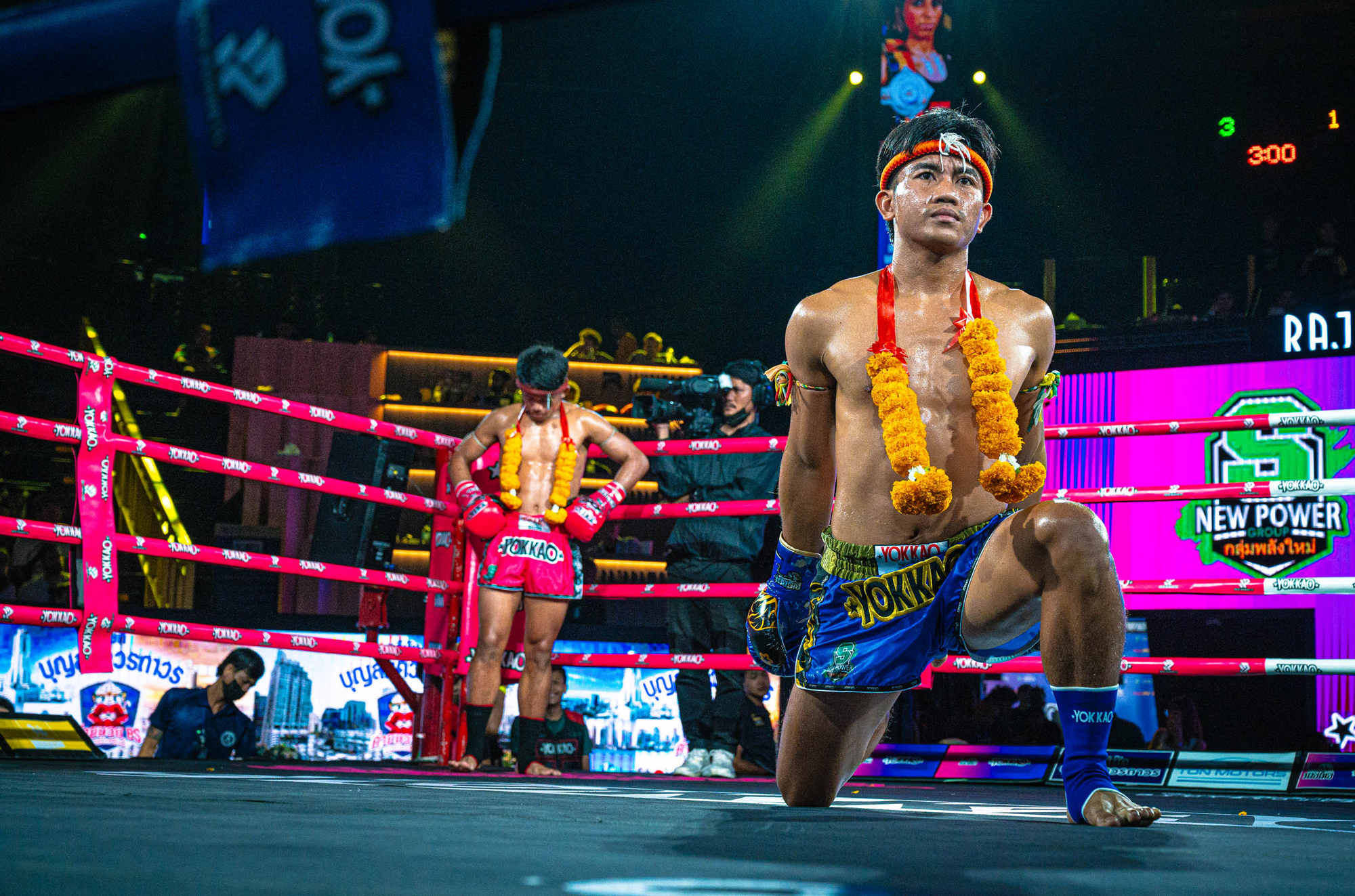
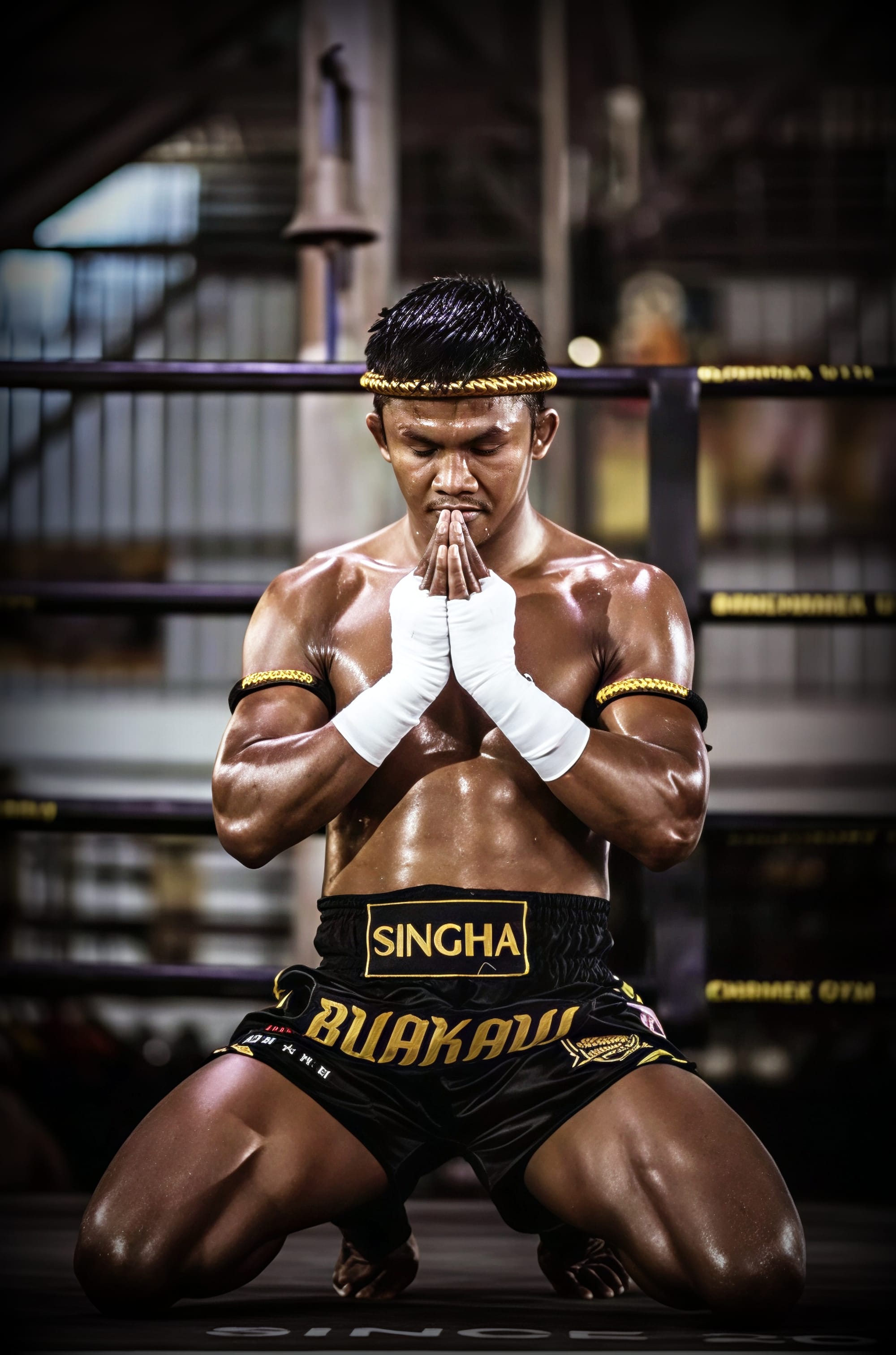
The Mongkhon headband and Pra Jiad armbands, blessed by monks and imbued with spiritual power, serve as talismanic objects that consolidate self-efficacy. Their physical presence on the body is a constant tactile reminder of the fighter’s preparation, their gym lineage, and a protective metaphysical force. In psychological terms, this is a form of superstitious conditioning that can genuinely enhance performance by fostering an unshakeable belief in one’s safety and capability. The placebo effect here is powerful and real, reducing the cognitive bandwidth dedicated to fear and threat appraisal. The pre-fight removal of the Mongkhon by the trainer, typically just before the first round, is a potent symbolic act. It signifies the final moment of protected preparation and the full assumption of personal responsibility and autonomy within the ring. This ritualised severance can serve as a trigger for a shift into a pure competitive mind-set, free of external dependence.
Beyond the ring, the cultural context of the Thai fight camp instils a psychological profile shaped by collectivism and a deep, familial hierarchy. Young fighters, often from impoverished rural backgrounds, are socialised into a system where the gym is their literal and figurative home. Motivation is profoundly extrinsic in its origin, tied to filial piety and the economic support of the family, yet it must transform into a fierce intrinsic drive to endure the rigours of the ring. This fusion of personal identity with the camp and family creates a powerful form of social motivation. The fighter’s identity is not individualistic but relational; victory brings honour and resources to the collective, and defeat brings shame. This can generate immense psychological pressure, but also profound resilience, as the fighter draws strength from a deep reservoir of social responsibility and meaning. The psychological experience of a Thai fighter from a traditional camp is thus fundamentally different from that of a foreign practitioner whose motivations may be rooted in self-actualization, fitness, or personal challenge.
Cognitive and Affective Processes in Competition
The pre-competition state of a Muay Thai fighter is a complex tapestry of anxiety, excitement, and aggressive readiness. Anxiety in sport is typically bifurcated into cognitive worry and somatic manifestations. In Muay Thai, the immediate physical threat elevates somatic anxiety to extreme levels; a fighter’s cardiac and respiratory systems are primed for maximum output. The interpretative dimension is critical. Successful fighters cognitively reappraise these somatic signals, interpreting a pounding heart not as fear but as a state of readiness and power. This shift from a threat state to a challenge state, as described in the biopsychosocial model of challenge and threat, is a hallmark of psychological preparation. Fighters who view the bout as an opportunity to demonstrate skill, courage, and honour, rather than a threat to their physical integrity and ego, exhibit more efficient cardiovascular profiles and superior decision-making under pressure.
The management of fear is a constant, background requirement. Fear of injury, fear of losing, and fear of public humiliation must be acknowledged and channelled rather than suppressed. Suppression often leads to paradoxical increases in its intensity and a rigid, hesitant fighting style colloquially known as “shelling up.” Psychological skills training in Muay Thai therefore emphasizes acceptance and commitment-based approaches, wherein fighters learn to make room for fearful thoughts and sensations without allowing them to dictate behaviour. The mantra “sabai” (สบาย), meaning comfortable or relaxed, is often used within the Thai training lexicon, not to deny effort, but to promote a specific quality of relaxed force—a physical looseness that allows for speed and fluid power generation. This is the embodiment of a non-reactive, mindful state in the midst of chaos.
Aggression in Muay Thai presents a nuanced psychological picture. Instrumental aggression, the cold, calculated use of force to achieve a goal, is rewarded. Conversely, hostile or reactive aggression, driven by anger and the intent to harm for its own sake, is typically detrimental, leading to a loss of tactical discipline, increased muscular tension, and rapid exhaustion. The cultural aesthetic of Muay Thai, particularly in high-level Thai stadiums, further complicates the expression of aggression. A fighter must display “heart,” courage, and an unrelenting forward pressure, yet also exhibit cool composure and technical beauty. An emotional, wild display of rage is often met with derision from a connoisseur audience that values “muay,” meaning the artistry and technical intelligence of a fighter. The fighter is thus engaged in a constant, delicate act of emotional regulation, maintaining a furnace of aggressive energy within an architecture of ice-cold cognition.
The experience of flow, a state of total absorption where action and awareness merge, is frequently reported by elite fighters during their peak performances. In the flow state, time distorts, the opponent’s movements seem to slow down, and the fighter acts with a sense of automaticity and grace, without conscious deliberation. Achieving this in a combative environment where a mistake carries severe consequences is the ultimate psychological feat. The pre-conditions for flow—a balance between perceived challenge and skill, clear goals, and immediate feedback—are all inherent in a Muay Thai bout. The fight provides clear proximal goals and the opponent’s reactions offer unambiguous, instantaneous feedback. The primary barrier to flow is the intrusion of self-consciousness and result-oriented thinking. The fighter who is thinking about winning or the judges’ scorecards disengages the automatic processing systems that govern fluid, complex motor programs. The psychology of peak Muay Thai performance is therefore largely the psychology of “getting out of your own way.”
Mental Skills Training for Muay Thai Fighters
The systematic application of mental skills training to Muay Thai has gained traction as the sport professionalizes. Goal setting in this context must accommodate the brutal uncertainties of the prize-fighting world. Fighters are guided to set process goals, such as maintaining a specific rate of teep, or executing a flawless defensive check on every low kick, rather than being solely fixated on the outcome goal of winning or losing, which a judge’s decision can arbitrarily determine. This process-orientation sustains intrinsic motivation and protects self-esteem during the inevitable setbacks of a fighting career.
Imagery, or visualization, is a particularly potent tool given the sport’s complexity. Fighters engage in multi-sensory imagery, rehearsing not just the visual picture of an opponent’s reaction, but the kinaesthetic feel of throwing a counter-elbow and the emotional state of calm aggression they wish to embody. Research in neurology demonstrates that mental rehearsal activates the same motor neuron pathways as physical execution, allowing for the consolidation of neural circuits without physical fatigue. For a fighter in a weight-cut, when physical training is minimized, mental rehearsal becomes an essential tool for skill maintenance. Imagery is also employed for motivational purposes, with fighters repeatedly visualizing the moment of victory and the accompanying emotional reward to galvanize commitment during exhausting training blocks.
Self-talk, the internal dialogue of the athlete, is actively shaped to be instructional and motivational. Fighters are trained to use cue words that are tightly coupled to a specific technical action and an emotional state. A word like “pop” for a jab is an instructional cue, while a phrase like “iron shin” serves to bolster self-efficacy and pain tolerance during a gruelling leg-kicking exchange. The dual function of these cues—to direct attention technically and to modulate emotional and physiological responses—is a refined psychological skill. Increasingly, mindfulness-based interventions, adapted from therapies like Mindfulness-Based Stress Reduction and Acceptance and Commitment Therapy, are being introduced. These practices cultivate the fighter’s capacity to observe their internal experiences—pain, fear, rage—without reactive attachment, thereby enhancing the choice of response rather than the automatic compulsion. A mindful fighter can feel the sting of a hard low kick, register it, and continue their strategic plan without a cycle of rumination or emotional retaliation.
The Psychology of the Corner and the Trainer-Fighter Relationship
The dynamic between the fighter and their corner is a critical, and often overlooked, performance variable. During the intense, one-minute rest periods between rounds, the trainer acts as a source of information, motivation, and co-regulation. In Thai culture, the trainer, or “Kru,” holds a position of immense authority and respect. Their verbal and tactile communication (vigorous massage, the pouring of water, the firm, reassuring touch on the head) serves to rapidly down-regulate the fighter’s arousal from the extreme peaks of the round. The trainer’s capacity to remain a calm, anchored presence when the fighter is physiologically flooded is an act of interpersonal psychophysiological regulation. The voice of the corner cuts through the fog of exhaustion and pain, re-directing attention to a single, actionable tactical instruction, thus breaking the cycle of internal chaos. A trainer’s reprimand or expression of disappointment can be a powerful negative reinforcer, but equally, an overly critical or panicked corner can shatter a fighter’s already fragile confidence. The most effective corners operate with an unshakeable affect, projecting a certainty and belief that the fighter can borrow and internalize in moments of deep crisis. This is the psychology of a secure base, applied to combat.
Motivation, Identity, and the Fighter’s Journey
The fighter’s motivational landscape evolves dramatically over a career. Initial participation may be driven by a need for self-defence, fitness, or a romanticized notion of the martial arts. For those who move into competition, motivation often transitions into a more complex blend of achievement striving, social recognition, and, for professional fighters, economic necessity. The “fighter identity” can become monolithic, a phenomenon known as athletic identity foreclosure. When a person’s sole source of self-worth is derived from their role as a fighter, injury, loss, or retirement can precipitate a profound psychological crisis. The culture of Muay Thai, which venerates the “nak muay” who shows courage in the face of insurmountable odds, can paradoxically reinforce a reluctance to seek help for mental health issues. The warrior archetype, while a source of immense strength, can also become a prison of stoicism, where vulnerability is equated with weakness. A comprehensive psychological support system must therefore include identity exploration, helping fighters to develop a multidimensional sense of self that includes, but is not limited to, their combat vocation.
The end of a fighting career is one of the most psychologically hazardous periods. The loss of the intense physical practice, the tight-knit camp community, the adrenaline of competition, and the clear hierarchy of goals can leave a void. Fighters may experience symptoms akin to grief and depression. The chronic traumatic encephalopathy risk associated with repeated head trauma adds a neurobiological dimension to potential mood and behavioural dysregulation in retirement. Forward-looking psychological care involves career transition planning from the moment a fighter turns professional, encouraging the development of coaching skills, educational pursuits, or business ventures that can provide a renewed sense of purpose.
The Role of Music and Rhythmic Entrainment
A truly unique psychological feature of Muay Thai is the live traditional music, or Sarama, played throughout each bout. The Sarama, consisting of the Pi Java, Klong Khaek drums, and Ching cymbals, is not a passive soundtrack but an active, dynamic force that mirrors and shapes the ebb and flow of the fight. Psychologically, the music’s fluctuating tempo acts as an external agent of arousal regulation. During periods of inactivity or a lull in the action, the music slows, exerting a calming pressure. As the fighters engage with greater ferocity, the tempo accelerates, driving a synchronous increase in the fighters’ and the audience’s physiological arousal. This creates a state of rhythmic entrainment, where the heart rate and movement patterns of the fighters become coupled to the external auditory pulse.
The Sarama serves a critical cognitive function by structuring time. In the frantic, distorted temporal experience of a fight, the steady, driving beat provides an anchor, a predictable pattern in an unpredictable environment. A fighter can use this rhythm to pace their attack, synchronize combinations, and find a psychological cadence that promotes flow. The music’s role is also deeply motivic, carrying cultural memories of past heroes and battles. For the Thai fighter, the Sarama is the sound of identity itself, activating a culturally embedded warrior script. For the foreign fighter, learning to fight with the Sarama represents a process of acculturation, a move from finding the music distracting to experiencing it as an energizing, indispensable ally. Disorientation often results when a foreign-trained fighter, accustomed to the silence or Western music of their gym, first competes under the live, improvisational, and culturally saturated sounds of the Sarama. The psychological integration of the music is, in itself, a performance skill.
Gender, Cross-Cultural Dynamics, and Mental Health
The participation of women in Muay Thai, while having a long history, has recently expanded dramatically on a global scale. Female fighters often face unique psychological challenges, including navigating culturally ingrained gender norms that may label the sport as unfeminine or too violent. They must cultivate a competitive aggression that is socially policed in ways different from their male counterparts, managing a psychological conflict between a nurturing, socially prescribed identity and the necessarily assertive, and at times destructive, self of the ring. Yet, research on women in combat sports frequently reveals that participation is a profoundly empowering experience, fostering a strong and embodied sense of self-efficacy, agency, and resilience that translates into protection against psychological distress. Body image, often a source of anxiety for women, can undergo a functional reappraisal; the body is valued not for aesthetics but for its power, durability, and capability. The Muay Thai gym becomes a site for the reconstruction of a powerful physical identity.

For the thousands of non-Thai “farang” fighters who travel to Thailand to train and compete, a complex process of cross-cultural psychological adaptation unfolds. The high-context, implicit communication style of Thai trainers, which contrasts with the explicit, direct feedback common in the West, can initially lead to confusion and perceptual mismatches. A foreign fighter must learn a new emotional lexicon, one where a trainer’s calm, quiet observations carry more weight than loud, effusive praise. Navigating the gambling-centric, stadium-specific judging criteria, which reward a cool, dominant “Muay Khao” style, requires a fighter to suppress a possibly ingrained preference for high-volume, aggressive brawling. This is an exercise in cognitive and motor re-structuring under conditions of high cognitive dissonance. The psychological trauma of fighting extends beyond a single bout. The hypervigilance, avoidance, and intrusive memories characteristic of post-traumatic stress disorder can occur in fighters who have experienced a particularly brutal knockout loss or a period of intense overtraining and competition. A sports psychologist must be vigilant for these signs, employing trauma-informed practices. The often-cited “Muay Thai as therapy” narrative, where training is used to overcome addiction or past trauma, highlights the sport’s potential for healing, yet it requires a careful, guided integration to ensure that the structured violence of the gym and ring provides mastery and not retraumatization.

Conclusion and Future Directions
The sports psychology of Muay Thai is a rich, multidimensional field that bridges the chasm between modern performance science and ancient cultural wisdom. It demonstrates that peak performance in this art cannot be reduced to a set of universal cognitive techniques, but is deeply interwoven with the fighter’s cultural, spiritual, and social world. The pre-fight rituals, the trainer-fighter bond, the Sarama music, and the deeply held warrior identity are not peripheral variables to be controlled but central psychological mechanisms that shape thought, emotion, and action under the most extreme conditions. Effective mental performance consulting in this domain must therefore be culturally humble and bespoke. The future of Muay Thai psychology calls for longitudinal studies tracking the cognitive and emotional health of fighters across their careers, and a deeper investigation into how mindfulness and acceptance-based protocols can be adapted to suit the specific pain and fear context of full-contact striking. Furthermore, the psychophysiological effects of the Sarama require empirical investigation using tools like heart rate variability and EEG, transforming anecdotal knowledge into evidence-based practice. Ultimately, by illuminating how the Muay Thai athlete masters the internal battle of mind and spirit to engage in the external battle of the body, sports psychology not only contributes to performance enhancement but gains profound insight into the nature of human courage, resilience, and the will to endure.
Thai Warriors
When distilling a list of the absolute greatest Muay Thai fighters of all time down to ten names, the conversation inevitably turns to a hierarchy defined by technical genius, cultural impact, dominance within their era, and a nearly mythical capacity to transcend the sport’s brutal demands. At the apex of this hierarchy stands Samart Payakaroon, a figure so technically sublime that he earned the nickname “The Jade Tiger.” He is a four-division Lumpinee Stadium champion and a WBC world boxing champion, whose footwork, defensive brilliance, and balletic ringcraft often lead to him being cited as the greatest to ever live, the fighter who treated the ring as a chessboard while others merely brawled. Occupying a similarly untouchable tier is Dieselnoi Chor Thanasukarn, the “Sky Piercing Knee,” a lightweight destroyer who was so dominant that he retired undefeated, having run out of opponents willing to face his relentless, suffocating clinch and piercing knee strikes. Following him is Somrak Khamsing, an athletic anomaly whose seamless fusion of elite Muay Thai and Western boxing culminated in Thailand’s first Olympic gold medal in boxing, yet his genius was equally expressed in the stadiums, where his preternatural head movement and counter-fighting intellect made him a ghost in the ring. The modern magician, Saenchai, then commands his place as the most enduringly creative force in the sport’s history. His four-division Lumpinee championship status is almost secondary to his career of playing with opponents, executing impossible dumps, cartwheel kicks, and a flowing style that has kept him competitive against much larger men deep into his forties. No list is complete without Pud Pad Noy Worawoot, the “Golden Leg,” whose shattering kicking power defined an era, famously snapping an opponent’s arm in half, but it was his refined, unshakeable ring generalship that made him a benchmark for the intelligent application of force. The patriarch of power, Apidej Sit-Hirun, was voted the “Fighter of the Century” by the King of Thailand, a legend whose right kick was said to be the hardest in the sport, and whose stoic, devastating simplicity in the ring made him a national treasure and a temple of raw, devastating Muay Thai. The holder of the longest-ever reign as Lumpinee Stadium champion, Namsaknoi Yudthagarngamtorn, known as “The Emperor,” then enters the pantheon. His technical perfectionism, flawless balance, and almost surgical precision over a six-year, undefeated run at the top of the sport argue for a level of ring control that was absolute and serene. While others dominated the Thai stadiums, Buakaw Banchamek became the first true global crossover superstar of the art, his singular explosion onto the K-1 MAX scene shattering preconceptions and his relentless forward pressure, granite chin, and punishing kicks bringing Muay Thai to millions of new eyes, permanently altering the international landscape of combat sports. The technician’s technician, Karuhat Sor Supawan, known as the “Lord of the Ring,” was a genius of evasion who fought and beat the best of multiple generations with a playful, almost artistic style of trickery, timing, and counter-striking that elevated him to a cult figure of the highest strategic intelligence. Finally, Chamuakpetch Hapalang, a fighter of relentless pace and an almost inhuman engine, completes this configuration of the top ten. He was a three-division Lumpinee champion who waged wars of attrition with a volume of strikes and an indomitable will that broke the spirit of contemporary legends, embodying the heroic, never-say-die essence of what it means to be a Muay Thai warrior.