Cheilopogon agoo: Japan’s Skyfish and the Art of Ocean Flight
The seas surrounding Japan are filled with life that both challenges and inspires the human imagination, but few species…
Introduction
The seas surrounding Japan are filled with life that both challenges and inspires the human imagination, but few species capture the poetry of motion like Cheilopogon agoo, the Japanese flying fish. In a single surge of power, it can break the ocean’s surface and glide hundreds of feet through open air, its fins extended like translucent wings. What appears to be spectacle is survival — a masterful adaptation that allows escape from tuna, dolphins, and seabirds. Yet this fish is more than a marvel of evolution. Along Japan’s southern coasts, it is revered as tobiuo, both a culinary delicacy and a seasonal signal, harvested with the precision of tradition. Its story is a convergence of biology, culture, and sustainability, embodying how people and nature share an unspoken rhythm in the Pacific.
Taxonomy
Cheilopogon agoo belongs to the family Exocoetidae, within the order Beloniformes and the class Actinopterygii. It was long mistaken for Prognichthys agoo until modern genetic analyses and osteological studies clarified its classification. The species is known as the Japanese flying fish in English and tobiuo (トビウオ) in Japanese, literally “the flying fish.” In Taiwan, it is fei yu (飛魚), while in Okinawan dialects it is called bangau, a word that reflects its deep ties to local maritime folklore. Among the Amami Islanders, the first appearance of tobiuo nearshore is still celebrated with small rituals marking the start of the warm season. Closely related species such as Cheilopogon melanurus and Cheilopogon intermedius share similar gliding adaptations but lack the same cultural and economic prominence.
Biology
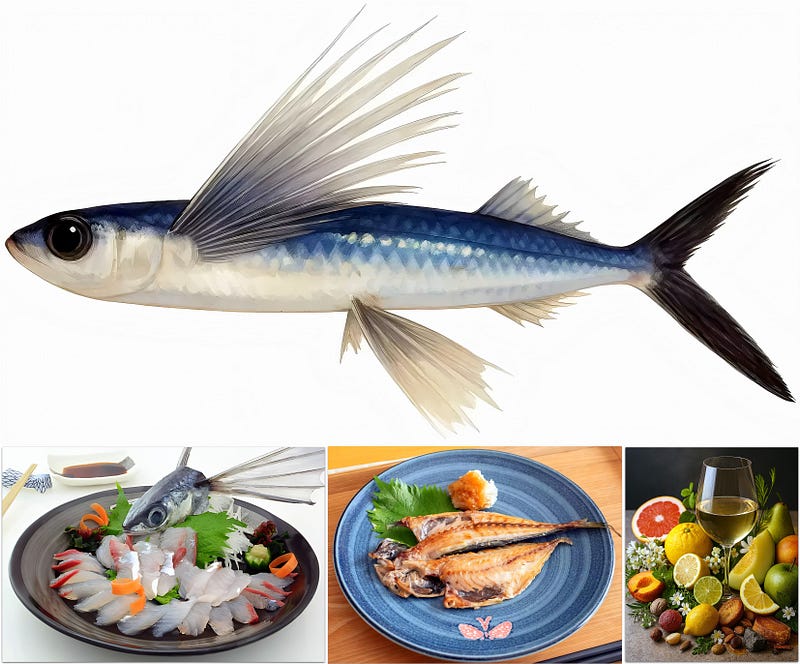
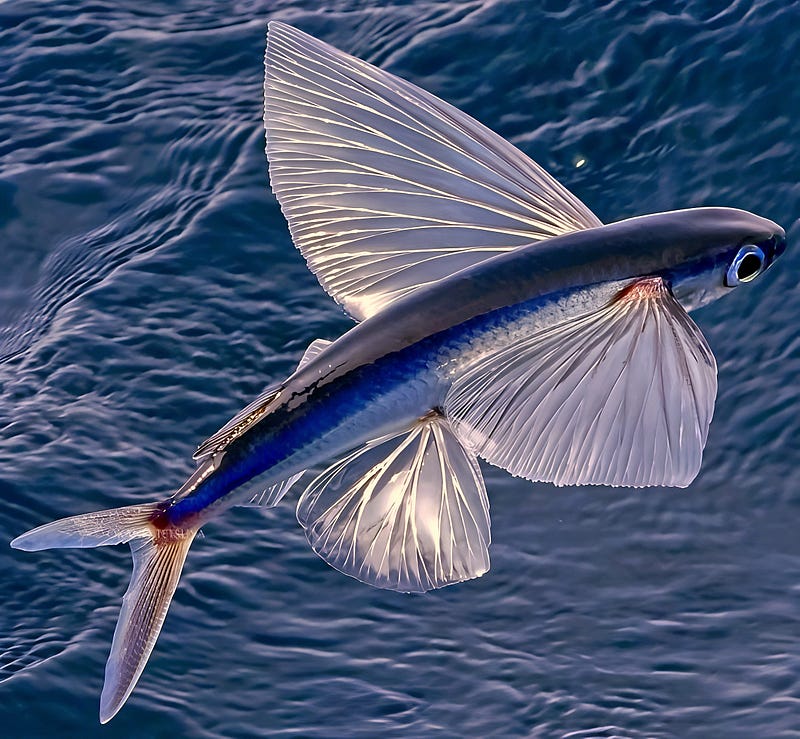
The Japanese flying fish grows to about 12–14 in (30–35 cm) and weighs around 7 oz (200 g). Its aerodynamic design — streamlined body, long rigid pectoral fins, and forked tail — makes it one of the best natural gliders in the marine world. When threatened, it accelerates underwater to nearly 37 mph (60 km/h), then propels itself into the air using rapid tail beats before spreading its fins like wings. Once airborne, it can glide as far as 656 ft (200 m), sometimes staying aloft for more than ten seconds. The dorsal surface of the fish is metallic blue, blending with the sea from above, while the silvery belly reflects the light from below, a camouflage known as countershading. Spawning takes place from late spring to midsummer in warm surface waters, when females attach sticky eggs to floating seaweed or driftwood. Juveniles feed on zooplankton until they reach sexual maturity after about one year. The typical lifespan is two to three years, with strong recruitment tied to the health of coastal plankton populations.
Ecology
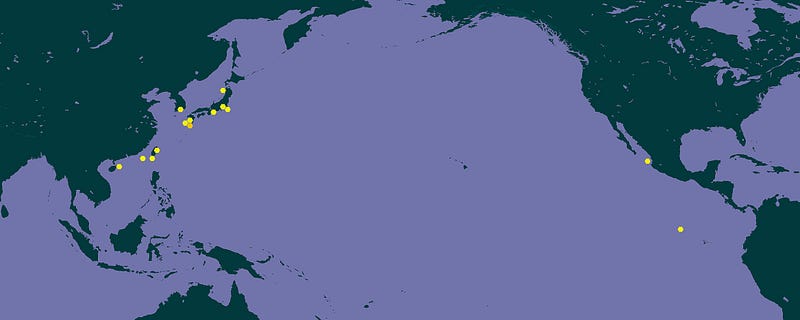
Cheilopogon agoo occupies the warm western Pacific, particularly along Japan’s southern coasts, the East China Sea, and Taiwan’s offshore islands. The species thrives in surface waters from 0–16 ft (0–5 m) deep, preferring temperatures near 77°F (25°C). Its ecological role is pivotal in mid-trophic marine systems, linking planktonic producers to larger pelagic predators such as tuna, dorado, and seabirds. It feeds primarily on copepods and amphipods, filtering zooplankton during twilight hours when predators are less active. Seasonal migrations follow the northward flow of the Kuroshio Current, coinciding with temperature gradients that cue reproduction. Modern fisheries management in Japan has imposed mesh-size regulations and closed seasons to preserve spawning stocks. Certification under the Marine Eco-Label Japan (MEL-J) ensures that catches are traceable and environmentally compliant, a necessary safeguard as climate change alters sea-surface temperatures and spawning ranges.
Uses
The entire body of Cheilopogon agoo is edible, with its flesh prized for lightness and purity of flavor. Its culinary applications extend across Japan, from fresh sashimi to dried, smoked, and soup-based preparations. In Kagoshima and Nagasaki, it forms the base of ago-dashi, a delicate broth that has largely replaced bonito flakes in premium ramen and miso soups. Typical seasonal harvests run from May through July, with an estimated yield of 1.2 metric tons per hectare (1.07 short tons per acre). Nutritionally, each 100 g (3.5 oz) portion offers 120 kcal, 22 g protein, 2 g fat, and generous levels of omega-3 fatty acids — especially EPA and DHA — as well as selenium and B-vitamins. There are no known toxins or antinutrients associated with consumption.
Processing begins with quick evisceration and a light salting of about 2.5%, followed by sun-drying at 86°F (30°C). The result is tobiuo himono, a semi-dried product that can be grilled or rehydrated for soup. Vacuum-sealing preserves the subtle sweetness and prevents oxidation. The taste is mild, faintly nutty, and ocean-clean, with an aroma that deepens when smoked. The texture is firm and elastic, becoming flaky when heated. In commercial form, the fish appears as dried stock, frozen fillets, or pressed flakes for instant broths. Oils extracted from C. agoo are used in cardiovascular supplements; evidence for lipid-lowering benefits is moderate but consistent with other cold-water species. Fishmeal derived from byproducts contains 62–65% protein and is used in aquaculture feed, showing strong palatability and moderate silage suitability. Market prices fluctuate between $12 and $18 per kilogram ($5.45–$8.18 per lb), depending on grade.
The ecological contribution of C. agoo is understated but vital. By transferring carbon from surface plankton to higher trophic levels, it contributes to approximately 0.9 metric tons CO₂-equivalent sequestration per hectare (0.81 short tons CO₂-eq/acre). Culturally, the fish remains embedded in Japanese art, poetry, and folk narratives, symbolizing freedom and perseverance. In Amami Ōshima, the annual Tobiuo Matsuri celebrates both the species and the community’s bond with the sea, underscoring its enduring cultural weight.
Culinary Aspects
The flavor of Cheilopogon agoo embodies the essence of clean ocean water — lightly briny, faintly sweet, and elegant in its simplicity. When eaten raw as sashimi, it offers a glass-clear translucence and a tender, almost silken mouthfeel. The taste recalls a cross between flounder and mackerel but without the latter’s oiliness. Grilling transforms it into something richer: the skin crisps, the flesh firms, and the aroma develops a nutty undertone that lingers. The aftertaste is dry and mineral, like sea breeze over stone, a finish that clears rather than coats the palate. Dried forms concentrate the umami, producing a depth similar to cured anchovy yet far more refined. When incorporated into ago-dashi, it yields a broth of quiet power — clear, slightly smoky, and layered with marine sweetness. Chemesthetic intensity is low, allowing it to pair comfortably with strong condiments such as citrus, miso, or soy reduction.
Wine Pairings
Pairing Cheilopogon agoo with wine demands sensitivity to its leanness and subtlety. For sashimi, a Japanese Koshu from Yamanashi remains ideal, but lesser-known varietals reveal deeper harmony. A Santorini Assyrtiko, with its saline minerality and brisk acidity, mirrors the fish’s maritime brightness while cutting through soy-based dips. For grilled preparations, a Croatian Pošip from Dalmatia offers a rounded texture and faint almond finish that complements the fish’s gentle nuttiness. In himono or smoked dishes, a Jura Savagnin (Vin Jaune style) enhances umami with oxidative complexity. When the fish is simmered in ago-dashi, a dry Furmint from Tokaj brings both fruit precision and the tensile acidity required for broth-based cuisine. For chilled appetizers or citrus-marinated servings, an Etna Bianco made from Carricante provides volcanic minerality that amplifies the fish’s clean saltiness without overshadowing it. Each of these wines, distinct from global standards, interacts texturally and aromatically with the fish’s refined balance rather than dominating it.
Conclusion
The Japanese flying fish, Cheilopogon agoo, exists where air and water meet — a creature suspended between two worlds, both fragile and enduring. Its biology is an expression of precision engineering by nature; its cultural legacy, a reflection of Japan’s maritime soul. As climate shifts challenge traditional fisheries, tobiuo reminds us that sustainability is not a static principle but an evolving relationship between people, sea, and season. To preserve this species is to preserve the story of coexistence itself — one that soars, briefly, above the horizon before returning to the depths that sustain us all.