The Great Annexation: How AI is Seizing the Sovereign Territory of the Self and How the Law Must…
We are witnessing a silent, digital enclosure of the commons of the self. Artificial intelligence does not merely process data; it ingests…
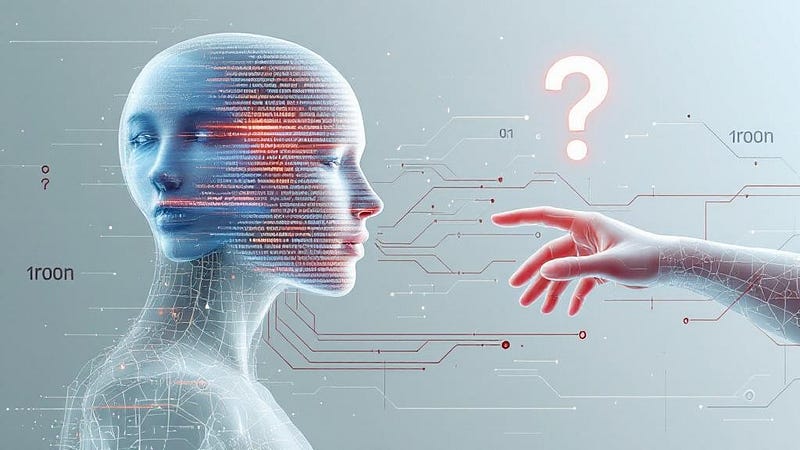
The Great Annexation: How AI is Seizing the Sovereign Territory of the Self and How the Law Must Fight Back
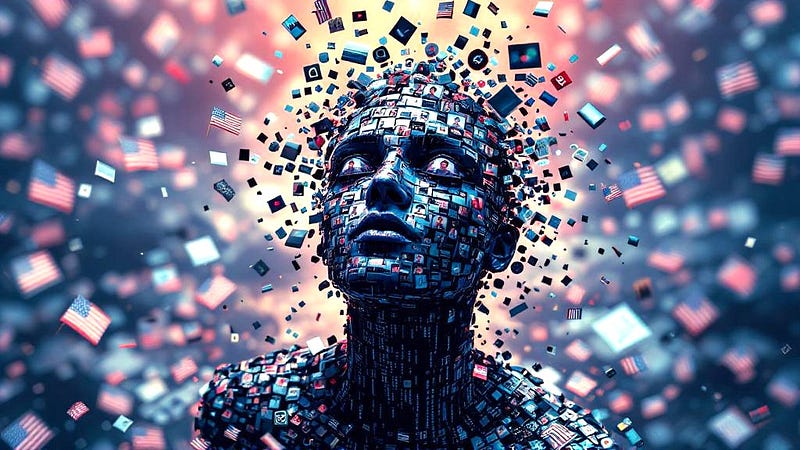
We are witnessing a silent, digital enclosure of the commons of the self. Artificial intelligence does not merely process data; it ingests identity itself. It consumes the unique biological and behavioral contours of a human being — a face, a voice, a lifetime of personal history — and excretes a commodity. This process, when done without consent, is not a new form of theft. It is a new form of conquest. It is the annexation of the sovereign territory of the self by corporate and algorithmic powers, and it constitutes the most fundamental constitutional crisis of the 21st century. The legal system, built on the bedrock of a physical world and a pre-digital conception of the person, is currently losing the war for the future of human identity. To prevail, it must abandon its reactive, piecemeal approach and launch a proactive, total defense rooted in a radical reinterpretation of personhood itself.
The constitutional crisis is not looming; it is present. The core protections of liberal democracy are being systematically hollowed out by the capabilities of generative AI. The right to privacy, famously articulated as the “right to be let alone,” is rendered meaningless when the very attributes that define you in the world can be replicated and redeployed without your knowledge. This is a violation more profound than eavesdropping or publishing a private diary. It is the violation of your very integrity as a perceived entity. The constitutional guarantee of liberty, intrinsically tied to self-determination and autonomy over one’s own body and pursuits, becomes a cruel joke if a corporation can construct a convincing digital puppet of you, forcing you to spend your life denying actions you did not take and statements you did not make. This leads to the brutal paradox of the First Amendment. The same constitutional amendment that protects dissent and artistic expression is now being weaponized to justify the non-consensual use of human identity as raw material. This creates a perverse hierarchy of rights where the “speech” of an algorithm is used to effectively silence the authentic speech and distort the identity of a real person. The legal system, accustomed to balancing competing rights, now faces a scenario where one person’s liberty directly annihilates another’s.
Philosophy is not an abstract luxury here; it is the necessary scalpel to dissect the nature of the injury. A deontological framework, following Immanuel Kant, would condemn this practice as the ultimate violation of the categorical imperative. A human being is an end in themselves, possessing inherent dignity and autonomy. To scrape a person’s likeness from the internet and use it to train an AI or generate a deepfake for entertainment or fraud is to treat that person as a mere means — as data, as a resource, as a tool. It is a fundamental denial of their moral status. Legal positivism, which focuses on law as written and enacted, reveals the terrifying gap between technological velocity and legislative speed. The law is always chasing the last crime, leaving a vast, unprotected space for the next one. This gap proves that we cannot rely on statutes alone; we must be guided by a north star of fundamental principles. That principle is human dignity. The injury of a non-consensual deepfake is not primarily financial; it is a dignitary harm. It is the horror of seeing your selfhood dismembered and used as a puppet. It is the violation of your narrative agency, your right to be the author of your own life story. When another entity can write chapters without your consent, they shatter the coherence of your identity and undermine your social existence.
Therefore, tinkering at the edges with better detection software or weak laws is a form of surrender. The only adequate response is a total, philosophical, and legal re-armament. We must move from a paradigm that reacts to misuse to one that proactively architects a world where such misuse is structurally difficult and constitutionally intolerable. This requires a revolution in four acts.
First, Congress must enact a Digital Personhood Protection Act. This cannot be a minor amendment to existing copyright or publicity law. It must be a foundational statute that establishes, in clear and uncompromising language, that an individual’s biometric identity — their face, voice, gait, and any other unique characteristic — is their sovereign personal property. The Act must create a federal cause of action that makes the non-consensual use of this identity for the training, development, or operation of any artificial intelligence system a per se violation. The key is “per se” — the harm is inherent the moment the use occurs. The victim would not need to prove they lost money or suffered reputational damage; the violation of their digital self is the damage. This law must provide for severe statutory damages, empower regulatory bodies for enforcement, and explicitly preempt weaker state laws to create a unified national standard.
Second, the Federal Trade Commission must wield its power to mandate Provenance by Design. This is a technical standard with a philosophical soul. It means passing a regulation that any generative AI model of significant scale must have cryptographic authentication and watermarking hard-coded into its very architecture. Every single output — every image, every video, every audio clip — must carry an immutable, machine-readable metadata tag that states, “This is synthetic. This was created by AI model X.” This is not a suggestion; it is a prerequisite for commercial release. This shifts the entire epistemological burden. It moves us from a world where we ask, “Is this real?” to a world where we can verify, “This is synthetic.” It creates a chain of evidence and makes the creator of the AI tool responsible for its identifiable output.
Third, the judicial branch must awaken to its constitutional duty. The Supreme Court must accept a case that forces a reckoning with the Fourteenth Amendment. The argument is straightforward: the liberty guarantee of the Fourteenth Amendment encompasses a right to digital self-determination. If a state’s laws are so inadequate that they cannot protect a citizen from the existential harm of non-consensual deepfake pornography or identity fabrication, then that state is failing to provide equal protection under the laws and is depriving its citizens of liberty without due process. This would force every state legislature in the nation to upgrade its criminal and civil codes to meet this fundamental standard. Simultaneously, lower courts must be instructed to apply strict scrutiny — the highest level of judicial review — to any case where AI-generated “speech” relies on the non-consensual use of a real person’s identity. The government would have to prove a compelling state interest in allowing that speech, a nearly impossible standard to meet when balanced against a fundamental right to autonomy.
Finally, the legal profession itself must become a garrison for this new reality. The American Bar Association and every state bar association must amend their Rules of Professional Conduct. They must make it a clear ethical violation, a matter of professional discipline, for an attorney to use AI tools that harvest human identity without consent in the practice of law. This applies to using a deepfake in litigation, employing an AI trained on stolen data for legal research, or using synthesized likenesses in firm marketing without permission. By making the defense of digital personhood a core tenet of legal ethics, we turn the entire profession into an army of defenders for the sovereign self.
This is the only way. It is a war fought on legislative, regulatory, judicial, and ethical fronts simultaneously. The goal is not to destroy the technology, but to civilize it. To build a world where the incredible power of artificial intelligence is not built on the rubble of human identity. The alternative is a future where we are all ghosts in the machine, spectral selves haunting a digital landscape we no longer control.