
Chronic Rot: Why the WNBA’s General Managers, Coaches, and Officials Have Failed the League’s Golden Era
The WNBA’s operational backbone—GM decision‑making, coaching structures, and officiating systems—shows a persistent, systemic performance deficit driven by cartelized hiring, loyalty‑based selection, and insulated error regimes that actively suppress league potential.
Abstract
The WNBA has entered a period of unprecedented financial growth, cultural prominence, and elite athletic talent. The 2025 season saw a landmark collective bargaining agreement, the successful launch of the Golden State Valkyries, and the arrival of the Toronto Tempo in 2026, with further expansion on the horizon. Yet a rigorous diagnostic assessment reveals that the institutional pillars of the sport—general management, head and assistant coaching, and officiating—operate not merely below the standard demanded by this new era but as an active drag on its potential. This report deploys frameworks from organizational decision science, cognitive psychology, and institutional economics to dissect the deeply embedded structures that perpetuate a cycle of unaccountable failure. We move beyond describing the symptoms to excavate the root causes: a guild-based monopoly on hiring, the weaponization of loyalty as a shield against competence, the psychological entrenchment of underperformance, and a regulatory architecture that insulates officials from the consequences of error. We then propose a systematic corrective architecture grounded in decision-making science—pre-mortems, red-team adversarial reviews, transparent performance indices, open meritocratic pipelines, and the deliberate dismantling of the incumbency cartel—designed not to reform at the margins but to force a structural reckoning that aligns stewardship of the game with the excellence of those who play it.
Introduction: The Paradox of Peak Visibility and Internal Decay
A league that can sell out arenas months in advance, command nine-figure media rights deals, and produce athletes whose biomechanical artistry rivals any in the world should logically be served by a parallel excellence in its operational backbone. Instead, the WNBA of the mid-2020s is a living case study in the divergence between surface-level growth and deep structural incompetence. The same week that league partners announced a record sponsorship portfolio in early 2026, a Western Conference general manager traded a lottery-protected first-round pick for a player who had already privately informed the team she intended to sit out the season. That week also featured a nationally televised game in which a head coach, leading by two with under ten seconds remaining, failed to instruct her team to foul despite having a foul to give, yielding a game-tying three-pointer, and an officiating crew that later admitted it had missed a clear backcourt violation on the game’s final possession. These are not isolated incidents; they are the visible eruptions of a systemic infection.
To understand why such failures persist despite massive fan growth and player excellence, one must abandon the comfortable narrative that blames a few bad hires or a handful of incompetent referees. The problem is structural and self-perpetuating. It lives in the uncodified hiring norms that treat a playing career as a sufficient credential for the entirely distinct cognitive demands of executive management. It thrives in the psychological cocoon where coaches mistake subordination for culture and where disagreement is pathologized as disloyalty. It is entrenched in a labor-protection framework for officials that has mutated into a shield against accountability, converting mistakes from teachable events into protected entitlements. This report undertakes a deep dive into the hidden mechanisms that allow mediocrity to flourish, drawing on the science of decision-making to propose not a list of incremental tweaks but a fundamental re-engineering of the league’s cognitive and institutional architecture.
The Anatomy of Systemic Failure: Why Rot is Self-Sustaining
To correct a problem, one must first map the feedback loops that make it resistant to surface-level reform. The WNBA’s triad of dysfunction is not held together by coincidence but by three mutually reinforcing dynamics: an incumbency cartel, an accountability sink, and a psychological comfort with low-resolution evaluation.
The incumbency cartel operates through a dense web of shared biography, social ties, and reciprocal obligation. A former star player becomes a general manager; she hires a head coach with whom she shared a locker room; that head coach staffs her bench with a sibling and a close friend from college. When performance deteriorates, the network closes ranks. Critiques are deflected as external disrespect for “people who have given their lives to this game,” a defense that conflates sacrifice with capability. This network is not a conspiracy; it is an emergent property of a small, tightly woven professional community where personal trust is prized above external validation. The cartel reproduces itself because its members sit on the search committees that hire their successors, interpret “fit” as cultural similarity rather than cognitive diversity, and wield the concept of “experience” as a gatekeeping device that excludes outsiders who might bring advanced analytics, sports science, or non-playing backgrounds. Breaking in requires a patronage sponsor, not a demonstration of skill, and that patronage guarantees ongoing loyalty, which in turn inoculates the sponsored against accountability for poor outcomes.
The accountability sink is a structural feature in which negative consequences are absorbed by diffuse entities—the team’s win-loss record, the players’ morale, the fans’ trust—while those directly responsible are buffered. A general manager who misses on four consecutive lottery picks will blame the coach’s development system. The coach will blame the players’ work ethic or the officiating. The officials’ union will point to the inherent difficulty of real-time decision-making. At no point does a clean, traceable line connect a specific decision error to a measurable professional penalty for the decider. This is distinct from ordinary job insecurity; it is a systemic decoupling of decision rights from consequence ownership. The sink is deepened by the league’s own institutional reticence to publicly grade its internal stewards, lest such grading undermine the necessary fiction of authority. The result is a moral hazard of cosmic proportions: the expected cost of a catastrophic decision approaches zero, so catastrophic decisions proliferate.
The psychological substrate, drawn from decades of research into expert decision-making, is the comfort with low-resolution evaluation. Human beings, especially those embedded in insular hierarchies, naturally gravitate toward assessment criteria that are easy to process and socially safe. “She was a great player, so she must understand talent” is a System 1 heuristic, a fast and cognitively cheap judgment that bypasses the laborious System 2 analysis required to assess whether someone can build a regression model, manage a salary cap across multiple out-years, or conduct a multi-stage trade negotiation. “He’s intense on the sideline, so he’s holding players accountable” substitutes observable emotional display for the unobservable quality of whether a practice plan actually improves defensive rotations. “They’re an experienced crew” becomes a proxy for officiating quality, even when that experience consists of years of unpunished mediocrity. The entire evaluation apparatus is calibrated for narrative coherence rather than predictive validity, and the people who thrive in it are those most fluent in the performance of competence rather than its substance.
The Management Monoculture: Loyalty as the Enemy of Asset Science
The typical WNBA general manager ascends to power through a pathway that selects against the very cognitive skills the job demands. She is, overwhelmingly, a former player with deep ties to a specific franchise, often hired with no prior experience in contract negotiation, draft-trade valuation, or organizational design. The selection criterion is not “who can build a sustainable championship ecosystem?” but “who embodies the values we want to project and will not embarrass ownership?” Once installed, the new GM faces an immediate cognitive trap: to justify the selection logic that elevated her, she must demonstrate loyalty to the incumbent networks that advocated for her. This means retaining the previous regime’s scouting apparatus, declining to poach analytical talent from more sophisticated front offices, and defaulting to familiar, face-to-face evaluations rather than building a data infrastructure that might reveal uncomfortable truths about the roster she inherited.
The decision-making defect becomes visible in asset management. The WNBA’s collective bargaining landscape, with its hard cap, core designations, and intricate trade exceptions, requires a mode of thought akin to financial portfolio optimization. Yet general managers routinely treat future draft capital as Monopoly money, tossing first-round picks into trades as sweeteners for marginal upgrades that do not shift championship probability by a statistically meaningful margin. The cognitive bias in play is hyperbolic discounting—overweighting the immediate gratification of a “win-now” headline against the severely undervalued future asset. The same bias explains the systemic neglect of the international scouting pipeline. A GM who commits resources to a European prospect who will not arrive for two years gets no social credit from the ownership and the fan base in the interim, whereas the GM who signs a recognizable veteran coming off a knee injury receives immediate approval for “being aggressive.” The incentive structure punishes the long-term value creator and rewards the short-term approval seeker, and because GMs are evaluated not on discounted future surplus value but on the gestalt feeling of whether they are “doing something,” the entire league drifts toward a transaction-for-transaction’s-sake culture.
Expansion has exposed these defects mercilessly. The Toronto Tempo’s front office, assembled in 2025, was given a rare blank-slate opportunity to construct a portfolio of young assets and cap flexibility that could mimic the most successful expansion build in modern sports. Instead, the Tempo’s leadership, swayed by the availability heuristic—the ease with which familiar names came to mind—loaded the protected roster with veterans who were available precisely because other analytically inclined front offices had already decided their contracts were underwater. The decision process revealed no evidence of a formal decision tree, no weighted expected-value modeling of different protection scenarios, and no red-teaming exercise that would have forced an internal devil’s advocate to argue for the opposite strategy. It was pure, unstructured, high-stakes intuition, and the bill will come due in the form of a half-decade of competitive irrelevance.
The Coaching Cartel: The Pathology of the Charismatic-Insecure Autocrat
Head coaching in the WNBA has converged on a disturbingly narrow personality profile: the demanding, relationally intense leader who processes tactical disagreement as personal insurrection and who views the assistant coaching bench as an extension of her own emotional support system rather than a brain trust of independent strategic thinkers. This profile is not a coincidence but an adaptive product of the hiring environment. Search committees, often comprising ownership without deep basketball expertise and general managers from the incumbency cartel, interpret confidence as competence. The candidate who speaks with unshakeable certainty about her “system” and who projects the kind of stern, parental authority that reads well in an interview room is chosen over the candidate who speaks tentatively about probabilities, admits the limits of her knowledge, and expresses eagerness to hire assistants smarter than herself. The resulting coach is, from day one, structurally incentivized to suppress internal dissent, because her authority is premised on performative infallibility, not demonstrated learning.
The cognitive consequences on the sideline are devastating and measurable. A coaching staff captured by the leader’s ego will not conduct rigorous post-game video sessions that identify coaching errors; it will instead selectively edit the film to highlight player execution failures. The team will not install a defensive system with built-in algorithmic counters to common offensive actions; it will run a base coverage and demand that players “try harder” when that coverage is predictably shredded by a well-scouted opponent. This is a direct application of the fundamental attribution error at the institutional level: player mistakes are attributed to dispositional factors like lack of effort, while coaching failures are attributed to situational factors beyond anyone’s control. Over time, the players internalize this asymmetric blame, and the locker room fractures between those who silently despair and those who become skilled at managing upward, telling the coach what she wants to hear.
The assistant coaching pipeline is the canary in the coal mine. In a healthy developmental ecosystem, the assistant bench is a laboratory of future head coaches, a place where tactical innovators hone their craft and build a portfolio of demonstrable strategic achievements. In the current WNBA, the assistant bench is a nepotistic holding pen. A content analysis of coaching staff biographies reveals a staggering overrepresentation of individuals hired not for their track record of installing top-rated defenses or designing creative out-of-bounds actions but for their status as the head coach’s former college teammate, the head coach’s spouse, or the daughter of a prominent agent. These assistants owe their positions entirely to a single personal relationship, creating an extreme power asymmetry that annihilates the conditions for honest intellectual exchange. No assistant in that position can tell the head coach that the offensive spacing is fundamentally broken, because to do so is to bite the hand that feeds not just a career but an identity. The result is a league full of staff rooms that are informationally dead, where the only cognitive input that reaches the head coach is the one she already agrees with.
The developmental damage to players is the ultimate output. Rookies arrive from college and professional overseas leagues with a rapidly rising skill floor, more competent than any generation before. After two seasons under a typical WNBA coaching regime, their games too often show not refinement but constriction. The creative passer learns to swing the ball safely rather than risk a turnover that will draw a sideline tirade. The versatile defender learns to stay glued to her assignment rather than instinctively rotating, because the coaching feedback punishes deviations from a rigid scheme more harshly than failures of the scheme itself. The coaching, in aggregate, is subtractive: it subtracts confidence, subtracts improvisational joy, and subtracts the very basketball intelligence that made the player a professional in the first place. That the league’s most transcendent offensive performances still occur primarily in player-organized runs and off-season international play is an indictment, not a coincidence.
The Officiating Fortress: How Institutional Design Manufactures Error
The crisis of WNBA officiating is commonly misdiagnosed as a personnel problem, a matter of recruiting better eyes and quicker legs. The truth is far more disturbing: the system is designed to produce and protect error. The officials’ union, through successive rounds of labor negotiation, has constructed a regulatory framework that prioritizes job security over performance accountability in a way that would be unthinkable in any other domain where split-second accuracy determines multi-million-dollar competitive outcomes.
The central mechanism is the opacity of the grading process. Officials are evaluated internally, by supervisors who are themselves former officials, using criteria that are not publicly disclosed and that have no transparent relationship to playoff assignments or retention. This is a classic accountability sink: the evaluators are members of the same professional guild as the evaluated, sharing the same socialization, the same unspoken norms about what constitutes an acceptable error rate, and the same material interest in maintaining the guild’s reputation. An official who blows a decisive call in a playoff game is not subject to a public post-game review in which a neutral third party explains the error, its impact, and the remedial training prescribed. Instead, the error is absorbed into the internal apparatus, described in bland “last two-minute report” language that downplays severity, and the official returns to work the next game, her assignment status unaffected. The absence of a transparent error-cost index—a publicly accessible metric that weights mistakes by leverage and tracks improvement or deterioration over time—means that the league’s paying customers have no information with which to distinguish a highly competent official from a serial blunderer. The union has successfully argued that such transparency would “undermine on-court authority,” a claim that should be recognized for what it is: a protection racket for the incompetent.
The cognitive limitations of the current system are compounded by a willful technological backwardness. FIBA, the international governing body, has long employed a remote replay center capable of rapidly correcting objective errors of fact: foot on the three-point line, shot clock violations, out-of-bounds possession. The WNBA has resisted implementing such a system, citing cost and “game flow” concerns that are patently disingenuous given the billions now flowing through the sport’s business side. The real reason is that a remote correction system would create a parallel authority structure, one staffed by non-union technicians whose judgments would publicly overrule the on-court crew. This would expose the frequency of objective error in a way that cannot be massaged by the internal review process. The technology is not the barrier; the political economy of the officials’ guild is.
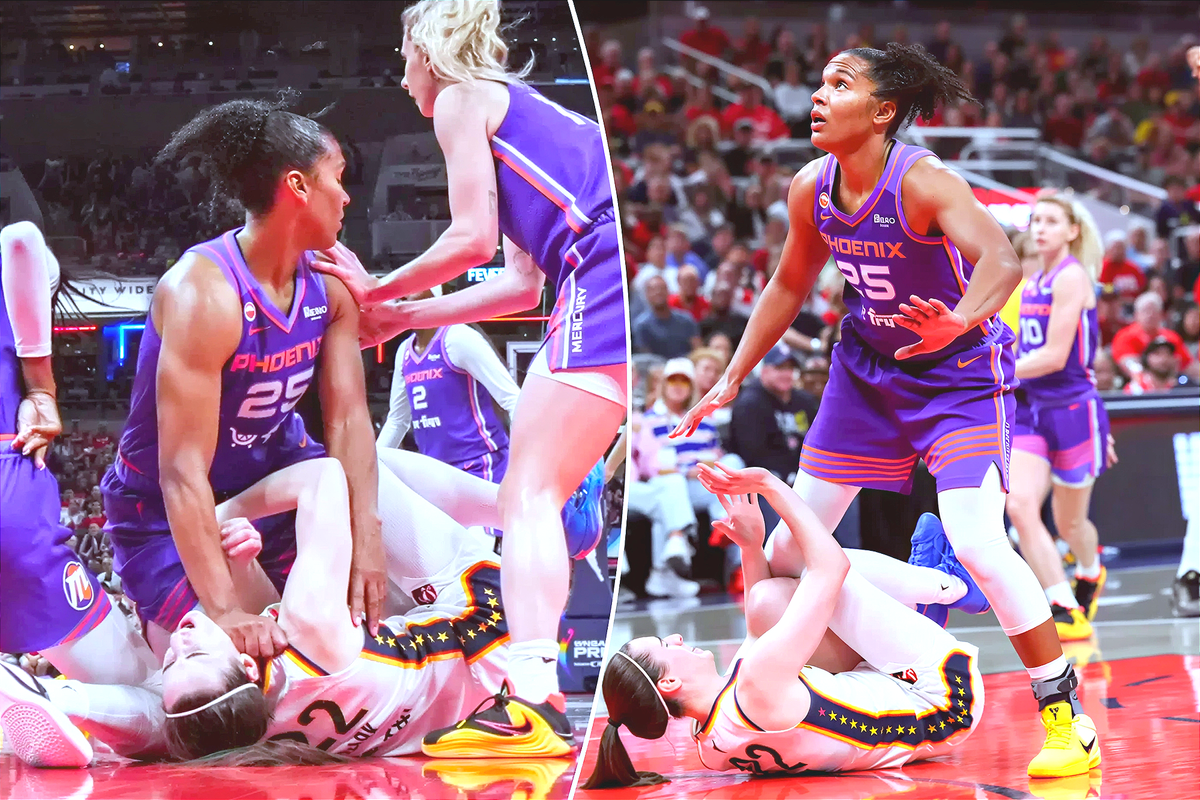
The downstream effect on the game itself is a distortion of competitive incentives. When the whistle is inconsistent, when certain star players enjoy an unspoken but empirically demonstrable favorable deviation in foul calls, the rational response from coaches and players is not to play purer basketball but to game the meta-game. Offensive players are trained to exaggerate contact, to snap the head back, to initiate collisions that in a properly officiated environment would be no-calls or offensive fouls. Defenders are trained to play with their hands behind their backs, because verticality is not reliably protected. The sport drifts from an athletic contest of skill and strategy toward a theater of manipulation, and the drift is a direct consequence of a regulatory body that has placed guild solidarity above competitive integrity. When the WNBA’s own broadcast partners can show a split-screen replay of a travel that went uncalled to decide a finals game, while the league issues a tepid acknowledgment days later, the compact with the audience is broken. Fans are not stupid; they see what they see, and they are being told by the institution that their eyes lie.
The Psychology of Impunity: Cognitive Biases that Cement the Status Quo
The persistence of this triad of failure cannot be explained by material incentives alone. It is also propped up by a collection of cognitive biases that operate at the individual, group, and institutional levels, creating a collective illusion that the system is functioning adequately.
At the individual level, the Dunning-Kruger effect runs rampant. General managers who have never built a draft model genuinely believe that their “eye test” is superior to quantitative methods, not because they have tested this belief against evidence but because they lack the meta-cognitive ability to assess their own incompetence in statistical reasoning. Head coaches who have never studied the principles of organizational psychology believe that their motivational style is effective, because the players who remain are precisely those who have survived the filter of that style, a classic survivorship bias.
At the group level, groupthink is the operational norm. Coaching staffs, general manager circles, and officiating crews are small, interdependent groups that prize cohesion. In such groups, dissent is a social cost, and the human brain is wired to avoid social costs even at the expense of accuracy. The assistant coach who suspects the defensive scheme is flawed will remain silent because the psychic discomfort of potentially being ostracized outweighs the distant, probabilistic benefit of winning a few more games. The official who sees her partner make a call she believes is wrong will not overrule it on the floor because the unwritten code of the crew demands solidarity. These micro-moments of silence aggregate into a macro-culture of error tolerance.
At the institutional level, the sunk cost fallacy exerts a gravitational pull on decision-makers. Ownership groups that have invested years and millions into a general manager or a head coach are psychologically incapable of writing off that investment, even as the evidence of failure mounts. Instead of making the clean break that a rational agent would make, they double down, extending contracts to avoid admitting a mistake, which only deepens the hole and delays the necessary reconstruction. The league office itself is not immune; having touted its officiating development program as world-class, it cannot now admit that the program is producing measurably inadequate outcomes without triggering a reputational crisis, so it defends the program rather than the truth.
The most insidious psychological mechanism is what organizational psychologists call the “normalization of deviance.” When small failures occur repeatedly without catastrophic consequence, the definition of acceptable performance gradually shifts. A missed rotation that doesn’t lead to a basket, a bad trade that is papered over by an unexpected free-agent signing, a blown call in a regular-season game that does not affect the playoff picture—each of these micro-failures recalibrates the internal standard. Over time, behaviors that would have been considered egregious a decade ago are reclassified as “the cost of doing business.” The league has become an expert at living with mediocrity because it has forgotten what excellence looks like at the institutional level.
The Decision-Science Blueprint for Reformation
Addressing a rot this deep demands interventions that are not cosmetic but architectural, grounded in the science of how to structure decisions to overcome the biases that produce the current equilibrium. The following framework proposes a set of mechanisms designed to break the incumbency cartel, puncture the accountability sink, and inject the cognitive diversity that the system has systematically expelled.
The first principle is the institutionalization of the pre-mortem at every level of decision-making. A pre-mortem is a structured exercise in which a team, before committing to a major decision, imagines that the decision has failed catastrophically and works backward to generate the reasons for that failure. Every significant trade, draft selection, head-coaching hire, and officiating policy change should be subjected to a mandatory, documented pre-mortem conducted by a mixed team that includes someone with no vested interest in the decision’s success. The pre-mortem output must be reviewed by a league-level standards committee, not to veto decisions but to ensure that the process was genuinely adversarial. This simple cognitive tool directly attacks overconfidence and groupthink by forcing the explicit consideration of failure pathways that the in-group would otherwise suppress.
The second principle is the creation of transparent, publicly accessible performance indices for general managers, coaches, and officials. For general managers, this means a “GM Score” that incorporates draft value over expectation, trade surplus value, cap efficiency, and a long-term winning projection, all normalized and explained in plain language. For coaches, a “Coaching Value Added” metric that adjusts for roster talent to measure the marginal impact of tactical decisions, player development trajectories, and lineup optimization. For officials, a “Whistle Accuracy Index” that tracks error rates by call type, game leverage, and official identity, with clear thresholds for probation, demotion, and termination. The specific formulas are less important than the principle of radical transparency: sunshine is the best disinfectant, and moving evaluation from the back room to the public square changes the incentive structure overnight. A general manager who knows her trades will be graded on a public dashboard, with her name attached, will behave differently than one who can deflect blame into the fog of internal conversations.
The third principle is the deliberate dismantling of the nepotistic hiring pipeline and its replacement with an open, meritocratic talent identification system. The WNBA should establish a neutral, league-funded scouting and executive development combine, separate from the playing combine, where individuals with backgrounds in data science, contract law, international scouting, and organizational leadership can demonstrate skills through standardized assessments and simulated decision-making exercises. Teams would be free to hire whomever they wish, but the pool of candidates would no longer be limited to the friends and family of incumbents. A parallel coaching certification program, modeled on elite international federation standards but with no prerequisite of a professional playing career, would create a pipeline of tacticians trained in the science of skill acquisition, biomechanics, and game theory. The existence of these alternative pathways would not force anyone to hire an outsider, but it would make the insider cartel’s monopoly visible and contestable in a way that it currently is not.
The fourth principle is the implementation of adversarial red-team reviews for officiating policy and playoff assignments. An independent body, staffed by retired coaches, analytics specialists, and former players from outside the officiating guild, should be empowered to audit officiating performance, propose rule interpretations that simplify judgment calls, and hold public hearings after controversial postseason games. This red team would operate with full access to all camera angles and tracking data, and its findings would be binding on playoff crew assignments. The union would resist, but the league’s bargaining position must be that the public’s trust in the product is non-negotiable. The goal is not to humiliate officials but to create a parallel source of institutional truth that the guild cannot capture.
The fifth principle is the injection of structured cognitive diversity into every decision-making body. The literature on collective intelligence is unequivocal: diverse groups outperform homogeneous ones on complex problem-solving tasks, not despite the friction of disagreement but because of it. League search committees for senior roles must include members who have never played professional basketball, individuals whose expertise lies in organizational behavior, finance, or high-reliability systems like aviation or nuclear power. A coaching staff should be required, as a condition of salary cap subsidy, to include at least one assistant whose primary background is in performance science rather than playing. An officiating crew should be mixed not just by race and gender but by cognitive style, pairing a fast-twitch intuitive caller with a methodical processor who serves as a built-in check. The current monoculture is an error-generating machine; diversity is the circuit breaker.
The sixth and most outside-the-box principle is the introduction of fan-powered accountability feedback loops. This is not a call for mob rule but for a structured, weighted signal-extraction system that treats the distributed cognition of a large, knowledgeable fan base as a resource rather than a nuisance. A mobile application could allow verified season-ticket holders and league-accredited analysts to submit real-time officiating assessments on close calls, with results aggregated, weighted by the assessor’s historical accuracy, and displayed on the public dashboard. The same mechanism could apply to post-draft grades and coaching decision critiques. The league fears this because it seems chaotic, but the scientific truth is that the aggregated judgment of many informed amateurs consistently outperforms the isolated judgment of a few conflicted experts. The WNBA’s audience is not a mindless mob; it contains thousands of basketball intellectuals whose collective insight is currently treated as a threat to be managed rather than a quality-control asset to be harnessed.
Conclusion: From Guild to Profession
The WNBA’s crisis of stewardship is not a mystery. It is the entirely predictable output of a system that selects for loyalty over competence, protects error from consequence, and psychologically adapts to mediocrity until it can no longer recognize itself. The athletes who comprise the league’s true value have held up their end of the bargain, elevating their craft to levels that would have been unimaginable a generation ago. The people paid to build around them, coach them, and adjudicate their contests have, by and large, not.
The way forward is not to hope for better individuals to miraculously emerge from the same broken machinery. It is to change the machinery. The decision-science blueprint outlined here is aggressive and will be met with fierce institutional resistance, because it threatens the privileges of those who benefit from unaccountability. But the alternative—continued drift in a period of maximum visibility—is not stability; it is decay on an accelerating timeline. The new media rights deals will not last forever. The new fans, drawn in by the brilliance of the players, will not tolerate indefinitely a product where championships are swung by uncorrected officiating errors and where their hometown team is run by someone who got the job because she was a great teammate in 2012. The league stands at a juncture where it can either become a case study in how institutions self-correct under pressure or a cautionary tale of a golden age squandered by the very people entrusted to protect it. The choice belongs to those with the courage to break the cartel and build a profession worthy of the game.