
Sex and the Retard
Sexuality in people with intellectual disability requires a dual clinical focus: mitigating elevated risks of abuse while supporting informed, developmentally appropriate sexual education and autonomy. Effective care protects safety and affirms healthy sexual expression across the lifespan.
The Sexual Lives of Individuals with Intellectual Disability: A Comprehensive Academic Review
Throughout much of history, the sexuality of persons with intellectual disabilities has been shrouded in stigma, fear, and profound misunderstanding. The very phrase “the sex life of the mentally retarded” reflects a clinical and social legacy that pathologized, infantilized, or even denied the existence of sexual personhood in this population. Contemporary scholarship, grounded in human rights frameworks and interdisciplinary research, has shifted toward a nuanced understanding of sexual development, expression, relationships, and the complex interplay of cognitive impairment with intimate life. This report synthesizes scientific, historical, ethical, and policy perspectives to provide a comprehensive account of the topic, consistently using the current and respectful terminology of intellectual disability while acknowledging the historical language for contextual accuracy.
Historical constructions of sexuality in people with intellectual disabilities have oscillated between two destructive poles: the asexual innocent and the hypersexual menace. In the eugenics era of the late nineteenth and early twentieth centuries, individuals deemed “feeble-minded” were cast as carriers of degenerate heredity, their sexuality a threat to the social body. This led to widespread institutionalization and coercive sterilization, justified by spurious science that linked intellectual impairment to promiscuity, criminality, and moral imbecility. Thousands of women and men were surgically prevented from reproducing under laws that persisted in some jurisdictions well into the latter half of the twentieth century. Conversely, within the sheltered confines of institutions, sexuality was rigorously suppressed. Segregation by sex, heavy sedation, and punitive responses to any expression of desire created environments where sexual identity was erased. When deinstitutionalization began in the 1960s and 1970s, community living exposed the profound gap between the sexual rights of disabled citizens and the readiness of society to support them.
The sexual development of adolescents and adults with intellectual disabilities follows the same biological trajectory as that of their nondisabled peers. Puberty, hormonal changes, the emergence of sexual feelings, and the capacity for sexual arousal and orgasm are physiologically intact in the vast majority of cases. However, the cognitive impairments that define the condition—limitations in intellectual functioning and adaptive behavior—reshape the landscape of sexual knowledge, decision-making, and social navigation. Abstract concepts like consent, contraception, and the long-term consequences of sexual activity can be extremely difficult to grasp without concrete, repeated, and individualized instruction. Many individuals receive little to no formal sex education, a void created by the discomfort of caregivers, the low expectations of educators, and the erroneous belief that ignorance will serve as protection. The result is a population at once highly vulnerable to sexual abuse and exploitation and equally capable of engaging in sexual behavior that is misunderstood or criminalized due to a lack of education about appropriate context and privacy.
Knowledge about sexuality among individuals with intellectual disabilities is generally poor and fragmented. Studies consistently reveal significant gaps in understanding basic anatomy, reproduction, sexually transmitted infections, and, most critically, the nuances of consent. These deficits are not inherent to the disability but rather a consequence of systemic neglect. Where tailored, accessible sex education programs are implemented, marked improvements occur in factual knowledge and, more importantly, in the ability to discriminate between safe and unsafe situations, say no to unwanted advances, and identify abusive dynamics. Effective curricula use concrete language, visual supports, social stories, and repeated role-play to translate abstract rights into practicable skills. The involvement of families is pivotal, yet many parents report feeling ill-equipped and anxious about addressing sexuality, fearing it will awaken desires or lead to pregnancy and victimization. This protective impulse, while understandable, often paradoxically increases risk by leaving individuals without the tools to understand their bodies or boundaries.
A critical dimension of this topic is the heightened vulnerability to sexual abuse. Epidemiological data robustly demonstrate that people with intellectual disabilities are at dramatically greater risk of sexual victimization than the general population, with some studies indicating rates of abuse that are two to three times higher. Perpetrators are most often known and trusted individuals—family members, paid caregivers, transportation providers, or peers in congregate settings. The dynamics of this abuse are rooted in the same lack of education, social isolation, and communication barriers that pervade the sexual lives of this group. Victims may not have the vocabulary to report abuse, may not recognize that what is happening is wrong, or may have been conditioned to unconditional compliance with authority figures. In many cases, disclosures are dismissed or disbelieved, particularly when the person’s testimony is considered unreliable due to intellectual disability. Legal systems worldwide have been slow to adapt, often requiring levels of verbal articulation and consistency that are incompatible with the communication styles of individuals with certain disabilities, leading to an abysmally low prosecution rate for crimes that are widespread.
The issue of sexual activity among individuals with intellectual disabilities inevitably engages the concept of capacity to consent. Ethical and legal frameworks generally require that consent be informed, voluntary, and given by a person with the cognitive ability to understand the nature and consequences of the sexual act. For many people with mild to moderate intellectual disability, this capacity is not categorically absent but is situational, developmental, and amenable to education. Assessments of sexual consent capacity have moved away from global, diagnosis-based judgments and toward functional, domain-specific evaluations that consider the person’s knowledge of the specific partner, the sexual activity, the risks, and the voluntariness of the decision. Yet a fundamental tension persists between the imperative to protect vulnerable individuals from harm and the recognition of their right to sexual expression. Overly restrictive guardianship laws and blanket prohibitions can constitute a form of civil death, denying the person the opportunity to form the intimate relationships that are central to human flourishing. The ethical lodestar is supported decision-making, wherein individuals are aided in understanding and making their own choices to the maximum extent possible, with more restrictive interventions reserved only for cases of clear and substantial danger.
Sterilization, historically the blunt instrument of eugenic control, has not entirely vanished from the landscape of sexual management. Although the era of mass non-consensual sterilization has formally ended in most nations, the procedure continues to be sought by parents and guardians as a form of menstrual management or permanent contraception, often for women with severe to profound disabilities. In many jurisdictions, court approval is required, and legal standards demand that the decision be made in the individual’s best interest, not for the convenience of caregivers. Ethical debate rages over less invasive, reversible options such as hormonal implants and intrauterine devices, which can manage menstruation and prevent pregnancy without the finality of surgical sterilization. The discussion is inseparable from the profound anxieties surrounding parenting by individuals with intellectual disability.
The topic of parents with intellectual disabilities sits at a fraught intersection of reproductive rights, child welfare, and societal prejudice. Research has consistently shown that with appropriate, long-term, and highly tailored supports, many parents with intellectual disabilities can learn and maintain adequate parenting skills and raise children in safe, loving homes. However, such supports are chronically underfunded and rarely available. The outcome is a child protection system in which parents with intellectual disabilities are disproportionately represented, their children removed at alarmingly high rates. Assessments of parenting capacity are often contaminated by implicit bias, focusing on the parent’s IQ score rather than on observations of actual parent-child interaction and the presence or absence of a supportive ecological context. The specter of eugenic thinking remains, with judgments frequently concluding that intellectual disability is in itself a risk factor for neglect, rather than evaluating whether specific skills can be taught in the home environment. The loss of a child in such circumstances is a devastating, and often preventable, outcome that perpetuates a cycle of family disruption.
Marriage and long-term intimate partnerships among individuals with intellectual disabilities, while increasingly accepted in principle, face formidable practical and attitudinal obstacles. Legal impediments, such as laws that void the marriages of individuals under full guardianship, still exist in some states and countries. More pervasive are the intangible barriers erected by family members, service providers, and residential program staff who, even when endorsing the abstract right to relationships, actively or passively obstruct them. A couple may be physically separated by placement in different group homes, denied time alone, or subjected to such intense surveillance that the development of any private emotional life is impossible. For people living in supported accommodation, staff attitudes are the single most powerful determinant of whether sexual expression is permitted. Agencies that have adopted clear, rights-based sexuality policies and provide ongoing staff training report a more positive environment, where relationships can be discussed openly and supportively negotiated. In the absence of such policy, the default is often a regime of silent prohibition.
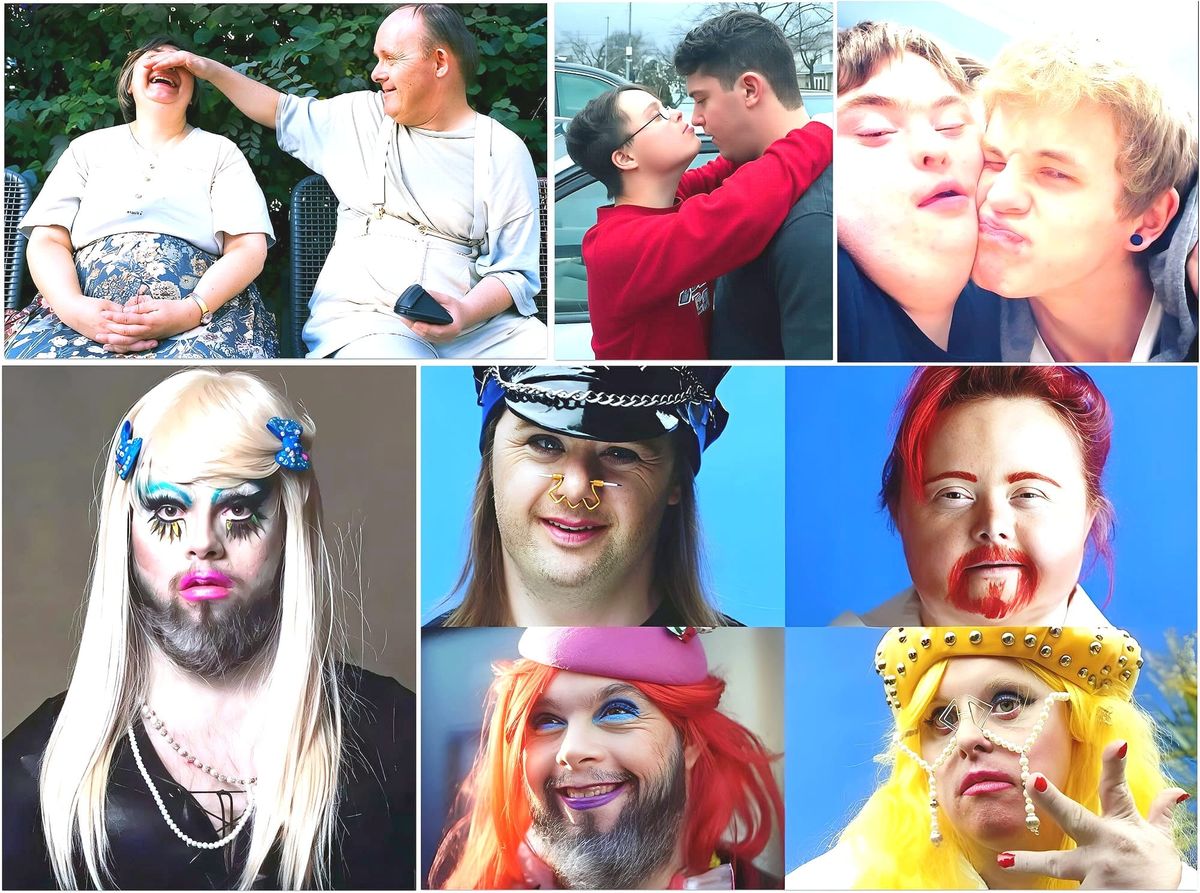
The lesbian, gay, bisexual, transgender, and queer individuals within the intellectual disability community face a layered, or intersectional, stigma. They must contend not only with the desexualization and infantilization common to all people with intellectual disabilities but also with homophobia and transphobia both in broader society and within disability service systems. Staff and families may dismiss a same-sex attraction as a phase, a confusion, or a consequence of limited opposite-sex opportunities in gender-segregated programs. Gender nonconformity is often pathologized as a behavioral issue rather than recognized as a core aspect of identity. As a result, LGBTQ people with intellectual disabilities are among the most isolated and invisible minorities, with almost no targeted resources to support their identity development and relationship formation. The few peer support groups and accessible materials that exist have demonstrated profound benefits, providing validation and a desperately needed sense of community.
At the profoundly disabled end of the spectrum, the very definition of sexual experience becomes a philosophical and empirical challenge. Individuals with severe and profound intellectual disabilities may be unable to conceptualize or communicate about sexuality in a conventional sense. Here, the focus of ethical care shifts to recognizing and addressing a more fundamental human need for touch, sensory pleasure, and bodily integrity. The question is not about interpersonal sexual activity, which is unlikely to be either possible or desired in a consent-based framework, but about the quality of physical life. This includes providing opportunities for self-stimulation in a private and dignified manner, ensuring that intimate care is performed respectfully, and being attuned to expressions of bodily discomfort that could signal unrecognized genital pain or infection. The paramount duty is to guard against any form of sexual contact initiated by others, as individuals at this level of disability cannot give anything approaching consent and are at extreme risk of institutional abuse. Their sexual rights, therefore, are the rights to safety, sensory wellness, and a life free from the intrusion of others’ desires.
The Internet and digital technologies have introduced an entirely new layer of complexity. Social media, dating apps, and online pornography are all highly accessible and hold a particular allure for a population often experiencing loneliness, social marginalization, and a paucity of relationship opportunities. The benefits are real: social connection, identity exploration, and access to information that may be otherwise denied. The risks are equally formidable. Without critical digital literacy skills, individuals are susceptible to online predation, financial scams, and the harmful internalization of pornography’s unrealistic and often misogynistic scripts. Many group homes and day programs respond with outright bans on Internet use, an approach that simply shifts risk to unmonitored mobile phone use outside the home and forecloses the possibility of teaching safe digital navigation. A more efficacious and respectful approach involves co-viewing, open discussion, and tailored education on digital safety and the distinction between pornographic fantasy and real-world intimacy, a pedagogical challenge that mainstream society has hardly mastered itself.
Staff training and organizational culture within disability services are the critical determinants of whether theoretical rights become lived realities. When direct support professionals receive no education on sexuality and disability, their natural reaction to witnessing sexual behavior is often anxiety and a reflexive move to stop it, documenting it as a “behavioral incident.” Shifting this culture requires a comprehensive, multi-level approach: a clear policy statement affirming the right to relationships; practical training that equips staff to handle common scenarios such as public masturbation or a couple seeking privacy; and a clear clinical pathway for situations that involve possible risk or capacity concerns. Supervision and reflective practice sessions are invaluable, allowing staff to process their own deeply held values and anxieties. Organizations that achieve cultural change move from a risk-averse gatekeeping role to one of supportive facilitation, seeing their mission as helping individuals live full lives rather than merely managing deficits.
Policy and law have, in many parts of the world, made a progressive turn toward affirming the sexual rights of persons with disabilities. The United Nations Convention on the Rights of Persons with Disabilities, ratified by the vast majority of nations, articulates the right to marry and found a family, the right to retain fertility, and the right to access reproductive health care on an equal basis with others. It establishes a paradigm in which legal capacity is the rule and substitute decision-making the exception, to be replaced by supported decision-making. However, translating treaty language into the operating procedures of a group home or the ruling of a family court is a slow and contested process. The gap between high-level rights and street-level reality remains vast. Many domestic legal systems still have statutes on the books that criminalize sexual contact with a “mentally defective” person under vaguely defined circumstances, creating a chilling effect that deters all discussion of sexuality and can even be used to prosecute consensual relationships between two people with intellectual disabilities.
Future directions in research and practice must be grounded in participatory methods that include the voices of individuals with intellectual disabilities as co-researchers, not merely as subjects. The knowledge base is still heavily tilted toward problems—abuse, risk, lack of knowledge—while the positive dimensions of love, pleasure, and satisfying partnership are vastly under-explored. Qualitative and ethnographic studies that follow couples over time, that document the meaning of sexual identity in their own words, are essential to developing a comprehensive science. There is an urgent need for rigorous outcome evaluations of comprehensive sex education curricula, not just on knowledge gain but on actual reduction of victimization and increase in respectful relationships. Furthermore, the development and validation of functional consent assessment tools that are culturally fair and practically usable in community settings is a pressing medico-legal task.
In closing, the sexual life of individuals with intellectual disability is not a niche clinical problem but a fundamental issue of human rights, identity, and dignity. The long legacy of abuse and repression is slowly yielding to a more enlightened approach that recognizes both the vulnerability and the agency of this population. The central challenge is to hold in tension two essential truths: that people with cognitive impairments are at uniquely high risk for sexual violence and exploitation, requiring robust societal safeguards, and that they are sexual beings with the same desires for intimacy, love, and bodily pleasure as anyone else, deserving of education and support to realize those dimensions of life to their fullest potential. A just society measures its treatment of its most marginalized citizens by whether it allows them not only safety, but also the opportunity for joy. The path forward lies in dismantling the fear, ignorance, and prejudice that have historically framed the discussion, and in building systems of support that respect the whole person, sexuality included, from adolescence to old age.