Crimson on the Wing: The Story of the Cinnamon Teal
Beyond its beauty, this duck embodies the precarious balance between wild habitats, human appetite, and the delicate interplay of ecology and culture. To study it is to glimpse the fragile connections tying wetlands to our dinner tables, and migration routes to sustainability debates.
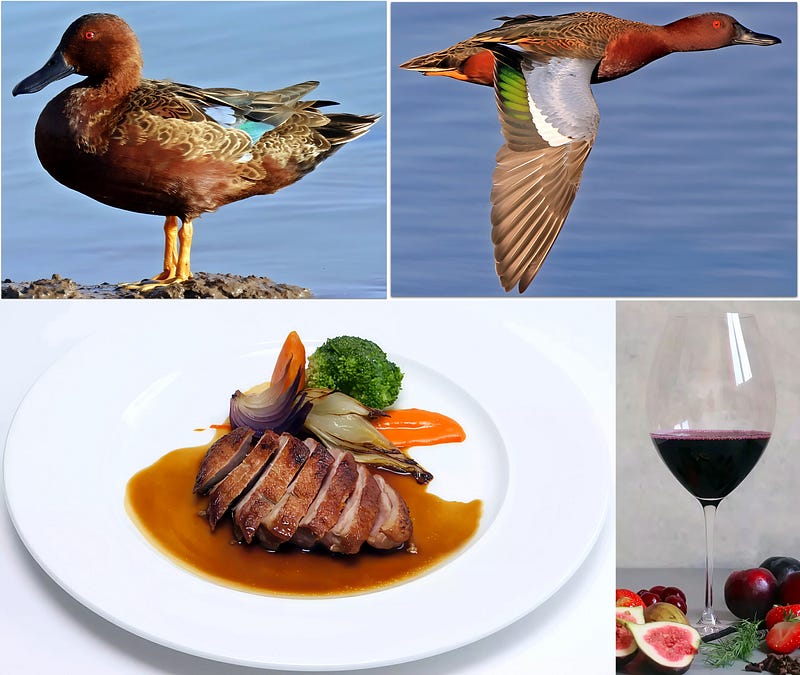
The Cinnamon Teal, Anas cyanoptera, is one of North America’s most striking waterfowl. With its deep brick-red plumage, it looks as though it has been brushed by the same hand that paints desert sunsets. Beyond its beauty, this duck embodies the precarious balance between wild habitats, human appetite, and the delicate interplay of ecology and culture. To study it is to glimpse the fragile connections tying wetlands to our dinner tables, and migration routes to sustainability debates.
Taxonomy
The Cinnamon Teal belongs to the family Anatidae, the same grand lineage that gives us mallards, pintails, and other dabbling ducks. Within its genus, Anas, the Cinnamon Teal has several subspecies. Anas cyanoptera cyanoptera is found in North America, while other subspecies extend into South America, stretching the bird’s presence from Canada to Argentina. Common names reflect its distinctive hue: “canelo” in Spanish, or simply “cinnamon duck.” Unlike domestic breeds of mallard, there are no widely cultivated edible varieties, though hunters and cooks have long prized its meat.

Biology
The male Cinnamon Teal in breeding plumage is unforgettable — burnished chestnut body, contrasting scarlet eye, and metallic blue forewing patches that flash in flight. Females are mottled brown, their plumage camouflaging them in reeds and grasses. These ducks are relatively small, about 14 in long (35.5 cm), with a wingspan of 24 in (61 cm). They weigh around 14 oz (400 g), compact yet strong enough for long migrations. Their diet includes aquatic invertebrates, seeds, and emergent vegetation. Life begins in shallow nests woven of grasses, with clutches averaging 8–10 eggs. Adapted for stealth and survival, ducklings can swim and feed almost immediately after hatching.
Ecology
Cinnamon Teals favor shallow wetlands, marshes, and ponds where they can filter-feed in safety. Their breeding grounds stretch across the western United States into Canada, while winter sends them southward, often as far as Central America. They play an important role in wetland ecosystems by cycling nutrients and controlling insect populations. Yet these habitats are threatened. Wetland drainage, agricultural runoff, and climate shifts reduce the spaces where these ducks can thrive. Conservation programs now emphasize protecting marshlands not only for biodiversity but also for the water filtration and flood control they provide.
Uses
Historically, Cinnamon Teals were hunted for food and sport. Their meat entered the kitchens of settlers and Indigenous communities alike. Today, regulated hunting continues, but the species is managed carefully to ensure sustainability. Economic value also flows indirectly: birdwatching, ecotourism, and photography bring enthusiasts to marshlands where Cinnamon Teals can be observed. Balancing hunting with conservation and recreation remains a delicate task, requiring coordination across borders.
Culinary Aspects
On the plate, Cinnamon Teal offers a lean, dark meat similar to other small ducks. The flavor is rich, slightly gamey, and carries a hint of mineral depth from its wetland diet. Roasted over an open fire, the skin crisps and releases a subtle aroma reminiscent of earth and wild herbs. The taste profile balances savory intensity with a mild sweetness in the finish. The mouthfeel is firm, not fatty, and benefits from gentle cooking to retain moisture. Historically, preparations included stews with wild onions or roasting with simple seasoning. Nutritionally, teal meat is high in protein and iron, while low in fat compared to domestic duck. Cultural importance varies, but across the Americas, it has represented both sustenance and a seasonal delicacy.
Wine Pairings
Given its bold yet lean character, Cinnamon Teal pairs well with wines that echo its earthy depth without overwhelming it. A Pinot Noir from Oregon or Burgundy complements the duck’s richness with red berry brightness and subtle earthiness. Alternatively, a Tempranillo from Rioja, with notes of dried cherry and leather, mirrors the gamey undertones. For those who prefer white, a full-bodied Chardonnay with gentle oak provides balance to roasted teal, its creamy finish softening the meat’s intensity.
Conclusion
The Cinnamon Teal is more than just a flash of red over the marshes. It is a messenger of ecological health, a reminder that wetlands are reservoirs of life, and a culinary link between tradition and sustainability. Protecting its habitats ensures not only the survival of a species but the preservation of cultural and ecological richness. To honor the Cinnamon Teal is to recognize that every wingbeat across the reeds carries with it the story of resilience and interdependence.