The Burning Kernel: Exploring the World of the Candlenut (Aleurites moluccanus)
The candlenut embodies the strange genius of human ingenuity: we learn to tame what is dangerous and transform it into something nourishing, flavorful, and even beautiful.
Introduction
In the lush tropics of Southeast Asia and the Pacific Islands, a tree with broad leaves and pale green fruit has long carried a dual reputation as both food and flame. Known as the candlenut, Aleurites moluccanus is a plant that sits at the crossroads of survival and culture. Its seeds, oily and rich, once provided light when skewered and burned like candles. Yet in kitchens from Hawaii to Indonesia, the same seeds — carefully prepared to neutralize their toxins — become the base of fragrant sauces, curries, and spice pastes. The candlenut embodies the strange genius of human ingenuity: we learn to tame what is dangerous and transform it into something nourishing, flavorful, and even beautiful.
Taxonomy
Aleurites moluccanus belongs to the family Euphorbiaceae, a group that contains many plants with potent chemical defenses. The genus Aleurites includes a few other species, but the candlenut is its most widely cultivated representative. Its common names reflect its varied uses and geographic spread: kukui in Hawaiian, kemiri in Indonesian, buah keras in Malay, and varnish tree in English. Though there are related species such as Aleurites rockinghamensis in Australia, none share quite the same culinary and cultural prominence.
Biology
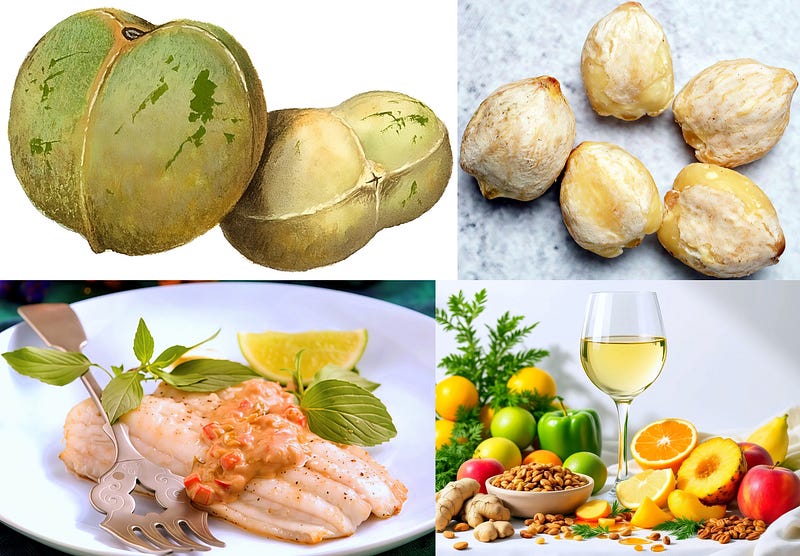
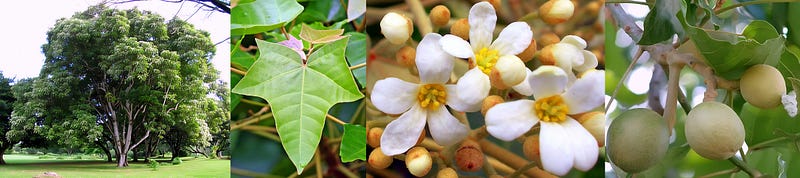
This fast-growing evergreen tree often reaches heights of 15 to 25 meters (49 to 82 ft), with some specimens soaring even taller. Its large, heart-shaped leaves sometimes stretch up to 20 centimeters (7.9 in) across, covered with a silvery down that shimmers in sunlight. The fruit is a green drupe, roughly 5 to 6 centimeters (2 to 2.4 in) in diameter, enclosing a hard shell that protects one or two seeds. These seeds are the candlenuts themselves — oily, pale, and deceptively mild-looking. Raw, they contain compounds that can cause stomach upset and even poisoning, a natural warning to consume with caution. Yet with roasting or cooking, their bitterness subsides, revealing a rich, creamy flesh that thickens stews and balances pungent spices.
Ecology
Candlenut trees thrive in humid tropical climates, often colonizing volcanic slopes, river valleys, and disturbed soils where other trees struggle. Native to the Indo-Malayan region, they have spread widely across Oceania and Polynesia, carried by voyagers as a multipurpose crop. The tree is ecologically resilient, improving soil fertility with its leaf litter and providing habitat for birds and insects. However, in some non-native regions, it has shown invasive tendencies, displacing local flora. Sustainable management focuses on harvesting while maintaining ecological balance, ensuring this versatile tree remains a boon rather than a burden.

Uses
Economically, the candlenut has been valued for its oil, extracted not only for lighting but also for varnishes, wood finishes, and even medicinal balms. In Hawaii, kukui oil has been applied to skin as a moisturizer and protector against the sun and salt. Modern markets have picked up on this, integrating kukui oil into skincare products. The timber, though soft, is useful for carving. Beyond its commercial uses, candlenut carries cultural weight: in Polynesia, it was used symbolically in rituals and tattoos, its soot serving as ink.

Culinary Aspects
Culinarily, candlenuts are indispensable in Indonesian and Malaysian kitchens. Ground into spice pastes, they provide a subtle nutty flavor and a silky texture that binds chili, garlic, and lemongrass into sambals and curries. The taste is often described as creamy, with a hint of bitterness that balances richer flavors. Once roasted, the nuts release a faint, earthy aroma with touches of wood smoke. Their mouthfeel is oily yet smooth, coating the palate without overwhelming it. Texture-wise, they dissolve easily, leaving sauces thickened and harmonized rather than gritty. The aftertaste is mild, a fading warmth rather than a dominant note. In appearance, they resemble pale macadamias, though their chemesthesis — the physical sensation they leave — is softer, less intense than spicy or pungent ingredients. Nutritionally, candlenuts are high in fats, particularly unsaturated oils, with moderate protein and micronutrient content, providing energy and depth to traditional diets.
Preparation is critical. A handful of nuts, perhaps 50 grams (1.8 oz), roasted until golden, can be ground into a paste or added whole to stews. In Hawaii, inamona is a relish of roasted candlenut mixed with salt and seaweed, often eaten with raw fish. In Southeast Asia, candlenuts appear in rendang, opor ayam, and laksa, each dish relying on their thickening power and subtle flavor balance.
Wine Pairings
Pairing wine with candlenut-based dishes requires sensitivity to its oily, creamy texture and the bold spices often accompanying it. A crisp white, such as Sauvignon Blanc or Grüner Veltliner, provides acidity that cuts through the richness while accentuating herbal notes. For more robust curries, a lightly chilled Pinot Noir or a spicy Grenache complements the nutty undertones without overwhelming the palate. Even sparkling wines, particularly brut styles, can lift candlenut dishes, cleansing the mouth between bites and echoing the nut’s delicate bitterness.
Conclusion
The candlenut is more than a tree; it is a story of adaptation, survival, and creativity. From a natural torch to a culinary cornerstone, it demonstrates how human cultures learn not just to endure nature’s challenges but to transform them into beauty and sustenance. In a world searching for sustainable resources and culinary diversity, the candlenut stands as a reminder that even the most unassuming seed can light both the hearth and the imagination.