The Decade of the 2000s – The Vibe in America: The Fall and the Afterglow
In 2007, Steve Jobs steps onto a stage and pulls a glass rectangle from his pocket, and the future fits in a single hand. Twitter's first tweets chirp into existence, and the news cycle shrinks to 140 characters. Civilization has fallen again....
A Cultural Portrait
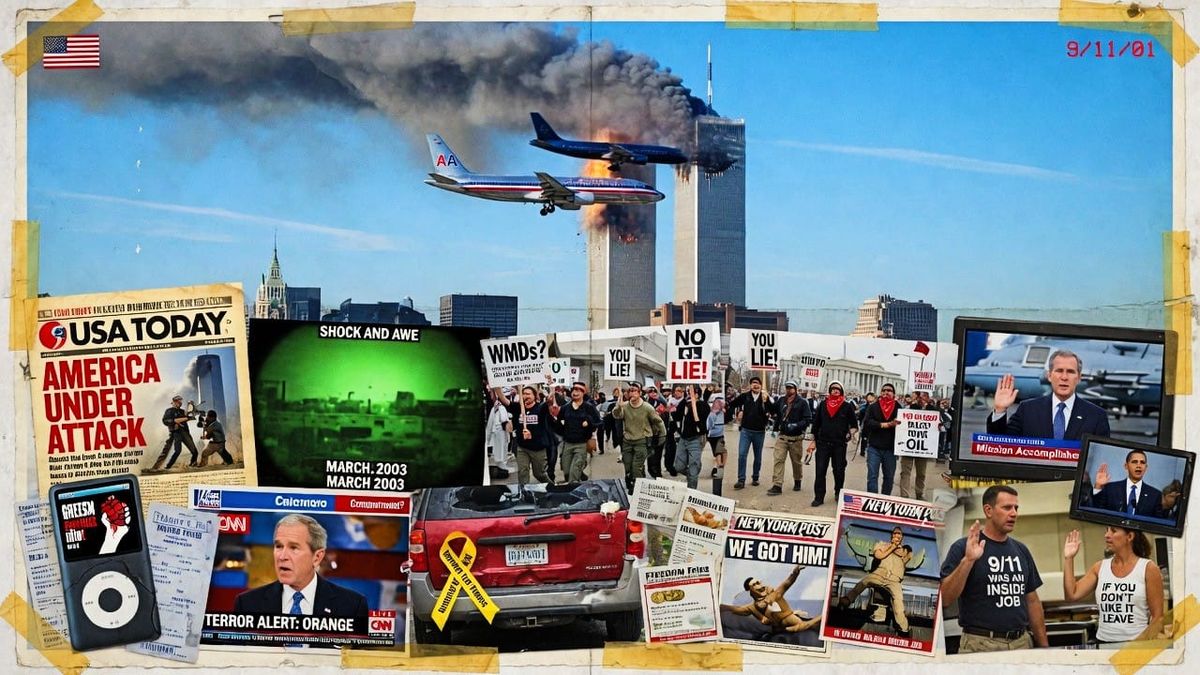
The decade begins in a hangover of phantom dread, the Y2K bug a disaster that never came, leaving behind a faint embarrassment and a glut of canned goods in basements across the suburbs. The year 2000 is still a sleepwalk, the national conversation obsessed with Survivor voting pacts and the searing question of whether *NSYNC is better than the Backstreet Boys. The economy, a dot-com soufflé, collapses into a trough of worthless stock certificates and Pets.com sock-puppet irony. The air tastes like the dust of a burst bubble, and everyone is waiting for the next thing. It arrives on a crystalline blue morning in September 2001, when the sky over New York turns to ash and paper. The planes turn every American into a witness, the TV replaying the impacts until the image is burned into the retina of the nation. The towers fall, the Pentagon smolders, a field in Pennsylvania becomes a graveyard of resistance, and the century's first decade truly begins in that moment of ruptured innocence. The psychological architecture of America is instantly rewired: a low-grade fever of fear, a craving for vengeance, a desperate, almost adolescent longing for a clear story of good versus evil.
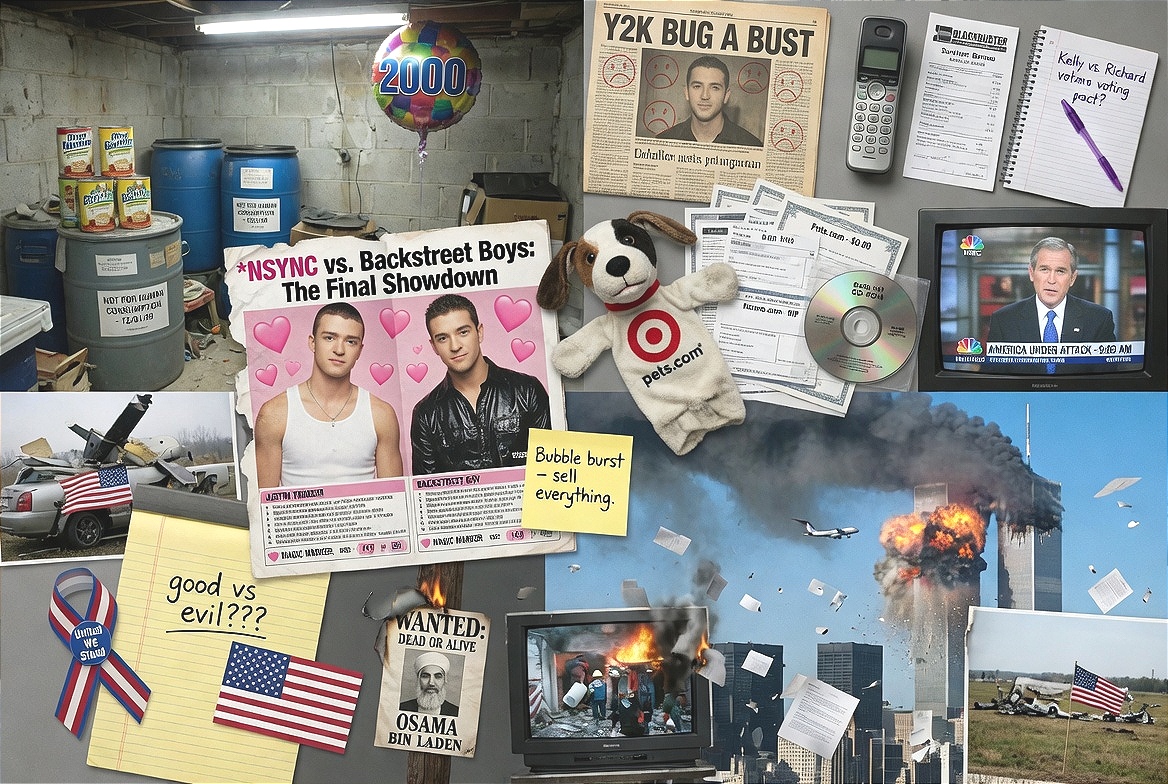
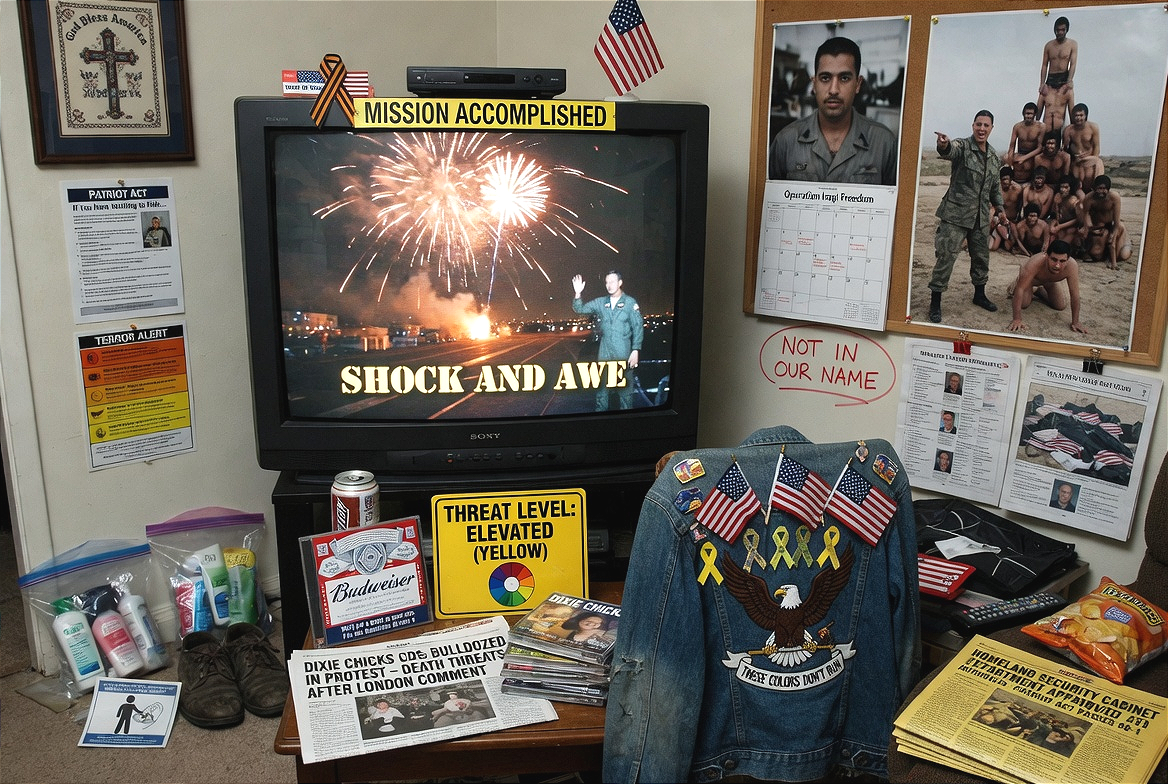
The immediate aftermath is a strange, suspended hush, then a roaring militarism. Flag pins bloom on every lapel. Toby Keith draws a line in the sand and boots connect with asses on country radio. The Dixie Chicks get death threats for speaking a single sentence of dissent in London, their CDs bulldozed in spectacle. The Patriot Act slips through, a vast lattice of surveillance that many accept with a shrug: if you have nothing to hide, you have nothing to fear. Homeland Security becomes a cabinet department; the terror alert level rotates through a Crayola spectrum of orange and yellow, a perpetual low-grade dread that seeps into the pores. At the airport, shoes come off, liquids are confiscated, and the TSA pat-down becomes an intimate, standardized ritual. The wars begin: first Afghanistan, then Iraq. The TV broadcasts "shock and awe," a fireworks display over Baghdad, and the mission is declared accomplished on an aircraft carrier beneath a banner that will age into a cruel punchline. Abu Ghraib surfaces: a pyramid of naked bodies, a woman in a leash, and the photographs sear a new image of America into the world's consciousness, a counterpoint to the righteous victimhood of 9/11. The body bags come home in ones and twos, then hundreds, then thousands, and the political arguments harden into bunkers.
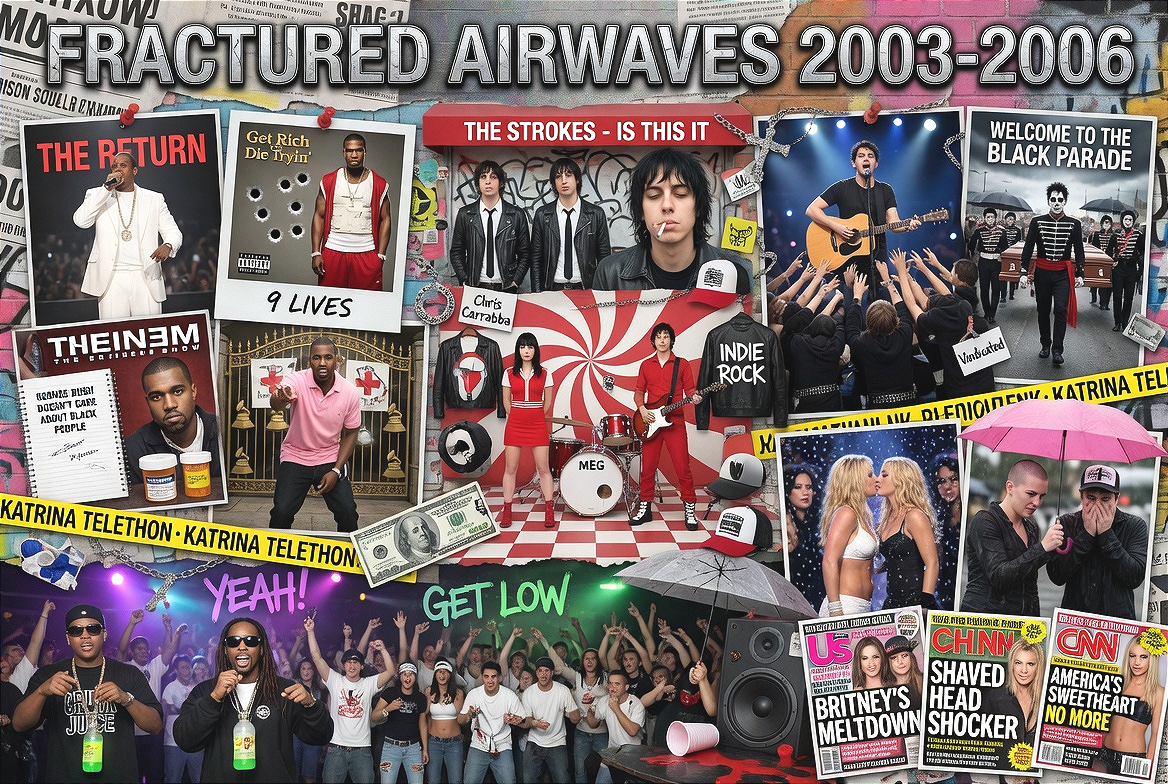
The cultural airwaves fracture. Hip-hop is the undisputed king, a global empire of bling and grit. Jay-Z retires and un-retires, Eminem turns rage into a best-selling diary, and 50 Cent is shot nine times and becomes an unstoppable force, the bulletproof mythology of the hustler made corporate. Kanye West crashes the gates with pink polos and sped-up soul samples, then tells a live TV audience that George Bush doesn't care about Black people during a Katrina telethon, a moment so raw and true it splits the public square in half. Out of the garage, a new angst: The Strokes bring back leather jackets and a studied indifference, the White Stripes color the world in peppermint red and white, and a new genre tag—indie rock—becomes a lifestyle accessory, a signifier of taste beyond the mainstream. Emo breaks into the mall, Dashboard Confessional's Chris Carrabba crooning his shattered diary entries to a thousand tear-streaked faces, and My Chemical Romance makes a concept album about death that becomes a stadium-sized black parade. Pop makes a spectacle of innocence lost: Britney kisses Madonna, shaves her head, attacks a paparazzo's car with an umbrella, and the entire tabloid-industrial complex feeds on the slow-motion collapse of a star who was once America's sweetheart. In the clubs, crunk juice flows, and dance floors bounce to "Yeah!" and "Get Low," a sweaty, ecstatic release from the heaviness outside.
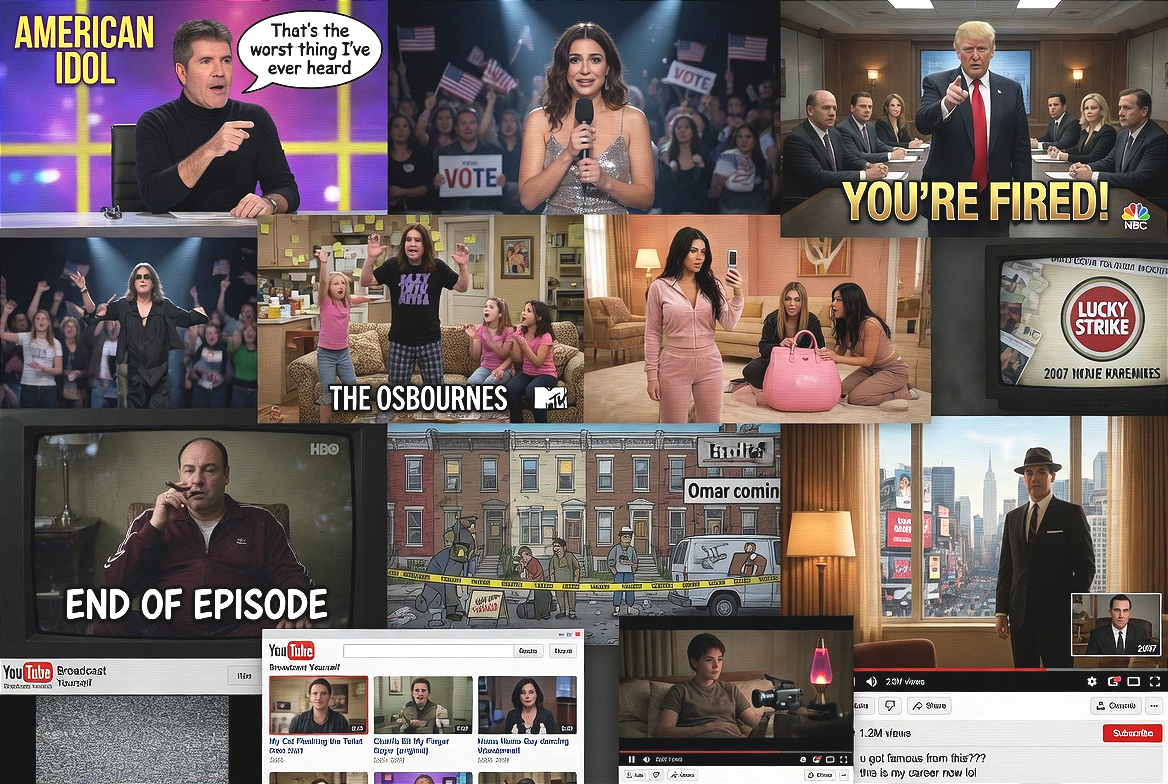
The screen becomes a window into other worlds, and reality television turns the mundane into a competitive bloodsport. American Idol makes karaoke a democratic process, and the cruel wit of Simon Cowell teaches a generation that honesty is a blunt instrument. The Apprentice turns a real-estate mogul with a comb-over into a boardroom deity, a symbol of tough-guy capitalism whose signature phrase—"You're fired!"—will later echo in a very different, more ominous civic context. The Osbournes normalizes the bickering chaos of celebrity families, and Keeping Up with the Kardashians is a late-decade seed planted, waiting to bloom into a shape-shifting empire of influencer nothingness. Meanwhile, prestige drama stirs: The Sopranos cuts to black mid-journey, leaving America wondering if its cable box just died; The Wire paints a sprawling, tragic mural of an American city's decay, and Mad Men arrives in the final year to summon the ghosts of an earlier, more confident era. YouTube uploads its first pixelated videos, a chaotic firehose of bedrooms and weirdness, and by decade's end, viral fame is a career path.
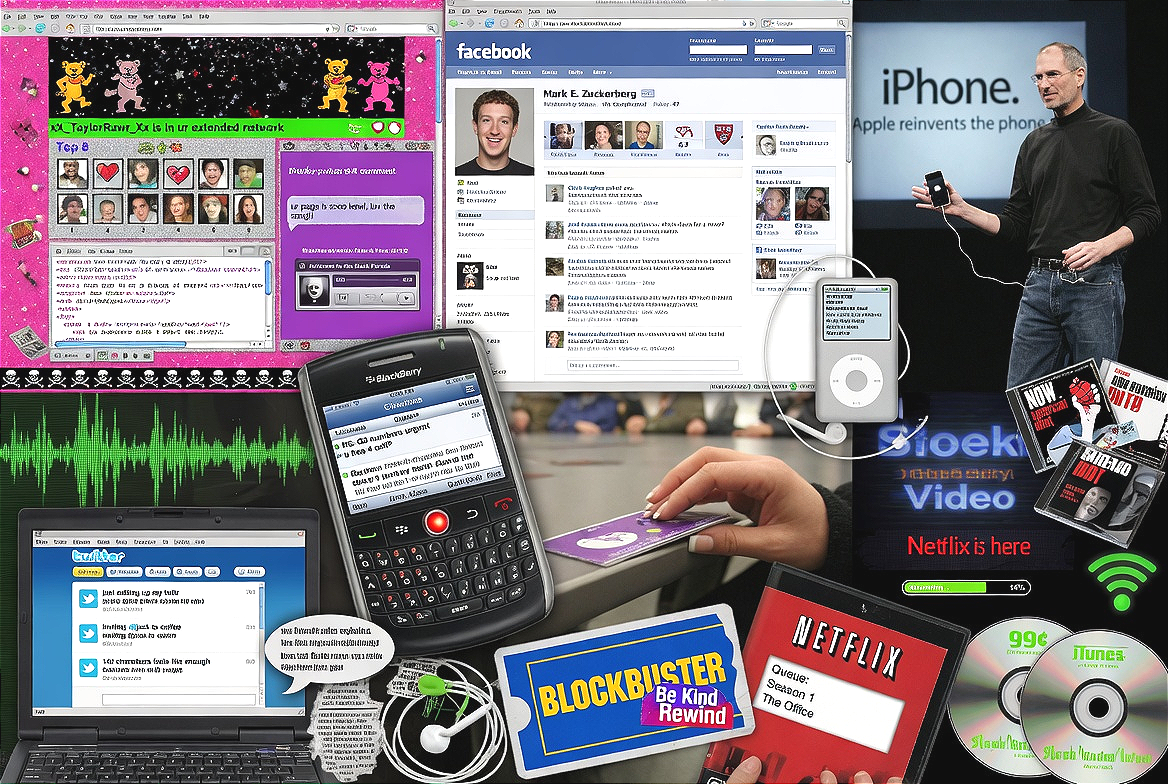
The digital life accelerates from dial-up screech to always-on broadband glow. The personal computer swells into a hub of identity. MySpace gives everyone an editable HTML canvas, a top-eight ranking of friends that causes real emotional devastation, and a glitter-graphic aesthetic that defines the mid-2000s as surely as any flag. Facebook starts in a Harvard dorm as a hot-or-not for the Ivy League, then opens its gates and colonizes the world, a clean, blue-and-white grid of pokes and relationship statuses that turns all life into a performance. The BlackBerry, nicknamed the CrackBerry, makes email a constant, twitching addiction, its tiny keyboard clicking under boardroom tables. Then, in 2007, Steve Jobs steps onto a stage and pulls a glass rectangle from his pocket, and the future fits in a single hand. Twitter's first tweets chirp into existence, and the news cycle shrinks to 140 characters. The music moves from CD wallets to the white earbud cord dangling from every collar, the iPod’s click wheel spinning through a library of tens of thousands of songs that were likely ripped from Limewire or bought for 99 cents on iTunes. The video store dies slowly, Blockbuster's blue-and-yellow ticket a relic, replaced by red Netflix envelopes and a nascent streaming whisper.
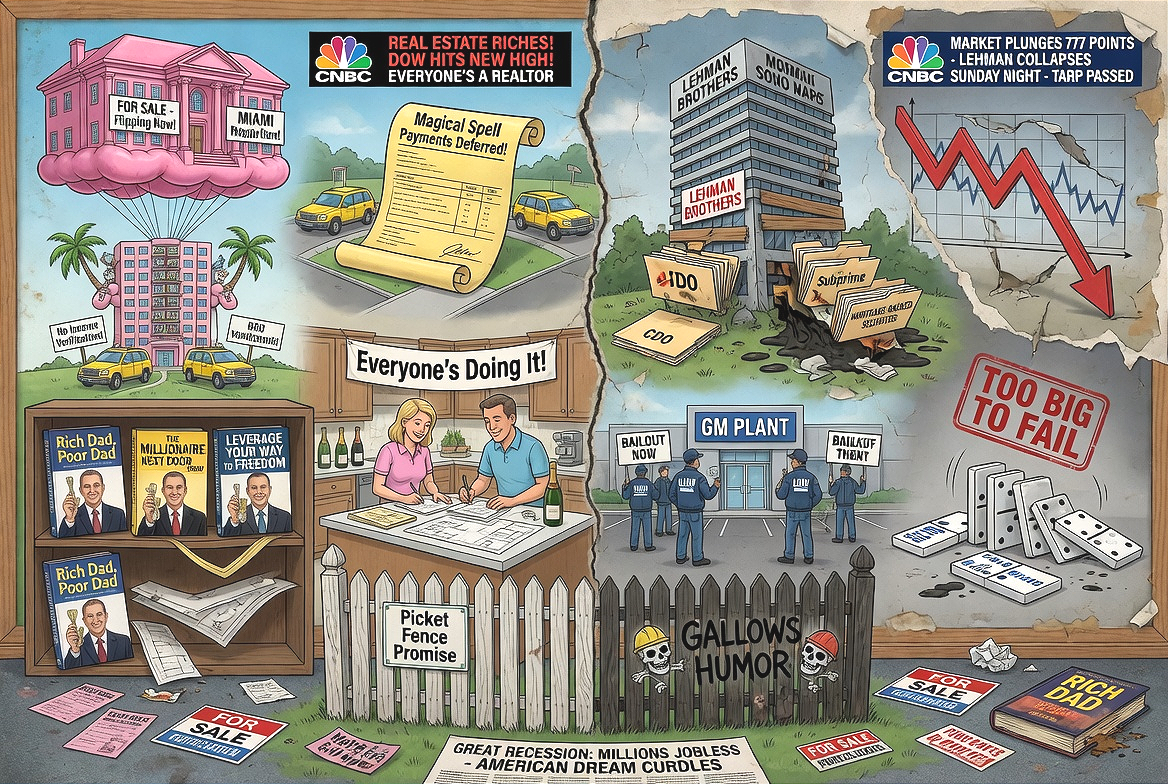
Economic reality is a tale of two Americas. The housing bubble inflates to grotesque proportions. It seems everyone is flipping a condo in Miami or refinancing a McMansion with no income verification, the interest-only ARM a magical spell that defers consequence. CNBC shouts about real-estate riches; bookshelves groan with titles like Rich Dad, Poor Dad promising financial freedom through leveraged debt. Then, in 2008, the music stops. Lehman Brothers collapses on a Sunday, a giant filing cabinet of toxic paper, and the whole edifice of global finance seizes up like a heart. The stock market dives, TARP is a scrambled acronym of rescue, and the Great Recession throws millions out of work. The psychic tone darkens: the optimism of the boom years curdles into fear and a simmering populist anger. The auto industry requires a bailout; the phrase "too big to fail" enters the lexicon. The American Dream mutates from a picket-fence promise into a source of gallows humor.
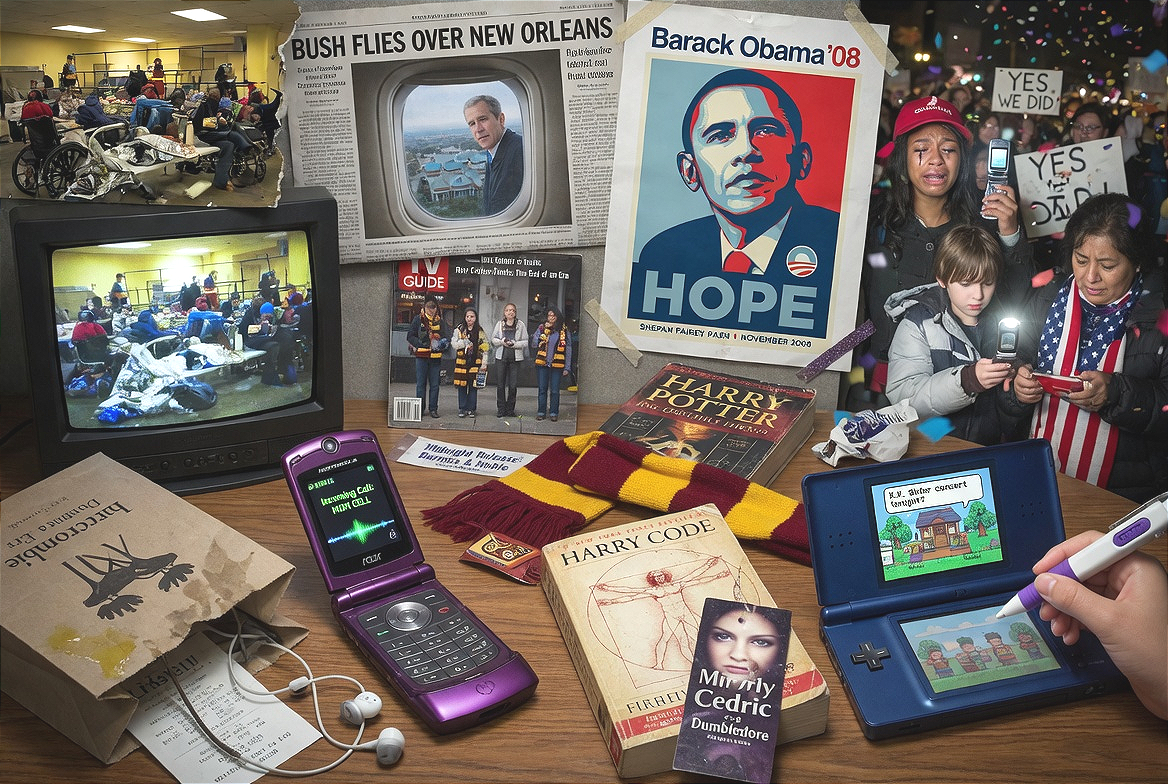
Daily life is saturated with specific textures: the smack of an Abercrombie & Fitch cologne-drenched store, the polyphonic ringtone of a Motorola RAZR, the chunky plastic joy of a Nintendo DS stylus. Books like The Da Vinci Code and Twilight pull millions into a frenzy of codebreaking and vampire romance. Harry Potter's final tome drops, and midnight release parties become a secular Christmas, children and adults dressed in house scarves, weeping together at the end of an era. Hurricane Katrina levels New Orleans, and the federal response is a slow-motion disaster that exposes the rot of inequality and indifference; the Superdome becomes a hellscape, and the President's flyover photo op becomes a defining image of detachment. The decade's politics climax in the 2008 election, where a young senator with a strange name and an oratorical gift runs on "hope and change," and his victory in November feels, for a brief, shimmering moment, like the closing of a long, dark chapter. The streets fill with weeping celebrants, and America briefly imagines itself reborn.
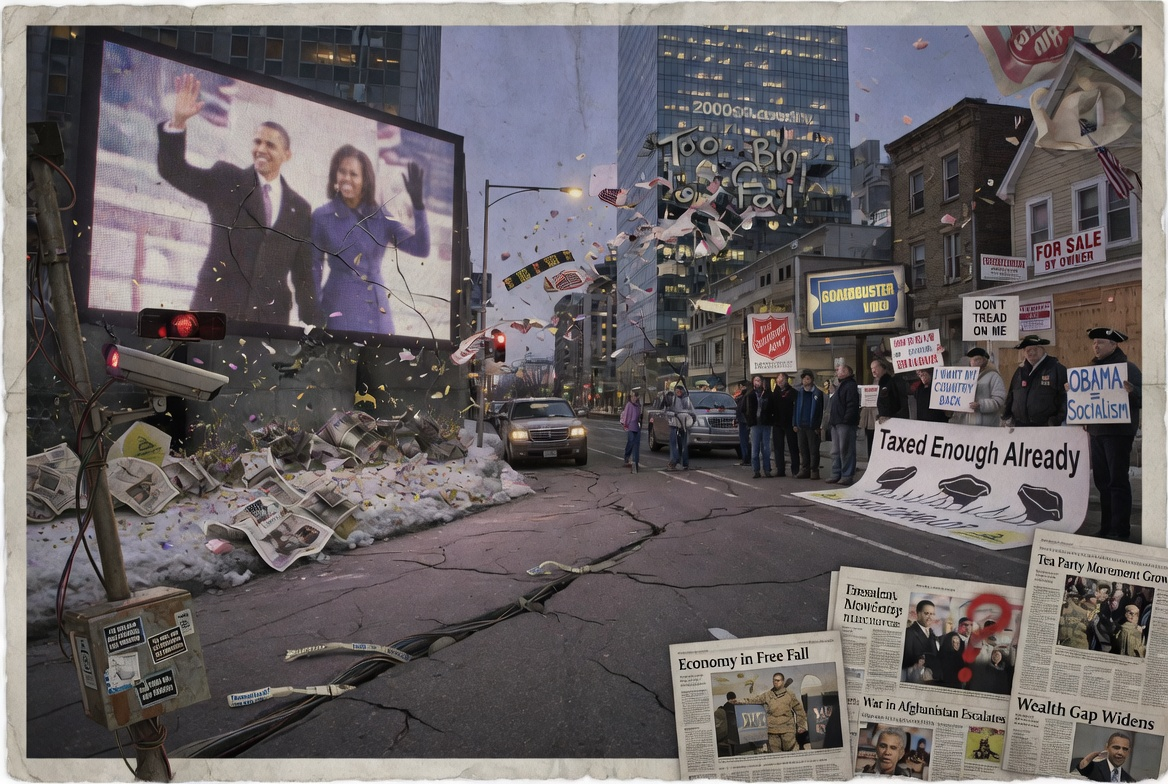
And yet, the cracks are already there. The surveillance state has grown roots; the wars grind on; the wealth gap yawns wider; and the cultural divisions, far from healed, have sharpened into tribal identities. The decade ends in a strange in-between space, the afterglow of the Obama inauguration fading into the cold reality of a broken economy and a polarized political landscape where the Tea Party is beginning to stir, a harbinger of the populist earthquake to come. The vibe of the 2000s is a long, vertiginous descent from a high tower of complacent prosperity into a new millennium that turned out to be anything but a holiday from history. It was a decade of falling, of scrambling for a handhold, and of convincing ourselves, again and again, that the worst was behind us.
Mood-Board: The 2000s
Ash-gray dust and lapis-blue sky from a cloudless September morning, the ticker-tape of missing-person flyers. The beige plastic of a CRT monitor, the neon lime of a Mountain Dew bottle, the raw umber of a desert camouflage uniform. The smell of a freshly opened iPod box, the crinkle of a metallic emergency blanket. A flip phone snapping shut with a satisfying click, the whir of an Xbox 360 disc drive. A silicone Livestrong bracelet in canary yellow, a black-velvet choker, a trucker cap worn ironically. The ominous, synthetic voice of a Amber Alert crawling across a TV screen, the digital shutter sound of a Sidekick camera. The archetypes: a prematurely graying office worker clinging to a foreclosure notice, a soldier uploading a grainy video from Fallujah, a teenager crying on MySpace, a rapper in a throwback jersey, a TV pundit screaming into the void, a hopeful organizer with a clipboard and a plastic smile.