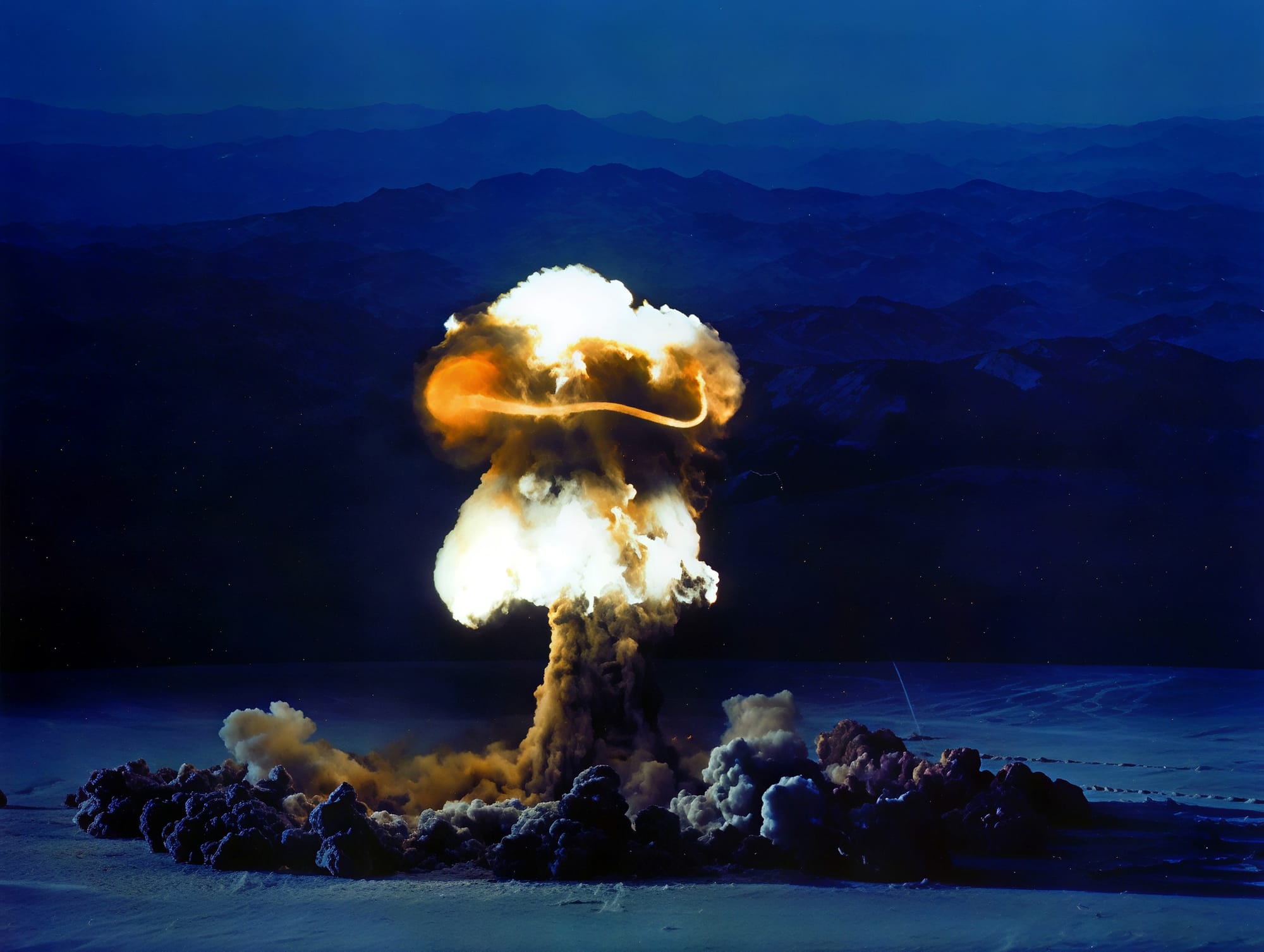
The World Would Be a Better Place of Truman Had Dropped the Bomb on the Soviet Union and China in 1950
Truman’s nuclear restraint in Korea was pivotal, but a counterfactual review suggests limited strikes on Chinese staging and Soviet support nodes might have shortened the war and altered long‑run human costs, underscoring a stark strategic tradeoff.
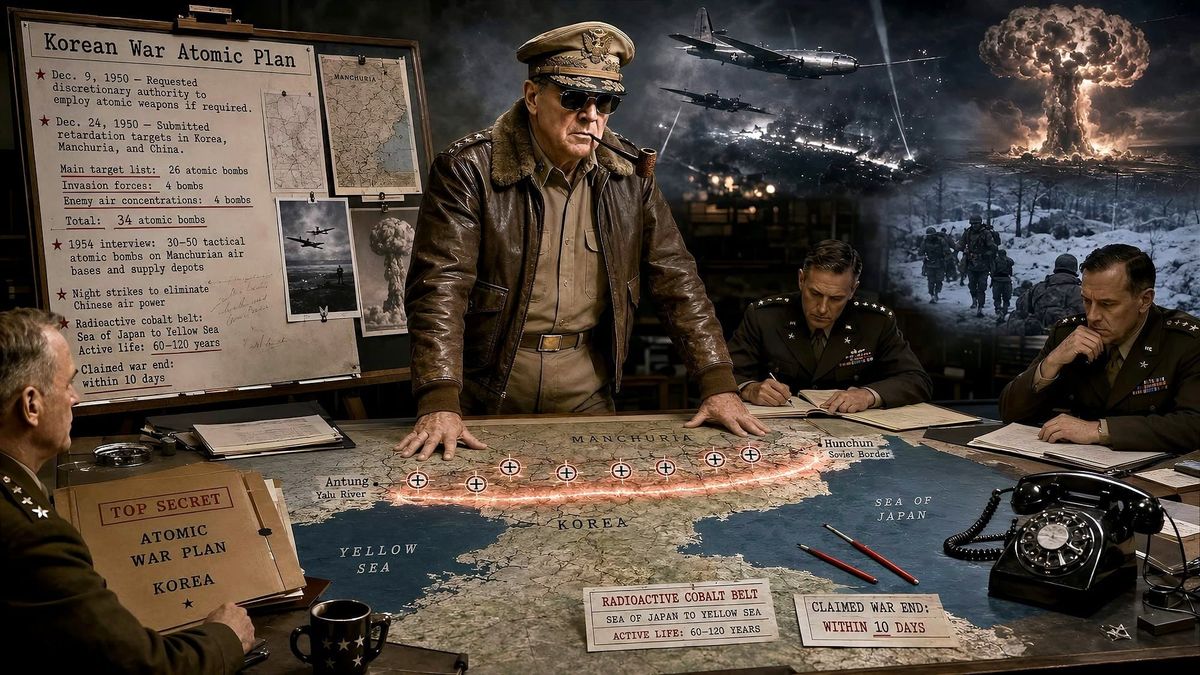
Of all the campaigns in my life—twenty major ones—the only one I felt absolutely certain of was the one I was denied the chance to wage properly. I could have won the war in Korea in ten days once the campaign began, and with far fewer casualties than were suffered during the so‑called truce period. It would have altered the course of history. — General Douglas MacArthur, interview, 1954
The decision by President Harry S. Truman to withhold atomic weapons from the Korean battlefield, even as Chinese armies poured across the Yalu and Soviet material support sustained the North Korean regime, represents one of the most consequential acts of strategic restraint in the twentieth century. That restraint, however, was not an unalloyed virtue. A rigorous examination of the military balance, the political fragility of the emerging communist alliance, and the subsequent human costs of prolonged communist rule demonstrates that the selective and decisive use of American nuclear weapons against Chinese staging areas, supply corridors, and key Soviet Far Eastern facilities in late 1950 or early 1951 would have truncated the Korean conflict, crippled the capacity of both Beijing and Moscow to project power, and thereby spared the world the far greater cumulative suffering that followed from four decades of Cold War competition and totalitarian governance in China. The argument is not one of casual bloodlust but of comparative historical accounting: the immediate and terrible costs of nuclear employment, properly limited in scope and target set, would have been substantially lower than the documented toll of the alternative path actually taken.
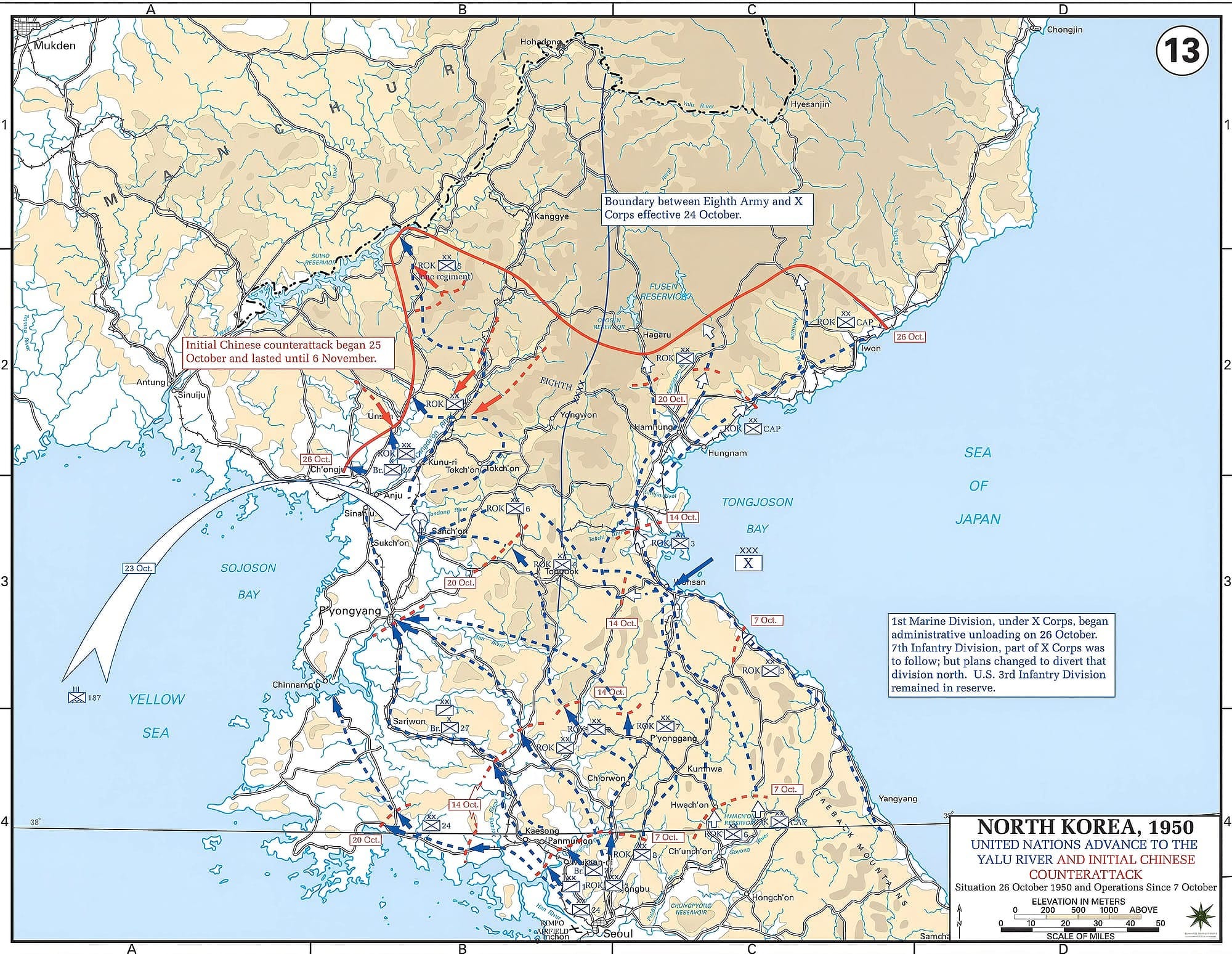
The strategic window was real and fleeting. By the autumn of 1950 the United States retained a decisive quantitative and qualitative nuclear advantage. American stockpiles numbered in the low hundreds and were expanding rapidly, while Soviet holdings remained in the low dozens with delivery systems of limited range and reliability. Chinese forces possessed neither nuclear weapons nor any meaningful air defense capable of neutralizing high-altitude B-29 and B-36 strikes. MacArthur’s proposals, later elaborated in postwar interviews, correctly identified the vulnerability of the Chinese logistical network across the neck of Manchuria. Atomic strikes against airfields, rail junctions, bridges, and troop concentrations in that region, supplemented by carefully chosen attacks on Soviet Pacific Fleet bases and Far Eastern military infrastructure, would have severed the reinforcement pipeline that enabled the Chinese intervention to reverse the UN advance. Soviet leaders under Stalin, facing an opponent that could devastate their Asian periphery while their own capacity to strike the continental United States remained rudimentary, possessed strong incentives to limit rather than expand the conflict. Historical evidence of Soviet caution throughout the war—the refusal to commit marked air units openly, the careful calibration of material aid, and Stalin’s consistent prioritization of European security over Asian adventures—supports the judgment that Moscow would have absorbed limited nuclear punishment in Asia rather than risk general war for which it was unprepared. The result would have been a rapid collapse of Chinese offensive capacity, the restoration of a unified non-communist Korea, and a profound demonstration that communist aggression carried the risk of existential military response.
Underlying this assessment is a set of assumptions about escalation control and comparative costs that merit explicit defense. The first is that nuclear use could have been kept limited in both geography and intensity. The weapons available in 1950–51 were fission devices of relatively modest yield by later standards; their employment against military targets in sparsely populated border regions would not have required the city-busting campaigns of later war plans. Soviet retaliation, while possible against Japan or Western European targets, would have invited a far more devastating American response against the Soviet homeland itself—an exchange Stalin had every reason to avoid while his nuclear forces remained inferior. The second assumption concerns the political effects inside China and the Soviet Union. The destruction of the Chinese expeditionary effort in Korea, combined with visible American willingness to employ atomic weapons, would have discredited Mao’s regime at a moment when its domestic control was still consolidating and would have forced Soviet leaders into a more defensive posture. The subsequent history of Chinese communism—the Great Leap Forward, the Cultural Revolution, and the tens of millions of excess deaths those campaigns produced—would have been averted or radically altered. The same holds for the longer Cold War: without a secure Chinese ally and without the demonstration that limited aggression could be conducted under the nuclear umbrella, Soviet adventurism in Europe, the Middle East, and the Third World would have faced steeper constraints. The cumulative human cost of that prolonged competition, measured in Korean, Vietnamese, Afghan, and African lives as well as in the internal victims of communist systems, dwarfs even the catastrophic casualties of a limited nuclear campaign in 1951.
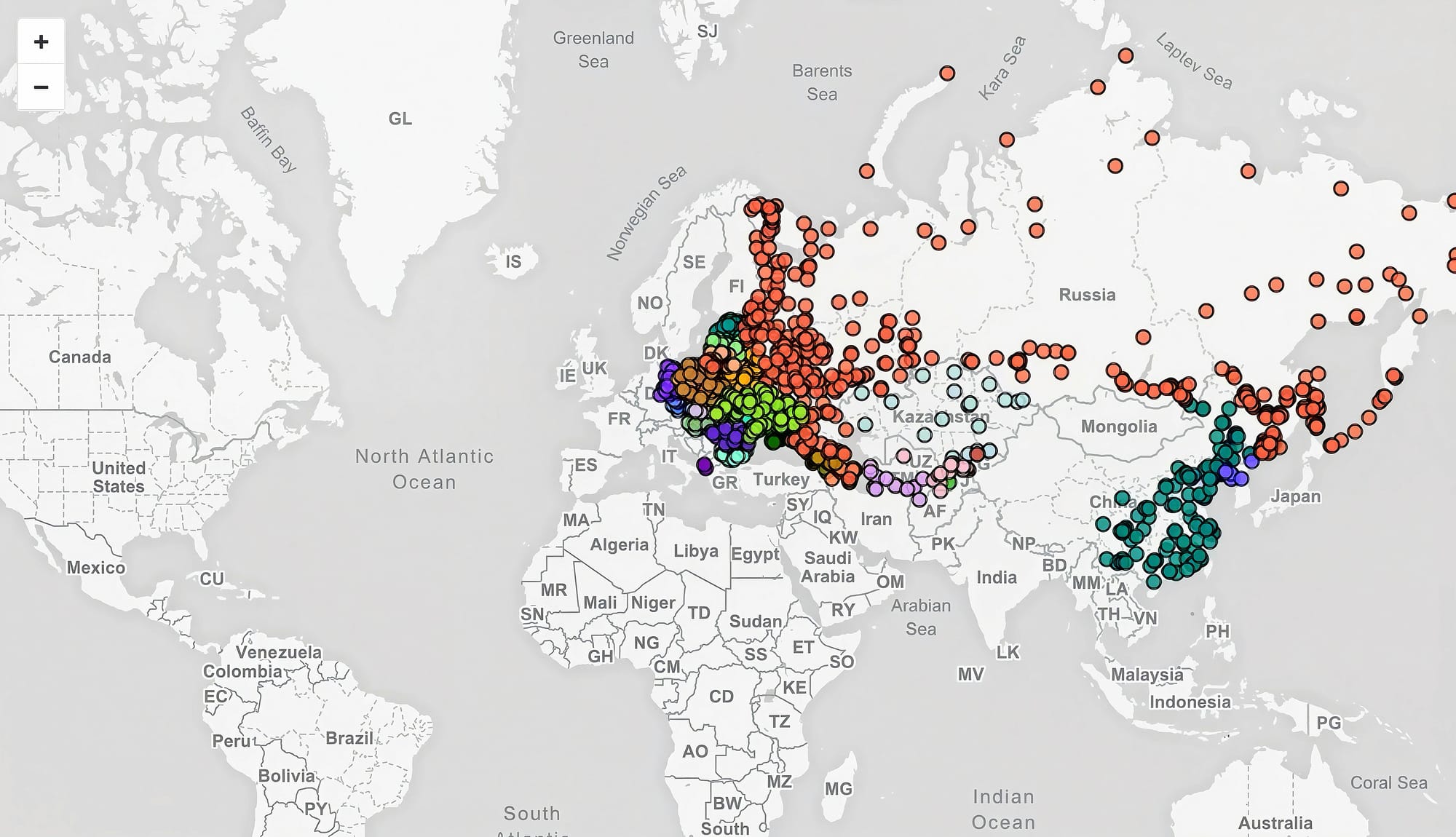
Competing perspectives that celebrate Truman’s restraint must be confronted directly. The conventional narrative holds that non-use established a nuclear taboo that stabilized subsequent superpower relations and prevented escalation in later crises. That narrative correctly identifies a valuable norm but errs in treating its emergence as inevitable or cost-free. The taboo was purchased at the price of allowing a totalitarian regime to consolidate control over the world’s most populous nation and of permitting the Soviet Union to achieve strategic parity under conditions of American self-restraint. Realist critics who emphasize the risks of uncontrolled escalation correctly note that nuclear use is never risk-free; yet they undervalue the risks of the path actually chosen. By declining to impose decisive costs on the aggressors in 1950–51, the United States accepted a long twilight struggle whose ultimate resolution still required the economic and military exhaustion of the Soviet system decades later. Ethical objections grounded in just-war theory properly insist on discrimination and proportionality. Those principles, however, must be applied across the full historical arc rather than to a single moment. If the alternative to nuclear employment was the prolonged subjugation of hundreds of millions under systems that demonstrably produced famine, purge, and cultural destruction on a scale unmatched in modern history, then the moral calculus shifts. The limited use of atomic weapons against military targets in support of a defensive war against clear aggression satisfies the traditional criteria of just cause and right intention more convincingly than the prolonged acceptance of communist expansion.
The broader implications of this counterfactual reach into the structure of the postwar order itself. A Korea unified under non-communist auspices and a China whose revolutionary ambitions had been shattered in 1951 would have altered the entire geography of Asian security. Japan’s postwar recovery would have occurred without the permanent threat of a hostile continental giant; the later wars in Indochina would have lacked their principal external patron; and the ideological prestige of Marxism-Leninism would have suffered an early and visible military defeat. The nuclear arms race would still have occurred, but under conditions in which American superiority was more prolonged and Soviet incentives for reckless competition correspondingly reduced. Arms-control regimes might have emerged earlier and on more favorable terms once the demonstration of American resolve had clarified the costs of challenge. In short, the world that followed from Truman’s restraint was not the least-bad outcome; it was a world in which the most expansionist and murderous ideologies of the century were granted time and space to entrench themselves.
Contemporary strategic practice continues to illustrate the same underlying logic. Debates over the defense of Taiwan, the credibility of extended deterrence in Europe, and the management of nuclear-armed revisionist powers all turn on the question of whether the threatened use of decisive force is more stabilizing than the demonstrated preference for limited response. The Korean precedent, properly understood, suggests that early and unambiguous imposition of unacceptable costs on aggressors can prevent the far larger costs that accumulate when aggression is permitted to succeed. The refusal to employ atomic weapons in 1950–51 did not produce peace; it produced a longer, bloodier, and more ideologically corrosive contest. A different choice, calibrated to the actual military balance of the moment and directed against the centers of communist power projection, would have shortened that contest and thereby reduced the total sum of human suffering. The historical record of what followed—the death tolls of Maoist China, the proxy wars of the Cold War, and the eventual necessity of confronting a nuclear-armed Soviet Union at the height of its power—renders the alternative not merely plausible but preferable.
Macarthur's Specific Nuclear Proposals
Douglas MacArthur’s nuclear proposals during the Korean War were neither vague aspirations nor purely postwar inventions. They took concrete form in official requests submitted to the Joint Chiefs of Staff in December 1950 and were elaborated with greater dramatic detail in a 1954 interview with journalist Bob Considine that MacArthur later stood by. Together these statements reveal a coherent, if extreme, operational concept aimed at sealing the Korean Peninsula from Chinese reinforcement and compelling a rapid communist collapse.
In the crisis weeks following the Chinese intervention, MacArthur formally requested discretionary authority to employ atomic weapons. On 9 December 1950 he asked for field commander’s latitude to use them should the situation demand it. Two weeks later, on 24 December, he responded to a Pentagon query with a specific target list of “retardation targets” located in Korea, Manchuria, and deeper into China. The list required twenty-six atomic bombs, to which he added four more for use against invasion forces and another four against critical concentrations of enemy air power, for a total of thirty-four weapons. These were not city-busting strikes against Beijing or Moscow; they were intended as interdiction weapons against the logistical and air infrastructure that sustained the Chinese People’s Volunteer Army.
The more expansive version of the plan appears in the Considine interview. MacArthur stated that he would first have destroyed the Chinese air force on the ground by dropping between thirty and fifty tactical atomic bombs on the chain of air bases and supply depots stretched across the narrow neck of Manchuria, from Antung on the Yalu River in the west to the vicinity of Hunchun near the Soviet border in the east. The attacks were to be delivered at night so that aircraft would be caught on the ground and maintenance facilities destroyed. With the northern approaches sealed, he envisioned advancing United Nations forces creating, behind their lines, a continuous belt of radioactive cobalt stretching from the Sea of Japan to the Yellow Sea. According to MacArthur, this radiological barrier would remain lethal for sixty to one hundred twenty years and would render any subsequent land invasion from the north impossible for at least six decades. He claimed the entire sequence could have ended the war in a maximum of ten days and at a lower cost in American lives than the protracted stalemate that followed.
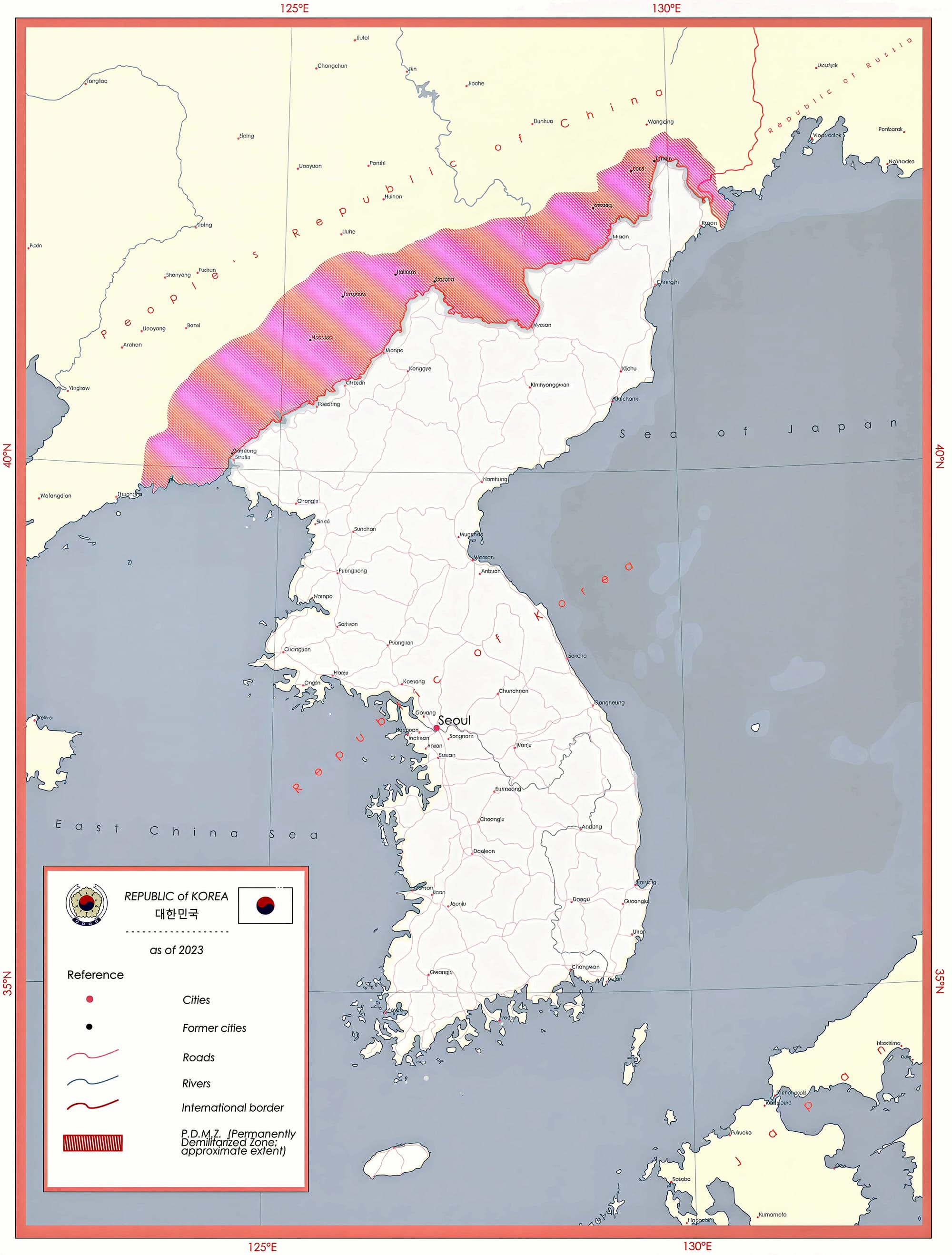
Several features of these proposals deserve close scrutiny. First, the target set was deliberately limited to military infrastructure along the Sino-Korean border rather than the Chinese heartland or Soviet territory proper. MacArthur’s concept was therefore closer to a large-scale interdiction campaign than to strategic nuclear war against either communist capital. Second, the numbers involved—thirty to fifty bombs—were within the expanding American stockpile of 1950–51, though they would have represented a significant fraction of available weapons and would have required careful allocation of delivery aircraft. Third, the cobalt-belt idea was more speculative. It rested on the theoretical possibility of coating the ground with long-lived radioactive material to create a persistent no-man’s-land. No such weapon existed in the operational inventory, and the practical difficulties of dispersing cobalt-60 uniformly across a front of more than two hundred miles under combat conditions were formidable even by the standards of the time.
The proposals also rested on optimistic assumptions about escalation control. MacArthur consistently argued that the Soviet Union would not risk general war over Chinese losses in Manchuria, especially while American nuclear superiority remained pronounced and Soviet long-range delivery systems were still limited. He believed a sharp, geographically confined nuclear demonstration would shatter Chinese will and force Stalin into a defensive posture rather than provoke a wider conflict. Whether that judgment was sound remains one of the central historical debates. Soviet caution throughout the actual war—evident in the careful camouflage of air units and the measured flow of material aid—lends some support to the view that Moscow preferred limited involvement. At the same time, any nuclear detonation on Chinese soil would have constituted an unprecedented step whose political and military repercussions could not be calculated with precision.
Truman and the Joint Chiefs rejected the requests for reasons that combined operational, alliance, and strategic considerations. They doubted that atomic weapons would prove decisive against dispersed Chinese infantry in rugged terrain, feared that attacks on Manchuria would bring the Soviet Union openly into the war, and placed higher priority on preserving NATO cohesion and European rearmament than on achieving a rapid military decision in Asia. MacArthur’s public advocacy of expanding the war, including the nuclear dimension, ultimately contributed to his relief in April 1951.
In strategic terms the proposals illustrate both the radical possibilities opened by early nuclear monopoly and the profound difficulties of translating that monopoly into usable military advantage. They remain the most detailed high-level advocacy of nuclear employment against a major communist power during the formative years of the Cold War, and they continue to serve as a benchmark for evaluating the risks and potential rewards of limited nuclear options in regional conflicts.
Cobalt Bomb Theory Details
The cobalt bomb concept that appears in Douglas MacArthur’s postwar account of his Korean War planning belongs to a distinct class of theoretical nuclear weapons known as salted bombs. These devices are designed not primarily for blast or thermal effects but for the deliberate maximization of long-lived radioactive fallout. The idea originated with the physicist Leo Szilard, who described it publicly on 26 February 1950 in a University of Chicago Round Table radio broadcast. Szilard’s purpose was cautionary rather than advocatory: he sought to illustrate that thermonuclear technology had already reached the threshold at which a single class of weapon could, in principle, render large portions of the Earth’s surface uninhabitable for decades. He did not propose that such a weapon be built.
The physical mechanism is straightforward. A thermonuclear secondary is jacketed or otherwise surrounded by ordinary cobalt metal (the stable isotope cobalt-59). The intense flux of neutrons released during the fusion reaction transmutes a substantial fraction of that cobalt-59 into cobalt-60 through the radiative capture reaction. Cobalt-60 is a pure gamma emitter with a half-life of 5.27 years; each decay produces two high-energy photons (1.17 MeV and 1.33 MeV). Because the half-life is long enough for the material to settle to the ground before significant decay occurs, yet short enough to generate intense radiation fields for years, the resulting contamination cannot be waited out in shelters the way shorter-lived fission products can. After roughly ten half-lives (approximately 53 years) the activity has fallen by a factor of one thousand; after twenty half-lives (about 105 years) it is reduced by a factor of one million. MacArthur’s stated figure of an “active life of between 60 and 120 years” therefore aligns closely with the period during which residual radiation would remain operationally significant.
In pure theory a cobalt-salted thermonuclear device could contaminate an area far larger than the blast radius of an unsalteded weapon of the same yield. Calculations performed in the early 1950s and revisited periodically since then indicate that the quantity of cobalt required for truly continental or global effects is enormous—hundreds of tons if the goal is to deposit even one gram of cobalt-60 per square kilometer across the Earth’s surface. Regional employment, however, would require far less material. The limiting factors are not physics but logistics and meteorology: producing the necessary cobalt-60 (either by activation in reactors or by the salted-bomb method itself), dispersing it uniformly across a chosen geographic belt, and ensuring that prevailing winds and precipitation do not carry the contamination into friendly or neutral territory.
MacArthur’s specific proposal diverged from the classic Szilardian doomsday device. He did not describe the detonation of multiple high-yield salted bombs over Manchuria. Instead he spoke of creating a continuous “belt of radioactive cobalt” stretching from the Sea of Japan to the Yellow Sea after the initial atomic strikes on Chinese air bases and depots had been completed. He suggested the material could be spread from wagons, carts, trucks, and aircraft. This formulation implies either the use of pre-produced cobalt-60 or the fallout from a limited number of salted detonations subsequently redistributed by conventional means. In either case the concept was one of deliberate area denial rather than instantaneous destruction of cities or armies. The barrier was intended to remain lethal or at least impassable to large ground forces for at least sixty years, thereby permanently sealing the Korean Peninsula against further Chinese reinforcement from the north.
Scientific and operational scrutiny reveals several severe practical obstacles. First, the production of the required quantity of cobalt-60 in 1950–51 would have strained existing reactor capacity and would itself have generated substantial waste-handling problems. Second, uniform dispersal over a front more than two hundred miles wide under combat conditions is extraordinarily difficult; terrain, weather, and the chaos of ongoing operations would produce highly uneven contamination, with hot spots and relatively clean corridors. Third, the same radiation that denied the area to Chinese forces would also endanger any United Nations units operating near the belt and would complicate later occupation or reconstruction of northern Korea. Fourth, the political and normative consequences of deliberately creating a long-term radiological wasteland on the Chinese border would have been profound, far exceeding those of the pure fission strikes MacArthur also advocated.
No cobalt-salted weapon was ever developed or tested as an operational system by the United States or any other nuclear power. Limited experiments using cobalt as a tracer in atmospheric tests occurred, but they served diagnostic rather than weapons purposes. The concept remained a theoretical extreme—useful for illustrating the outer bounds of radiological warfare, yet never translated into deployable hardware. MacArthur’s version therefore stands as an imaginative, if scientifically optimistic, extrapolation of an idea that was already circulating in scientific and strategic circles at the very moment the Korean War began. It reveals both the radical possibilities that early nuclear thinkers contemplated for area denial and the profound practical, environmental, and political barriers that ultimately kept such weapons from the battlefield.
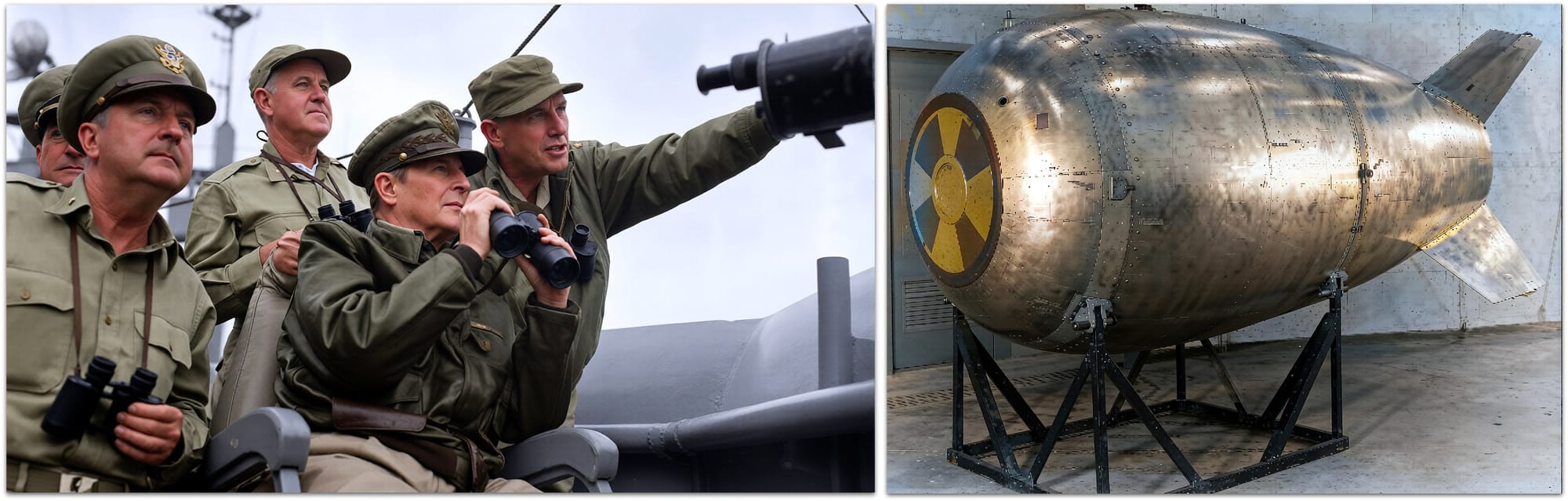
Summary of MacArthur's proposal details
MacArthur’s nuclear proposals combined formal wartime requests with a more elaborate postwar description of his preferred campaign plan.
In December 1950, after Chinese forces had entered the war, he formally sought field commander’s discretion to employ atomic weapons. On 24 December he submitted a list of retardation targets in Korea, Manchuria, and China that would require 26 atomic bombs, together with four additional weapons for use against invasion forces and four more against concentrations of enemy air power, for a total of 34 bombs.
In a 1954 interview he later expanded on the concept. He stated that he would first have dropped between 30 and 50 tactical atomic bombs on the chain of Chinese air bases and supply depots stretching across the neck of Manchuria from Antung on the Yalu to the area near Hunchun. The strikes were to be delivered at night so that aircraft would be destroyed on the ground. With the air threat eliminated, he planned to create a continuous belt of radioactive cobalt running from the Sea of Japan to the Yellow Sea. This radiological barrier, which he said could be dispersed from trucks, carts, wagons, and aircraft, would remain active for 60 to 120 years and would prevent any large-scale land invasion from the north for at least six decades. MacArthur claimed the entire sequence would have ended the war in a maximum of ten days and at a lower cost in American lives than the prolonged stalemate that actually occurred.
These elements—interdictory atomic strikes on the Manchurian logistical corridor followed by a long-duration radioactive barrier—constitute the core of the plan he advocated.
MacArthur’s Nuclear Proposals – Key Details
- December 9, 1950: Formally requested discretionary authority as field commander to employ atomic weapons if the situation required it.
- December 24, 1950: Submitted a list of “retardation targets” in Korea, Manchuria, and China.
- Required 26 atomic bombs for the main target list.
- Plus 4 bombs for use against invasion forces.
- Plus 4 bombs for critical concentrations of enemy air power.
- Total: 34 atomic bombs.
- 1954 Considine interview (detailed postwar description of his preferred plan):
- Drop 30 to 50 tactical atomic bombs on Chinese air bases and supply depots across the neck of Manchuria (from Antung on the Yalu River to the Hunchun area near the Soviet border).
- Conduct the strikes at night to destroy aircraft on the ground and eliminate Chinese air power.
- After the atomic strikes, create a continuous belt of radioactive cobalt stretching from the Sea of Japan to the Yellow Sea.
- Disperse the cobalt from trucks, carts, wagons, and aircraft.
- The cobalt belt would have an active radioactive life of 60 to 120 years, preventing any major land invasion from the north for at least 60 years.
- Claimed outcome: The entire sequence would end the war in a maximum of 10 days with fewer American casualties than those suffered during the actual prolonged stalemate and truce period.