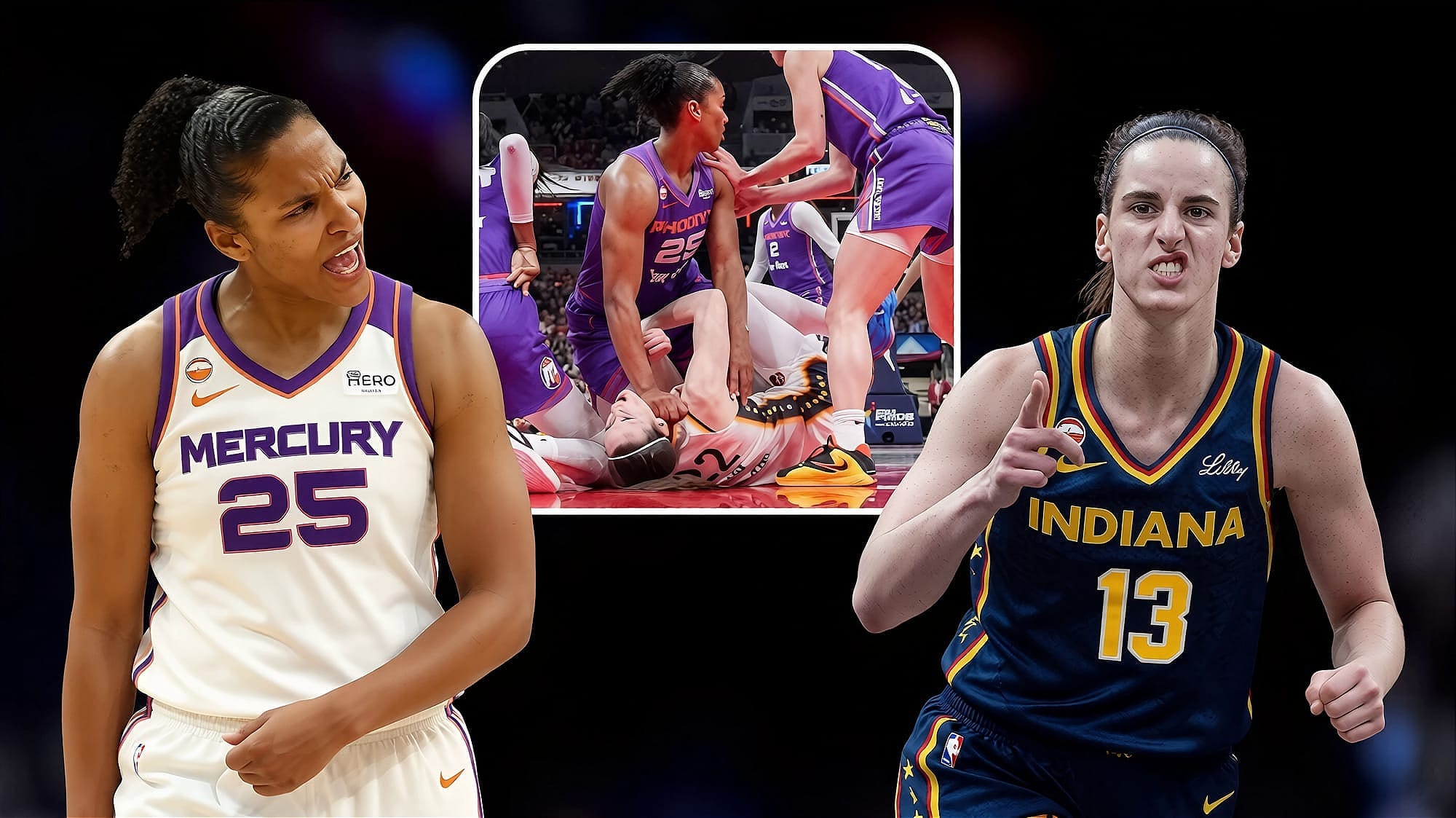
Two Ledgers, One Standard: Caitlin Clark, Alyssa Thomas, and the WNBA’s Discipline Credibility Gap
Clark’s and Thomas’s infraction profiles show that raw totals and rate‑adjusted measures describe different behavioral patterns, but the decisive contrast is structural: dissent receives instantaneous sanction while dangerous contact requires post‑hoc correction, revealing an enforcement imbalance.
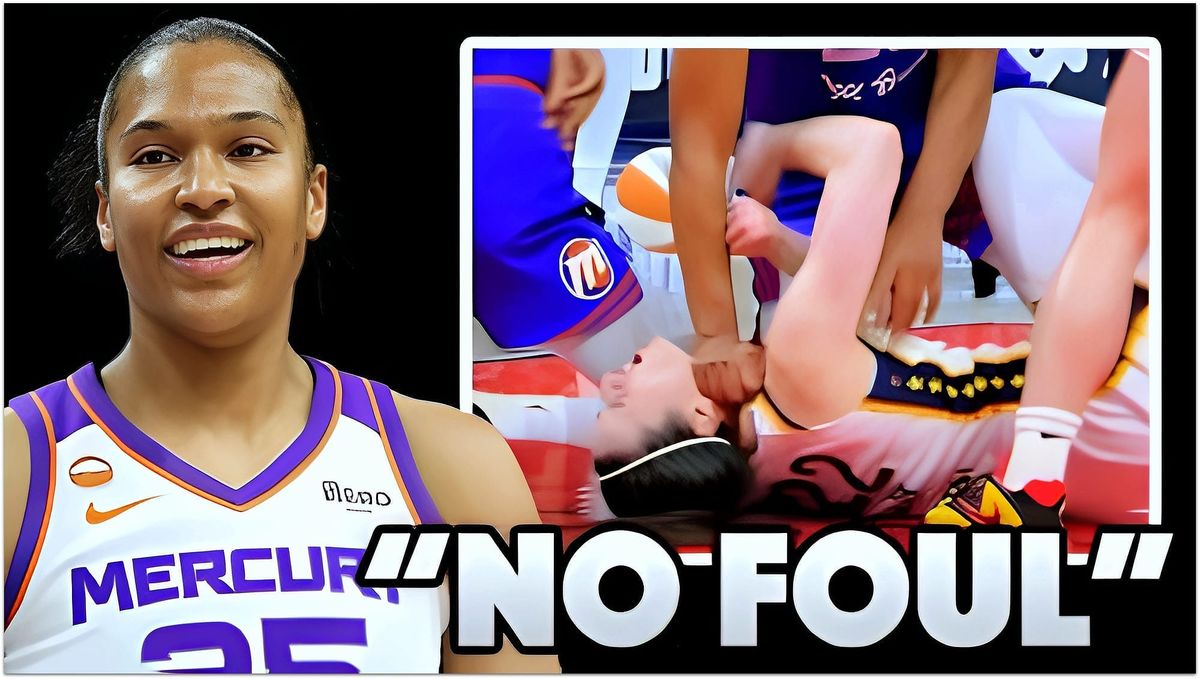
Clark’s technical-foul count is immediate, public, and approaching the suspension threshold. A dangerous act against her required postgame intervention before the league imposed discipline. The contrast raises a legitimate question about WNBA enforcement—but it must be separated from an unrelated criminal stalking prosecution.
The WNBA now has two disciplinary ledgers involving Caitlin Clark.
The first is precise and unforgiving. Clark has accumulated six technical fouls during the 2026 regular season. Each additional emotional reaction toward an official brings her closer to an automatic suspension that could remove the Indiana Fever’s primary ball handler from an important game.
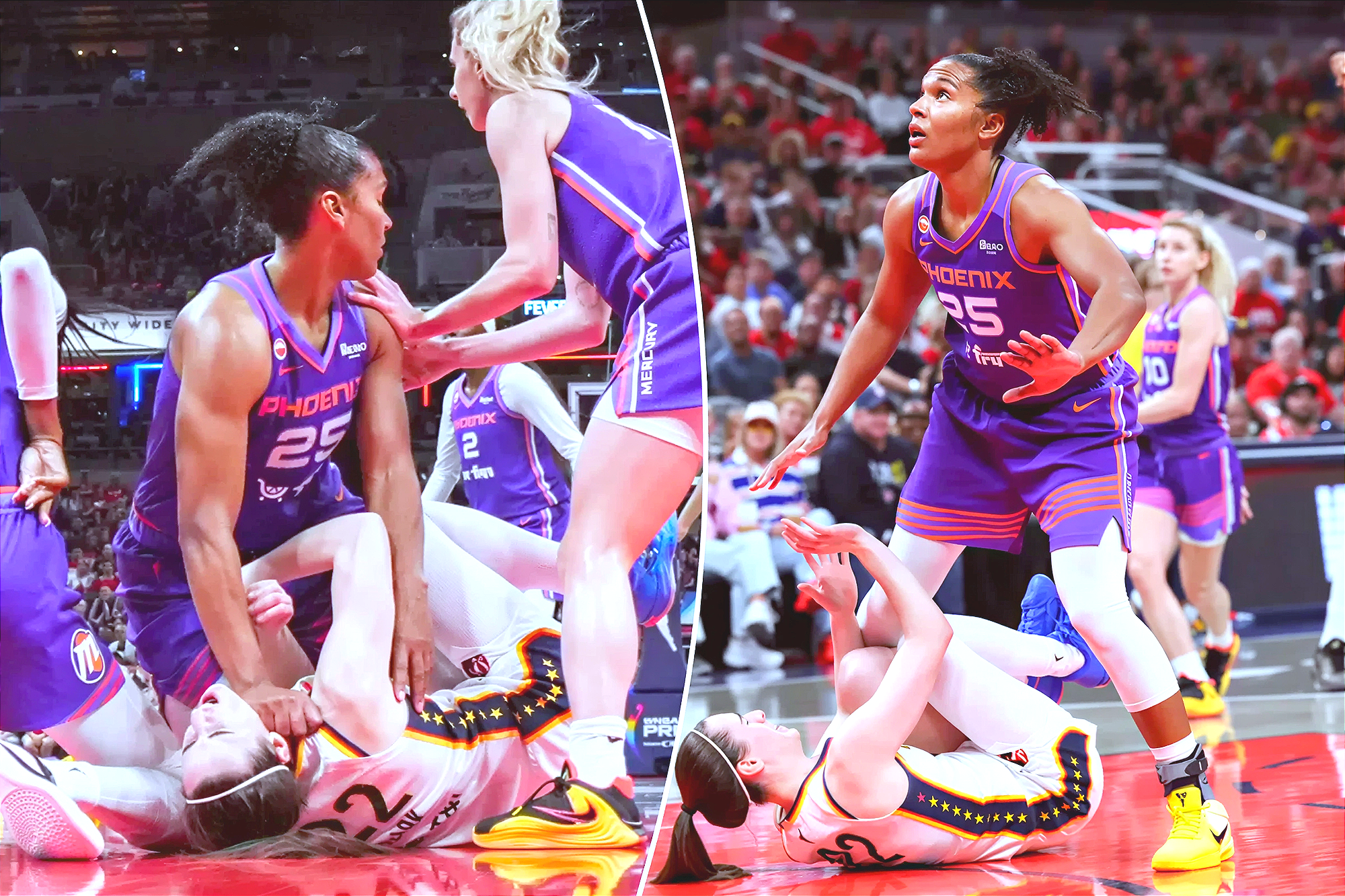
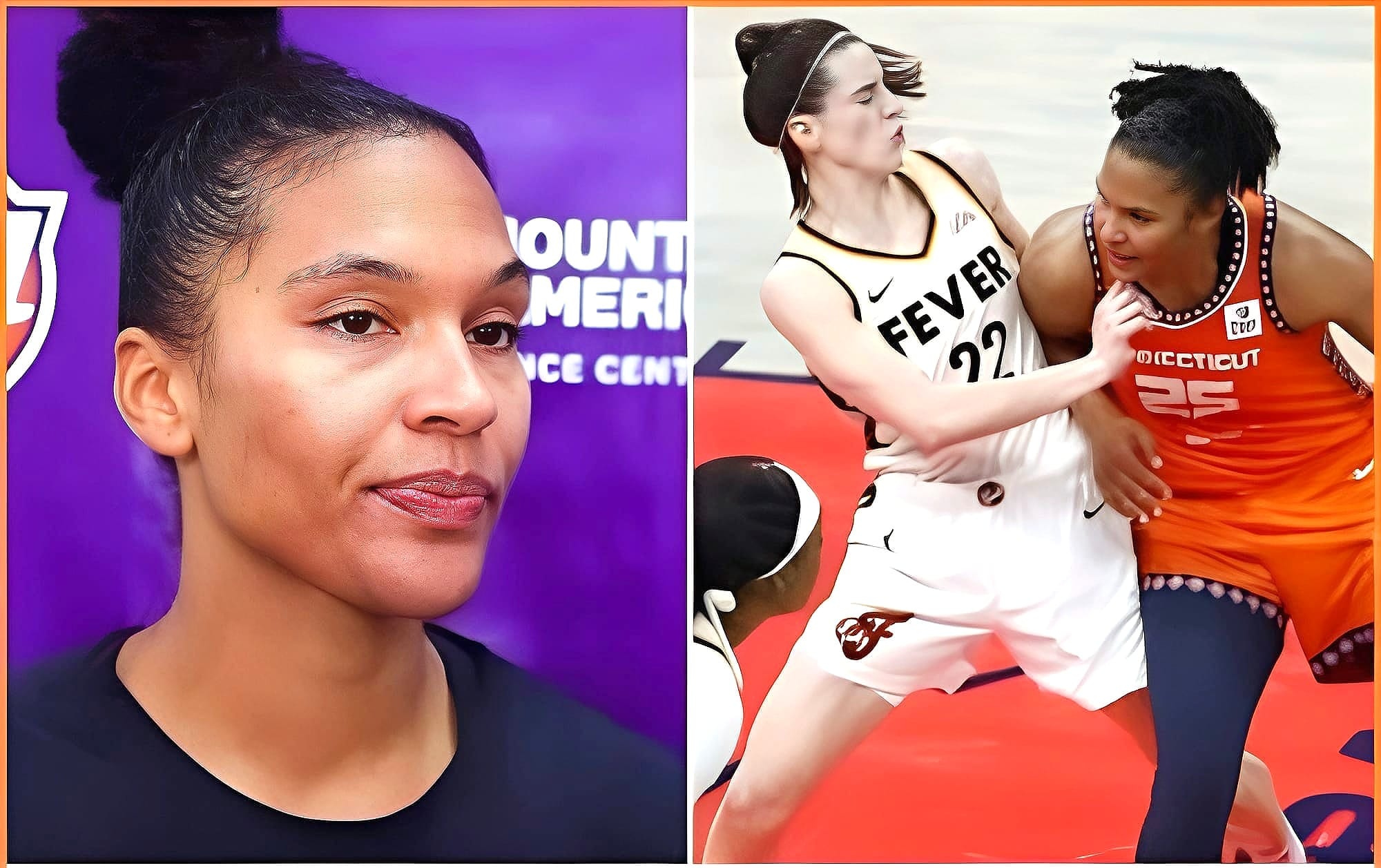
The second ledger is less reassuring. When Phoenix Mercury forward Alyssa Thomas made reckless contact with Clark’s throat area during a June game, no foul was called on the play. The WNBA corrected the omission only after a postgame review, assessing Thomas a Flagrant Foul 2, a $1,000 fine, and a one-game suspension.
The issue is therefore not that Thomas escaped all punishment. She did not. The issue is that Clark’s objection to an official was identified and penalized immediately, while contact that the league later classified as a non-basketball act was missed during live play.
That contrast does not prove personal bias, institutional hostility, or deliberate unequal treatment. It does, however, expose a serious enforcement problem: the WNBA appears more reliable at policing visible dissent toward officials than at identifying dangerous physical conduct between players.
Clark Approaches the Suspension Line
Clark received her sixth technical foul early in Indiana’s 108–88 victory over the New York Liberty on July 18, 2026. After making hard contact with a screen involving Jonquel Jones, Clark objected to the absence of a foul call and directed her frustration toward an official. The technical came approximately 90 seconds into the game and carried a $1,000 fine.
Under the WNBA’s revised 2026 disciplinary structure, a player is fined $500 for each of the first three technical fouls and $1,000 for the fourth through seventh. The eighth technical produces a $1,500 fine and an automatic one-game suspension. After the eighth, every additional technical carries a $1,500 fine, with another suspension imposed at the tenth, twelfth, and every second technical thereafter.
Clark therefore has limited room remaining. She can receive a seventh technical without being suspended. An eighth would automatically remove her from one game.
Indiana head coach Stephanie White has acknowledged the operational risk. She said the team must have conversations with Clark and be strategic about how technical fouls are used and avoided during the remainder of the season. That concern is practical rather than theoretical. Indiana is competing for playoff position, and Clark is its central offensive organizer.
Clark remains responsible for her own conduct. Disagreement with an official does not exempt a player from established rules governing demonstrative reactions, prolonged arguments, or disrespectful behavior. The league is entitled to regulate those reactions.
The credibility problem arises when the enforcement of those standards appears more immediate and dependable than the enforcement of rules intended to protect players from dangerous contact.
The Thomas Incident and the Delayed Whistle
On June 24, 2026, Thomas and Clark became entangled during a loose-ball sequence in a game between Phoenix and Indiana. Thomas made contact with her fist to Clark’s throat area while the players were on the floor. No personal foul, technical foul, or flagrant foul was called during the game.
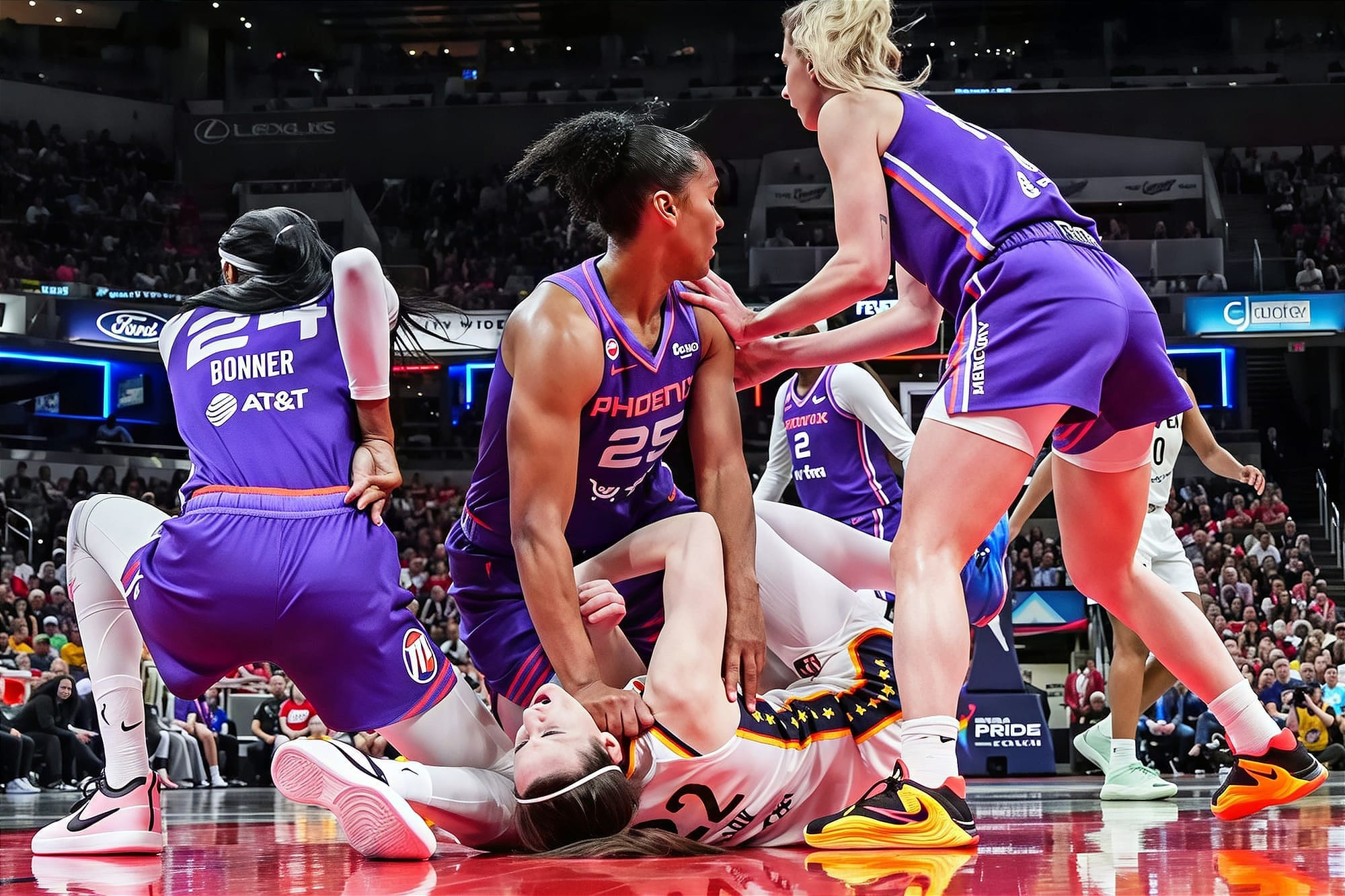
Following a postgame review, the WNBA determined that Thomas had recklessly made contact with Clark’s throat and had committed a non-basketball act. The league retroactively assessed a Flagrant Foul 2 and suspended Thomas for one game. The WNBA noted that league rules permit the office to classify an uncalled act as flagrant after reviewing the game.
The correction was appropriate. It was also late.
A retroactive penalty can amend the official record and punish the responsible player, but it cannot reproduce the consequences that should have occurred during the contest. A Flagrant 2 assessed in real time would ordinarily result in an ejection. Phoenix instead retained Thomas for the remainder of a game it won 111–109.
That does not establish that the missed call determined the result. It establishes that delayed enforcement is not competitively equivalent to enforcement during the game.
The contrast is difficult to ignore. Clark’s reaction to a perceived missed call was detected almost immediately against New York. Thomas’s contact with Clark’s throat was not recognized until league personnel reviewed the footage after the Phoenix game had ended.
The WNBA eventually reached the correct disciplinary result. The officiating crew did not reach it when the penalty could have affected the contest.
The Statistical Ledger
Career statistics provide broader context, but they must be interpreted carefully.
For this comparison, an “infraction” is defined as the sum of personal fouls, technical fouls, and flagrant fouls. This is a constructed analytical measure, not an official WNBA statistical category. Because a flagrant foul may also be recorded as a personal foul, the composite measures category entries rather than necessarily representing completely separate incidents.
The figures below cover regular-season play through games completed July 19, 2026.
| Career measure | Alyssa Thomas | Caitlin Clark |
|---|---|---|
| Seasons with an appearance | 13 | 3 |
| Games played | 383 | 75 |
| Personal fouls | 990 | 217 |
| Technical fouls | 32 | 14 |
| Flagrant fouls | 10 | 2 |
| Composite infractions | 1,032 | 233 |
| Composite infractions per season | 79.4 | 77.7 |
| Composite infractions per game | 2.69 | 3.11 |
| Composite infractions per 40 minutes | Approximately 3.50 | Approximately 3.78 |
Clark’s season-by-season record consists of 111 personal fouls, six technical fouls, and no flagrants in 2024; 35 personal fouls, two technicals, and one flagrant in 2025; and 71 personal fouls, six technicals, and one flagrant through July 19, 2026. Those figures produce a career composite of 233.
Thomas’s composite consists of 990 personal fouls, 32 technical fouls, and 10 flagrant fouls, including the retroactively imposed Flagrant 2 from the June 24 incident. Her total stands at 1,032 across 383 regular-season games.
The raw difference is 799 infractions. Thomas’s composite total is approximately 4.4 times Clark’s.
On its face, that is an enormous gap. It is also largely the predictable result of career length.
Thomas has played more than five times as many games as Clark and approximately 4.8 times as many minutes. She entered the league in 2014; Clark entered in 2024. Thomas’s cumulative record contains more fouls because it covers more than a decade of professional competition.
The career total therefore answers only one question: which player has accumulated more recorded infractions? The answer is Thomas, by a wide margin.
It does not answer which player accumulates them more frequently.
Rate Statistics Change the Picture
When the difference in career length is controlled, the comparison becomes considerably closer.
Thomas averages approximately 79.4 composite infractions per season. Clark averages 77.7. Those numbers are nearly equal, although both calculations treat the incomplete 2026 season as a full season and should not be read as full-season projections.
Per game, Clark currently has the higher rate: 3.11 composite infractions compared with Thomas’s 2.69.
The same pattern appears when playing time is considered. Clark averages approximately 3.78 composite infractions per 40 minutes, while Thomas averages approximately 3.50.
The rate difference is modest, but it is important. Thomas has the much larger cumulative ledger; Clark has accumulated the defined infractions slightly faster during the time she has actually played.
This directly limits what can responsibly be claimed from the statistics. Thomas’s total is not evidence that she is presently committing infractions at a dramatically higher rate than Clark. It is primarily evidence that Thomas has played substantially longer.
Nor can Thomas accurately be described as holding an official WNBA record for “infractions.” The league does not publish a career leaderboard combining personal, technical, and flagrant fouls into one category. The composite is useful for this comparison, but it should not be presented as an official league record.
Position, Role, and Usage
The two players also operate in substantially different roles.
Thomas is a forward whose responsibilities include interior defense, rebounding, screening, post play, and defending across multiple positions. Those duties place her in repeated physical contests around the basket and produce substantial exposure to ordinary personal fouls.
Clark is a lead guard and primary offensive initiator. She handles the ball extensively, navigates screens, directs transition play, absorbs perimeter pressure, and frequently controls late-game possessions. Her current offensive usage rate is materially higher than Thomas’s, reflecting the greater share of Indiana possessions that run through her.
Usage does not excuse technical fouls, and frontcourt physicality does not excuse flagrant conduct. The figures simply explain why raw totals cannot be interpreted without role and opportunity.
Thomas has had more physical possessions over a much longer career. Clark has had fewer career possessions but an unusually prominent role during the games she has played.
The statistical record therefore provides context, not a verdict about intent, character, or the legitimacy of any individual call.
What the Numbers Do—and Do Not—Establish
The numbers establish four defensible conclusions.
First, Thomas has accumulated far more career infractions under the defined composite measure: 1,032 to 233.
Second, the majority of that difference is attributable to longevity. Thomas has played 308 more regular-season games.
Third, Clark currently records composite infractions at a slightly higher rate per game and per 40 minutes.
Fourth, neither the cumulative total nor the rate statistics determine how the June 24 incident should have been officiated. That judgment rests on the act itself, the applicable rules, and the video evidence.
The statistics strengthen the article only when used within those limits. They demonstrate that Thomas has a long and extensive foul record, but they do not prove that she intended to injure Clark or that every foul in her career was unusually severe.
Likewise, Clark’s higher present rate does not establish that her conduct is more dangerous. Six of her 14 career technical fouls have occurred during the current season, and technicals involve a different form of misconduct from personal or flagrant fouls.
Combining the categories permits a numerical comparison. It does not make the underlying conduct equivalent.
Why the Criminal Stalking Case Is Not a Valid Comparison
The prosecution of Michael Lewis for stalking Clark must be treated separately from WNBA discipline.
Lewis was not prosecuted merely for making a single hostile remark. Authorities said he sent numerous threatening and sexually explicit messages over an extended period. Investigators traced communications to an Indianapolis hotel near the Fever’s arena, despite Lewis being a Texas resident. Police instructed him to stop, but the messages continued. He later pleaded guilty to felony stalking and misdemeanor harassment and received a sentence of approximately two and a half years, along with no-contact and location restrictions.
That case involved repeated threatening conduct, physical proximity to the victim, continued contact after a police warning, fear for personal safety, a criminal investigation, and an admission of guilt.
The Thomas incident involved conduct during a professional sporting event and was governed initially by basketball rules and the league’s disciplinary authority.
These are separate systems addressing different conduct under different legal standards. The absence of criminal charges against Thomas does not make the prosecution of Lewis disproportionate. Conversely, the legitimacy of the stalking prosecution does not excuse the failure to call Thomas’s conduct during the game.
Conflating the cases weakens the more credible criticism of the WNBA.
The defensible argument is not that a stalker was punished too severely because a basketball player was not criminally charged. The defensible argument is that the WNBA initially failed to recognize conduct that its own postgame review later classified as reckless, non-basketball contact deserving ejection-level discipline.
The Real Inconsistency
The strongest evidence of inconsistency lies within the league’s own enforcement system.
Clark’s technical fouls are counted immediately. The corresponding fines are automatic. The suspension threshold is clear. Coaches, players, commentators, and fans can track her proximity to an absence in real time.
The Thomas incident was different. The contact was initially absent from the officiating record. Only after the game did the league classify it as a Flagrant 2 and impose a suspension.
That disparity creates the appearance that the WNBA protects the authority of its officials more efficiently than it protects players from dangerous contact.
There are practical explanations. An emotional reaction directed at a referee is visible to the person empowered to assess the technical. Physical contact during a loose-ball scramble can be obscured, fast, or difficult to evaluate from one angle.
Those explanations may account for the missed call. They do not eliminate the consequences.
The league should expand or clarify real-time replay procedures for possible contact to the head, neck, and throat. Replay officials should be able to initiate review when video shows a potentially flagrant non-basketball act, even when the on-court crew initially calls nothing.
A postgame correction protects the disciplinary record. A timely review protects both the player and the integrity of the game.
Conclusion
Caitlin Clark’s sixth technical foul places her two technicals away from an automatic one-game suspension. She is responsible for avoiding the conduct that could cost Indiana her services during a playoff race.
Alyssa Thomas, meanwhile, has the much larger career infraction total under the composite measure used here: 1,032 to 233. But that difference is driven chiefly by 13 seasons, 383 games, and nearly five times Clark’s playing time. Once exposure is controlled, Clark’s current infraction rate is modestly higher.
The statistical comparison therefore does not prove that Thomas is uniquely undisciplined, nor does it justify minimizing Clark’s technical fouls. It does establish that cumulative totals and rate statistics tell different stories and must not be confused.
The more consequential contrast is institutional.
Clark’s protest toward an official produced an immediate whistle, a recorded technical, and an automatic fine. Thomas’s reckless throat contact produced no live penalty and required the league office to correct the record after the game.
The stalking prosecution belongs to a separate criminal matter and was supported by repeated threats, continued harassment, proximity, and a guilty plea. It should not be used as evidence that Thomas was treated more favorably by prosecutors.
The credible indictment is narrower but powerful: when dissent is punished in seconds and dangerous contact is corrected only after the final buzzer, the league has an enforcement problem.