The Autocrat’s Trap: How Delusion, Fear, and Drugs Engineered the Third Reich’s Self-Destruction
This story synthesizes an in-depth analysis of the command dynamics within Nazi Germany, exploring the catastrophic convergence of…
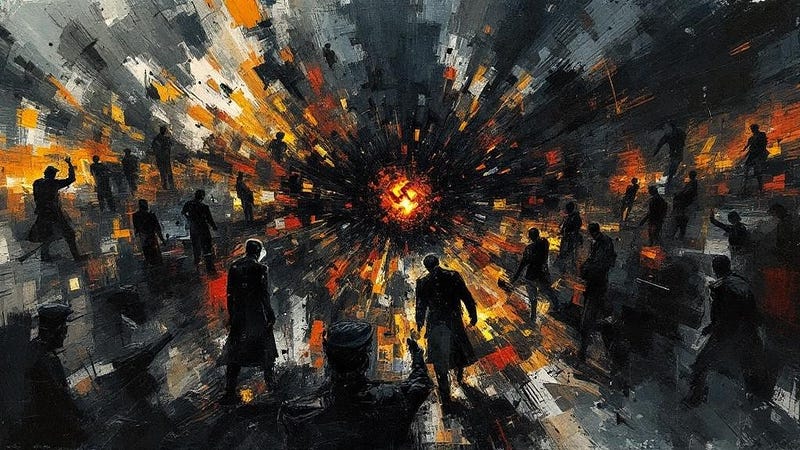
This story synthesizes an in-depth analysis of the command dynamics within Nazi Germany, exploring the catastrophic convergence of unqualified leadership, ideological fanaticism, and systemic terror that led to the inevitable collapse of its war machine. It examines how Adolf Hitler’s absolute control, insulated from reality by a corrupt inner circle and his own deteriorating health, created a feedback loop of disastrous decision-making from which the state could not escape.
The Foundation of Failure: Hitler’s Path to Supreme Command
Adolf Hitler’s ascent to the role of supreme military commander stands as one of history’s great paradoxes. He was not a trained strategist, tactician, or theorist, yet he asserted direct and increasingly absolute control over the Wehrmacht. This was rooted in a powerful personal narrative he cultivated from his experience as a low-ranking dispatch runner in the First World War, which he framed not as a limitation but as proof of his unique understanding of the common soldier and the realities of combat. This narrative was seemingly validated by his bloodless political gambits of the 1930s — the remilitarization of the Rhineland, the Anschluss with Austria, and the Munich Agreement — and the subsequent Blitzkrieg victories over Poland and France. These successes cemented a dangerous belief in his own infallible, intuitive genius and fostered a deep contempt for the conservative, aristocratic generals of the old Prussian tradition.
This flawed self-perception was institutionalized by the core Nazi tenet of the Führerprinzip, or Leader Principle. This ideology posited that all authority and wisdom flowed downward from the supreme leader, whose will was the ultimate source of law and strategy. Within this framework, questioning Hitler’s military judgment was not a professional dissent but an act of political and ideological heresy. His intuition was considered a strategic resource capable of overcoming material shortages and logistical nightmares. This led to a selective and distorted reading of history. The lesson of Napoleon’s invasion of Russia was not the paramount importance of logistics and climate, but the belief that superior German will could succeed where others had failed. Similarly, the fundamental strategic rule of avoiding a two-front war, a cornerstone of Bismarckian statecraft, was recklessly discarded in the fervent belief that a clash of civilizations was inevitable.
The Corrosive System: Fear, Sycophancy, and Insulation from Reality
As the war turned against Germany after the setbacks before Moscow and the disaster at Stalingrad, the command structure began to implode. Hitler’s inherent distrust of his officer corps escalated into a pervasive paranoia, transforming his military headquarters into a Byzantine court. In this environment, sycophants like Wilhelm Keitel and Alfred Jodl maintained their influence by telling the Führer what he wanted to hear and systematically filtering out bad news.
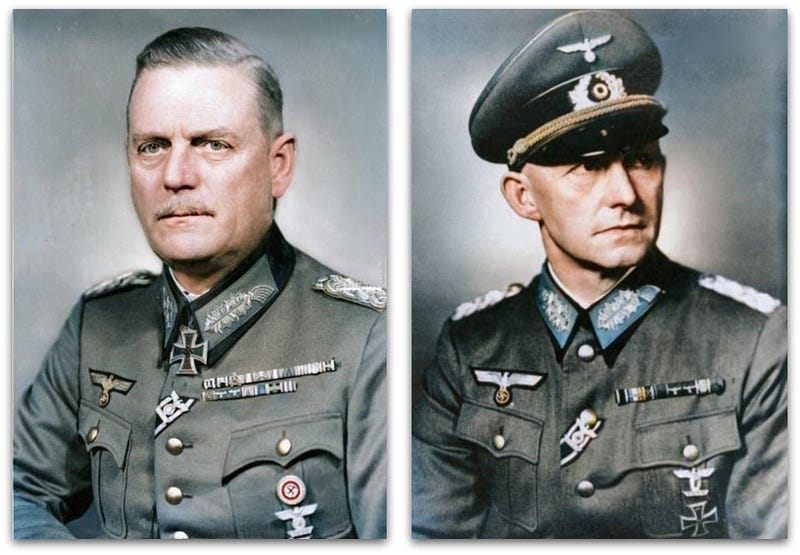
This created a catastrophic insulation from reality, where Hitler made strategic decisions based on maps that did not reflect the actual situation, issued rigid “no retreat” orders that led to the needless destruction of entire armies, and pinned his hopes on nonexistent “wonder weapons.”
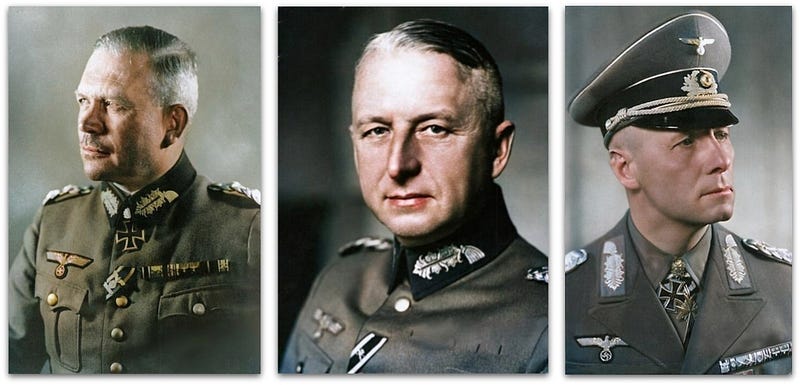
This system made honesty a lethal profession for military commanders. The fear was institutional and tangible. Early purges of the war ministry served as a stark warning, and throughout the conflict, competent but critical commanders like Heinz Guderian and Erich von Manstein were routinely sidelined or dismissed. The aftermath of the failed July 20, 1944, assassination plot unleashed a final, brutal wave of terror, exemplified by the forced suicide of the revered Field Marshal Erwin Rommel. The message was unequivocal: dissent was not merely insubordination; it was treason, punishable by torture and death. Consequently, a culture of silence and complicity took hold, ensuring that the man driving Germany to ruin remained convinced of his own genius.
The Pharmacological Accelerant: Drugs and Delusion
Compounding the systemic dysfunction was a critical physiological factor: Hitler’s rampant drug use. Under the care of his personal physician, Dr. Theodor Morell, Hitler was subjected to a devastating cocktail of pharmaceuticals.
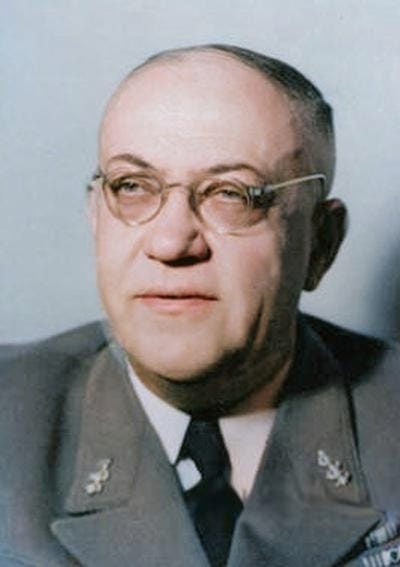
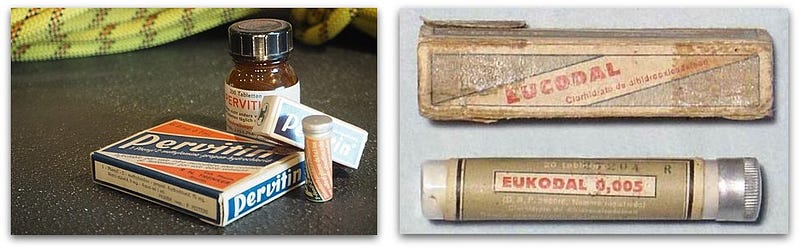
His daily regimen included injections of Pervitin, a methamphetamine that produced short-term energy and euphoria followed by agitation and paranoia, and Eukodal, a powerful opioid that induced a detached sense of well-being and clouded judgment. This polypharmacy, which also included various barbiturates and quack remedies, created violent swings in his mood and cognitive state. The man issuing fateful strategic commands was, by the war’s critical later stages, a chronic addict. His rambling monologues, tremors, volatile rages, and inability to grasp complex logistical reports were consistent with the effects of advanced amphetamine and opioid use, chemically reinforcing his delusions and further degrading his capacity for rational judgment.
The Unbreakable Trap: Why the Machine Could Not Heal Itself
A haunting question remains: why could the German military and political apparatus not remove the source of its own destruction? The answer lies in the perfection of the totalitarian trap. The system was specifically designed to prevent its own correction. The personal oath of allegiance, the Führereid, bound officers in a knot of traditional honor, making the overthrow of the Supreme Commander a profound violation of their code.
Ich schwöre bei Gott diesen heiligen Eid,
daß ich dem Führer des Deutschen Reiches und Volkes
Adolf Hitler, dem Obersten Befehlshaber der Wehrmacht,
unbedingten Gehorsam leisten und als tapferer Soldat bereit sein will,
jederzeit für diesen Eid mein Leben einzusetzen.
Furthermore, the regime had systematically dismantled all competing centers of power. There was no constitution, no independent judiciary, and no free press to which one could appeal. The only paths for change were conspiracy or coup, both of which risked plunging the nation into civil war amidst a fight for national survival and were made nearly impossible by the pervasive SS security apparatus and Gestapo surveillance. By the end, the choice for many was between certain death for treason and probable death following a futile order.
Moral Reckoning and Historical Lessons
The moral judgment on the Nazi leadership is unequivocal; the regime stands as one of history’s most evil for its core project of industrialized genocide and its ideology of racial hatred. However, to assign the label of “the worst people ever” to the entire German population is a dangerous oversimplification. It ignores the complex spectrum of coercion, propaganda, terror, and the human instinct for self-preservation that characterized life in a totalitarian police state. The real and more universal lesson is not about a uniquely evil nation, but about how any society, under conditions of economic despair, national humiliation, and manipulative leadership, can be led down a dark path.
In conclusion, the collapse of the German war effort was not a simple military failure. It was the systematic and inevitable result of vesting absolute power in an unqualified leader, a political ideology that elevated his intuition over professional analysis, a culture of sycophancy and terror that silenced truth, and a physiological decline accelerated by rampant drug use. These elements combined to create a self-reinforcing trap — a command climate where delusion was rewarded, reality was filtered out, and catastrophic decisions were met with enforced compliance. The autocrat, convinced of his own genius and insulated from the consequences of his actions, became incapable of steering his state away from the abyss, serving as the primary architect of its ruin.