Cato’s Letters and the Federal Republic: Liberty’s Mirror in Modern Washington
IT is usually said, that bad Government is better than none; a proposition which is far from self-evident. I am apt to think that absolute…

IT is usually said, that bad Government is better than none; a proposition which is far from self-evident. I am apt to think that absolute Tyranny is worse than Anarchy; for I can easily suppose popular confusion to be less mischievous than a settled active Tyranny, that it will do no less harm, and is likely to end sooner. All tumults are in their nature, and must be, short in duration, must soon subside, or settle into some order. But Tyranny may last for ages, and go on destroying, till at last it has left nothing to destroy. What can the most dreadful Anarchy produce but a temporary work of desolation and fury, what but violation of Law and Life? And can Government be said to exist, where all Justice is neglected, where all Violence and Oppression is committed, where lawless Will is the only reason, where the ravages of blind appetite, and of the blind sword; are the only administration? — Thomas Gordon
Between 1720 and 1723, John Trenchard and Thomas Gordon published Cato’s Letters, a series of essays defending individual liberty and condemning governmental corruption. Written during the political turbulence following the South Sea Bubble, these essays distilled the Whig suspicion of concentrated power and the belief that virtue was the foundation of free government. They argued that rulers are naturally inclined toward abuse, and only a vigilant citizenry, free press, and transparent institutions can prevent tyranny. Liberty, they claimed, depends not on benevolence but on structure — on mechanisms that hold power to account. Freedom of speech, they insisted, is not a privilege but the first line of defense against arbitrary authority.
The central themes of Cato’s Letters — liberty, free expression, and accountability — became the intellectual scaffolding of Anglo-American republicanism. The essays warned against corruption in office, against executive secrecy, and against the erosion of civic virtue through complacency. They contended that a people who surrender their right to criticize government are unworthy of freedom. This moral and political framework influenced both colonial American pamphleteers and the framers of the Constitution. The founders absorbed Trenchard and Gordon’s principle that liberty survives only when power is divided, laws are transparent, and citizens exercise an active duty to resist encroachments.
In contemporary federal politics, those same themes surface repeatedly. In Murthy v. Missouri (2024), the Supreme Court examined whether federal officials’ communications with social media platforms constituted coercion. Though the case was dismissed for lack of standing, the broader question reflected Cato’s warning about “indirect censorship” — the danger that government might stifle dissent by persuasion rather than law. The modern state’s capacity to influence private actors echoes Trenchard and Gordon’s fear of subtle despotism cloaked in administrative convenience. Their insistence on open discourse as the immune system of liberty remains relevant in an era where federal and corporate partnerships mediate digital speech.
Cato’s critique of unaccountable administration also finds new life in Loper Bright Enterprises v. Raimondo (2024), which ended four decades of Chevron deference. The Court’s decision that judges, not agencies, must interpret ambiguous statutes reinstated a republican principle at the core of Cato’s Letters: that the governed must not be ruled by bureaucratic discretion masquerading as law. Meaning that government agencies shouldn’t be allowed to make up or interpret rules as they see fit and then treat those rules as if they were real laws. Only elected lawmakers — not unelected bureaucrats — should decide what the law actually means. Trenchard and Gordon’s essays warned that officials who both interpret and execute the law would eventually usurp legislative power. By reasserting judicial independence, the Court reaffirmed that accountability must travel upward, not dissipate in the fog of delegation.
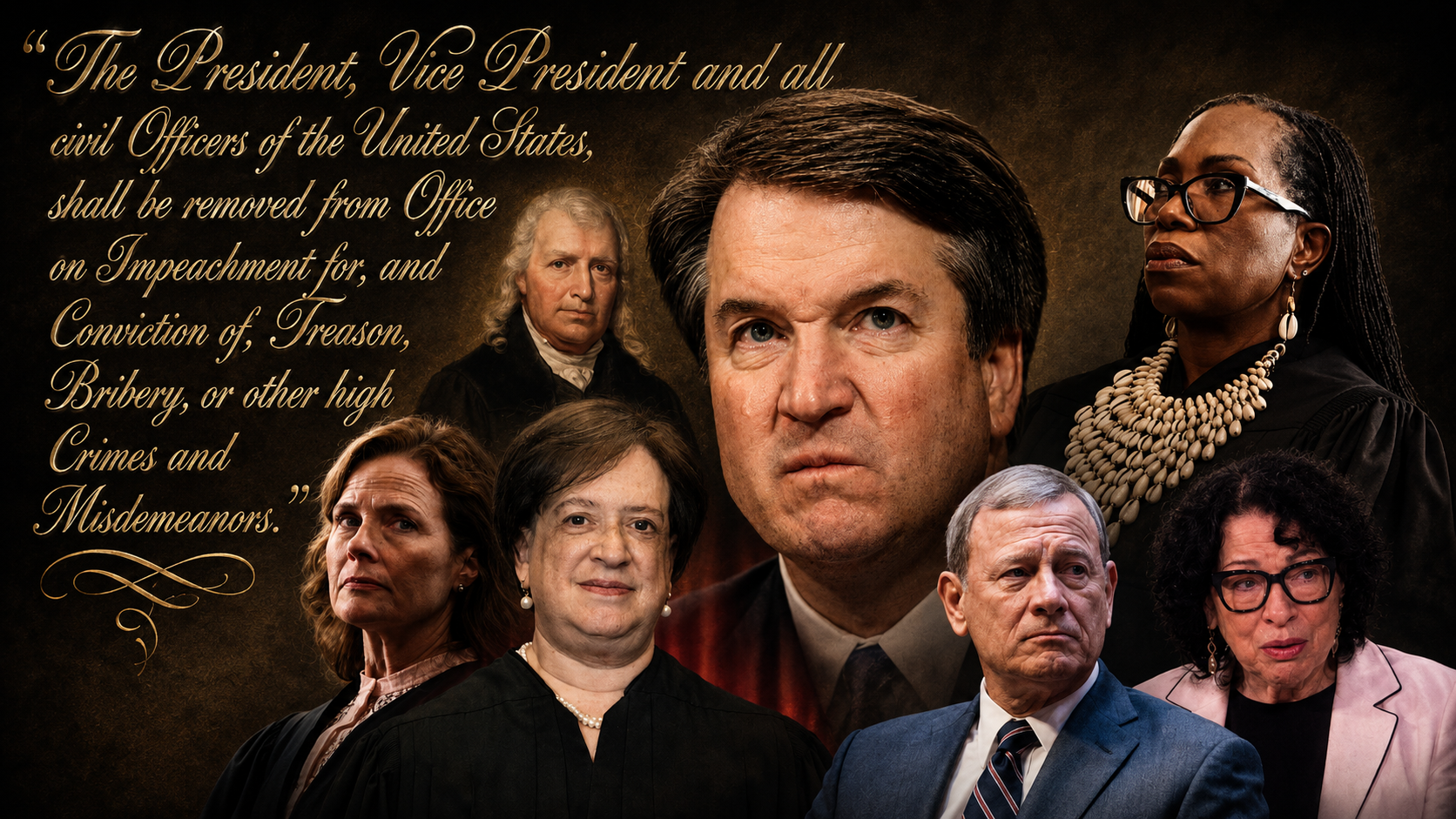
Executive power and immunity also stand in Cato’s shadow. In Trump v. United States (2025), the Supreme Court recognized varying degrees of presidential immunity for official acts but excluded private conduct. The ruling sparked debate over whether constitutional design can still restrain ambition with countervailing ambition, as Madison envisioned. Meaning that the Supreme Court decided presidents are protected from being prosecuted for some official actions they take while in office, but not for private actions. This raised questions about whether the U.S. Constitution’s system of checks and balances still works — whether different branches of government can still limit each other’s power, as James Madison intended. To Trenchard and Gordon, any expansion of personal immunity for officeholders would have been anathema, for they argued that “men are not angels, and power always seeks an increase.” Their vision aligns with modern calls in Congress to clarify the limits of executive privilege and codify stronger statutory checks on presidential conduct.
The anti-corruption agenda that animated Cato’s Letters likewise resonates with federal jurisprudence. In Snyder v. United States (2024), the Court narrowed the reach of bribery statutes, holding that certain gratuities fall outside the federal definition of corruption unless a clear quid pro quo is proven. Trenchard and Gordon would have regarded this as a cautionary signal that the law must remain vigilant against influence that evades technical classification. To them, corruption was not merely a legal infraction but a moral contagion — one that corrodes republican character even when it avoids prosecution.
In the legislative sphere, the renewal of Section 702 of the Foreign Intelligence Surveillance Act demonstrates another tension between security and liberty. Cato’s insistence that “a people jealous of their freedom are the surest guardians of it” underscores the necessity of oversight in surveillance policy. Current congressional efforts to strengthen reporting requirements and judicial review mirror that older republican ethos: that liberty can coexist with power only when scrutiny is constant and rules are visible.
Comparatively, Cato’s Letters continues to inform the grammar of American political argument. When debates erupt over the balance between free expression and misinformation, or over whether executive agencies should act without explicit statutory authorization, they are reenacting the same dialectic that Trenchard and Gordon staged three centuries ago. The essays’ rejection of blind trust in authority remains the operating system of the republic. Even the partisan press wars of modern Washington echo Cato’s defense of a free press as both sword and shield — a weapon against concealment and a protection for the governed.
In evaluating the present federal landscape, one can see both the endurance and the erosion of Cato’s principles. Transparency laws, inspector-general oversight, and whistleblower protections embody the republican virtues they preached. Yet the expansion of executive orders, emergency powers, and classified programs often undermines the public’s ability to audit authority. The bureaucratic state’s inertia and the politicization of oversight committees reveal a drift from civic virtue toward factional utility. In response, contemporary reform movements — from digital privacy advocates to campaign-finance reformers — echo Cato’s demand for moral accountability in public office and renewed citizen vigilance.
Ultimately, Cato’s Letters survives not as an artifact but as a living diagnostic of government. In the early eighteenth century, Trenchard and Gordon described corruption as a slow fever that dulls a nation’s moral sense. In twenty-first-century Washington, that metaphor remains exact. Whether the subject is data surveillance, agency autonomy, or presidential immunity, the same principle applies: liberty decays when accountability is treated as discretionary. The federal republic’s durability, therefore, depends on what the authors called the “spirit of liberty” — a collective refusal to permit secrecy, silence, or power to become routine.