Douglas Murray on Ukraine Conflict Analysis
This perspective presents Ukraine’s war as a moral and strategic fight for democratic survival, emphasizing Ukrainian resolve, frontline innovation, and the need for unwavering Western aid while criticizing media narratives and political hesitation that could weaken Ukraine’s position.
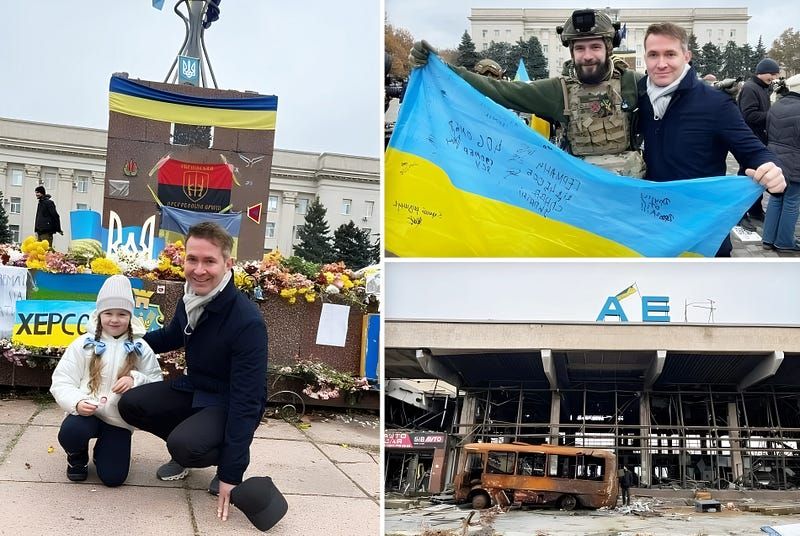
Douglas Murray’s perspective on the conflict in Ukraine is deeply informed by his extensive firsthand reporting from the front lines, his sharp analysis of the broader geopolitical currents, and his consistent critique of what he perceives as the failings of Western media and political leadership. Having made multiple trips to Ukraine to embed with military units, Murray provides a ground-level view that contrasts with more abstract commentary. He describes encountering Ukrainian soldiers who, after years of a brutal war, exhibit a profound and unwavering determination. This resilience, he argues, is born from the fundamental clarity of their cause: they are fighting for their families, their homes, and the very survival of their nation. He has witnessed the horrific human cost of the conflict, from soldiers living in World War I-style trench conditions to the devastating aftermath of thermobaric bomb attacks, yet he consistently returns to their unbroken will to resist.
Technologically, Murray highlights the Ukrainian ingenuity in drone warfare, observing specialized units that use drones to effectively target Russian troops, vehicles, and supply depots, thus disrupting larger-scale advances. Geopolitically, he interprets Russia’s reliance on poorly trained and equipped North Korean troops as a sign of profound weakness and desperation, a move that shatters Vladimir Putin’s narrative of Russian military invincibility. For Murray, the outcome of the war hinges critically on the continuity of Western military aid; he issues stark warnings that any wavering support or political dithering in Washington and European capitals could catastrophically jeopardize Ukraine’s ability to defend itself. He was particularly critical of a meeting between former President Trump and President Zelenskyy, which he viewed as poorly timed and disrespectful, emblematic of the political posturing that risks undermining Ukraine’s strategic position and morale.
On a deeper level, Murray frames the war in stark moral terms, as a civilizational struggle between democracies and what he terms authoritarian death cults. He draws direct parallels between Ukraine’s fight against Russian aggression and Israel’s conflict with Hamas, arguing that both represent a defense of civilized values against barbarism. In this context, he vehemently rejects calls for “proportionality” in military response, arguing that it is a hypocritical double standard never applied to Western nations themselves and that it is impossible to expect a nation to fight with one hand tied behind its back when its existence is at stake.
A significant portion of Murray’s commentary is reserved for criticizing Western media and so-called experts. He condemns influential podcasters and commentators who spread anti-Ukraine and anti-Israel narratives without any real expertise or firsthand knowledge, emphasizing the urgent need for media accountability to combat the spread of dangerous misinformation. He argues that too much Western reporting fails because it relies on biased sources or lacks direct access to the reality of the war, underscoring the indispensable role of on-the-ground journalism to provide a true picture.
Looking forward, Murray maintains that a Ukrainian victory is still possible, but only if Western support remains steadfast. He points to Ukrainian innovations and their tactical adaptability as key advantages. Furthermore, he ties Ukraine’s struggle to a broader need for Western cultural renewal — a “reconstruction” that involves rebuilding confidence, rejecting moral relativism, and unequivocally reaffirming the values that underpin free societies. While acknowledging the war’s immense brutality, he cautions strongly against pushing for premature peace deals that would force Ukraine into concessions, arguing that any settlement must honor the immense sacrifices made by its soldiers and fully preserve the nation’s sovereignty and hard-won dignity.