Giants of the Shoreline: The Enigmatic Life and Taste of the Coconut Crab
Among the world’s crustaceans, few capture as much intrigue as the coconut crab (Birgus latro). Known as the largest…
Introduction
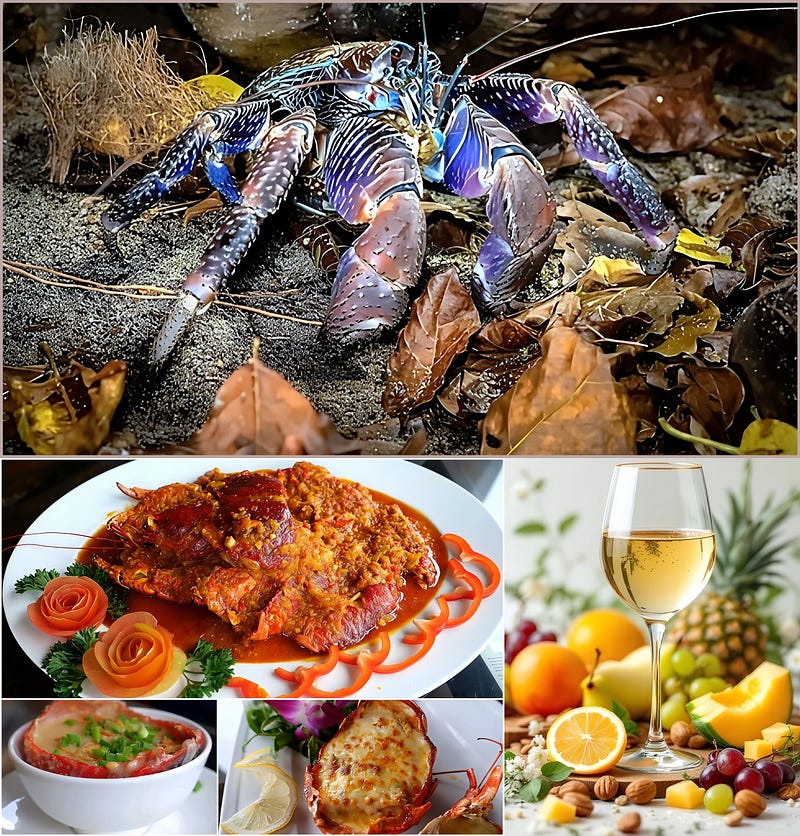
Among the world’s crustaceans, few capture as much intrigue as the coconut crab (Birgus latro). Known as the largest terrestrial arthropod, this species walks the thin line between myth and reality — feared for its strength, admired for its adaptability, and prized in certain culinary traditions. To study the coconut crab is to explore the complex interplay between biology, culture, and sustainability. It is not just a curiosity of island life; it is a living lens on how humans interact with their environment.
Taxonomy
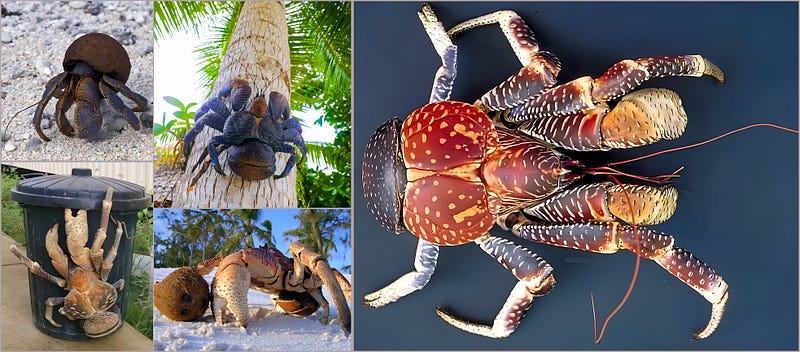
The coconut crab belongs to the family Coenobitidae, within the order Decapoda. Its closest relatives are hermit crabs, but unlike them, Birgus latro abandons the shell as an adult, developing a hardened exoskeleton capable of terrestrial living. Known across the Indo-Pacific as “robber crab” or “palm thief,” its cultural names reflect both its reputation for stealing shiny objects and its association with coconut-rich habitats. No recognized subspecies exist, but island populations show variation in size and coloration, ranging from deep violet to rusty red.
Biology
Reaching leg spans of up to 1 m (about 3 ft 3 in) and body weights of 4 kg (about 8.8 lb), the coconut crab dwarfs most land-dwelling arthropods. Its claws generate crushing forces of up to 3,300 newtons — strong enough to crack coconuts, its namesake food source. Adaptations include modified gills that act like lungs, allowing the crab to live exclusively on land, though it must return to the sea to release its larvae. These larvae spend 3–4 weeks drifting before settling on shorelines. Lifespans can exceed 60 years, a rarity among crustaceans.
Ecology
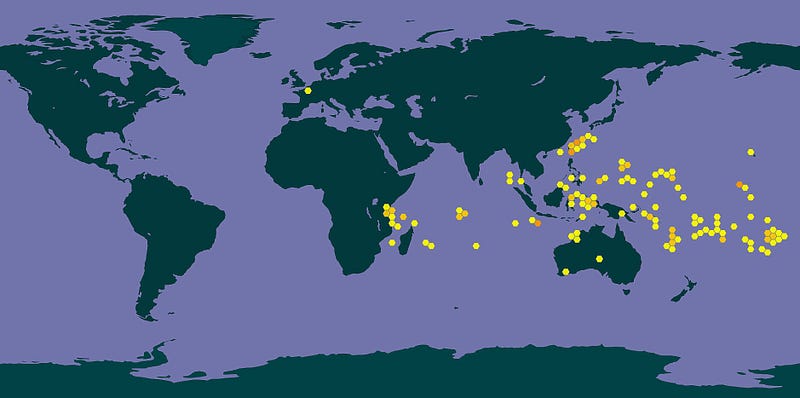
Coconut crabs inhabit coastal forests and rocky shorelines across islands of the Indian and Pacific Oceans, from the Seychelles to the Cook Islands. They are nocturnal omnivores, feeding on fruits, nuts, carrion, and even small vertebrates. As scavengers, they contribute to nutrient cycling and seed dispersal. Their populations, however, are declining in many regions due to overharvesting and habitat loss. The species is listed as “Vulnerable” by the IUCN, with local bans or catch restrictions in place across islands like Guam and Okinawa to prevent depletion.
Uses
Economically, coconut crabs provide a niche but valuable source of protein in island communities. They are also sold in specialty markets, often fetching high prices due to rarity. However, unsustainable harvest pressure has placed many populations at risk. Regulatory frameworks, including catch-size limits and seasonal restrictions, are critical levers to balance tradition and conservation. Ecotourism — promoting sightings rather than consumption — is an emerging alternative revenue stream.
Culinary Aspects
The coconut crab’s flesh is rich, dense, and slightly sweeter than standard crab meat. When cooked, the aroma suggests a fusion of lobster and roasted coconut. The flavor profile is layered: nutty undertones, umami depth, and a faint mineral salinity. The mouthfeel is firm but yielding, with fibers breaking cleanly under pressure. Texture leans toward lobster tail rather than blue crab, creating a meaty bite. Balance comes from its natural sweetness, while complexity derives from diet variations across islands. The aftertaste lingers with a subtle earthiness, sometimes compared to chestnut. Chemesthetically, the fat within the abdomen delivers a creamy sensation akin to uni. In Pacific traditions, the abdominal fat is considered a delicacy, used sparingly in curries or grilled preparations. Nutritionally, coconut crab is high in protein — about 19 g per 100 g (3.5 oz) — and contains omega-3 fatty acids and trace minerals like zinc and selenium.
Wine Pairings
Pairing with coconut crab requires precision, as the meat is both rich and subtly sweet. A Fiano from Campania, Italy, with its waxy texture and hints of tropical fruit, complements grilled coconut crab brushed with lime and chili. For steamed preparations seasoned with ginger and lemongrass, a dry Mosel Riesling offers piercing acidity and mineral lift, cutting through richness while echoing citrus notes. In curries, particularly those using coconut milk, a Gewürztraminer from Alsace aligns with the aromatic spice and creamy texture, its lychee and rose notes harmonizing with the dish. For roasted crab served with butter and herbs, a Verdelho from Madeira balances freshness with weight, enhancing savory depth. Each pairing moves beyond the generic, drawing out different registers of the crab’s layered taste.
Conclusion
The coconut crab embodies the tensions of our time: between wonder and exploitation, appetite and conservation. To encounter it is to see both the evolutionary ingenuity of life on land and the fragility of island ecosystems under human pressure. Whether admired in the wild or consumed in cultural rituals, Birgus latro reminds us that sustainability must underpin every interaction with species at the edge of myth and extinction.