Is Israel’s Gaza War “Genocide”? Urban Warfare Expert John Spencer Says “No”
Take the false charge of genocide. Israel is accused of deliberately targeting civilians. Ladies and Gentlemen, the opposite is true. The…
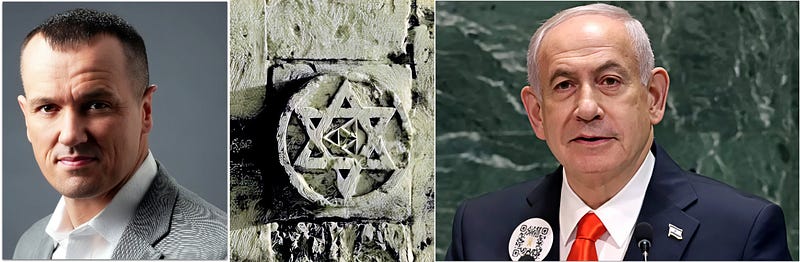
Take the false charge of genocide. Israel is accused of deliberately targeting civilians. Ladies and Gentlemen, the opposite is true. The head of urban warfare studies, Col. John Spencer, he’s probably the world’s expert on urban warfare, says, “Israel is applying more measures to minimize civilian casualties than any military in history.” — Benjamin Netanyahu
John W. Spencer is an American military scholar and retired Army officer renowned for his work on urban combat. Over more than a decade at the Modern War Institute (MWI) at West Point, he has published extensively on how armies fight in cities. His major books include Understanding Urban Warfare (2022) and Connected Soldiers (2022), and he even produced a widely translated Mini-Manual for the Urban Defender for Ukrainians in 2022. Spencer’s writings emphasize that 21st‑century warfare is overwhelmingly urban, demanding new doctrine and preparation. He argues that cities form complex “ecosystems” of civilians and infrastructure. For example, in Understanding Urban Warfare, he and coauthor Liam Collins illustrate that depriving a city of essentials like water or electricity quickly turns its population “restive” and hostile. Spencer urges military planners to view every city as unique and to integrate civilian welfare and civil affairs deeply into operations, a theme evident in case studies he coauthored about battles like Mosul and Fallujah. In his memoir Connected Soldiers, he recounts leading soldiers in Iraq and notes that battlefield bonds “developed as the soldiers experienced the horrors of combat as a group,” underscoring the psychological importance of unit cohesion. He also explores how constant internet connectivity changes soldiers’ relationships with family and the unit: by 2008, he saw the internet as both a potential threat to unit cohesion and a vital link to loved ones.
Spencer’s central arguments reflect this human-centric and Clausewitzian outlook. He contends that war is a political instrument that requires clear objectives and that modern cities collapse the traditional separation between civilians, combatants, and policy. In a 2025 article, he argues that Carl von Clausewitz’s “remarkable trinity” of passion, chance, and policy is made literal in a city battle, with civilians, military action, and national goals all physically intertwined. He insists that strategy and tactics must account for this interconnectedness: every urban fight should start by defining what kind of war is being waged and the desired outcome. Spencer also believes contemporary Western military doctrine (focused on surprise and overwhelming force) must adapt. He notes that in places like Gaza, Israel had to abandon the traditional “maneuver warfare” playbook in favor of extensive warnings and evacuations to protect civilians, even at the cost of tactical surprise. This thesis underpins Spencer’s repeated claim that the Israel Defense Forces (IDF) has set a new benchmark for civilian protection. In Newsweek in March 2024 he wrote that Israel “has implemented more precautions to prevent civilian harm than any military in history — above and beyond what international law requires and more than the U.S. did in its wars in Iraq and Afghanistan.” He contrasts this with terrorists who hide behind civilians: Spencer argues Hamas deliberately “blends into” its own population, effectively using human shields and broadcasting images of suffering to pressure Israel. Thus, he frames the Gaza fighting as an asymmetric conflict where Israel, a democratic state, strives to uphold the laws of war, while Hamas weaponizes civilians.
Spencer’s psychological perspective is evident in his focus on social bonds and leadership. He draws on social science to explain modern soldier behavior: his memoir describes how shared hardship on the battlefield forges deep bonds and how leaders must find ways to maintain unit trust in the age of smartphones. He observed that earlier soldiers bonded by collectively processing trauma, whereas newer units risk fragmentation if every soldier retreats into online life. Spencer’s practical recommendations include training, communication, and leadership methods that reinforce resilience and trust in small units. This attention to the human dimension also shows in his view of political-military strategy: he expects leaders to be clear about war aims and to guide strategy accordingly. Spencer often cites Clausewitz’s insight that a leader must be clear about “the kind of war on which [they] are embarking,” and he believes failing to establish that clarity, especially in a city fight with ambiguous goals, can lead to disaster.
Politically, Spencer’s writings tend to align with a mainstream, pro-democracy security perspective. He has not publicly endorsed a partisan ideology but emphasizes principles like protecting noncombatants and supporting democratic allies. His repeated praise of the IDF’s precautions and criticism of Hamas’s tactics reflect a worldview that favors strong defense and holds terrorist groups fully accountable for civilian harm. When Russia invaded Ukraine, Spencer similarly condemned Moscow’s actions as extreme, even invoking the term “genocide” to describe Russian atrocities in Ukraine, a stance some critics later cited as hyperbolic given his Gaza argument. Generally, he trusts allied military intelligence and insists that official casualty figures from democratic armies (like Israel’s) are credible. Spencer also advocates for democratic militaries to study each other’s tactics; for example, in 2025, he urged U.S. forces to learn from Israeli experiences adapting to urban threats. His writings show a realist belief that war inevitably involves civilian risk, but that modern armies must mitigate harm through extraordinary measures. Core values in his work include a commitment to the laws of armed conflict and the idea that even in war, moral and legal constraints matter. He has explicitly argued that viewing Israel’s actions as genocide is a fundamental mischaracterization of both intent and practice. In a December 2024 op-ed co-written with legal analyst Arsen Ostrovsky, he strongly rejected claims of a Gaza genocide as a “grotesque” distortion, arguing that the intent behind Israel’s campaign is to destroy Hamas, not Palestinians. That piece highlights Spencer’s belief in treating Israel’s counterterror campaign as a lawful military response, not an ethnic purge. He downplays civilian casualties as tragic but unavoidable consequences of fighting embedded enemies. For example, Spencer told CNN in late 2023 that Israel’s frequent “pauses” and humanitarian pauses go beyond what any military usually does; critics have disputed this, but it underscores his conviction that intent — not raw casualty numbers — determines whether genocide occurred.
Career Timeline: Spencer’s military and scholarly career has progressed steadily from combat infantry to academic leadership. He enlisted in the U.S. Army at age 17, serving in Airborne infantry. During two Iraq tours (2003 and 2008) he participated in major battles, including the initial 2003 invasion and the 2008 Sadr City fight. These combat experiences shaped his views on urban battle and unit cohesion. After retirement from active service (with the rank of major), he joined academic and strategic research roles, eventually earning a Georgetown University M.A. He took on positions at the Pentagon’s Strategic Studies Group and later became chair of Urban Warfare Studies at West Point’s Modern War Institute. Around the late 2010s, he co-founded the International Working Group on Subterranean Warfare and served as a contributing editor to War on the Rocks. Spencer began publishing extensively from about 2017 onward on urban military operations. In 2018–2020, he wrote influential articles on megacities and tunnel warfare, including pieces in foreign-policy outlets and Army journals. In 2022, he rapidly expanded into public engagement: he visited Ukraine during Russia’s invasion and authored The Mini-Manual for the Urban Defender (March 2022) to advise civilians on city defense. That guide became highly influential and was translated into over a dozen languages. Also in 2022, he co-authored Understanding Urban Warfare and released his memoir Connected Soldiers, establishing him as a prominent scholar and commentator. After October 7, 2023, Spencer traveled to Israel to observe the Gaza campaign and quickly became a visible commentator on the conflict. He published opinion pieces in major outlets (CNN, Newsweek, WSJ, New York Post), asserting that Israel was striving to protect Gaza civilians under the law. He frequently appeared on cable news and in podcasts defending Israel’s tactics. Throughout 2024, he continued this focus, penning multiple Newsweek and War on the Rocks articles on Gaza — for instance, declaring that Israel had set a “new standard” of warnings and evacuations. In late 2024, he co-authored the Newsweek rebuttal to Amnesty’s genocide report. In 2025, he sustained this line of argument in Modern War Institute analyses, a Wall Street Journal op-ed, and on social media, reiterating that nothing he had written on Gaza had changed and that the IDF was still not committing genocide. His 2025 lectures and articles (e.g., “A Clausewitzian Lens on Modern Urban Warfare”) further solidified his role as an educator of urban war concepts, while he doubled down on his political-military assertions about Gaza.
Major Works and Publications (Annotated Bibliography): Spencer’s writings span academic books, military journals, and popular media. Connected Soldiers: Life, Leadership, and Social Connections in Modern War (Potomac Books, 2022) draws on his combat and family experience to examine soldier psychology. In it he illustrates how combat forges cohesion: early chapters recount that as a 2003 platoon leader, he “learned how important unit cohesion was to surviving a war” because cohesion “developed as the soldiers experienced the horrors of combat as a group, spending their downtime together and processing their shared experiences.” He uses this narrative to argue that leaders should balance needed connectivity with home and the bonding from shared hardship. Understanding Urban Warfare (with Liam Collins, Howgate Publishing, 2022) is a primer on city fighting. Spencer and Collins conceptualize the city as a living system: they caution that removing basic services disrupts stability. For example, their analysis notes that if a city’s residents lose “water, electricity [or] a steady food chain… what remains is a restive population deprived of basic needs.” The book emphasizes that planning must incorporate civilians’ needs and that successful urban operations integrate civil affairs and information operations early. A 2024 review praises it as “a fulsome, comprehensive and balanced examination of 20th and 21st-century urban warfare,” noting the authors’ case studies range from WWII to recent conflicts to draw enduring lessons. In addition to books, Spencer has authored many essays. In Newsweek’s March 26, 2024 issue (“Israel Has Created a New Standard for Urban Warfare”), he details how Israel telegraphed its operations to let Palestinians evacuate, and asserts that by his count, “Israel has implemented more precautions to prevent civilian harm than any military in history — above and beyond what international law requires.” Another Newsweek op-ed (Dec. 5, 2024, “How Amnesty International Became a Joke,” with Arsen Ostrovsky) vehemently rejects genocide allegations, calling them a “modern-day blood libel.” Spencer cites official channels to note that Gaza’s population “has actually increased 2 percent in the last year,” arguing this trend is “the very opposite of seeking to destroy… a group of people.” In these writings, he often quotes Israeli leaders’ war aims, emphasizing they target Hamas’s governance, not Gazans. On legal matters, he co-authored a Wall Street Journal piece (Apr. 9, 2024) criticizing U.S. policy advice to Israel. Across his publications, representative passages include: “In my long career studying and advising on urban warfare… I’ve never known an army to take such measures to attend to the enemy’s civilian population,” and that Israel’s approach has included “historic measures to prevent civilian harm.” These samples reflect Spencer’s signature themes: tactical adaptation, civilian warnings, and attributing blame for civilian deaths to enemy strategies rather than the army’s intent.
Key Arguments and Theories: At the core of Spencer’s thought is the idea that urban conflict is inevitable and demands conscious innovation. He argues that conventional doctrines must evolve to address civilians’ presence and infrastructure. For example, he coined or frequently invoked phrases like a “new standard” of civilian protection (though he clarifies that no “gold standard” exists in war) to describe Israel’s practices. He theorizes that a state army can deliberately choose to notify and “pause” as part of battle, even if this allows enemy fighters to relocate, if the goal is to save lives. This view contrasts with critics who see such actions as endangering operations. Spencer also emphasizes historical context: he often reminds readers that many 20th-century wars killed far higher percentages of civilians, claiming the Gaza casualty ratio is below historical urban averages. More broadly, he uses a historical-comparative lens: his work on Ukraine and Nagorno-Karabakh highlights lessons learned, and he applies those to the Gaza war. He warns against simplistic analogies; for example, he writes that “stop comparing Israel’s war in Gaza to anything. It has no precedent,” underscoring his theory that each conflict’s constraints differ. Ideologically, Spencer appears to accept the moral framework of international law but places great weight on intent. He contends that Israel’s declared intent to eliminate Hamas, not Palestinians per se, means by definition the campaign cannot meet the strict genocide criteria (which require intent “to destroy in whole or in part” a protected group). He sees evidence of intent in Israeli public statements and cautionary practices, and views Gaza’s high casualty toll as a function of an unwilling enemy rather than purposeful targeting. In sum, Spencer’s arguments combine Clausewitzian realism (war as continuation of policy) with an emphasis on moral differentiation between combatants and civilians. He theorizes that modern democracy-based militaries face dilemmas unfamiliar to older models of war and that future security will depend on acknowledging these complexities, as he describes in lectures on megacities and subterranean warfare.
Critiques and Controversies: Spencer’s Gaza-related views have drawn sharp criticism. Analysts on the left and in international law circles say he is downplaying civilian suffering. Economist Michael Spagat noted that Spencer’s use of casualty figures is misleading; Spagat finds that Gaza civilian deaths likely account for around 80% of the total, higher than Spencer’s 1.5-to-1 ratio, meaning Israel’s civilian harm is not as “historically low” as claimed. Law experts have pointed out that emphasizing precautions (warnings, evacuations) conflates humanitarian tactics with the distinct legal question of intent; they argue Spencer misinterprets genocide law by focusing only on battlefield behavior. Legal scholars have cited the International Court of Justice’s consideration of officials’ rhetoric and siege tactics as relevant to genocide, implying Spencer’s “blood libel” rebuttal oversimplifies complex legal tests. On military grounds, critics like Larry Lewis (former US defense analyst) argue Spencer cherry-picked data and ignored practical realities: Lewis notes that ordering Gaza’s north to evacuate in 24 hours was functionally impossible and that Israel continued airstrikes on civilians during evacuation, undermining claims of flawless execution. Others, like journalist Maryam Jamshidi, assert that Israel’s so-called “precautionary measures” have frequently failed or caused confusion, and can even constitute collective punishment under the guise of warnings. Some commentators on social media have accused Spencer of bias or factual errors, pointing out, for example, that Spencer overstated militia-to-civilian death ratios in past conflicts to make Israel look better. On the other hand, some military analysts have welcomed parts of Spencer’s analysis. Retired Air Force General David Deptula cited Spencer’s assessments favorably in Forbes, noting that Spencer observed the IDF’s strenuous compliance with the laws of armed conflict. Legal scholar Geoffrey Corn wrote in Newsweek that Israel “consistently implements” its obligations to avoid civilian deaths, a point Spencer echoed. The polarized response reflects the broader debate: Spencer’s defenders view him as a voice of reason grounded in military expertise, while critics see him as a partisan apologist overlooking evidence. Notably, Spencer has stood by his views through early 2025 — publicly reiterating on social media that Gaza is “still not a genocide” and rejecting calls to retract any statements, which has itself been controversial in public discourse.