Paying to Disappear: Japan’s Hidden Homeless
In a dimly lit manga kissa in Tokyo, Hiroshi, a 34-year-old freelance graphic designer, sets his backpack down in a narrow booth he calls…
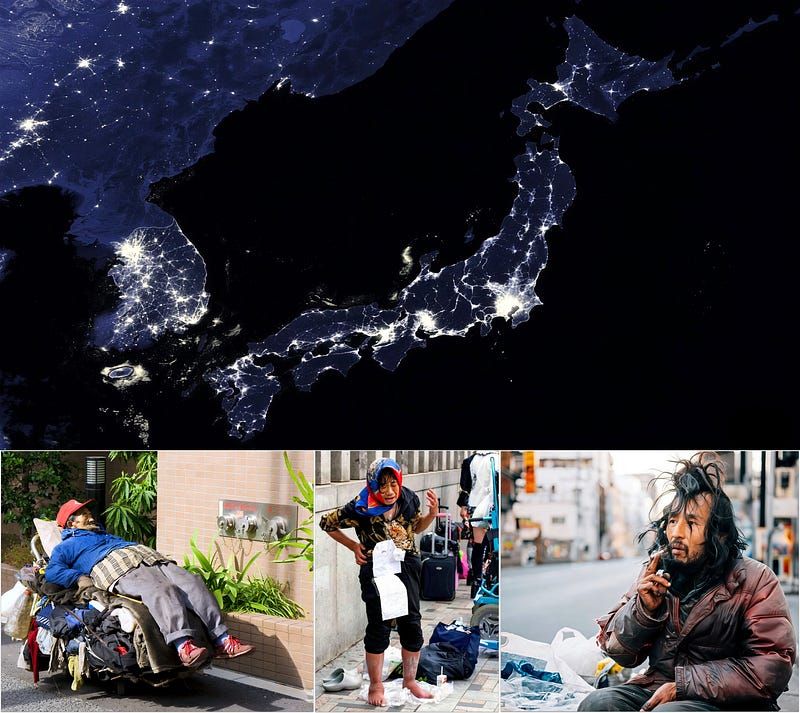
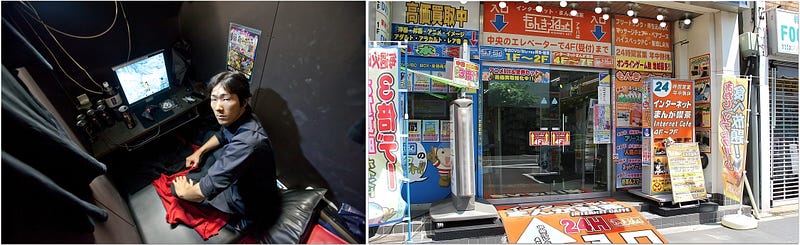
In a dimly lit manga kissa in Tokyo, Hiroshi, a 34-year-old freelance graphic designer, sets his backpack down in a narrow booth he calls home for the night. Each evening follows the same pattern: he pays the ¥2,000 fee, receives a key card, and retreats to his temporary haven. Here, amidst the muffled keystrokes and whispers, he connects to the Wi-Fi and continues work, maintaining the facade of stability his clients expect. Yet, Hiroshi’s story is not unique to Tokyo. In cities like London and São Paulo, similar hidden populations navigate the precarious balance between affordability, underscoring a global urban crisis in which the cost of living outpaces accessible solutions. By revealing these underrepresented narratives, we can better understand the worldwide affordability crunch facing urban dwellers.
Japan proudly reports a homeless population of just 3,000 people, a statistic that paints a picture of a society that has solved a deep-rooted urban problem. This number, however, includes only individuals who sleep in public spaces such as parks, as defined by the official homelessness definition. It completely ignores a hidden population of over 100,000 individuals who live without a home by residing in plain sight within commercial establishments. They are the uncounted residents of manga kissas, capsule hotels, and family restaurants, whose survival hinges on a nightly payment that grants them a few hours of borrowed shelter.
A simple, brutal economic equation sustains this hidden world. A worker earning a precarious ¥100,000 (approximately $600 USD) per month from temporary jobs finds the upfront cost of a rental apartment — often requiring ¥600,000 ($3,600 USD) or more in deposits and fees — an impossible sum. This financial trap forces them into the economy of nightly rentals, where the basic need for a roof consumes their entire income.
The most common refuge is the internet and Manga cafe, known as a manga kissa. For a nightly fee of ¥1,500 to ¥3,000 ($10 to $20 USD), a person obtains a private booth. This price unlocks a suite of essential services: unlimited soft drinks, access to a shower, internet connectivity, and a vast manga library. The only requirement is payment and a valid ID for registration. Yet, the harsh fluorescent glare and the constant hum of computer fans serve as a reminder that unlimited soda and pages of manga are no substitutes for the comforts of home. The sensory fatigue that accompanies such spaces, where personal dignity is quietly bartered for survival, underscores a deeper moral tension. This setup allows a person to maintain a facade of normalcy; they can use the cafe’s address on job applications, clean up for work, and avoid the visible stigma of homelessness, all for the price of a movie ticket.
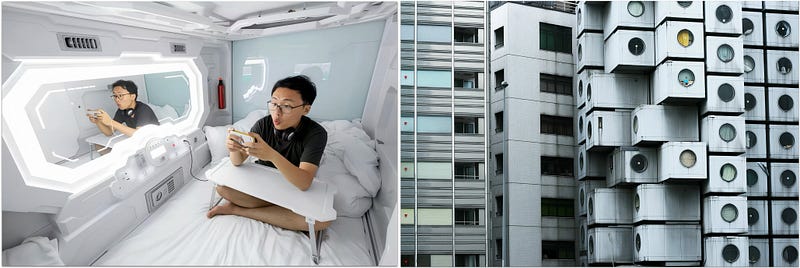
A more expensive, yet equally impersonal, option is the Capsule hotel. For around ¥3,500 ($22 USD) per night, one receives a sterile, coffin-sized pod in a stack of identical units. These are allowed under zoning and hotel-licensing policies that prioritize compact, high-density forms of temporary accommodation over sustainable housing solutions. While it provides a mattress and shared bathroom facilities, it offers no personal space or sense of home. It is purely a transaction for sleep, cementing a cycle of paying for one night at a time.
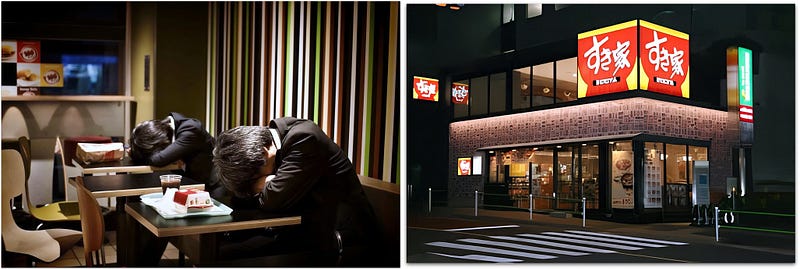
At the most desperate end of this spectrum are 24-hour establishments like the Gyudon beef bowl chain Sukiya or the family restaurant Jonathan’s. Here, the barrier to entry is lowest. A single purchase of a ¥300 ($2 USD) coffee gives a person the right to occupy a booth for hours, attempting to sleep sitting up. It is a stark and exposed form of rest, but it represents the final barrier before literal destitution on a park bench.
In contrast, consider cities like New York, which have explored policies such as legalizing micro-apartments and expanding rent voucher programs. These alternatives provide more stable housing options to those on the brink of homelessness, enabling them to invest in a secure, albeit small, living space. Such policies offer a potential roadmap for addressing urban poverty, providing more than just a temporary refuge and paving the way toward lasting stability.
This entire system thrives on a powerful cultural silence. The profound shame associated with poverty and failure in Japan makes this form of invisible homelessness preferable to seeking public help. In the words of one individual who chose this path, “Seeking government assistance felt like admitting defeat. I didn’t want my family to know.” While maintaining a facade of normalcy, many individuals face the psychological toll of isolation and chronic exhaustion. Each night spent in temporary shelters further erodes their sense of self-worth, fostering feelings of despair and alienation. The mental burden is compounded by the constant pressure to secure a spot to sleep and the relentless cycle of day-to-day survival. The detachment from stable community ties only intensifies their sense of vulnerability. These factors contribute to deteriorating mental health, highlighting the urgent need for policy responses that address not just the economic, but also the personal dignity of these individuals. The people in these spaces are not unemployed; they are the working poor, actively participating in the economy by day and paying for a shadow of a life by night. The official statistic of 3,000 homeless is not a lie, but it is a profound omission, concealing a reality where the price of a shadow is ¥300 and the cost of a shower is ¥1,500.