The Flat Needlefish: A Slender Hunter of the Tropical Seas
To many, it is an obscure species glimpsed in tropical shallows or pulled up by artisanal fishers. Yet this fish has a role in local cuisines, coastal economies, and the broader ecology of the seas.
Introduction
Few marine creatures capture the sleek elegance of open-water predators quite like the flat needlefish, Ablennes hians. With its elongated form, dart-like snout, and habit of skimming just beneath the ocean’s surface, it embodies the balance between fragility and ferocity. Yet beyond its streamlined appearance lies a curious secret: its bones are tinged green, a striking trait that both fascinates and unsettles first-time diners. To many, it is an obscure species glimpsed in tropical shallows or pulled up by artisanal fishers. Yet this fish has a role in local cuisines, coastal economies, and the broader ecology of the seas. Understanding its biology, culinary potential, and sustainability opens a window into the hidden networks of life that sustain us.
Taxonomy
The flat needlefish belongs to the family Belonidae, a group renowned for its long, beak-like jaws and streamlined bodies. Its scientific name, Ablennes hians, places it in a genus with only one recognized species, making it a monotypic genus. Common names include flat needlefish, barred needlefish, and houndfish, reflecting regional traditions. Unlike many commercial fish, it has no cultivated varieties or recognized subspecies, though coloration patterns may vary across its wide distribution.
Biology
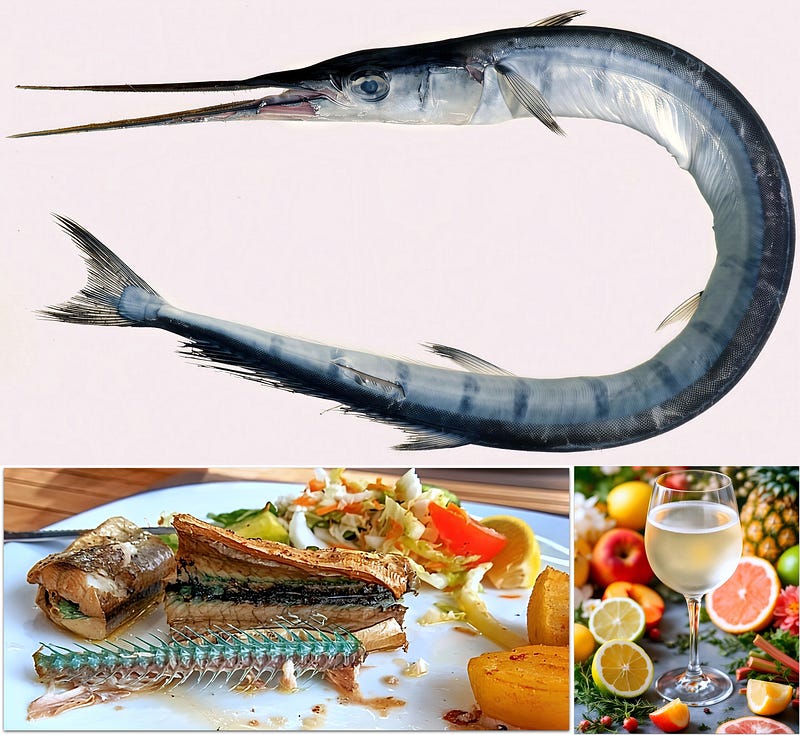
Ablennes hians can reach lengths of up to 140 cm (55 in) and weigh as much as 6.35 kg (14 lb). Its body is strongly compressed, with a silver base color marked by vertical bars that provide camouflage near the surface. The elongated jaws are armed with sharp teeth suited for catching smaller fish. It spawns in tropical and subtropical waters, releasing buoyant eggs that drift with currents. Adapted for speed, the flat needlefish often leaps clear of the water when startled, a habit that has occasionally injured unwary boaters. Its short lifespan and rapid growth reflect the dynamics of pelagic predators.
Ecology
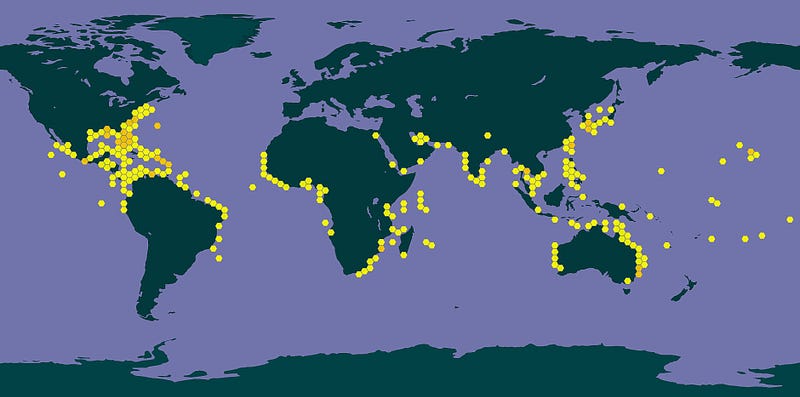
This species occupies warm surface waters across the Atlantic, Indian, and Pacific Oceans. It thrives in coastal zones, estuaries, and the open sea, feeding primarily on smaller schooling fish. Its ecological role is as a mesopredator — both prey for larger species like tuna and billfish and a predator of forage fish. While not considered threatened, localized overfishing can impact populations. Needlefish are often caught as bycatch, raising sustainability questions about management in mixed fisheries. Preserving their habitats, particularly coastal nurseries, is essential for long-term population stability.
Uses
Flat needlefish have modest economic value compared to more famous pelagic fish. In many regions, they are sold fresh in local markets or dried and salted for storage. They are less common in international trade due to their delicate flesh and difficulty in large-scale handling. For artisanal fishers, however, they provide a steady food source and income. Their sustainability profile is mixed: populations remain widespread, but pressure in coastal fisheries demands monitoring.
Culinary Aspects
The flesh of the flat needlefish is soft and mild, with a delicate flavor often compared to a lighter version of mackerel or garfish. Its taste profile leans toward clean salinity with subtle sweetness. The aroma is faintly briny, the mouthfeel tender, and the texture flaky when cooked properly. Balance is achieved by pairing with bold seasonings such as garlic, chili, or citrus, which accentuate its understated complexity.
One of the species’ most striking features is the unusual green to blue-green color of its bones, a result of biliverdin pigments. This characteristic, while visually surprising, is completely harmless and does not affect flavor. The flesh itself is pale — white to off-white — and may appear slightly translucent when raw before turning opaque once cooked. The contrast between the bright green bones and white meat gives the fish a distinctive presentation that often sparks curiosity at the table.
The aftertaste is clean, with little oiliness, making it versatile for both grilling and frying. Its appearance on the plate is striking: slender fillets with a pale sheen, highlighted by the unusual skeletal coloring. Chemesthesis — the sensory perception of pungency — pairs well here, as spicy marinades complement the mildness of the fish. Nutritionally, it is rich in protein, omega-3 fatty acids, and micronutrients like selenium. In Southeast Asia, it is grilled whole and served with tamarind sauces; in the Caribbean, it is sometimes fried crisp and eaten with plantains.
Wine Pairings
A grilled flat needlefish brushed with lime and chili finds harmony with a Txakolina from Spain’s Basque coast, where the wine’s high acidity and slight spritz cut through the spice and refresh the palate. A steamed preparation with ginger and soy sauce aligns well with an off-dry Riesling from the Mosel, whose aromatics echo the fish’s subtle sweetness. For a fried Caribbean preparation, a light-bodied Vermentino from Sardinia offers citrus notes that brighten the dish without overwhelming it. In more herb-heavy recipes, such as with dill or coriander, a Grüner Veltliner from Austria provides a peppery lift that enhances herbal nuances. Each wine works not as a generic pairing but as a contextual counterpart to the cultural and culinary expression of the fish.
Conclusion
The flat needlefish is a reminder that not all valuable species are marquee names in the seafood trade. Its biology reveals a predator honed for speed, its ecology underscores the importance of coastal health, and its place in local cuisines reflects the quiet richness of regional traditions. To engage with species like Ablennes hians is to see the interwoven strands of food, culture, and ecology. In choosing how we fish, prepare, and savor such creatures, we participate in a broader story of sustainability and stewardship that extends beyond the dinner table.