The Floating Jewel of Wetlands: Water Chestnut’s Strange and Storied Life
The water chestnut has been revered, reviled, and relentlessly cultivated across centuries. It is a tale of survival, culinary intrigue, and environmental caution — a plant both celebrated on festival tables and condemned as an invasive scourge choking rivers.
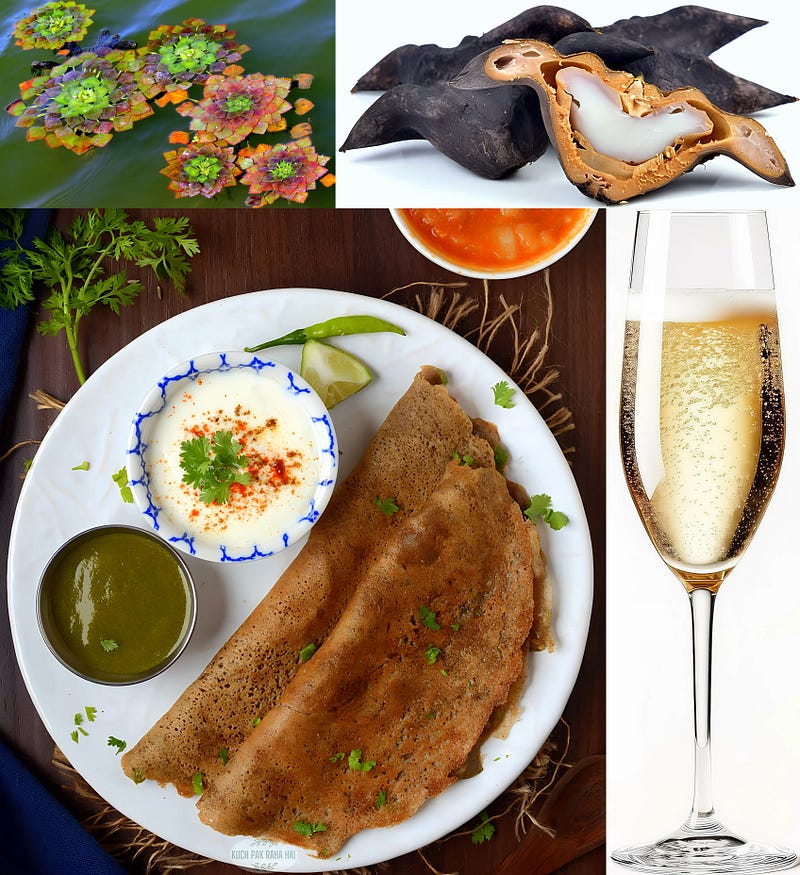
The water chestnut, Trapa natans, is a botanical paradox. Despite its name, it is not a nut at all, nor is it related to the crunchy corms often tossed into stir-fries. Instead, it is a floating aquatic plant whose thorny fruits resemble medieval weapons as much as they do food. Native to Eurasia and Africa but spread far beyond, the water chestnut has been revered, reviled, and relentlessly cultivated across centuries. It is a tale of survival, culinary intrigue, and environmental caution — a plant both celebrated on festival tables and condemned as an invasive scourge choking rivers.
Taxonomy
Trapa natans belongs to the family Lythraceae, a curious lineage of flowering plants that includes loosestrife. Within its genus, Trapa species are sometimes collectively referred to as water caltrops, a nod to the sharply horned fruits. Common names range from water chestnut to devil pod, bat nut, and ling jiao in China. While T. natans is the most widespread, relatives such as Trapa bicornis are also harvested for food. This blending of taxonomy and tradition has long fueled confusion between true water chestnuts and the unrelated but edible corms of Eleocharis dulcis, the crunchy “Chinese water chestnuts” found in Asian cuisine.
Biology
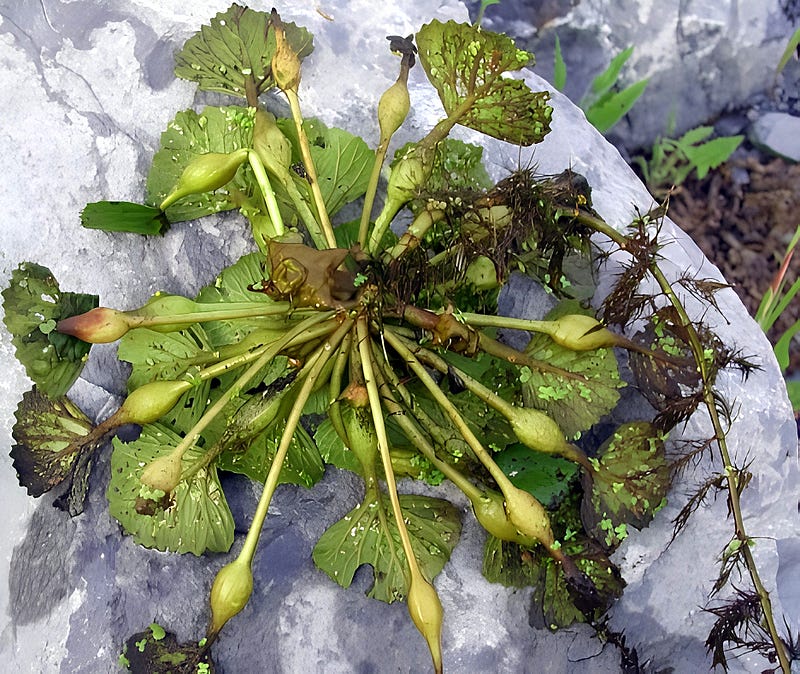
Biologically, the plant is a marvel of adaptation. Its rosettes of triangular leaves float serenely on the water’s surface, while feathery submerged leaves serve as anchors and nutrient gatherers. Each rosette can span 30 cm (about 12 in), forming mats so dense they block sunlight beneath.
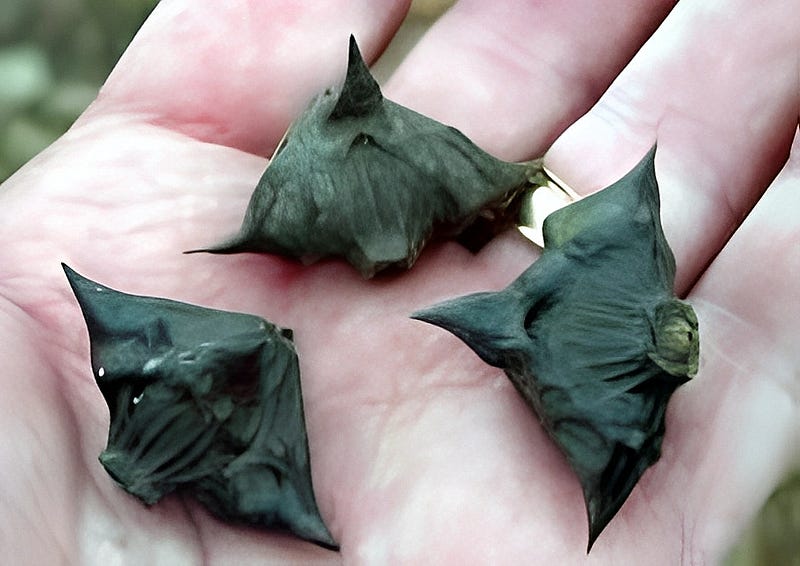
Its fruits, which mature in late summer, are about 5 cm (2 in) across, each studded with two to four vicious spines. The fruit sinks, lies dormant in sediment through winter, and germinates in spring, ensuring a cycle of persistence that has made eradication notoriously difficult.
Ecology
In ecological terms, water chestnut is both friend and foe. In its native wetlands of Asia and Europe, it provides food for wildlife and stabilizes aquatic systems. Yet in North America, where it was introduced in the mid-1800s, it has become invasive, overwhelming rivers such as the Hudson in New York. Dense mats deplete oxygen, suffocate native plants, and hinder fish movement. Efforts to control it — ranging from mechanical harvesting to hand-pulling — are ongoing. This tension makes T. natans a case study in the unintended consequences of global species transfer.

Uses
Historically, water chestnut has had significant economic relevance. In India, China, and Japan, the fruit is harvested, boiled, roasted, or ground into flour. It is a staple in Hindu fasting rituals, where its flour, known as singhara atta, becomes pancakes and sweets. The fruit is high in carbohydrates, minerals like iron and potassium, and provides a valuable starch alternative. In regions like Bihar, annual yields measure in the thousands of tons, feeding local markets and sustaining livelihoods. Yet the plant’s dual identity — crop in one land, invasive in another — underscores the delicate balance of sustainability.
Culinary Aspects
Culinarily, the taste of Trapa natans is earthy, subtly sweet, and nutty, with a starchy body akin to chestnuts or water-boiled peanuts. The shell must be cracked with care, often using a stone or knife, to reach the ivory-colored kernel inside. Roasted pods are a common street snack across Asia, while boiled seeds are mashed into traditional dishes. Nutritionally, 100 g (3.5 oz) of boiled kernels offer around 22 g (0.77 oz) of carbohydrates, a low-fat profile, and a moderate amount of protein — making them filling yet light. In modern kitchens, the fruit is increasingly appreciated for its gluten-free flour applications.
Wine Pairings
Pairing wine with water chestnuts invites a subtle touch. Its mild sweetness and nutty starch harmonize beautifully with off-dry whites such as Riesling or Gewürztraminer, whose floral notes lift the earthy tones. For roasted preparations, a light Pinot Noir, served slightly chilled at 13°C (55°F), balances the smoky bitterness with red fruit elegance. Sparkling wines, particularly Prosecco, add effervescence that complements water chestnuts’ gentle crunch, making them ideal for festive tables where ancient tradition meets modern indulgence.
Conclusion
The story of Trapa natans is one of dualities — food and foe, tradition and threat, delicacy and danger. It has nourished civilizations for millennia and yet today fuels debates over ecological invasions. In a warming, globalized world, its story serves as a reminder that every plant carries a legacy, and that sustainability lies not in simplification but in embracing complexity. The water chestnut, thorny and stubborn, teaches us that what we cultivate and what we unleash are often two faces of the same seed.