The Gaza Genocide Allegation: Dissecting the Legal and Moral Mischaracterization of Israel’s…
This report aims to provide a comprehensive analysis of the arguments opposing the genocide classification, examining the situation through the lens of international law, military necessity, and documented Israeli practices.
The Gaza Genocide Allegation: Dissecting the Legal and Moral Mischaracterization of Israel’s Military Campaign
The ongoing conflict in Gaza has sparked intense debate across the globe, with accusations of genocide being levied against Israel by various international bodies, non-governmental organizations, and scholars. However, a significant body of opinion, grounded in international legal standards and historical context, challenges this characterization. This report aims to provide a comprehensive analysis of the arguments opposing the genocide classification, examining the situation through the lens of international law, military necessity, and documented Israeli practices. The term genocide carries profound moral and legal implications, and its application to the Gaza conflict is not only legally dubious but also risks diminishing the severity of historically recognized genocides while providing implicit justification for the actions of terrorist organizations. By exploring the precise definition of genocide as established by international conventions, the historical background of the Gaza Strip, and the specific reasons why many experts argue the current situation does not meet this definition, this report seeks to contribute a nuanced perspective to a highly polarized discourse.
I. Introduction
The conflict in Gaza has dominated international headlines, prompting widespread condemnation and accusations of genocide against Israel. These allegations, however, often stem from a misinterpretation or politicization of international law rather than a dispassionate application of its strict definitions. The modern concept of genocide was first codified in the 1948 Convention on the Prevention and Punishment of the Crime of Genocide, which defines it as acts committed with the specific intent to destroy, in whole or in part, a national, ethnical, racial, or religious group. This intent, known as dolus specialis, is the cornerstone of the crime and distinguishes it from other atrocities like war crimes or crimes against humanity. Accusations that Israel is committing genocide against Palestinians in Gaza frequently overlook this crucial element of intent, instead focusing on the tragic but foreseeable consequences of a military campaign against a terrorist organization embedded within a civilian population. A proper legal analysis must separate the emotional response to human suffering from the rigorous standards required to prove genocidal intent, a standard that the evidence suggests Israel’s actions do not meet.
II. Historical Background
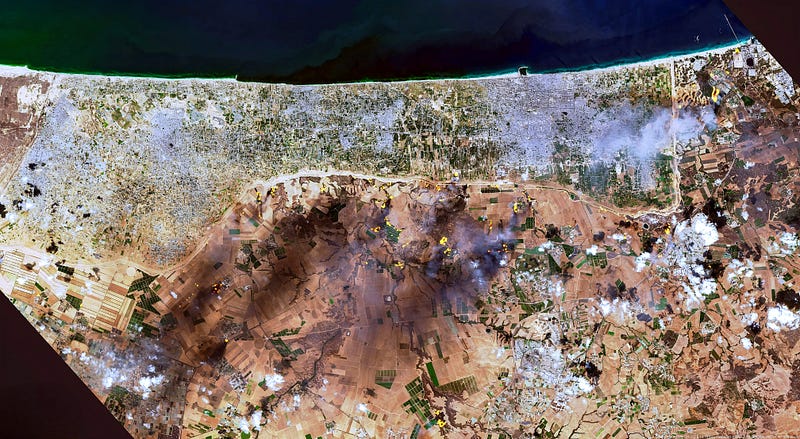
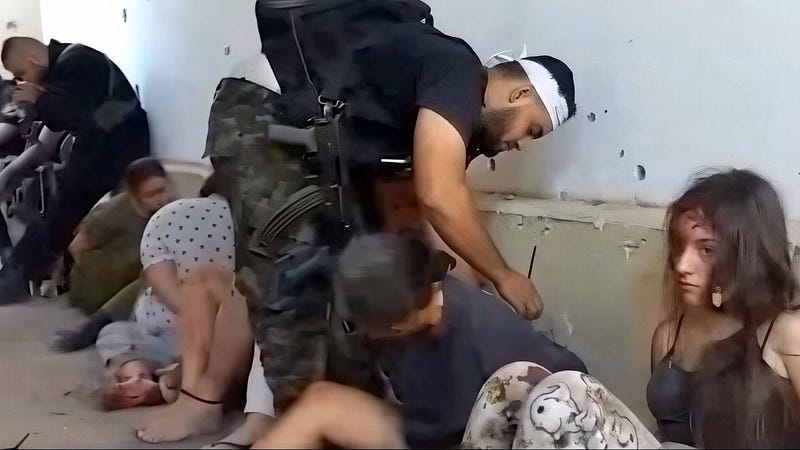
Understanding the current conflict requires contextualizing the Gaza Strip’s complex history. Following the 1948 Arab-Israeli war, the territory came under Egyptian administration and became a refuge for a large number of Palestinian refugees. Its borders were formalized in the 1949 armistice agreements. Israel captured Gaza from Egypt during the Six-Day War in 1967, initiating a prolonged period of military administration. In a significant move towards peace, Israel unilaterally disengaged from Gaza in 2005, dismantling all Israeli settlements and withdrawing its military forces, thereby ending its direct occupation and placing governance in the hands of the Palestinians. The democratic election of Hamas in 2006 and its subsequent violent takeover of the strip in 2007 marked a pivotal turning point. Hamas, an organization explicitly dedicated to the destruction of Israel and widely designated as a terrorist group by numerous countries, established a de facto government. In response to ongoing security threats, including constant rocket fire, Israel and Egypt imposed a blockade on the strip, controlling the movement of people and goods to prevent the smuggling of weapons. This history is not merely a backdrop but is essential for understanding the casus belli: the current military campaign was triggered by a specific and brutal act of aggression — the October 2023 Hamas attack that resulted in the deaths of approximately 1,200 Israelis and the taking of hundreds of hostages. Israel’s subsequent military action is framed not as an assault on a people, but as a war against a terrorist organization that continues to hold hostages and pose an existential threat.
III. Opposition Arguments
Opponents of the genocide label present a multi-faceted argument rooted in international law, military strategy, and factual analysis. They contend that applying the term genocide to Israel’s actions is not only legally inaccurate but also morally and strategically dangerous, as it absolves Hamas of responsibility for its role in creating the humanitarian crisis.
Central to the opposition is the strict legal definition of genocide, which requires a proven specific intent to destroy a protected group in whole or in part. Critics of the genocide allegation argue that Israel’s stated and demonstrated intent is the destruction of Hamas’s military and governing capabilities, not the Palestinian people. Israeli leaders have consistently asserted that their campaign is directed solely at the terrorist organization responsible for the October 7 massacre. This stated objective is fundamentally different from the genocidal intent required by the Genocide Convention. The Israeli military’s practices on the ground are cited as evidence of this lack of genocidal intent. The Israel Defense Forces have repeatedly undertaken extensive measures to minimize civilian casualties, including issuing widespread evacuation orders for northern Gaza at the war’s outset and delaying its ground offensive for weeks to allow civilians to flee. The establishment of designated humanitarian corridors and safe routes for civilian relocation further undermines the notion of an intent to destroy. Furthermore, the IDF continues to engage in tactics such as issuing warnings before airstrikes and facilitating the delivery of humanitarian aid, actions that are inconsistent with a campaign of genocide.
The role of Hamas is presented as a critical factor in the civilian death toll and suffering. Hamas is accused of systematically using the Palestinian population as human shields, a war crime that deliberately increases civilian casualties. Hamas fighters operate from within and underneath protected civilian sites such as residential buildings, schools, mosques, and hospitals, thereby transforming these locations into legitimate military targets. The group has also been reported to forcibly prevent civilians from heeding Israeli evacuation warnings, using them as pawns to inflate casualty figures for propaganda purposes. This strategy is designed to both protect its military assets and win the war of public opinion by ensuring a high number of civilian deaths that can be blamed on Israel. The argument follows that the resulting casualties are a tragic consequence of Hamas’s tactics rather than evidence of an Israeli-led genocide.
The statistical data and evidence used to support genocide claims are also challenged as unreliable. The primary source for casualty figures is the Gaza Ministry of Health, which is under the control of Hamas. This source does not distinguish between combatants and non-combatants in its published death tolls, making it impossible to ascertain the true number of innocent civilians versus Hamas terrorists killed. Furthermore, the circumstances of many deaths are unclear, with some potentially resulting from failed rocket launches by Palestinian Islamic Jihad or other armed groups rather than Israeli actions. The highly chaotic environment and Hamas’s control over the territory also prevent independent verification of whether specific Israeli attacks were directed at legitimate military targets such as Hamas leaders, weapon caches, or tunnel networks. Without this crucial context, raw casualty numbers alone cannot substantiate a claim of genocide.
Finally, opponents argue that the genocide charge is a powerful rhetorical tool that serves to delegitimize Israel’s right to self-defense. The modern Jewish state was founded in the aftermath of the Holocaust, the paradigmatic example of genocide. The implication that its descendants are now perpetrating a similar crime is presented as a profound historical irony and a particularly offensive form of demonization. This charge, it is argued, gives a free pass to the Hamas terrorists who carried out a massacre with demonstrable genocidal intent, as articulated in their own charter and repeated statements. By falsely accusing Israel of the ultimate crime, the genocide narrative shifts the focus away from the atrocities of October 7th and the ongoing threat posed by a terrorist organization dedicated to the annihilation of Israel. In conclusion, the opposition argues that while the human suffering in Gaza is profound and tragic, it is the result of a brutal war against a terrorist enemy that hides among its own people, not a state-led policy of genocide.