The IDF’s Multifaceted Strategy for Gaza
The Israel Defense Forces’ (IDF) campaign to eradicate Hamas is a complex and devastating military undertaking with profound humanitarian consequences.
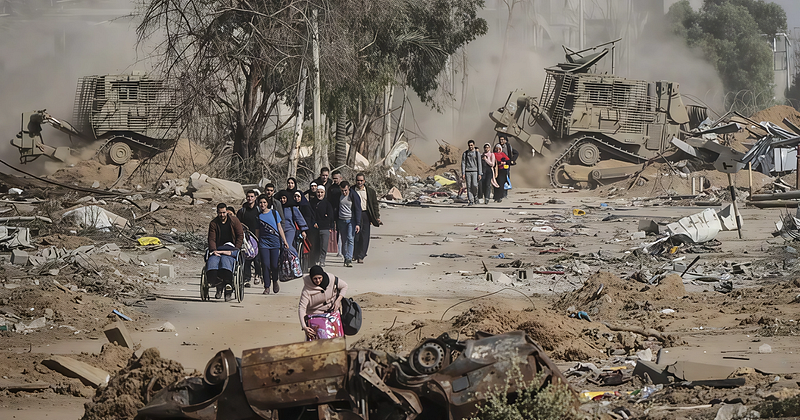
The Israel Defense Forces’ (IDF) campaign to eradicate Hamas is a complex and devastating military undertaking with profound humanitarian consequences. The strategy is not a single operation but a protracted war of attrition combining overwhelming firepower, territorial conquest, and a severe siege, all while navigating intense internal and external political pressures.
A core component of the strategy is a phased ground offensive aimed at physical control and destruction. The operation began with the approval of plans to seize Gaza City, an identified Hamas stronghold. This involves intense aerial bombardment and artillery barrages to soften targets, followed by the advance of infantry and armored units into dense urban areas. A primary tactical focus is the identification and destruction of Hamas’s extensive tunnel network, which serves as command centers, storage for weapons, and transport routes. The operation is a slow, grinding occupation of territory, with Israeli forces taking control of key areas and cities, effectively dividing Gaza into sectors to isolate Hamas battalions. As of recent operations, the IDF claims to control approximately 75% of the Gaza Strip. The next phase, dubbed “Operation Gideon’s Chariots II,” is explicitly aimed at the complete conquest of Gaza City, which the IDF has begun implementing with a new call-up of thousands of reservists.
This military campaign is inextricably linked to a strategy of severe humanitarian pressure. A strict blockade on the entry of essential supplies like food, fuel, and medicine has been enforced, crippling basic services and leading to widespread malnutrition. The UN and world food experts have confirmed that famine conditions are occurring in Gaza City and are projected to spread. The health ministry in Gaza reported that in a single 24-hour period, 13 people, including three children, died of malnutrition, bringing the total reported starvation deaths to 361. Furthermore, the military’s strategy of issuing mass evacuation orders has displaced the vast majority of the population multiple times, pushing civilians into increasingly confined and unsafe areas like al-Mawasi, which the UN has warned is overcrowded and unsafe. The systematic destruction of civilian infrastructure — including homes, universities, and hospitals — aims to deny Hamas any future base of operations but has rendered large parts of the strip uninhabitable.
Challenges and Internal Conflicts
Despite the massive application of force, the objective of eradicating Hamas faces severe and perhaps insurmountable challenges. Hamas has adapted its tactics, shifting from conventional defense to a resilient insurgency. The group has increased coordination between its localized guerrilla units and other armed groups in Gaza. Despite the loss of top leaders like Yahya Sinwar and Mohammed Deif, Hamas’s ability to replenish its ranks remains significant, with U.S. intelligence concluding the group may have added as many as 15,000 fighters since the war began. They execute daring ambushes, such as a recent large-scale assault on an Israeli military encampment in Khan Younis by 18 fighters, demonstrating continued coordination and intelligence capabilities. Their extensive tunnel network remains a critical asset, allowing them to protect fighters, hide hostages, and launch surprise attacks, highlighting the asymmetric nature of the conflict .
The campaign has also sparked a profound internal crisis within Israel’s leadership. The most severe rift is between the political echelon, led by Prime Minister Benjamin Netanyahu, and the military command, led by IDF Chief of Staff Lt. Gen. Eyal Zamir. Zamir has repeatedly voiced strong misgivings about a full occupation of Gaza, warning it would plunge Israel into a “black hole” of a prolonged insurgency, humanitarian responsibility, and heightened risk to the hostages. This dissent has been described as the most severe civil-military crisis since 1948. This discontent is also spreading among soldiers and reservists, with reports indicating only 60% of soldiers are showing up for reserve duty, including “grey refusals” who cite medical conditions or quietly leave the country.
The Staggering Human Cost and Political Stalemate
The human cost of this strategy is catastrophic. According to the Gaza Health Ministry, over 65,000 people have been killed in the war. A revelation from a classified Israeli military intelligence database indicates that, as of May 2025, only 8,900 named Hamas and Palestinian Islamic Jihad fighters were listed as killed out of a total death toll of 53,000 at that time, suggesting that 83% of the Palestinians killed were civilians. This extreme civilian death rate is rarely matched in modern warfare. The deaths are not just from bombardment; the systematic blockade has created a man-made famine, and thousands more are believed to be buried under the rubble of destroyed buildings.
Politically, the endgame remains highly uncertain and contentious. Israel’s official vision proposes replacing Hamas with an alternative local administration, backed by international and Arab partners for reconstruction, while Israel maintains indefinite overall security control. However, this plan is vague, lacks credible Palestinian partners, and has been rejected by key international actors. Furthermore, the issue of the remaining Israeli hostages hangs over every decision. Hamas is believed to hold 58 hostages, with 23 still alive, and their families are putting immense pressure on the government to prioritize a deal over military escalation. Ceasefire negotiations have repeatedly broken down, with Hamas demanding a permanent ceasefire and full Israeli withdrawal — terms that Netanyahu has rejected.
From the Israeli point of view, the campaign to eradicate Hamas is a necessary and justified war of survival, a direct response to the atrocities of October 7th, 2023. The strategy is a comprehensive military and political effort designed to achieve the complete and irreversible destruction of Hamas as a military and governing entity in the Gaza Strip.
The primary military objective is the total conquest of Hamas’s territorial strongholds, culminating in the seizure of Gaza City, which Israel identifies as the group’s last major bastion. This operation, codenamed “Operation Gideon’s Chariots II,” involves a massive call-up of 60,000 reservists to support a large-scale ground offensive. The Israel Defense Forces (IDF) are employing overwhelming force, combining intense aerial bombardment, artillery strikes, and ground maneuvers to dismantle Hamas’s infrastructure. A critical focus is the neutralization of the vast network of tunnels used by Hamas for command, logistics, and hostage concealment. The IDF asserts that it currently controls approximately 75% of the Gaza Strip and is now focused on completing its territorial objectives.
Concurrent with the offensive is a plan for the forced evacuation of Palestinian civilians from combat zones to minimize Israeli military casualties, a move Israel defends as a humanitarian effort despite international criticism. Israel’s long-term political objective is to ensure that Hamas can never again govern Gaza or threaten Israeli security. This involves the complete disarmament of the group and the establishment of indefinite Israeli security control over the territory. Israel envisions a future Gaza governed by an alternative local administration, neither Hamas nor the current Palestinian Authority, backed by international and Arab partners for reconstruction, while Israel retains overriding security authority.
Israel maintains that the key to ending the war lies in Hamas’s unconditional surrender, the release of all hostages, and its complete disarmament. From the Israeli perspective, the campaign, while costly, is the only path to achieving the lasting security and the decisive victory that the nation demands after the events of October 7th.
In conclusion, the IDF’s strategy is a high-stakes gamble that has achieved territorial gains at an unimaginable human cost. However, it has not achieved its core objectives of eradicating Hamas or freeing all hostages. Instead, it has fueled a resilient insurgency, triggered a devastating famine, opened a deep rift within Israeli society and its military, and drawn widespread international condemnation. The path forward appears to be either a bloody and open-ended occupation of Gaza or a negotiated settlement that the current Israeli government seems unwilling to accept.