The Northern Rockhopper Penguin: A Crowned Survivor on the Edge of the World
Few creatures embody the drama of isolation quite like the northern rockhopper penguin (Eudyptes moseleyi). With its yellow…

Introduction
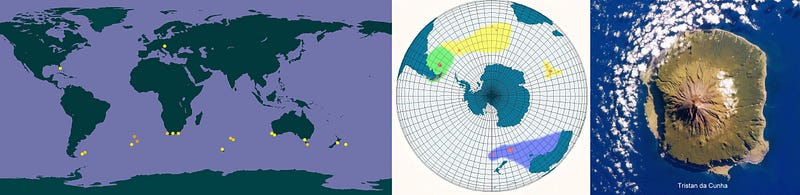
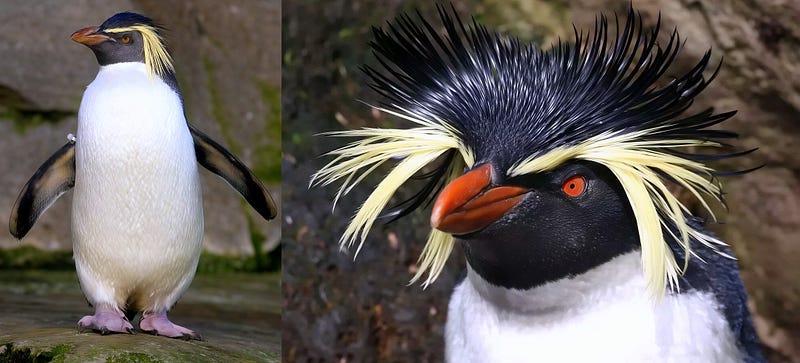
Few creatures embody the drama of isolation quite like the northern rockhopper penguin (Eudyptes moseleyi). With its yellow plumes and piercing red eyes, this bird reigns over the storm-swept cliffs of the South Atlantic, where the human footprint is light but growing. These penguins live at the intersection of resilience and fragility — symbols of evolutionary brilliance battling a rapidly changing ocean. Once abundant across Tristan da Cunha, Gough Island, and other sub-Antarctic outposts, the species now teeters toward extinction, offering a haunting glimpse into the tension between nature’s persistence and humanity’s excess.
Taxonomy
Eudyptes moseleyi belongs to the family Spheniscidae within the order Sphenisciformes. It is closely related to the southern rockhopper (Eudyptes chrysocome) but differs in its thicker plumes and more restricted breeding range. Common English names include northern rockhopper penguin, Moseley’s penguin, and crested rockhopper. In Tristan da Cunha, locals refer to it as “pinnamin,” derived from old maritime slang for “little pin man.” In French, it is known as “gorfou sauteur du nord,” while Afrikaans speakers call it “noordelike klipspringer-pikkewyn.”
Biology
The northern rockhopper stands about 55 cm tall (21.7 in) and weighs approximately 2.5 kg (5.5 lb). Its yellow head plumes extend beyond the nape in long, streamer-like arcs, giving it a regal, almost theatrical appearance. These penguins breed on steep coastal cliffs, forming dense colonies that erupt in a cacophony of calls during the austral summer. They feed mainly on krill, small fish, and squid, diving up to 100 m (328 ft) deep in pursuit of prey. Females typically lay two eggs, though only one chick is usually raised. Lifespans in the wild can reach 15–20 years, though current survival rates are declining due to food scarcity and warming sea temperatures.
Ecology
Northern rockhoppers inhabit remote islands with nutrient-rich waters driven by cold upwellings. Their ecological role is integral — they recycle marine nutrients to terrestrial ecosystems through guano deposition, fertilizing the sparse vegetation that clings to the cliffs. The species is now classified as Endangered under the IUCN Red List, with population declines exceeding 90% in some colonies since the 1950s. Threats include climate-driven changes in prey distribution, oil spills, invasive species predation, and accidental bycatch in fisheries. Conservation projects on Gough Island have focused on eradicating introduced mice that prey on chicks, while international policy frameworks under the Convention on Migratory Species aim to safeguard feeding zones.
Uses
While hunting and consumption of adult northern rockhopper penguins are prohibited, their eggs remain a traditional and occasionally practiced seasonal food in certain island communities, such as Tristan da Cunha. Egg collection is tightly regulated under local conservation law, with limited annual permits issued to ensure sustainable harvest. Typically, each licensed household may take a small quota during the laying season in late October to early November, ensuring at least one egg remains in each nest to preserve reproductive success.
A fresh penguin egg weighs roughly 110 g (3.9 oz) and contains about 170 calories per 100 g (3.5 oz). Its composition features elevated protein levels, moderate cholesterol, and a higher lipid content than chicken eggs, giving a richer texture. Nutrient density is notable: vitamin D, selenium, and long-chain omega-3 fatty acids are present in concentrations nearly double those of domestic fowl. Processing requires immediate boiling or baking within 24 hours due to rapid spoilage risk in the marine climate.
From a sustainability standpoint, traditional egg gathering plays a dual role — maintaining cultural continuity while funding habitat monitoring. Traceability protocols require reporting of collection sites, quantities, and spoilage rates to conservation authorities. The harvest yield per hectare is low, typically 8–12 nests (19.8–29.6 per acre), reflecting the species’ slow reproductive cycle.
Commercial derivatives focus on non-extractive value. Guano rich in nitrogen (8–10% by weight) has been tested for controlled agricultural applications. Penguin habitats support measurable carbon sequestration through nutrient-driven phytoplankton blooms, estimated at 2.5 tonnes CO₂ per hectare per year (2.2 tons per acre). Ecotourism centered on rockhopper observation funds local monitoring programs under the UK Overseas Territories Environment Programme, which enforces certification, traceability, and community rights protection.
Culinary Aspects
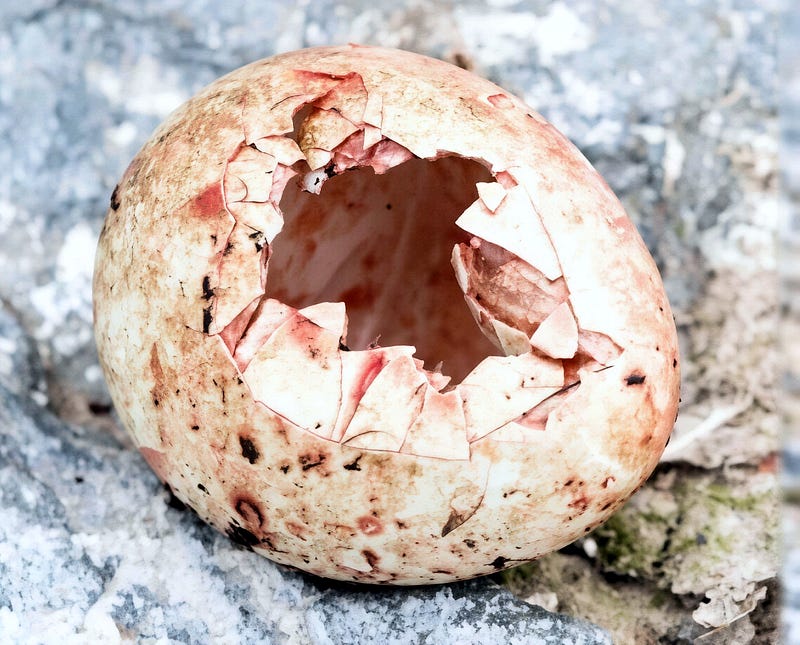
Rockhopper penguin eggs are thick-shelled and pale cream in color, often blotched with reddish markings. The shell must be tapped sharply to crack because of its density and layered calcite structure. Inside, the albumen — unlike that of domestic poultry — does not turn opaque white when cooked. Instead, it remains semi-translucent, developing a faint amber hue when boiled. This characteristic, a product of differing protein and lipid chemistry in the albumen, gives the cooked egg a glassy, gelatinous appearance that surprises first-time tasters.
The yolk is dense and vividly orange, accounting for nearly 40% of total mass — substantially higher than the 30% typical of chicken eggs. When boiled for 12 minutes at 100°C (212°F), the yolk achieves a custard-like firmness with a subtle marine salinity. The aroma combines notes of kelp, iodine, and brine, while the flavor balance is umami-rich with a mild sulfur undertone that softens when baked. The mouthfeel is creamy but substantial, the aftertaste lingering yet clean.
Locals traditionally bake the eggs in open hearth ovens, pairing them with potatoes and onions for a dish called “rockhopper pudding.” When scrambled in butter, the translucent whites give a glossy, almost glazed finish. Modern chefs experimenting with sous-vide methods at 68°C (154°F) report improved textural uniformity and retention of delicate fatty acids. From a sensory standpoint, the flavor complexity resembles duck or goose eggs but with a saline depth unique to seabirds, offering a layered, nutrient-dense expression of place and ecology.
Wine Pairings
For rockhopper penguin eggs, the optimal pairing must balance their marine salinity, dense yolk, and translucent, gelatinous albumen. South Africa’s cool-climate coastal wines — particularly from Elgin, Walker Bay, and Hemel-en-Aarde — mirror the oceanic conditions of Tristan da Cunha and deliver the required freshness and mineral tension.
A Chenin Blanc from Swartland or Stellenbosch, especially a dry style aged on lees, provides crisp acidity, beeswax texture, and subtle saline lift that harmonize with the richness of the yolk. For baked egg dishes such as “rockhopper pudding,” an Assyrtiko grown in the Cape Agulhas region offers volcanic minerality and linear acidity, echoing the flavor precision of the Atlantic air.
If a red is preferred, a Pinotage from Walker Bay with light extraction and bright cranberry fruit complements the egg’s savory depth without overpowering its delicacy. For those favoring sparkling wines, a Méthode Cap Classique — particularly one based on Chardonnay and Pinot Noir from Franschhoek — cuts through the fatty mouthfeel with brisk effervescence and citrus precision.
Each of these wines speaks to proximity and ecology: South African coastal terroirs share the same Humboldt and Benguela current influences that shape Tristan da Cunha’s maritime environment, creating a rare sensory symmetry between ocean, bird, and vineyard.
Conclusion
The northern rockhopper penguin embodies both the triumph and vulnerability of evolution. Its crown of golden feathers stands as a living emblem of adaptation against brutal conditions, yet its survival now hinges on human restraint. From its windswept rookeries to the rare seasonal harvest of its eggs, every aspect of this species reflects a delicate negotiation between tradition, ecology, and responsibility. Protecting it means acknowledging that sustainability is not a slogan but a practiced discipline — one that must balance cultural heritage with ecological integrity.