
Do We Really Need Self-Driving Cars? A Critical Analysis
Self-driving cars — also known as autonomous vehicles (AVs) — have long been heralded as the next revolution in transportation. Proponents argue that these vehicles could drastically reduce accidents, ease traffic congestion, and transform the way cities utilize their streets.

Introduction
Self-driving cars — also known as autonomous vehicles (AVs) — have long been heralded as the next revolution in transportation. Proponents argue that these vehicles could drastically reduce accidents, ease traffic congestion, and transform the way cities utilize their streets. Yet despite years of development, fully autonomous cars remain largely experimental, and public enthusiasm is mixed. This report takes a critical look at the question: Do we really need self-driving cars? It examines the technological feasibility of AVs and the sweeping changes required in our infrastructure, as well as the societal, ethical, economic, and environmental implications of integrating autonomous vehicles into today’s transportation systems.
In the following sections, we analyze how self-driving cars could be both beneficial and disruptive. We pay special attention to how existing transportation infrastructure needs to adapt to accommodate the needs and impacts of autonomous vehicles. From the streets and signals in our cities to the laws, insurance policies, and job markets that underpin mobility, the arrival of driverless cars demands a careful balancing of promises and pitfalls.
Technological Feasibility and Infrastructure Requirements
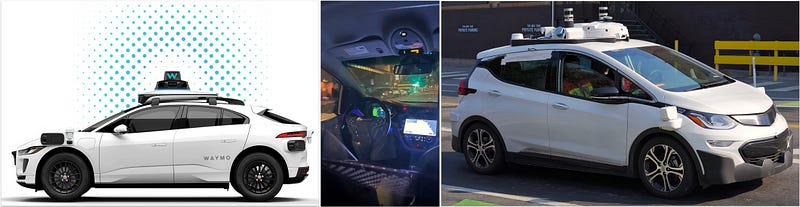
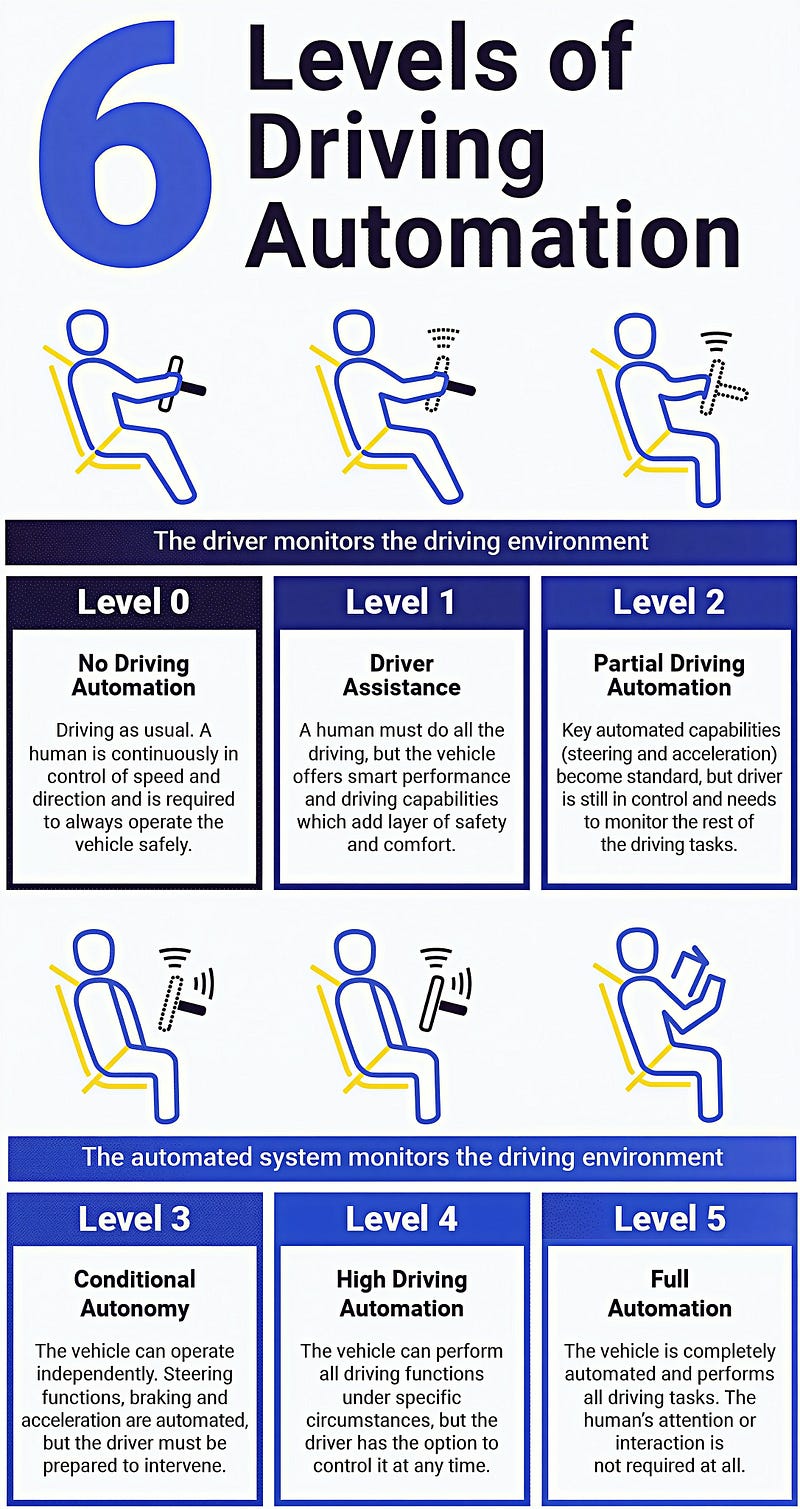
Despite dramatic advances in sensors and artificial intelligence, truly driverless cars still face significant technological hurdles. The current state of autonomous driving is largely limited to pilot programs and geofenced areas in a few cities. Companies like Waymo and Cruise have deployed robotaxis in places such as Phoenix and San Francisco, and some trucking routes in Texas are testing self-driving freight convoys. However, no automaker yet offers a vehicle that can autonomously handle all roads and conditions (known as Level 5 autonomy). Most commercially available systems remain at Level 2 (partial automation, like advanced driver-assist features) or at best Level 3 in limited scenarios, meaning human drivers must still stand by to take control when the automation reaches its limits. The optimistic forecasts of widespread AV deployment have repeatedly been pushed back as engineers grapple with edge cases like bad weather, complex urban environments, and unpredictable human behaviors.
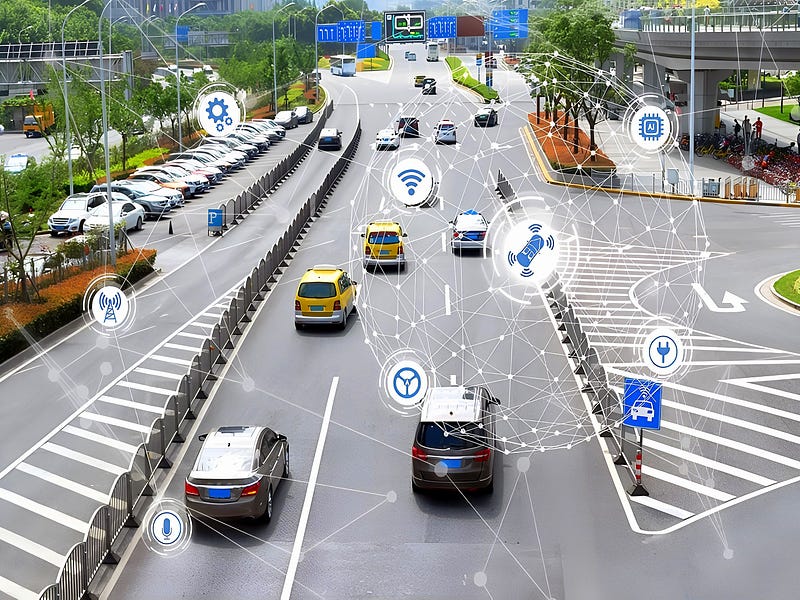
For autonomous vehicles to operate safely at scale, substantial upgrades to transportation infrastructure are required. Today’s roads and traffic control systems were designed for human drivers, not machine vision and AI. Many cities struggle to maintain clear lane markings and standardized signage, yet these visual cues are crucial for AV sensors and cameras to navigate reliably. Faded paint or inconsistent road signs that a human might intuitively handle can confuse an autonomous car’s decision-making. Likewise, most traffic lights are not equipped to communicate with vehicles. They cycle on fixed timers or, at best, use basic induction loop sensors, offering no direct data feed to an approaching AV. In a future with self-driving cars, traffic signals and intersection controllers may need connectivity upgrades — vehicle-to-infrastructure (V2I) communication — so that cars and city systems can exchange information in real time. Researchers have proposed “smart” traffic lights that adjust dynamically based on live traffic flow or even new signal concepts specifically for AV coordination. Such intelligent traffic management could reduce idle time and improve safety, but deploying it citywide would require major public investment.
Digital infrastructure is another critical piece. Self-driving cars generate and consume enormous amounts of data each second as their Lidar, radar, and camera systems map the world around them. For smooth operation, especially in busy urban settings, AVs benefit from high-bandwidth, low-latency wireless connections (for cloud-based maps, sensor uploads, or coordination with other vehicles). Yet many regions lack the necessary 5G networks and edge computing nodes to support this data exchange. Gaps in connectivity could leave autonomous cars “driving blind” in situations where they rely on real-time updates — for instance, an AV might not receive an alert about an accident around the bend or might lose high-definition map data in a dead zone. Building a robust digital backbone (from ubiquitous wireless coverage to possibly dedicated short-range communications for transportation) is thus part of the infrastructure adaptation needed before AVs can truly thrive. The technological promise of self-driving cars is inseparable from these infrastructure enhancements: better-maintained physical roads, upgraded traffic control devices, and resilient communication networks. Without such improvements, even the most advanced AV software will struggle to safely navigate the legacy road system designed for people.
At the same time, it’s worth noting that technology is improving. Modern AI driving systems are far better than their predecessors at perceiving and reacting to the environment, but they remain imperfect. High-profile mishaps — from vehicles confused by unusual situations to accidents caused by sensor failures — have underscored that reliability is still a work in progress. Notably, several fatal crashes involving prototype self-driving cars have occurred in the past decade, caused by factors like faulty object recognition or the inability to handle rare events. These incidents reveal that achieving human-level driving competence in all conditions is an exceedingly hard challenge. In response, some experts suggest that infrastructure itself could shoulder some of the burden: for example, dedicated AV lanes or geofenced zones might isolate self-driving cars from the chaos of mixed traffic. Exclusive lanes outfitted with sensors and consistent markings could create a more controlled environment where autonomous vehicles perform optimally. However, segregating roads for AV use also reduces flexibility and raises questions about the equitable use of street space. In any case, early experiences show that the path to full autonomy will likely be gradual — a prolonged period of mixed traffic with both automated and human-driven vehicles. During this transition, infrastructure will need to accommodate both, ensuring that new technology can integrate without compromising the safety and efficiency of transportation for everyone.
Societal Impact and Public Acceptance
Beyond the engineering challenges, the push for self-driving cars carries wide-ranging implications for society. Advocates envision a future of safer roads, greater mobility, and more convenience. On the safety front, the potential gains are undeniably compelling: over 40,000 people are killed in motor vehicle crashes each year in the United States alone, and an estimated 90% or more of serious crashes stem from human errors like drunk or distracted driving. A well-designed autonomous driving system does not get tired, text on a phone, or drive under the influence. In theory, replacing imperfect human drivers with tireless algorithms could prevent thousands of fatalities. Early data from self-driving prototypes suggests that while they have been involved in accidents (some of them fatal), these incidents are often linked to technical shortcomings that are steadily being addressed. Over time, experts anticipate that autonomous vehicles will cause far fewer deaths and injuries than the current human-driven fleet. If this holds, the social benefit in terms of lives saved and injuries avoided would be immense — a strong argument in favor of pursuing the technology.
Self-driving cars also promise new mobility options for people who cannot drive due to age or disability. An elderly person no longer able to hold a license, or a visually impaired individual who must rely on others for transportation, could gain independence from door-to-door autonomous taxis. Approximately 25 million Americans have travel-limiting disabilities, and widespread AV services could help many of them access jobs, healthcare, and social activities that are currently out of reach. In rural or suburban areas with scant public transit, an automated shuttle service might connect isolated communities, reducing the epidemic of isolation among those (especially seniors) who lack mobility. These benefits, however, would only materialize if AV technology is implemented with accessibility in mind — vehicles must accommodate wheelchairs, interfaces must be user-friendly for those with vision or hearing impairments, and services must be affordable and accessible. There are signs of progress: pilot programs in some towns have tested autonomous vans equipped for disabled riders. But ensuring equitable access will require conscious effort from policymakers and manufacturers, lest self-driving services cater only to tech-savvy urban professionals and neglect those most in need of mobility improvements.
Despite these potential upsides, public acceptance of self-driving cars remains a significant hurdle. The idea of ceding all control to a machine makes many people uneasy, especially given media coverage of crashes involving experimental AVs. Surveys consistently show wariness: according to AAA’s 2025 poll, only 13% of U.S. drivers say they would trust riding in a fully self-driving vehicle, and about 60% report being afraid to do so. This distrust has actually grown in recent years, as enthusiasm for autonomous driving has stagnated — in 2022, 18% of drivers were interested in the development of self-driving cars, but by 2025 that number had fallen to 13%. Even with robotaxi services now operating in a few cities, a majority of Americans say they would not choose to ride in one if given the option. The generational divide is telling: younger adults are more open to the idea, yet even among Millennials and Gen X, most would still rather not trust a robotaxi on their commute. These attitudes reflect concerns about safety, reliability, and the intangible discomfort of relinquishing control. Every headline about an autonomous vehicle mishap — an Uber test vehicle failing to stop for a pedestrian, or a Tesla on “Autopilot” mode contributing to a crash — reinforces public skepticism.
Building societal trust in self-driving cars will likely require a track record of safety and clear public education. City and state authorities planning to integrate AVs are beginning to consider outreach efforts to familiarize the public with the technology’s capabilities and limits. Transparent communication is key: people need to know not just the benefits (e.g., fewer accidents) but also how an AV makes decisions and what safeguards are in place. For instance, if an autonomous shuttle pulls up to a crosswalk full of pedestrians, how does it decide when to proceed? If its sensors fail, is there a remote operator or fail-safe system? Addressing such questions openly can help demystify the technology. Public education campaigns and even demonstrations or ride-alongs can gradually ease fears by showing that an AV follows the rules of the road conservatively and is backed by redundant safety systems. Ultimately, widespread adoption will depend not only on the technology’s actual safety performance, but also on overcoming the psychological barrier many people have about trusting a machine with their lives. Society may benefit from self-driving cars, but society must also accept them — and that acceptance will not happen overnight. In the meantime, it falls to policymakers and companies to engage with communities, build confidence through transparency, and perhaps proceed slowly enough that people have time to adapt to the idea of sharing the road with, and eventually riding inside, driverless vehicles.
Ethical and Legal Concerns
The rise of autonomous vehicles also raises thorny ethical questions and demands an evolution of legal frameworks. One much-discussed dilemma is how a self-driving car should behave in a no-win scenario — the classic “trolley problem” where any action will result in harm. Humans rarely have time to reason through ethical trade-offs in an impending crash, but autonomous driving software could, in theory, be programmed to make split-second judgments: for example, should the car swerve to avoid a group of pedestrians at the risk of hitting one person, or prioritize the safety of its passenger at all costs? There is no societal consensus on the “right” answer to such scenarios, and forcing engineers to encode a moral decision algorithmically is deeply uncomfortable. Some ethicists argue that focusing on these rare dilemma situations may distract from more pressing everyday ethics, such as ensuring an AV drives in a way that is fair to other road users and obeys laws scrupulously. Nevertheless, the public is understandably worried about ceding life-and-death decisions to AI. Any high-profile incident in which an autonomous car’s actions lead to a moral controversy could set back acceptance of the technology. To navigate this, companies and regulators might need to establish transparent guidelines or principles (for instance, disclosing if an AV is programmed always to prioritize occupants or minimize total harm). Some jurisdictions have even contemplated requiring that such decision logic be revealed to regulators or the public. However, coding ethics into machines remains an unresolved challenge, one that blends philosophy, engineering, and law.
Legal frameworks, meanwhile, are scrambling to catch up with the reality of autonomous driving. Under current law in most places, human drivers are assumed to be in control of their vehicles and are held responsible for obeying traffic rules and causing accidents. What happens when the “driver” is an algorithm? Around the world, regulators are beginning to address this paradigm shift. In the United States, there is a patchwork of state laws governing AV testing and deployment, but no comprehensive federal law yet. States like California have instituted detailed regulations for autonomous vehicle operation, including requiring companies to carry hefty insurance and report any incidents. Pennsylvania passed an Act in 2022 to modernize its vehicle code for highly autonomous vehicles, collaborating with industry and planners to ensure safety while encouraging innovation. These early legal adaptations typically still assume a backup human driver or operator who can be called upon, which skirts the hardest questions until full autonomy is more common. As AVs become more capable, laws will need to define responsibilities clearly. If a self-driving car runs a red light or causes a fender-bender, is the “driver” liable? If so, is that the passenger, the owner, the manufacturer, or the software developer? Or is the vehicle considered more akin to an automated product that malfunctioned? There is a growing view that liability will shift to the manufacturers and developers of autonomous systems when the car is truly driving itself. In fact, insurance models are already bracing for this shift — envisioning a move from personal driver liability coverage to product liability and commercial policies carried by the companies operating AV fleets. Determining fault in an AV crash can be complex, potentially requiring forensic analysis of sensor data and decision logs rather than eyewitness testimony. Legal standards for such evidence, data retention policies, and the privacy of those records are all areas that need new rules. As of 2025, regulators and courts are only beginning to grapple with these issues, and inconsistencies abound across different regions. Without clear legal frameworks, both manufacturers and the public lack certainty about how accountability will be handled when something goes wrong.
Ethical and legal concerns also extend to data privacy and security. A self-driving car by necessity records tremendous detail about its surroundings and its passengers. Cameras and sensors might continuously film not just the road, but also people on sidewalks or the vehicle’s occupants. This raises questions of who owns and can access that data — law enforcement? the car manufacturer? advertisers? Privacy advocates worry about a future where AVs become roving surveillance devices, collecting location and visual data that could be misused. Strong regulations and encryption practices may be needed to ensure that autonomous vehicles respect privacy rights and only use data for legitimate safety purposes. Equally urgent is the issue of cybersecurity. As highly computerized, connected machines, AVs are vulnerable to hacking or malware in a way that traditional cars are not. A malicious actor theoretically could take control of a vehicle or feed it false sensor information, with potentially catastrophic consequences. Already, researchers have demonstrated hacks on connected cars’ braking systems and steering through wireless exploits. The prospect of a fleet of self-driving cars being hijacked or sabotaged is a new kind of public safety risk. Ethically, manufacturers have a responsibility to build robust security into their vehicles, and regulators may need to set cybersecurity standards for autonomous systems. Moreover, if a hacked AV causes harm, the legal system will face tricky questions of liability: does blame lie with the hacker (if they can even be identified), or with the company that failed to secure its product? Existing product liability laws likely need updates to cover software vulnerabilities and cyberattacks on vehicles. In short, the march toward self-driving cars forces society to rethink long-standing ethical norms (like how we weigh safety vs. freedom, or human judgment vs. algorithmic rules) and to modernize legal regimes that were built for an earlier era of transportation. Addressing these concerns proactively is essential — if we do not, the introduction of autonomous vehicles could lead to public backlash or injustice, even if the technology itself functions as intended.
Economic Implications and Labor Market Disruption
The economic stakes of a driverless future are enormous. On one hand, autonomous vehicles could deliver substantial economic benefits: safer roads mean fewer crash-related costs (medical bills, property damage, lost productivity), which run into the hundreds of billions of dollars globally each year. Smoother traffic flow and optimized routing could increase productivity by saving commuters’ time. Entirely new industries and services are emerging around AV technology — from high-tech jobs in vehicle software development to mobility-as-a-service businesses that operate robotaxi fleets. On the other hand, these gains come with significant disruptions to existing economic structures, especially in employment. Driving is one of the most common occupations in many countries. In the United States, for example, roughly 3.5 million people work as professional truck drivers, and hundreds of thousands more drive taxis, ride-hailing cars, buses, and delivery vehicles. A successful deployment of self-driving vehicles threatens to automate many of these jobs out of existence. Long-haul truck drivers, rideshare drivers for companies like Uber, and local delivery couriers — all could see demand for their labor plummet if vehicles become capable of driving themselves 24/7 without pay or rest. The ripple effects could be profound: entire communities and demographics rely on driving jobs for income, and not all displaced workers can easily transition to new careers.
History suggests that technological revolutions create winners and losers, and that without intervention, the losses often fall on the most vulnerable workers. Driverless technology will likely be no different. The labor market will need to adapt, but that adaptation may be painful. Some economists argue that automation of driving will eventually create new jobs (in vehicle monitoring, fleet maintenance, software oversight, etc.), but these positions will require different skills and far fewer people than the drivers of today. There is a growing consensus that proactive measures are needed to retrain and support workers who will be displaced by vehicle automation. For instance, trucking companies and unions might develop retraining programs for truck drivers to move into logistics management or local delivery roles that are harder to automate. Governments could fund vocational training in tech and automotive fields for former drivers. Without such efforts, the social cost of sudden unemployment for millions of drivers could outweigh the efficiency gains that AVs bring. In the interim, some regions might even consider slowing the deployment of AVs in certain sectors (like trucking) to give the labor market more time to adjust. The transition could be managed over years or decades, to avoid a sharp shock to employment. Urban planners and economists also note that reduced demand for human drivers could have secondary economic effects: for example, less need for parking attendants and gas station workers, or declining business for highway motels and diners that serve truckers. Entire local economies organized around road travel may need to reinvent themselves.
Another economic dimension of self-driving cars involves insurance and liability. The auto insurance industry today is built on the assumption that human drivers occasionally make mistakes that lead to crashes, and insurance premiums are priced according to an individual’s risk factors (age, driving record, etc.). If autonomous systems sharply reduce accidents, one might expect insurance costs to drop for everyone. Indeed, with automation, there should be far fewer at-fault crashes due to human error. However, paradoxically, insurance is not likely to vanish — it will evolve. While there may be fewer collisions overall, when accidents do involve autonomous vehicles, the blame may lie with a vehicle’s software or hardware malfunction. This shifts liability from individual drivers to manufacturers and software developers. Insurers are already beginning to develop new models where the coverage follows the vehicle or its operating system rather than the person. In some scenarios, personal car insurance might become less important, while product liability insurance for AV manufacturers and commercial policies for fleet operators become paramount. We see early evidence of this in regulations: for example, California requires companies testing AVs to carry a $5 million insurance bond to cover potential damages, reflecting the expectation that the company (not a human driver) is financially responsible for any mishap. In the future, individual car owners might buy policies that explicitly separate when the human is driving versus when the AI is driving — essentially covering system failures differently from human errors. Premiums could be calculated more on the track record of the vehicle’s software version and sensor suite than on the owner’s personal driving history. Notably, even if accidents decrease in frequency, the cost per incident might increase because repairs to high-tech vehicles are more expensive. A minor fender-bender in a car loaded with Lidar units and advanced sensors can cost a fortune to fix, as those components are costly to replace. Thus, the insurance industry might not shrink so much as change focus — dealing with fewer but higher-cost claims, and grappling with complex investigations to determine if a crash was caused by a software bug, a faulty sensor, or simply unpredictable road conditions.
The broader economic impact also touches consumers and car manufacturers. If autonomous mobility is primarily offered as a service (fleet-owned taxis), car ownership patterns could shift. Some analysts predict a decline in private car ownership in favor of using on-demand AV services. This would upend the current automotive market; automakers might sell fewer cars overall but possibly more high-end vehicles to fleet operators, and they may need new business models like subscription-based rides. Car sales could become more concentrated in commercial fleets that turn over vehicles rapidly, since a robotaxi might be utilized for far more hours per day and accumulate mileage faster than personal cars. In fact, a single robotaxi could do the work of multiple privately owned cars by serving many riders throughout the day. If that scenario plays out, the total number of vehicles manufactured might drop, affecting auto industry jobs, dealerships, and auto finance companies. On the flip side, if autonomous cars make travel so convenient and cheap that people opt to take more trips or live farther from work (since they can relax or work during commutes), we might see vehicle miles traveled soar and a need for even more vehicles in circulation to meet demand. Economic outcomes here depend heavily on policies: cities could encourage shared AV rides and robust public transit integration, or if left to pure market forces, we might get a glut of cheap robotaxis congesting streets. Finally, the advent of self-driving vehicles has competitive implications on the global stage. Companies and countries investing heavily in AV technology aim to lead a potentially huge market. There is an economic incentive for governments to support AV R&D to gain an edge in what could be a key industry of the 21st century, much as personal computing or the internet were in prior decades. In summary, the economic case for self-driving cars is double-edged — promising efficiency and growth, but threatening disruption and inequality. Much will depend on how we manage the transition, from protecting displaced workers to updating insurance and economic models for a new paradigm of automobility.
Environmental Factors and Urban Planning
Finally, any discussion of whether we “need” self-driving cars must consider environmental sustainability and how autonomous vehicles would mesh with urban planning goals. At first glance, AVs could bring several environmental benefits. Many of the prototype self-driving cars are electric vehicles (EVs), and indeed, experts believe that autonomy and electrification will go hand-in-hand. An autonomous electric vehicle produces no tailpipe emissions, and its overall carbon footprint can be significantly lower than a gasoline car, especially as the electricity grid gets cleaner. Studies have estimated that widespread adoption of autonomous EVs could reduce greenhouse gas emissions from transportation by around 30% relative to the status quo. The reasons are twofold: electric drivetrains are more efficient, and autonomous control can be optimized for energy savings. Self-driving cars can be programmed to accelerate and brake more smoothly than human drivers, avoiding the fuel waste of hard stops and starts. They can also “platoon” by driving closely together at highway speeds, taking advantage of reduced air drag to save energy. In theory, a network of AVs coordinating with each other and with traffic systems might eliminate needless idling at red lights and prevent stop-and-go traffic, further cutting fuel or electricity usage. If accidents are reduced, that also eliminates associated traffic jams and rubbernecking delays, which have their own emissions cost. Additionally, autonomous vehicles don’t need to circle the block looking for parking — a task that currently wastes fuel in city centers. They could drop passengers off and either park efficiently or proceed to the next ride, reducing the miles driven purely for parking search.
However, these optimistic outcomes depend on careful integration of AVs into a sustainable transportation framework. Without that, the net environmental effect of self-driving cars could be negative. A major concern is that easier travel may induce more travel. If you can read, work, or even sleep in your car, a two-hour daily commute might become more palatable — people might choose to live farther from their jobs or take additional trips since the “cost” of their time is lower. This convenience-driven increase in vehicle miles traveled (VMT) can erode or even overwhelm the efficiency gains of AV technology. One analysis warns that robotaxis and personal AVs could trigger significantly more driving: by some estimates, total VMT could rise by over 80% if autonomous rides become very cheap and convenient. This surge would come from a combination of factors: more frequent short trips (since an AV can shuttle you around for errands effortlessly), longer commutes (people willing to live farther, as mentioned), and empty vehicle relocations (AVs driving with no passengers, either repositioning for the next pick-up or roaming to avoid parking fees). Already, today’s ride-hailing services like Uber generate a lot of “deadhead” miles between fares, and autonomous fleets could intensify that problem. These extra miles mean extra energy consumption and, if the electricity or fuel is not zero-carbon, extra emissions.
The impact on urban planning could likewise cut both ways. In a positive vision, widespread AV use, especially in shared fleets, could allow cities to reclaim vast amounts of land currently devoted to parking and widen roads. When people forego owning private cars and rely on autonomous mobility services, the demand for parking lots and garages could plummet. Urban planners could convert parking lanes into green spaces, bike lanes, or wider sidewalks, thereby enhancing the urban environment. Gas stations and auto repair shops might also become less common in an electric, largely fleet-based scenario, freeing up more urban real estate. A city less dominated by parked cars and wide arterial roads could be redesigned to a more human scale, with denser development and more room for pedestrians and cyclists. There is genuine excitement among some urban planners about this potential: safer AVs that stick to rules might also allow for narrower lanes and reduced buffer space on roads, since the precision of machine driving means cars could travel closer together confidently. If done thoughtfully, self-driving technology could be a tool to support more sustainable cities — complementing public transit by solving first/last mile gaps and enabling car-sharing models that reduce total vehicles on the road.
The negative scenario, however, is that autonomous cars could reinforce and even worsen car-centric sprawl. If commuting in an AV is so comfortable that people choose suburban or exurban homes over city living, urban sprawl could accelerate. More sprawl means more dependency on cars (since low-density areas are hard to serve with public transit), creating a vicious cycle. It also means converting more open land into highways and subdivisions, with associated ecological impacts. A study from the University of California at Berkeley projected that easy access to robotaxis might induce significant sprawl and push VMT to nearly double current levels. This would directly undermine climate goals: more driving leads to higher emissions, even if each mile is somewhat cleaner. Moreover, the infrastructure required to support all those additional vehicle miles is itself resource-intensive. Roads and highways have a large carbon footprint — one study noted that building and maintaining a single mile of highway can emit roughly 3,500 tons of CO₂ over its lifetime. If cities respond to AV-related traffic growth by constructing more roads or widening existing ones, the construction emissions and habitat disruption could be substantial. There’s also a counterintuitive energy issue with autonomous EVs: the computers, sensors, and data centers that make autonomy possible consume power. Researchers have found that operating the onboard computers and sensors can significantly drain an electric vehicle’s battery, reducing its efficient range. So even an electric AV may use more energy than a comparable human-driven EV due to the computational overhead. And if manufacturers, freed from the need to cater to human drivers, start designing larger vehicles (mobile offices or entertainment pods on wheels), those larger AVs would require bigger batteries and more energy to move, negating some efficiency gains.
In short, the environmental outcome of self-driving cars is not predetermined — it depends on policy and planning. If we implement AVs in a way that complements public transit, encourages ride-sharing (multiple passengers per vehicle), and disincentivizes empty cruising, we could see reduced emissions and more livable cities. For instance, cities might enforce congestion pricing or “zero-occupancy fees” to discourage AVs from roaming without passengers. They could dedicate curb spaces for autonomous pick-ups/drop-offs to optimize traffic flow and favor smaller, more energy-efficient AV models. Conversely, if AVs flood the streets unchecked, drawing riders away from buses and trains and enabling ever-longer commutes, we could end up in a more congested, higher-emission future than before. Notably, one projection suggested that if mostly large, personal electric AVs proliferate without sharing, the overall carbon emissions from cars could increase dramatically — even double — relative to today. This would happen due to more travel demand and the energy/resource costs of bigger vehicles and extensive battery production. Such an outcome would be a tragic irony: a technology touted as “clean” transportation could, without proper governance, set back our fight against climate change. Therefore, as we weigh the need for self-driving cars, we must factor in these urban and environmental dynamics. The technology alone will not automatically create greener or more efficient cities; it must be steered (figuratively speaking) by urban policy to serve sustainable outcomes rather than undermine them.
Conclusion
The question of whether we really need self-driving cars invites a nuanced answer. Autonomous vehicles hold remarkable promise: they could save tens of thousands of lives by preventing crashes, expand mobility to those who have been left out, and reshape cities for the better by reducing the dominance of private cars. The technological vision is undeniably alluring — cars that chauffeur us safely while we work or relax, traffic jams eliminated by algorithmic precision, and parking lots replaced by parks and housing. However, this analysis shows that realizing those benefits is far from guaranteed and comes with significant caveats. The technology, while advancing, is not yet foolproof, and it demands a major overhaul of physical and digital infrastructure to work optimally. Society’s readiness for driverless cars is also in doubt: public trust in the technology is low, and ethical frameworks and legal systems are scrambling to adapt to a world where a machine makes life-and-death decisions on the road. Furthermore, the economic disruptions could be vast — millions of jobs in driving and related industries are at stake, and without careful transition plans, the human costs could be severe. Environmentally, autonomous cars are a double-edged sword that could either help reduce emissions or greatly increase them, depending on how we implement them and guide our urban development.
Ultimately, the question may not be “Do we need self-driving cars?” so much as “What do we need from self-driving cars, and how can we ensure they serve the public interest?” If the goal is safer roads, there may be alternative or complementary paths — such as investing in advanced driver-assistance systems and better road safety education — that achieve some of the same benefits without the full leap to autonomy. If the goal is mobility for all, robust public transit and accessible on-demand services (which could be autonomous or human-driven) are both avenues to explore. The critical point is that autonomous vehicles are a tool, not an end in themselves. They will only prove “needed” to the extent that they solve pressing problems better than other solutions, and without introducing worse new problems in the process.
As things stand, we are on the cusp of this profound change, but not across the threshold. The coming years will likely see more pilot programs and gradual integration of self-driving features rather than an overnight revolution. This gives policymakers, urban planners, and communities a window of opportunity to proactively shape how autonomy enters our lives. Integrating self-driving cars into the existing transportation network will require updating infrastructure, from smarter traffic signals to standardized road markings and ubiquitous connectivity. It will require new laws and insurance models to allocate responsibility and protect the public. It will demand strategies to cushion the impact on workers whose livelihoods are tied to driving. And crucially, it will demand vigilance to ensure that the technology is deployed in the service of societal goals — safety, sustainability, equity — rather than simply for the convenience of a few or the profits of tech companies.
In conclusion, self-driving cars could be a transformative innovation that we come to need because of the benefits they deliver, but that outcome is not automatic. The promises of autonomous vehicles are accompanied by significant pitfalls. A critical and analytical approach, as taken in this report, suggests that whether we truly “need” self-driving cars depends on how they are implemented and regulated. If we harness them wisely, addressing the infrastructural and societal challenges head-on, they have the potential to greatly enhance our transportation systems. If we adopt them uncritically or prematurely, they could just as easily exacerbate the very problems we hope they will solve. The road to a driverless future thus must be navigated with care. We should neither reject the technology out of hand nor embrace it blindly, but rather steer it — through policy, planning, and public engagement — toward outcomes that genuinely benefit society. Only then can we say, in retrospect, whether self-driving cars were a necessity or simply an intriguing novelty.