Prophet of America First: Patrick J. Buchanan’s Legacy in 2025
What America first means is we put the national interests of the United States and the well-being of our own country and our own people…
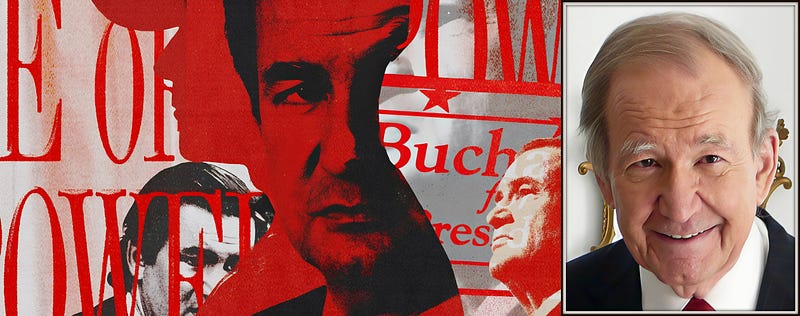
What America first means is we put the national interests of the United States and the well-being of our own country and our own people first. Our foreign policy, first and foremost, should be focused on the defense of American freedom, security and rights.
In 2025, Patrick J. Buchanan looms as a paradoxical elder statesman of the American right — a figure once dismissed as an extremist outsider, now hailed by many as a visionary who anticipated the populist turn of conservative politics. A former White House aide, presidential speechwriter, and three-time presidential candidate, Buchanan has long espoused an “America First” ethos rooted in nationalism, cultural traditionalism, and skepticism of global entanglements. Decades ago, he raised alarms about lost manufacturing jobs, porous borders, and the erosion of Christian values — warnings that establishment politicians in the 1990s brushed aside as fringe rhetoric. Yet much of what Buchanan championed has since moved from the margins to the mainstream. His combative crusade against “globalist” elites and liberal social change reverberates through today’s political discourse, not only in the United States but across a world where nationalist movements echo themes he sounded. To understand Patrick Buchanan’s impact, one must explore the full spectrum of his contributions and beliefs — from his prolific writings and pugilistic arguments to the psychological and philosophical underpinnings of his worldview, his concrete political ideas, and the core values that have defined his life’s work.
Writings: Major Works and Media Presence
Patrick J. Buchanan’s writing career spans over half a century and serves as the backbone of his intellectual influence. Starting as a young newspaper editorialist in the 1960s, he went on to craft fiery speeches for President Richard Nixon before launching his own public crusades through columns, books, and television. Buchanan co-founded The American Conservative magazine in 2002 as a platform for the brand of traditionalist, anti-interventionist conservatism he championed. Throughout his career, he penned a syndicated column that bluntly assailed everything from free trade deals to “politically correct” multiculturalism. Biographer Timothy Stanley credited Buchanan with “essentially inventing the art of modern political punditry,” given his role as a brash, confrontational commentator on programs like CNN’s Crossfire and The McLaughlin Group. His decades in broadcast media perfected a style of rhetorical combat that drew audiences into heated debates over the soul of America.
In print, Buchanan is the author of a string of polemical bestsellers that map the topology of his thought. His early book, The New Majority (1973), argued that the silent backbone of America — Middle Americans — held values at odds with those of liberal media elites, foreshadowing the populist claim that “the people” were being ignored by those in power. Later works sharpened his themes: The Great Betrayal (1998) decried how free-trade policies devastated American industries and workers; A Republic, Not an Empire (1999) warned against American global overreach and called for a foreign policy of restraint; and The Death of the West (2002) sounded an alarm over declining Western birthrates and mass immigration, arguing that “uncontrolled immigration threatens to deconstruct the nation we grew up in”. In these and other books, Buchanan blended detailed history with apocalyptic predictions, contending that Western civilization was imperiled from within and without. Perhaps his most provocatively titled work, Suicide of a Superpower: Will America Survive to 2025? (2011), grimly predicted that cultural decadence and demographic change could spell the end of the America he knew by the year 2025. (Checking in at 2025, commentators have noted that the nation endures — if shakily — and that Buchanan’s once-radical ideas have largely been absorbed into the political mainstream.) Through his writings and on-air broadsides, Buchanan created an extensive body of work that has both galvanized followers and furnished ammunition to his critics. Even in retirement — he ceased his regular column in 2023 after a long career — his words continue to circulate as touchstones for debates on nationalism, identity, and the fate of the West.
Arguments: Central Themes and Theories
At the heart of Buchanan’s intellectual legacy are a set of forceful arguments that he has advanced with unwavering consistency. Foremost among these is his argument for economic nationalism and trade protectionism. Long before outsourcing and globalization became white-hot issues, Buchanan lambasted free trade agreements like NAFTA as betrayals of American workers and sovereignty. He warned that the U.S. manufacturing base was being hollowed out by offshoring and unfair imports — a position derided by mainstream Republicans in the 1990s but later vindicated in the eyes of many voters who watched factories shutter across the Midwest. Buchanan’s “America First” platform called for tariffs to protect domestic industry and a rejection of the neoliberal consensus on open markets. In foreign affairs, he articulated a theory of “enlightened nationalism” or “great-power realism”: the United States, he argued, should abandon the role of world policeman and instead mind its own strategic interests, defending its borders rather than crusading for democracy abroad. This stance led him to oppose U.S. military interventions from the First Gulf War in 1991 to NATO’s bombing of Serbia in 1999 and the Iraq War in 2003. Buchanan’s skepticism of interventionist foreign policy — encapsulated in the title of his memoir A Republic, Not an Empire — stood in stark contrast to the post-Cold War expansionism championed by the neoconservatives. It was a throwback to the “Old Right” isolationism of the early 20th century and a precursor of the Trump-era Republican Party’s more restrained (if erratic) foreign policy instincts.
Another central pillar of Buchanan’s thought is his unrelenting engagement in the “culture war” — the clash of values between traditionalists and progressives. He famously declared at the 1992 Republican National Convention that “there is a religious war going on in our country for the soul of America.” In that fiery “Culture War” speech, Buchanan framed issues like abortion, gay rights, feminism, and secularism as existential threats to America’s moral order. He argued that liberal policies were undermining the American social fabric. For example, he warned that the Clinton Democrats’ agenda of “abortion on demand, homosexual rights… women in combat” was “not the kind of change America needs”. This argument casts modern politics as a Manichaean battle between devout patriots upholding Judeo-Christian traditions and a hostile elite pushing “godless” cultural revolution. Buchanan’s rhetoric could be scathing — he spoke of the United States as “a once-Christian nation that has been force-fed the poisons of paganism,” excoriating those who did not share his values. Over the decades, he has inveighed against feminists, gay rights activists, proponents of secular education, and others, often in incendiary terms. (For instance, he once described out-of-the-closet lesbians as “defecating on society’s values” and called abortion clinics “abortuaries… akin to the Nazi ovens of Auschwitz,” deliberately using shock imagery to rally his base.) Such language exemplified Buchanan’s belief that sharp, provocative rhetoric was necessary to jolt Americans into recognizing the gravity of cultural decay.
Bill Clinton’s foreign policy experience stems mainly from having breakfast at the International House of Pancakes.
Buchanan’s third central theme is what might be called civilizational identity and demographic theory. He has long warned that the United States (and the wider Western world) faces decline not only from cultural liberalism but from demographic and immigration trends. In The Death of the West, he argued that falling birth rates among Americans of European descent, coupled with mass immigration from developing countries, would within decades transform and possibly fracture American society. He painted a stark picture of a nation losing its core identity: “a conglomeration of peoples with almost nothing in common — not history, heroes, languages, culture, faith, or ancestors,” as he put it. This idea — that Western nations are committing “demographic suicide” and inviting cultural obliteration — was a notable Buchanan theory that later resurfaced in various forms among nationalist movements in Europe and North America. In his 2011 book Suicide of a Superpower, Buchanan asked bluntly whether America would survive to 2025 if it continued on the path of multiculturalism and political correctness. His answer was pessimistic: he prophesied a breakup of the United States into ethnically and ideologically segregated enclaves if current trends persisted. While such dire predictions have not literally come to pass by 2025, the underlying arguments about immigration, national identity, and resentment toward “multicultural elites” have profoundly influenced right-wing discourse. Indeed, analysts note that Buchanan “invented Trump’s shtick” years before Trump arrived: his proto-Trumpian blend of protectionism, isolationism, and nativism during his 1990s campaigns prefigured the themes that would carry an “America First” candidate to the White House in 2016.
Psychology: The Man and His Political Persona
Understanding Buchanan’s impact also means grasping the psychology behind his politics. A personality profile of Buchanan developed by political psychologists in 2000 depicted a man with a singular blend of strengths and weaknesses. On the one hand, Buchanan scored high on social dominance, persuasiveness, and strategic single-mindedness — traits that made him a formidable campaigner able to mobilize ardent support. He possesses a pugnacious instinct for zeroing in on opponents’ vulnerabilities and rallying the disaffected with combative charisma. Even critics who loathe his views acknowledge his tough, unsentimental focus and diligent attention to detail, qualities that served him well both as a speechwriter crafting zinger-filled addresses and as a candidate orchestrating insurgent campaigns. These strengths allowed Buchanan to cast himself convincingly as the tribune of “forgotten” Americans — the “peasants with pitchforks” ready to storm the castles of the establishment, with Pat leading the charge.
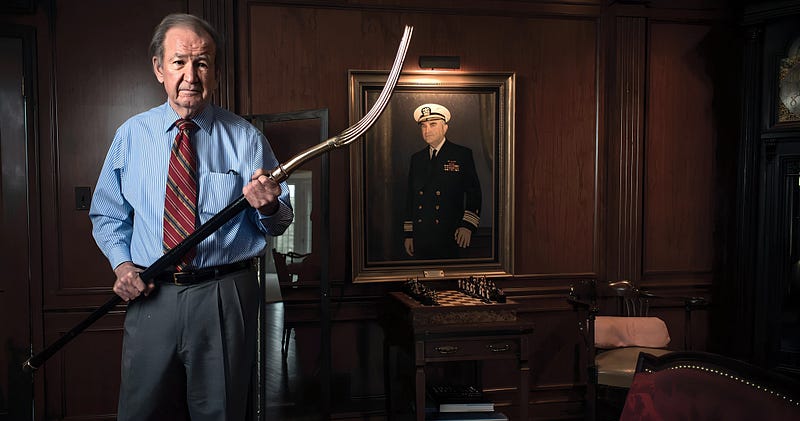
Yet the same profile highlighted limitations in Buchanan’s makeup that often proved politically self-defeating. He is, by most accounts, uncompromising to a fault: stubbornly principled or simply inflexible, depending on one’s view. Psychologists noted his closed-mindedness and unwillingness to compromise, paired with a moralistic streak that brooks no dissent. In Buchanan’s world, policy debates are rarely just technical disagreements — they are battles of right versus wrong, patriot versus traitor, believer versus infidel. This absolutist mentality has fed his tendency to vilify opponents in stark terms, which in turn often alienates as many voters as it energizes. Supporters laud his ironclad consistency and refusal to “sell out” his convictions, but detractors see in his style a judgmental intolerance that divides. Even some conservative allies worried that Buchanan’s confrontational approach — what one journalist called a life of “sharply honed rhetoric” — was too acerbic and polarizing for broad appeal. This intransigence helps explain why Buchanan, despite his significant influence on ideas, never won a high office: he could rouse a passionate minority but struggled to build majority coalitions. In psychological terms, he is a leader who excels at rallying the base through outrage; however, his “us against them” worldview and reluctance to temper his message limit his ability to broaden that base. By his own admission, he relished the role of outsider and provocateur more than that of deal-making insider. Such a personality ensured that Buchanan would leave a mark on America’s psyche — embodying the righteous rebel perpetually at war with the establishment — yet it also meant his revolution was destined to be carried forward by others who might be more pragmatic even as they borrowed his ideas.
Philosophy: Ideas and Principles Behind the Politics
Philosophically, Patrick Buchanan stands in the lineage of the American Old Right and an even older tradition of cultural conservatism rooted in faith and heritage. He is often labeled a paleoconservative, a term that captures the essence of his guiding principles. Paleoconservatism, as embodied by Buchanan, seeks to preserve the country’s Anglo-Saxon and Christian heritage, limit the federal government, and uphold traditional social hierarchies and values. In contrast to libertarian conservatives, Buchanan’s philosophy is not primarily about free markets or individualism — indeed, he criticizes unbridled capitalism for undermining communities. Instead, his conservatism is about belonging: to a family, a faith, a nation. He frequently invokes natural law and Judeo-Christian teachings as the moral foundation of society, echoing the Catholic social thought that influenced him from his youth. Buchanan’s worldview is unabashedly communitarian and civilizational in nature. He believes that cultures arise from religious and ethnic cores that must remain dominant if a nation is to cohere. This principle leads him to reject the liberal notion of America as an ever-morphing “nation of ideas” in favor of an older notion of America as a concrete nation-state defined by a specific cultural inheritance. As he approvingly noted of one ally’s stance, a nation is “a people, a land, a shared history” — more homeland than philosophy.
Buchanan’s philosophical rejection of cosmopolitan liberalism also means a rejection of Enlightenment egalitarianism insofar as it challenges tradition. He is a self-described traditionalist who extols hierarchy in the social order (for example, he has defended the propriety of traditional gender roles and was notorious for opposing women serving in front-line combat or high political office). In his view, attempts to reorder society in the name of equality or diversity radically are not progress but hubris — and history, he warns, punishes hubris. This conviction undergirds his deep aversion to what he calls “social engineering” by courts, bureaucrats, or international bodies. Philosophically, Buchanan cherishes the sovereign nation-state as the highest expression of a people’s will and character. He has thus been a fierce critic of transnational institutions and agreements (from the United Nations and European Union to multi-lateral trade deals), which he sees as eroding the primacy of national sovereignty. In this, Buchanan’s thought aligns with a broader conservative philosophical skepticism of globalization and universalism. He often quotes historical figures (from George Washington’s warnings about foreign entanglements to the Old Testament’s lessons on nations) to give weight to his belief that peace and order come from each nation minding its own affairs under God. While critics argue that Buchanan’s philosophy verges on cultural chauvinism or even ethnic exclusion — pointing to his emphasis on Anglo-Christian identity — he presents it as a defense of cultural self-determination. Like a stern prophet from the Old Testament, Buchanan preaches that a nation forgetful of its founding principles and cultural soul will sow the seeds of its own downfall.
Political Ideas: Ideology and Influence on Conservatism
In practical political terms, Buchanan’s ideology can be summarized as nationalist-populist conservatism. He takes classic conservative positions — such as low immigration, vigorous defense of religious values, and opposition to socialism — but infuses them with a populist hostility toward elites and a nationalist insistence on sovereignty. During his insurgent presidential runs in 1992 and 1996, Buchanan ran on a platform that combined hard-right social conservatism with economic populism. This unsettled the Republican establishment of the day. He championed the working-class “forgotten Americans” who, in his telling, were betrayed by both parties’ embrace of Wall Street economics and Washington interventionism. Buchanan proudly accepted labels like “nativist” and “protectionist,” arguing that these stances were simply common sense patriotism. He fiercely opposed the “neoconservative” wing of his own party, clashing with figures who promoted free trade, open immigration, and an expansive US role abroad. By the late 1990s, this rift led him to break from the Republicans altogether: he left the GOP in 1999, decrying it as too captive to globalist big-business interests, and ran as the Reform Party’s nominee in 2000. Although that campaign fared poorly, it cemented Buchanan’s role as a kind of conscience of the conservative grass roots, someone unafraid to say the unsayable.
The core political ideas Buchanan stood for — immigration restriction, economic nationalism, anti-interventionism, and unapologetic social conservatism — were once regarded as relics of an outdated right, but they have since come roaring back. Indeed, many observers now contend that “the GOP is Pat Buchanan’s party now.” By 2024, the Republican Party’s base had so thoroughly absorbed Buchananite ideas that even younger figures like Ohio Senator J.D. Vance, who rose to prominence in the post-Trump era, openly echo Buchanan’s “blood-and-soil brand of economic nationalism.” The shift is evident in the party’s tone and policy: tariffs and trade wars instead of reflexive free trade; skepticism of NATO and foreign wars, rather than reflexive hawkishness; and an unabashed embrace of culture-war rhetoric on immigration, race, and gender. Buchanan’s once-radical stands have become litmus tests in GOP primaries. Even his contentious critique of U.S. policy toward Israel and the influence of pro-Israel lobbies — positions that earned him accusations of anti-Semitism in the 1990s — found a faint echo in the “America First” faction that questions endless foreign aid or entanglements in the Middle East. In short, Buchanan’s paleoconservative revolt against the GOP establishment prefigured the party’s 21st-century realignment. His intellectual fingerprints are on the manifestos of contemporary nationalist conservatives who call for secure borders, tariffs on Chinese goods, and a revival of what Buchanan once called “the forgotten man” (a term borrowed from FDR that Buchanan used to describe the American worker left behind by globalism).
Beyond U.S. shores, Buchanan’s political ideas have also resonated in the rising tide of global conservatism and populism. The nationalist movements that swept Europe in the 2010s — including Brexit in Britain, the National Rally in France, the rise of leaders like Viktor Orbán in Hungary, and the Law and Justice Party in Poland — mirror many Buchananite themes. These movements, like Buchanan, decry mass immigration as a threat to national identity, resist supranational governance by entities like the EU or UN, and invoke traditional values against what they see as decadent liberalism imposed by “globalist” elites. It would be an exaggeration to say Buchanan directly inspired Europe’s populist right, but he was undoubtedly a kindred spirit in the broader nationalist revival. In some cases, there have been direct parallels: Buchanan’s warm words for Russia’s post-Soviet appeals to Christian heritage, for instance, anticipated the affinity some Western right-wing populists later showed for leaders like Vladimir Putin who positioned themselves as defenders of the West’s conservative, Christian roots. In an age of intensifying backlash against globalization, Buchanan’s long-derided ideas have found new life in various political incarnations around the world.
Beliefs: Core Values and Worldview
Underlying all of Patrick Buchanan’s endeavors are a set of core beliefs — deeply held convictions that give his politics its animating moral force. At his core, Buchanan is a patriot and cultural warrior who believes in the exceptional character of the American nation as it has traditionally been conceived. He fervently believes that the United States was founded as a Christian republic and that its greatness is inseparable from its religious and moral character. This conviction is why issues like school prayer, abortion, and marriage have never been mere policy debates for him but red-line battles over America’s soul. A devout Catholic, Buchanan’s pro-life stance is absolute: he regards abortion as a Holocaust-scale moral abomination and has devoted much of his career to advocating for the unborn. Likewise, he views the traditional family (one man married to one woman, raising children) as the irreplaceable bedrock of society. His opposition to the normalization of homosexuality, transgender identities, or feminist redefinitions of gender roles stems from a belief that deviating from traditional Judeo-Christian teachings invites societal collapse. In Buchanan’s worldview, sin and decadence are not private matters but public dangers — he often asserts that “God and His Ten Commandments” must be restored to a central place in American life if the nation is to survive and thrive.
Another core belief for Buchanan is an almost visceral loyalty to the concept of the nation-state. He is unapologetically nationalist; in his eyes, love of one’s country and people is a sacred duty. This translates into a deep skepticism of immigration — especially immigration that, in his view, does not assimilate or comes from non-Christian, non-Western cultures. His stance is not simply policy-based, but civilizational: he believes that demography is destiny, and that if America’s demographic makeup changes too rapidly or profoundly, the country's cultural and political essence will be irretrievably altered. Buchanan has often framed this in stark terms of conflict, arguing that a nation that ceases to be majority-Christian or majority-European in heritage will not be the America he knows. He bluntly opposes multiculturalism as a guiding ethos; instead, he believes in Americanization — that immigrants who do come should embrace the language, history, and mores of the Anglo-American tradition. Critics call this xenophobia or even racism, noting Buchanan’s oft-expressed preference for immigrants from Europe over those from Latin America or the Middle East. Buchanan counters that it is a matter of cultural compatibility and social cohesion, not hatred of others. Nonetheless, his belief in preserving a particular American cultural identity has been one of his most controversial positions, drawing charges of bigotry that he has vigorously denied even as he doubles down on the substance of his warnings.
Ultimately, Buchanan’s core values encompass a strong streak of anti-elitist populism and a distrust of concentrated power. From his early days as a young firebrand for Nixon to his later years railing against the “Davos crowd,” he has consistently sided rhetorically with the “common man” against what he sees as arrogant, out-of-touch elites. He believes that an entrenched establishment — comprising Hollywood, Ivy League academia, the mainstream media, and bipartisan political dynasties — looks down on ordinary Americans and seeks to impose an alien liberal ideology on them. This belief fuels his combative style: Buchanan has never shied from naming his enemies and urging people to choose sides. “The list of foes changes and grows through the years, but they share a common thread in Buchanan’s mind: They are out-of-touch elites trying to impose their corrupt and godless values on the common men and women of America,” observed one profile of him. Standing against these elites, in Buchanan’s belief, is a virtuous populace that still holds dear the old values of faith, family, and flag. He genuinely sees himself as a voice for these voiceless Americans, a knight for the “peasants” in their rebellion against the kings. This populist conviction not only motivated his own campaigns but also forms part of his legacy — visible in the anti-establishment fervor that characterizes so much of today’s right-wing politics.
In sum, Patrick J. Buchanan’s intellectual contributions and personal beliefs form a tapestry that is both complex and remarkably consistent. He has been, in turns, hailed as a prophet and damned as a demagogue. In 2025, as the United States and other Western societies wrestle with the very issues he sounded alarms about — immigration, national identity, globalism, and the clash of values — Buchanan’s ideas continue to provoke and inspire. His “America First” credo, once derided, now guides significant swaths of the conservative movement. His cultural jeremiads, once condemned as too extreme, now resonate in an era of renewed culture wars. Whether one views him as a patriotic truth-teller or as a progenitor of division, there is no denying that Patrick J. Buchanan has cast a long shadow over the turn of the 21st century. He not only chronicled the changing tides of American conservatism — he helped create them, driven by an unyielding faith in the nation he fervently defends and a steadfast refusal to let that nation fade quietly into the night.
Mapping the Media Vanguard of the America First Movement in 2025
The media landscape of the America First populist-nationalist movement in 2025 is dominated not by traditional TV pundits or syndicated columnists but by decentralized, hyper-engaged creators across podcasts, YouTube, and social media livestreams. These figures serve as ideological broadcasters, cultural influencers, and digital organizers simultaneously. They blend entertainment with political agitation, and their content shapes how nationalist-populist ideas circulate among American audiences, particularly among young people disaffected by traditional media.
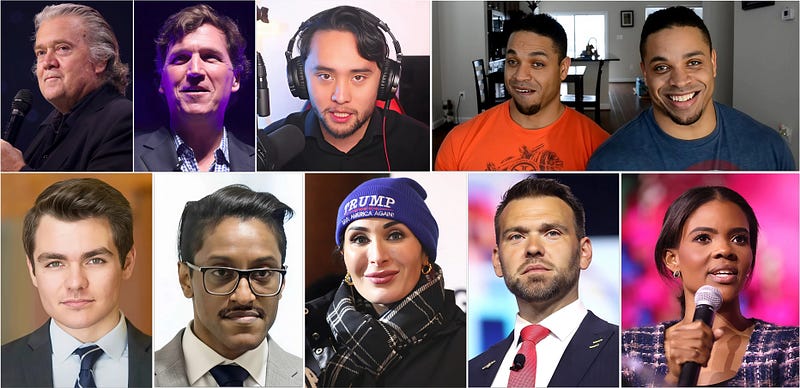
On the podcast front, Steve Bannon remains a central architect of the America First narrative. His podcast “War Room” fuses economic nationalism, anti-globalism, and spiritual warfare, broadcasting daily from the ideological trenches of right-wing populism. Though no longer in the limelight of formal politics, Bannon continues to wield outsize influence as a strategist and recruiter for the broader movement, with deep ties to populist parties in Europe and South America.
Tucker Carlson, now operating outside of Fox News, maintains a significant presence via his independent podcast and streaming network. Having repositioned himself as an outsider truth-teller, Carlson amplifies themes of civilizational decline, anti-interventionism, and cultural insurgency with high production value and an intellectual edge. He continues to interview nationalist politicians globally, from Hungary’s Viktor Orbán to Latin American traditionalists, extending the America First message beyond U.S. borders.
On YouTube, Vince Dao has emerged as a Gen Z voice for Christian traditionalism and nationalist politics. His videos challenge progressive social norms and defend a theological vision of American identity, often framing gender ideology and immigration as existential threats. Dao combines calm delivery with sharp messaging that resonates with high school and college audiences disillusioned with mainstream liberalism.
The Hodgetwins, formerly fitness influencers who have transitioned into political YouTubers, speak to blue-collar and middle-American audiences with humor-laced patriotism. They defend gun rights, mock progressive identity politics, and regularly endorse the America First foreign and economic agenda. Their style leans toward comedic defiance, but their messaging closely mirrors the Buchanan-Trump lineage.
Savanah Hernandez, a journalist and YouTube host, offers on-the-ground coverage of protests, immigration issues, and government overreach. She adopts a field-reporter style that lends her content credibility among younger right-leaning viewers. Hernandez often spotlights issues along the Southern border, pushing a narrative of invasion and state failure tied directly to the America First worldview.
In the social media livestream space, Nick Fuentes maintains a controversial yet undeniable presence through his nightly livestream, “America First.” He mixes white nationalist rhetoric with Christian fundamentalism, appealing to younger, radicalized male audiences. Though banned from many platforms, Fuentes persists through alternative tech ecosystems and remains a touchstone for the most extreme edge of the movement.
Ali Alexander primarily operates on Telegram and X (formerly Twitter), where he curates content that is conspiratorial and nationalist in nature. He emphasizes anti-globalist themes, Christian nationalism, and deep state narratives. Despite past controversies, he maintains influence among activist wings of the movement, particularly those still mobilizing around election integrity and sovereignty issues.
Laura Loomer, now largely deplatformed from mainstream services, broadcasts on smaller video sites and X Spaces. Her content is characterized by high-octane denunciations of “globalist traitors,” Islam, and leftist cultural influence. She frequently positions herself as a martyr for free speech and a frontline fighter in the ideological war for America’s future.
Jack Posobiec continues to blend activism and punditry across multiple platforms, including X, Rumble, and his podcast. A former naval intelligence officer, he brings an anti-globalist, anti-interventionist perspective with intelligence-style framing. His influence lies in packaging nationalist ideas in ways that feel insider, conspiratorial, and urgent.
Candace Owens rounds out the cohort, operating at the intersection of cultural commentary, nationalist economic thought, and race-transcendent populism. Through her YouTube channel and podcast, Owens critiques the Black Lives Matter movement, promotes traditional family structures, and aligns with America First economic and immigration positions, albeit with more rhetorical restraint than her peers.
Together, these ten figures constitute the multimedia front line of the America First media ecosystem in 2025. They span demographics, delivery styles, and levels of radicalism but share a commitment to reshaping American identity through the lens of nationalism, tradition, and opposition to progressive-globalist hegemony.