The TikTok Takeover: How the Kirk Assassination, “Vile” Speech, and a MAGA-Aligned Consortium…
TikTok is that app where people dance, rant, and somehow get famous in 15 seconds. It blew up like crazy — then got dragged through the…
The TikTok Takeover: How the Kirk Assassination, “Vile” Speech, and a MAGA-Aligned Consortium Forged a New Model for Digital Censorship
TikTok is that app where people dance, rant, and somehow get famous in 15 seconds. It blew up like crazy — then got dragged through the mud. Governments freaked out ’cause it’s owned by China’s ByteDance. Said it’s spying, stealing data, messing with minds. U.S. tried banning it, then played hot potato with laws. By 2025, it’s still kicking. Some states blocked it on gov phones. Kids still scroll. Politicians still yell. Everyone’s addicted, nobody trusts it. It’s also been a battleground for free speech — some say it censors too much, others say it doesn’t do enough. Debates flared over how it handles hate speech, especially when it targets public figures or minority groups. Welcome to the internet.
The assassination of Charlie Kirk has sparked a heated debate about free speech and censorship, influencing how platforms like TikTok operate. Following the event, various online reactions emerged, with some people celebrating his death, leading to significant offline consequences. Many public school teachers in the U. S. faced job loss, suspension, or investigations due to their social media comments about Kirk, with conservative activists pushing for these outcomes.
Government officials also contributed to this censorship push. A Republican senator called for the firing of a university employee, and other officials suggested they would punish individuals for their social media remarks. Experts noted that while private companies can fire employees for their speech, government involvement raises serious First Amendment issues.
The incident has shifted the political discussion surrounding content moderation. Traditionally framed as censorship by the right, many conservatives now demand that platforms remove content they find offensive, complicating the position of tech companies. This political pressure sets a precedent for TikTok’s new ownership to face similar demands on content control.
The divestiture of TikTok to a U.S.-led group (referred to in reports as the Oracle–Silver Lake Consortium and/or M2) occurs amidst government interventions in media, raising concerns about political influence. The ownership consortium includes individuals with ties to conservative media and International Jewry, suggesting that future content policies may align with their political loyalties. Overall, the aftermath of Kirk’s assassination has intensified tensions around free speech and media control, with clearer government intervention trends emerging.
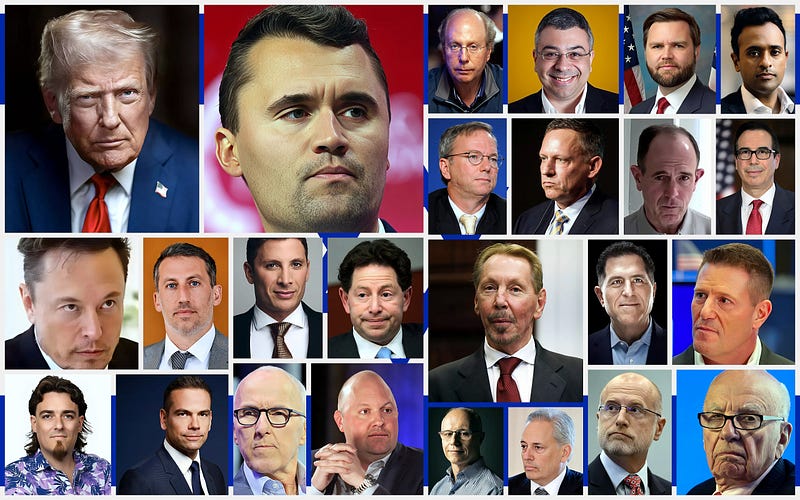
The compelled divestiture of TikTok from its Chinese parent company, ByteDance, constitutes a watershed moment in the geopolitics of digital media. This analysis examines the new ownership consortium, the affiliations and motivations of its constituent members, and the profound implications for the platform’s role in global media and politics, with specific consideration given to the issue of antisemitism. The ownership entity, established under the framework of the qualified divestiture, is a consortium of American investors and technology leaders. Oracle Corporation holds a foundational role as both a major equity holder and the designated technology and security provider, entrusted with securing United States user data and systems. Its co-founder, Larry Ellison, is a central figure in this arrangement. The investor group is extensive and includes a coalition of significant figures from private equity, venture capital, and technology. This group comprises Steven Mnuchin, who assembled a consortium; Frank McCourt; Bobby Kotick; Kevin Mayer; Rupert Murdoch and his son Lachlan Murdoch; JD Vance; Doug Leone; Jacob Helberg; Alex Spiro; Theo Vassilakis; Marc Andreessen; Ben Horowitz; Jeff Yass; David Sacks; Vivek Ramaswamy; Peter Thiel; Michael Dell; Eric Schmidt; Brendan Carr; Keith Rabois; and Palmer Luckey. ByteDance retains a non-controlling minority stake (less than 20 percent), with the governance structure ensuring operational and security control rests firmly with the U.S.-led board. The board chairman of the new TikTok U.S. consortium has not been officially named in public disclosures. However, Oracle co-founder and executive chairman Larry Ellison is widely expected to play a leading role, given Oracle’s central position in the deal and its responsibility for overseeing TikTok’s U.S. data and algorithm.
The affiliations of the new ownership group are deeply interwoven with established media, financial, and political power structures. The involvement of Rupert Murdoch and Lachlan Murdoch, whose media empire includes Fox News and The Wall Street Journal, aligns the platform with a documented editorial stance and political influence operation. The central role of Oracle and the noted political allegiance of its co-founder, Larry Ellison, further tether the platform to specific domestic political currents. The group includes individuals with strong political affiliations, such as Vice President JD Vance, and technologists like Peter Thiel and Palmer Luckey, who have established ties to government defense and intelligence sectors. These collective affiliations create a substantive risk that the platform’s content moderation policies and algorithmic recommendations could be shaped to align with the owners’ consolidated business and political interests, effectively transitioning the platform from potential foreign influence to a form of domesticated media consolidation under a distinct ideological lens.
The motivations for this transfer are multifarious and reflect a confluence of national security, commercial, and political interests. For the U.S. government, the primary gain is the mitigation of perceived national security threats by placing control of a dominant media platform and its sophisticated algorithm under American stewardship. For the acquiring consortium, the benefit is direct control over one of the world’s most valuable and influential social media assets, presenting an immense commercial opportunity through advertising, e-commerce, and data services. President Donald Trump’s motivation to avoid a public ban of a popular platform, coupled with his acknowledgment of its utility for his political campaign, underscores the political calculations inherent in the transaction. Furthermore, the involvement of figures like Jacob Helberg, a senior advisor on China policy, and Brendan Carr, a long-standing regulatory proponent of divestiture, highlights the deeply entrenched geopolitical motivations to counter Chinese technological influence.
A constellation of political, technological, and financial figures has been involved in the discussions surrounding the divestiture of TikTok, each bringing distinct motivations and potential interests to the proceedings. The political dimension is prominently represented by former President Donald Trump, who publicly supported the sale and suggested a specific ownership model, and Vice President JD Vance, who has been a vocal advocate for the divestiture from China. From the regulatory sphere, Federal Communications Commission Commissioner Brendan Carr has been a long-standing and influential proponent of removing TikTok from Chinese control.
The investor group is notably extensive and includes prominent technology luminaries and venture capitalists who have formally committed to the venture. Oracle co-founder Larry Ellison is an active investor. Former Treasury Secretary Steven Mnuchin has assembled and leads a consortium that is pursuing the acquisition. A significant cohort from the venture capital firm Andreessen Horowitz — including Marc Andreessen, Ben Horowitz, and general partners Doug Leone and David Sacks — has invested, with Sacks and Leone also participating in Mnuchin’s group. Other confirmed technology investors include Peter Thiel, co-founder of Palantir, and Palmer Luckey, founder of Anduril. Keith Rabois, general partner at Founders Fund, is actively involved. Michael Dell, founder of Dell Technologies, has joined as an investor. Former Google CEO Eric Schmidt is also a committed participant in the bid for the platform.
The media landscape is represented by Rupert Murdoch and his son Lachlan Murdoch, whose involvement would align with their extensive media holdings. The list also includes former executives with direct experience in the social media and technology sector, such as former Activision Blizzard CEO Bobby Kotick and former TikTok CEO Kevin Mayer. Other individuals who have been part of the conversation include Jacob Helberg, a senior advisor at Palantir; Alex Spiro, an attorney representing Elon Musk; and Theo Vassilakis, a managing partner at venture firm General Catalyst.
Regarding specific affiliations, within this group, Larry Ellison and Jeff Yass of Susquehanna International Group are publicly identified as Jewish. The Murdochs, through their media properties, have maintained a strongly pro-Israel editorial stance. The motivations for the divestiture among these parties are a blend of national security concerns, significant commercial opportunity, and the strategic desire to control a dominant global media platform.
Regarding the issue of antisemitism, the ownership group includes individuals who are publicly identified as Jewish, namely Oracle’s Larry Ellison and Jeff Yass of Susquehanna International Group. The legislative impetus for the divestiture was significantly accelerated by concerted advocacy from major Jewish organizations, which cited a pervasive problem of antisemitic content on the platform. The new ownership, therefore, inherits a clear mandate from its political sponsors to address this issue. Potential strategies would logically involve a stringent enforcement of terms of service, increased transparency in algorithmic amplification, and direct collaboration with established Jewish civil society organizations to identify and mitigate hateful content. The efficacy of these measures will depend on the new management’s commitment to these goals, absent the immediate geopolitical pressure that necessitated the divestiture, and whether it can resist any political pressures from within its own ownership group to selectively enforce content policies.
The compelled divestiture of TikTok presents significant implications for First Amendment principles, prior restraint, and censorship in digital media. The government’s action, while framed as a national security measure concerning foreign corporate control, functions as a de facto prior restraint by forcing a change in ownership to alter a speech platform’s content environment. The fact that the platform’s content is perceived as overwhelmingly critical of a foreign nation is central to the political impetus behind the law, even if it is not the stated legal rationale. This creates a precedent where the government can effectively mandate the transfer of a media entity based on the perceived slant of its content, so long as it is couched in terms of national security. The new, U.S.-based ownership consortium, with its own distinct political and business affiliations, now holds the power to reshape content policies and algorithmic amplification. This shift risks institutionalizing a form of censorship where certain viewpoints are systematically diminished under the new management, not by direct government mandate, but through the transfer of control to owners who may align with specific political narratives. This outcome challenges the core First Amendment principle that the government must not suppress speech, or a forum for speech, simply because it finds the speech disagreeable.
In conclusion, the divestiture of TikTok marks a pivotal moment where digital media sovereignty is forcibly transferred, creating a new entity whose control is concentrated among a group with profound media, political, and financial affiliations. The deal trades one set of potential influences for another, embedding the platform within existing American power structures. There is a strong Jewish presence involved in the TikTok divestiture. This includes key individuals in the reported ownership consortium, such as Larry Ellison of Oracle and investor Jeff Yass, as well as organized groups like the Anti-Defamation League and the Jewish Federations of North America, which have actively advocated for the sale and for stricter content moderation on the platform. Its future role in global media and politics will be dictated by how this new ownership balances its commercial incentives, political allegiances, and the content moderation responsibilities it has been implicitly tasked to uphold, all under the shadow of the geopolitical contest that brought it into being.