
The Hatred of the Jews: A Theological Meditation on the Enmity Directed Against the Ancient People of God
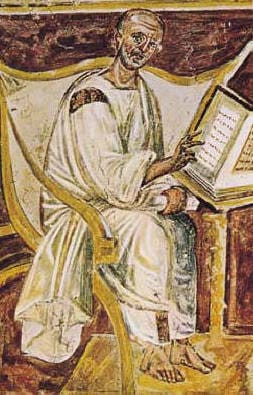
I, Augustine of Hippo: The hatred of the Jews is a salvation mystery. This ancient covenant people preserved Christ’s Scriptures despite rejection. Some call them cursed, yet Paul says God has not cast them off. Reject envy; see divine mercy.
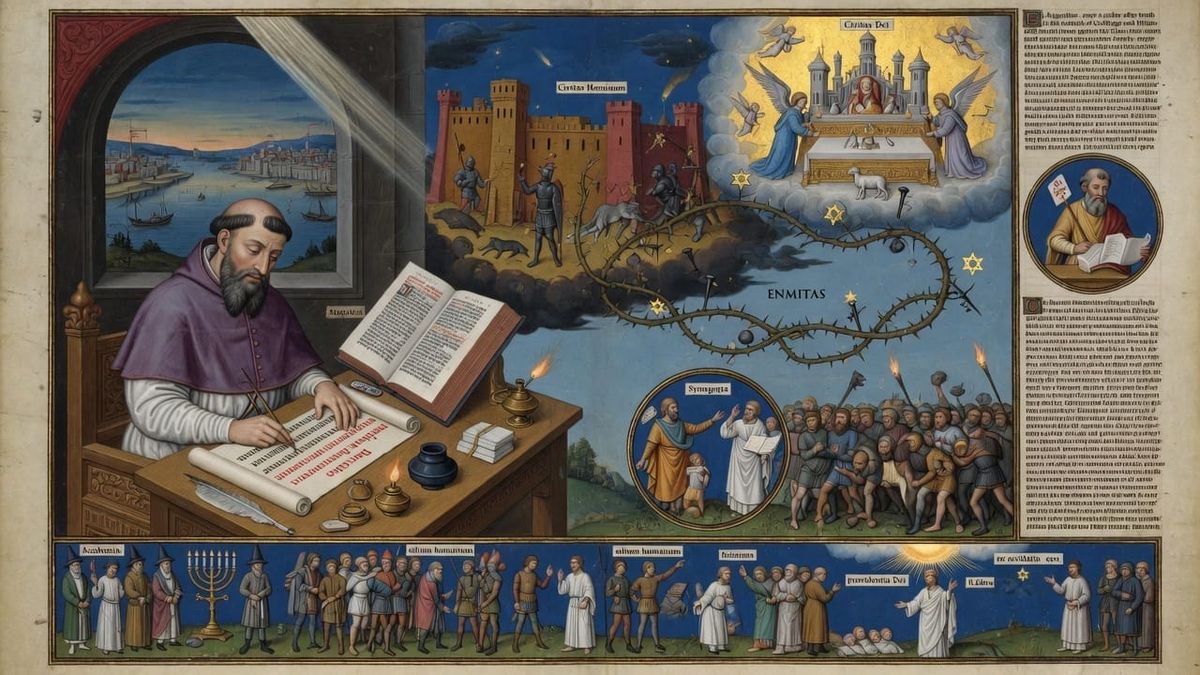
"The Jews who slew Him... were yet more miserably wasted by the Romans... and are thus by their own Scriptures a testimony to us that we have not forged the prophecies about Christ... 'Slay them not, lest they should at last forget Thy law'; scatter them in Thy might."
— City of God, Book 18, Chapter 46
I, Augustine, once a seeker after truth in the schools of Carthage and Milan, now bishop of Hippo by the grace of the Lord Jesus Christ, set forth this discourse not in the heat of controversy alone, but in the calm light of divine providence, that those who seek wisdom may discern the hidden purposes of God amid the shadows of human sin. For the hatred borne against the Jews, this most ancient and persistent enmity, is no mere accident of history or outburst of passion; it is a mystery woven into the fabric of salvation itself, wherein the City of God contends with the City of Man. Let us examine it with the eyes of faith, drawing upon the sacred Scriptures, the testimony of the prophets, and the reflections of reason illumined by grace, that we may neither excuse malice nor overlook the hand of the Almighty.
From the earliest days of which history or Scripture speaks, the people descended from Abraham have stood apart, marked by their covenant with the one true God. In the ancient world, as the learned chroniclers recount, the Egyptians first envied and oppressed them, seeing in their prosperity a threat to Pharaoh’s dominion; the Greeks of Alexandria, in their philosophical pride, mocked the Jews’ refusal to bow before idols or partake in the common cults, leading even to pogroms where synagogues were desecrated and lives lost. The Romans, conquerors of Judea, razed the Temple in the year seventy after the birth of our Lord, scattering the people in punishment for their revolt, yet this dispersion, far from extinguishing their witness, spread the very books of Moses and the Prophets across the empire. Into this soil the Christian faith was planted. The Gospels themselves bear witness to the tension: the chief priests and elders, blinded by envy, delivered the Lord to Pilate, crying “His blood be upon us and upon our children.” Early teachers of the Church, from Justin Martyr onward, grappled with this rejection, framing the Jews’ persistence in the Law as a carnal clinging to shadows now fulfilled in Christ. Yet it was in my own age, amid the struggles against Manichees who scorned the Old Testament as the work of a lesser god, that I was compelled to reflect more deeply. In my treatise against Faustus, I came to see that the Jewish observance of circumcision, sacrifices, and Sabbath was not mere error but a divine pedagogy, good in its time and place, pointing forward to the incarnate Word. The Jews, though they rejected the Messiah, preserved the Scriptures that testify to Him; their very dispersion and subjection became a living sermon to the nations, proclaiming the truth of Christian claims even as they themselves remained veiled.
This hatred, then, rests upon certain assumptions that demand scrutiny. Many suppose that the Jews are collectively cursed for the crucifixion, their sufferings a perpetual sign of divine abandonment, as if the blood of Abel cried out only in vengeance and not in typology of the slain Christ. Yet this view harbors inconsistencies, for does not the Apostle Paul, himself a Jew, declare in Romans that God has not cast off His people whom He foreknew? To read the Prophets solely as oracles against Israel while ignoring their promises of restoration is to wrest Scripture from its context, a bias born of Gentile pride that forgets the Church’s own roots in the synagogue. Pagan critics, from the time of Apion in Alexandria, assumed the Jews’ separatism bespoke hatred of humanity itself, an envy of their monotheism twisted into accusations of secret rites or disloyalty. In Christian circles, a similar distortion arises: the assumption that supersession—the fulfillment of the Law in the Gospel—entails the erasure of the Jewish people, when in truth God’s covenant endures as a sign. My own earlier writings, shaped by the rhetorical customs of the age, sometimes echoed the sharper tones of the adversus Iudaeos tradition, yet reflection upon divine justice and human freedom revealed a deeper truth. The Jews’ “blindness,” as the Apostle calls it, is not arbitrary but part of the mystery whereby grace operates through weakness; to hate them for it is to hate the very economy of salvation, wherein even the wrath of man praises God. Biases of interpretation multiply when envy or fear intervenes: the Jew becomes a scapegoat for plague or economic woe, accused of usury when Christian law forbade it to the faithful, or of ritual crimes that contradict their own Torah’s prohibition of blood. Such projections reveal more of the accuser’s heart than of the accused, for sin ever seeks an outward enemy rather than confessing its own disorder.
Diverse perspectives contend upon this matter, each revealing strengths and exposing weaknesses when held to the light of truth. The Jewish understanding, rooted in the unbreakable covenant of Sinai, sees their endurance as fidelity to the eternal Torah, a light to the nations despite exile; its strength lies in the unbroken chain of tradition and the refusal to assimilate utterly, yet it may falter in recognizing the prophetic pointers to the Messiah who has come. Among my fellow Christians, some, following the harsher path of Chrysostom or certain African bishops, viewed the Jews as wholly forsaken, their synagogues as dens of error to be shunned or suppressed; this perspective rightly upholds the uniqueness of Christ but risks forgetting charity and the Psalmist’s command not to slay them lest the people forget. Pagan and philosophical voices, from Celsus to later rationalists, attribute the hatred to cultural difference or economic rivalry, praising tolerance in theory while practicing exclusion; their strength is in observing the social dynamics of otherness, yet they lack the divine horizon that alone explains why this particular people provokes such fury across ages. Heretical sects like the Manichees despised the Jews along with the Old Testament itself, seeing matter as evil; their view collapses under the weight of creation’s goodness affirmed in Genesis. In my own doctrine, forged in debate, I proposed a middle way—not tolerance in the lax modern sense, but a providential preservation: the Jews as unwilling witnesses, bearing the books that convict them and confirm us, marked like Cain with a sign of protection. This perspective honors both judgment and mercy, yet its weakness lies in its dependence upon the Church’s own humility; when forgotten, it has been twisted to justify subjugation without love.
The broader implications of this hatred extend far beyond the temporal fortunes of any single people. Within the field of theology, it shapes our understanding of election and grace: the Jews remind us that God’s gifts and calling are irrevocable, compelling the Church to ponder the “mystery of Israel” that Paul unveils in Romans eleven, where the grafting of the wild olive branch warns against boasting. It influences ecclesiology, for the City of God is not built by erasing the past but by fulfilling it; to persecute the Jews is to strike at the very root from which the Vine sprang. In society at large, this enmity reveals the fragility of human communities, prone to scapegoating in times of crisis—whether the fall of empires, the onset of plague, or the upheavals of revolution—where the outsider becomes the vessel for collective anxiety. Future developments in doctrine and politics will turn upon whether we heed the witness or silence it; the dispersion that once spread the Gospel may yet, in God’s hidden counsel, prepare for the fullness of the Gentiles and the salvation of “all Israel.” Philosophically, it underscores the tension between particularity and universality: a people chosen to bear universal truth, hated precisely for embodying both. Edge cases abound—individual conversions that affirm the faith without erasing lineage, or communities of Jewish Christians in the apostolic age who kept the Law without compulsion—reminding us that grace operates variably, never coercing the will that God Himself respects.
In the practical order, this theological reality has found application across domains both sacred and secular. In the governance of Christian realms, my appeal to Psalm fifty-nine—“Slay them not, lest my people forget”—echoed through the centuries, informing imperial and royal decrees that shielded Jewish communities from mob violence, even as it countenanced restrictions upon their public worship or civic equality; thus in the medieval West, Jews survived crusades and expulsions where others might not. In economic life, the very accusations of usury, born of exclusion from guilds and landownership, forced Jews into moneylending, which in turn fueled resentment when debts mounted—a cycle of necessity twisted into stereotype. In religious discourse, the preservation of synagogues served as living libraries of prophecy, yet polemics in sermons sometimes inflamed rather than instructed. In times of plague or famine, as in the Rhineland massacres or later libels of ritual murder, hatred manifested in pogroms, revealing how theoretical theology, misapplied, licenses atrocity. Even in the realm of learning, Jewish scholars preserved Aristotle and the sciences when Christian hands were turned elsewhere, enriching the very culture that marginalized them. In our own day and in ages yet to come, the same patterns recur: conspiracy fables of secret cabals controlling banks or governments echo ancient slanders, while political upheavals—from the forging of false protocols to racial ideologies that reduce persons to blood—weaponize the old enmity under new guises. Yet wherever charity prevails, as in protections extended by bishops or princes mindful of the witness doctrine, the Church bears truer testimony to her Lord.
Thus, brethren, let us not weary in well-doing. The hatred of the Jews is a mirror held to the soul of humanity, reflecting both the wound of original sin and the long-suffering mercy of God who scatters yet preserves. May we, who live between the times, labor in prayer and deed that this enmity yield at last to the peace of Jerusalem, where Jew and Gentile together praise the one who was crucified and is risen. To Him be glory, now and forever. Amen.
This meditation draws its substance from the Holy Scriptures, particularly the Psalms, the Prophets, the Gospels, and the Epistles of Paul; from my own labors in De Civitate Dei, Contra Faustum Manichaeum, and the Tractatus adversus Judaeos; and from the careful historical and theological scholarship of later ages, including Paula Fredriksen’s examination of my doctrine of Jewish witness in her study Augustine and the Jews: A Christian Defense of Jews and Judaism, alongside broader historical overviews of antisemitism from antiquity through the medieval and modern eras provided by institutions such as the United States Holocaust Memorial Museum and analyses in works tracing the evolution from theological anti-Judaism to racial ideologies. These sources illuminate without supplanting the primacy of divine revelation.