A Multidisciplinary Examination of the New Glenn Static‑Fire Explosion: Technical, Regulatory, Economic, Environmental, and Risk‑Management Dimensions
The New Glenn explosion is not merely a technical failure but a multidimensional event with consequences across engineering, regulation, economics, environmental safety, and national strategy.
Abstract
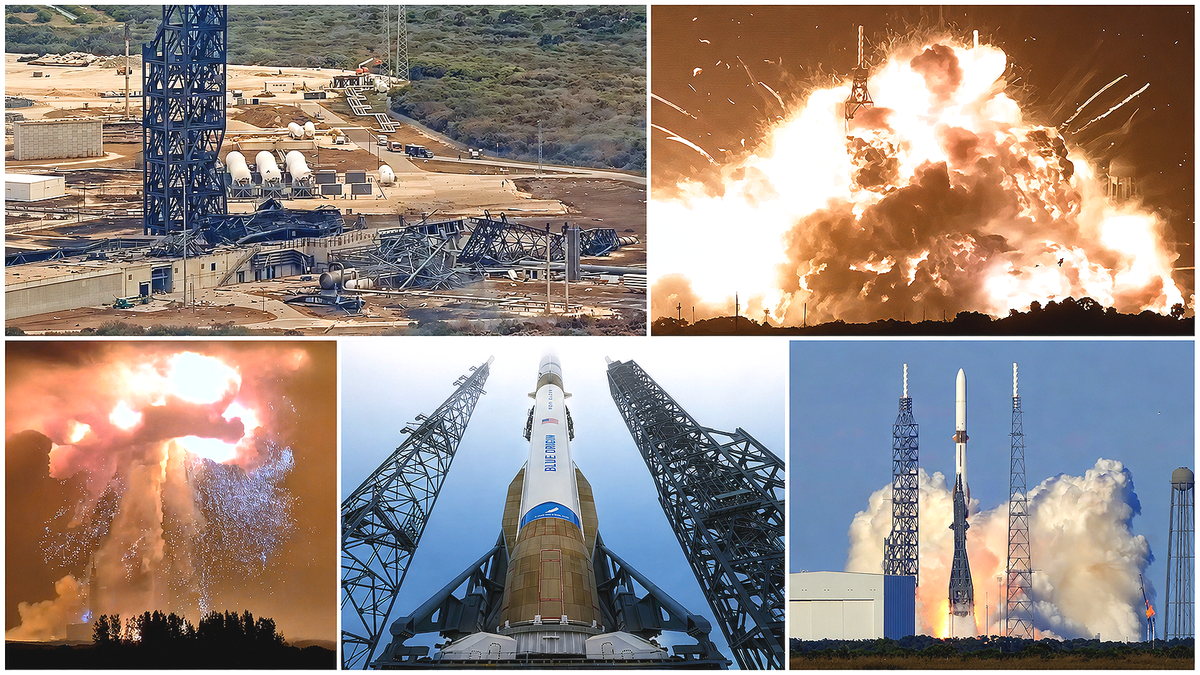
The catastrophic destruction of Blue Origin’s New Glenn launch vehicle during a static‑fire test at Launch Complex 36 in May 2026 represents a pivotal event in contemporary commercial spaceflight. This study provides a multidisciplinary examination of the explosion, integrating technical, regulatory, economic, environmental, and risk‑management perspectives to contextualize the incident within the broader evolution of heavy‑lift launch systems. The analysis reconstructs the failure sequence based on publicly available reporting, evaluates the regulatory response led by the Federal Aviation Administration and the U.S. Space Force, and assesses the implications for NASA’s Artemis program and Amazon’s Kuiper satellite deployment schedule. A dedicated financial‑impact deep dive demonstrates that the losses associated with the destroyed vehicle, the extensive damage to pad infrastructure, and the resulting program delays collectively constitute one of the most significant economic setbacks in recent commercial launch history. The report further examines the role of self‑insurance in aerospace, arguing that Blue Origin’s apparent reliance on internal risk retention aligns with industry norms for prototype heavy‑lift systems. The findings underscore the inherent volatility of high‑energy propulsion development, the systemic vulnerabilities introduced by limited heavy‑lift redundancy, and the necessity of robust risk‑management frameworks as commercial launch providers assume increasingly central roles in national and civil space architectures.

The destruction of Blue Origin’s New Glenn launch vehicle during a static‑fire test at Launch Complex 36 in late May 2026 represents one of the most consequential aerospace mishaps of the decade. Although static‑fire anomalies are not unprecedented in the development of heavy‑lift launch systems, the scale of the failure, the extent of infrastructure damage, and the timing—occurring amid Blue Origin’s commitments to Amazon’s Kuiper constellation and NASA’s Artemis program—elevate this event beyond a routine developmental setback. This report synthesizes the technical, regulatory, economic, environmental, and risk‑management implications of the explosion, situating the event within the broader context of modern aerospace practice and the evolving commercial launch landscape.
The static‑fire test was intended to validate the integrated performance of New Glenn’s seven BE‑4 engines under full‑thrust conditions. Shortly after ignition, an anomaly at the base of the first stage triggered a catastrophic fireball that engulfed the vehicle. Video evidence captured a rapid overpressure event consistent with a structural or propulsion‑system failure, though the precise initiating mechanism remains under investigation. The booster was fully fueled at the time, and the resulting conflagration destroyed the vehicle outright. The blast wave and thermal load inflicted severe damage on Launch Complex 36, including the collapse of at least one lightning‑protection tower and visible deformation of pad structures. The scale of destruction suggests that the failure propagated through multiple subsystems in rapid succession, a hallmark of high‑energy propulsion anomalies in cryogenic launch vehicles.
Regulatory oversight was immediately activated. Although the static‑fire test itself did not fall under a licensed launch operation, the Federal Aviation Administration classified the event as a mishap requiring a formal investigation. Blue Origin must now produce a comprehensive mishap report, identify root causes, and implement corrective actions before any future launch operations can resume. The U.S. Space Force, responsible for range safety at Cape Canaveral, confirmed that all personnel were accounted for and that no hazardous fumes posed a threat to the surrounding community. NASA, meanwhile, faces renewed uncertainty regarding the schedule for its Artemis lunar program, as New Glenn is contracted to launch the Blue Moon Mark 1 lander. The explosion compounds the effects of the earlier NG‑3 mission failure in April 2026, which had already prompted a series of corrective actions related to cryogenic fluid management and upper‑stage engine performance.
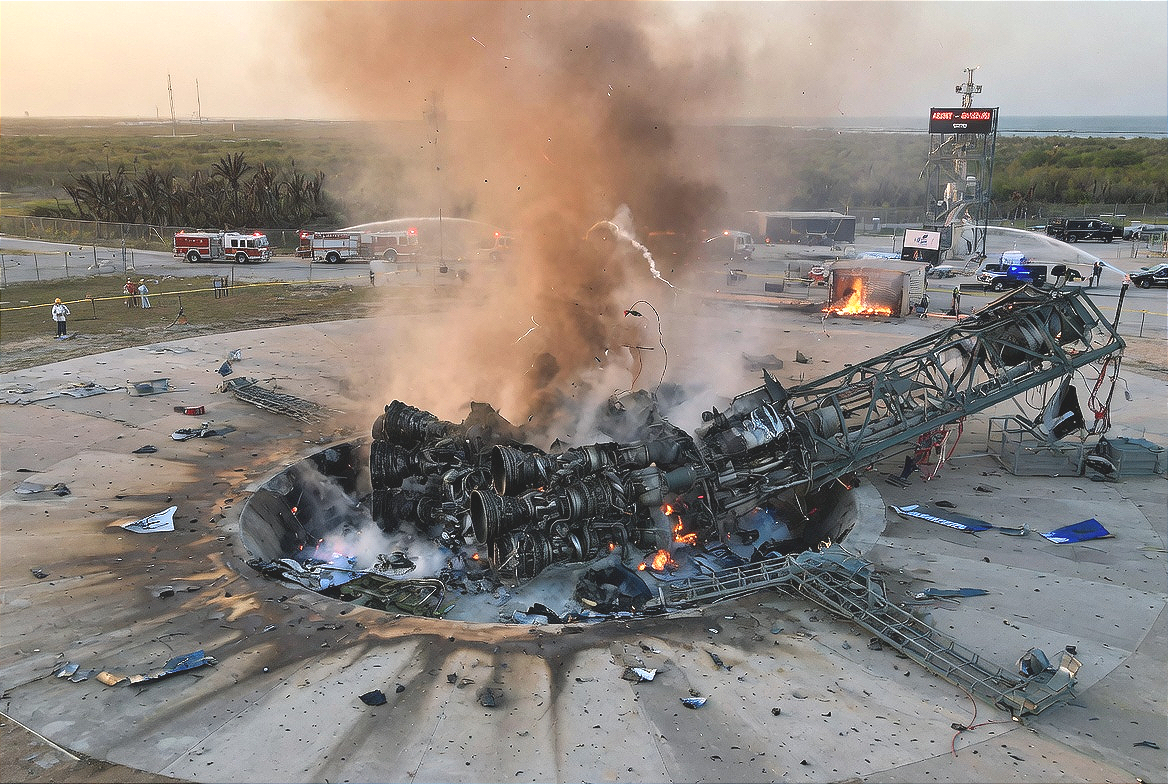
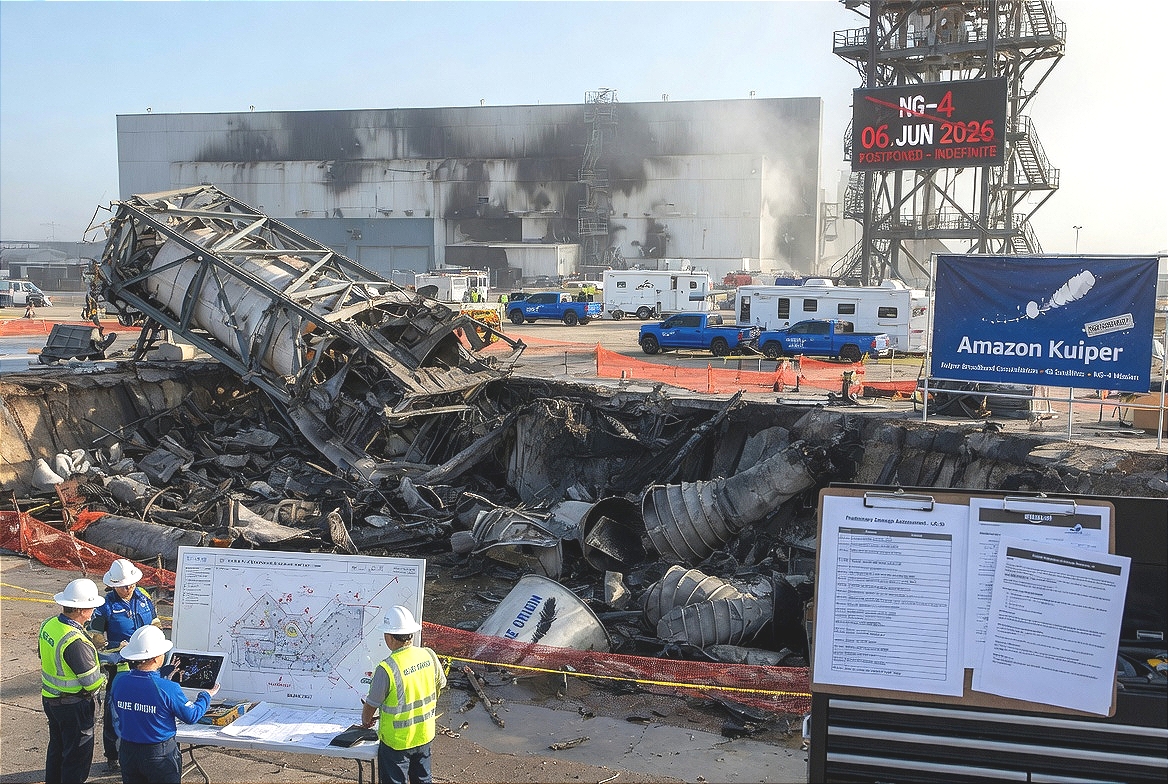
The economic consequences of the explosion are substantial and multifaceted. The immediate loss includes the destruction of a heavy‑lift booster whose development cost is measured in the hundreds of millions of dollars. More consequential, however, is the damage to Launch Complex 36, a site that Blue Origin has invested more than a billion dollars into refurbishing and modernizing. The collapse of pad infrastructure will require extensive reconstruction, likely extending over many months. This delay directly affects Blue Origin’s ability to meet its contractual obligations, most notably its multi‑launch agreement with Amazon’s Kuiper broadband constellation. The NG‑4 mission, scheduled to deploy 48 Kuiper satellites in early June 2026, is now indefinitely postponed. Although the payload had not yet been integrated—avoiding customer‑payload loss—the delay disrupts Amazon’s deployment cadence and may force the company to reallocate satellites to alternative launch providers.
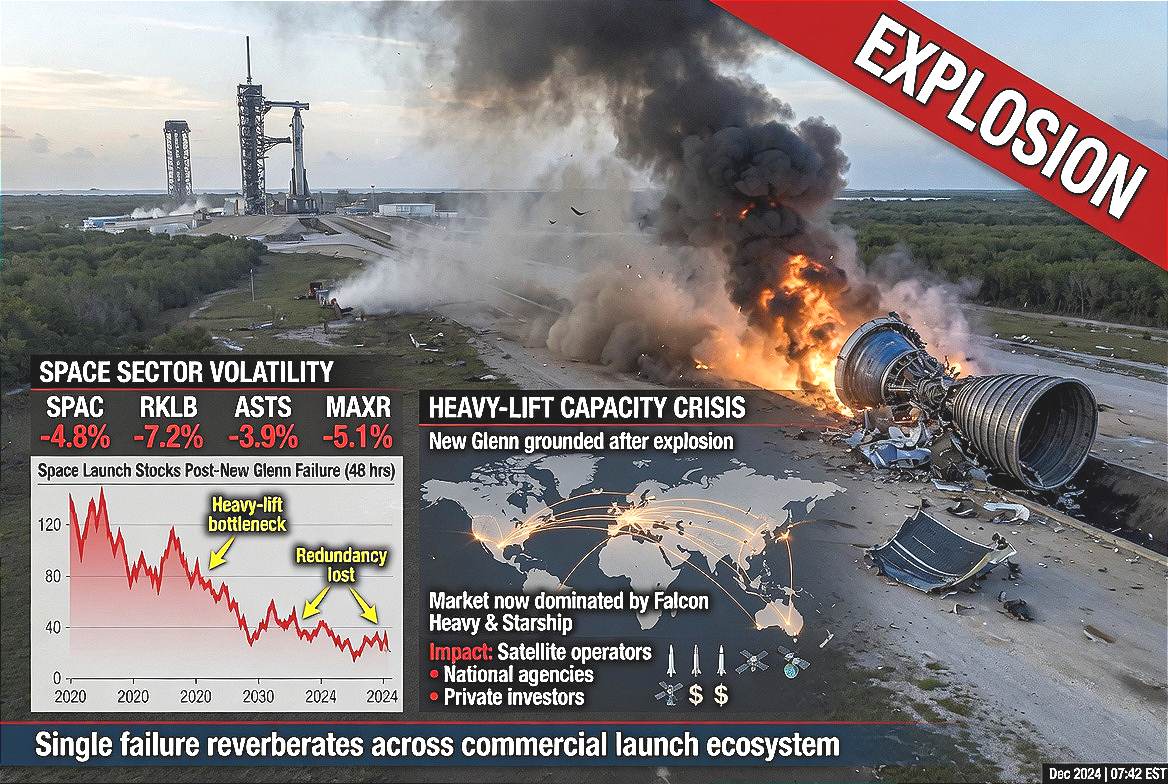
The broader commercial space sector has also felt the shock. Heavy‑lift launch capacity is a strategic bottleneck in the global space economy, and the temporary loss of New Glenn reduces redundancy in a market already dominated by SpaceX’s Falcon Heavy and the emerging Starship system. Investors responded accordingly, with space‑sector equities experiencing notable volatility in the days following the explosion. The event underscores the fragility of the commercial launch ecosystem, where a single failure can reverberate across satellite operators, national space agencies, and private‑sector investors.
Environmental and public‑safety impacts appear limited. Local authorities reported no injuries, no toxic plume threatening nearby communities, and no off‑site debris hazards. The explosion was largely contained within the boundaries of Launch Complex 36. Nevertheless, environmental assessments will continue as part of the regulatory process, particularly given the presence of cryogenic propellants, composite materials, and potential soil contamination from debris and fire‑suppressant chemicals.
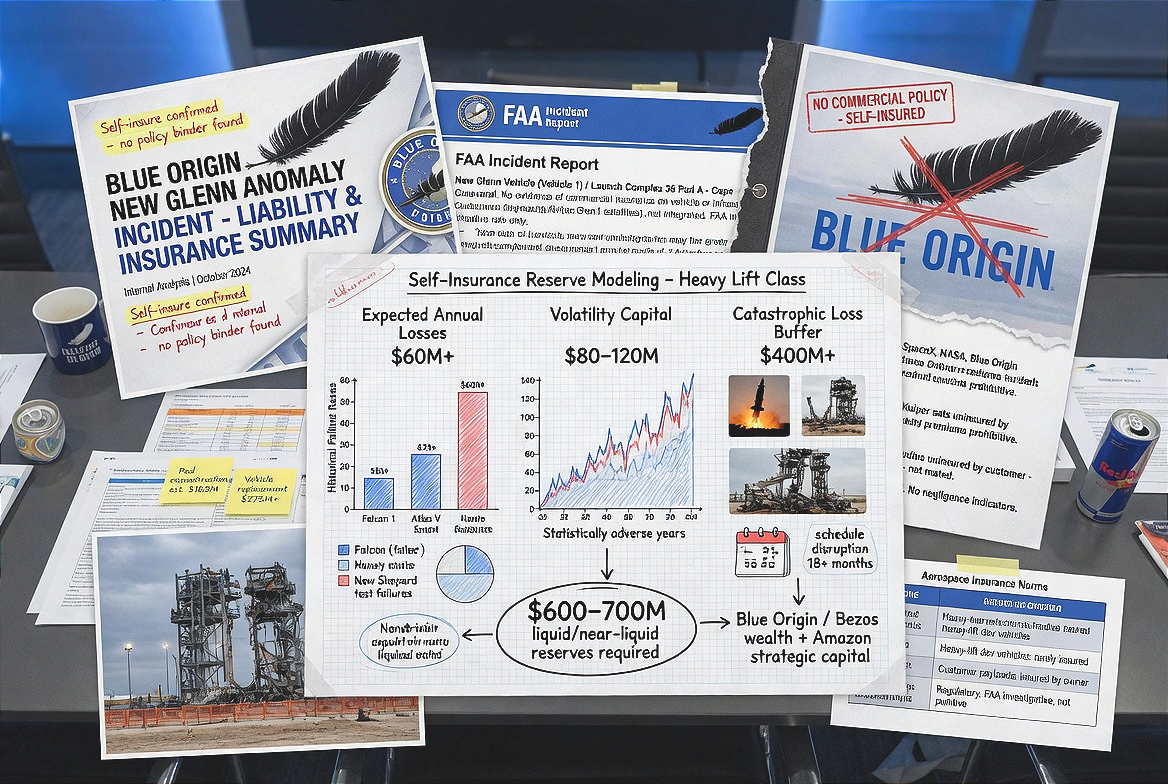
The liability and insurance implications of the event reveal a familiar pattern in the aerospace sector. There is no public evidence that Blue Origin carried commercial insurance on the New Glenn vehicle or the launchpad infrastructure. This omission is not unusual. Heavy‑lift rockets in development are rarely insured because premiums are extraordinarily high and the probability of failure during early testing is non‑trivial. Instead, companies with sufficient capital—such as Blue Origin, SpaceX, and NASA—typically self‑insure, absorbing losses internally. Customer payloads, by contrast, are almost always insured by the customers themselves, and in this case the Kuiper satellites were not yet integrated, eliminating any customer‑payload liability. Regulatory liability is similarly limited: the FAA’s role is investigative rather than punitive, and no evidence suggests negligence or non‑compliance that would trigger fines or sanctions.
The logic of self‑insurance in aerospace becomes clearer when examined through a financial‑modeling lens. A heavy‑lift launch provider must maintain reserves sufficient to absorb three categories of loss: expected annual losses based on historical failure rates, volatility capital to withstand statistically adverse years, and a catastrophic loss buffer capable of covering total vehicle destruction, pad damage, and schedule disruption. For a rocket in New Glenn’s class, expected annual losses may exceed $60 million, volatility capital may require an additional $80–120 million, and a catastrophic loss buffer—covering vehicle replacement, pad reconstruction, and program delays—can easily surpass $400 million. A responsible self‑insurance reserve for a heavy‑lift program therefore approaches $600–700 million in liquid or near‑liquid assets. Blue Origin, backed by Jeff Bezos’s substantial personal wealth and Amazon‑adjacent strategic interests, is one of the few entities capable of sustaining such a reserve structure. The absence of commercial insurance coverage for the destroyed vehicle and damaged pad is therefore consistent with industry norms rather than an anomaly.
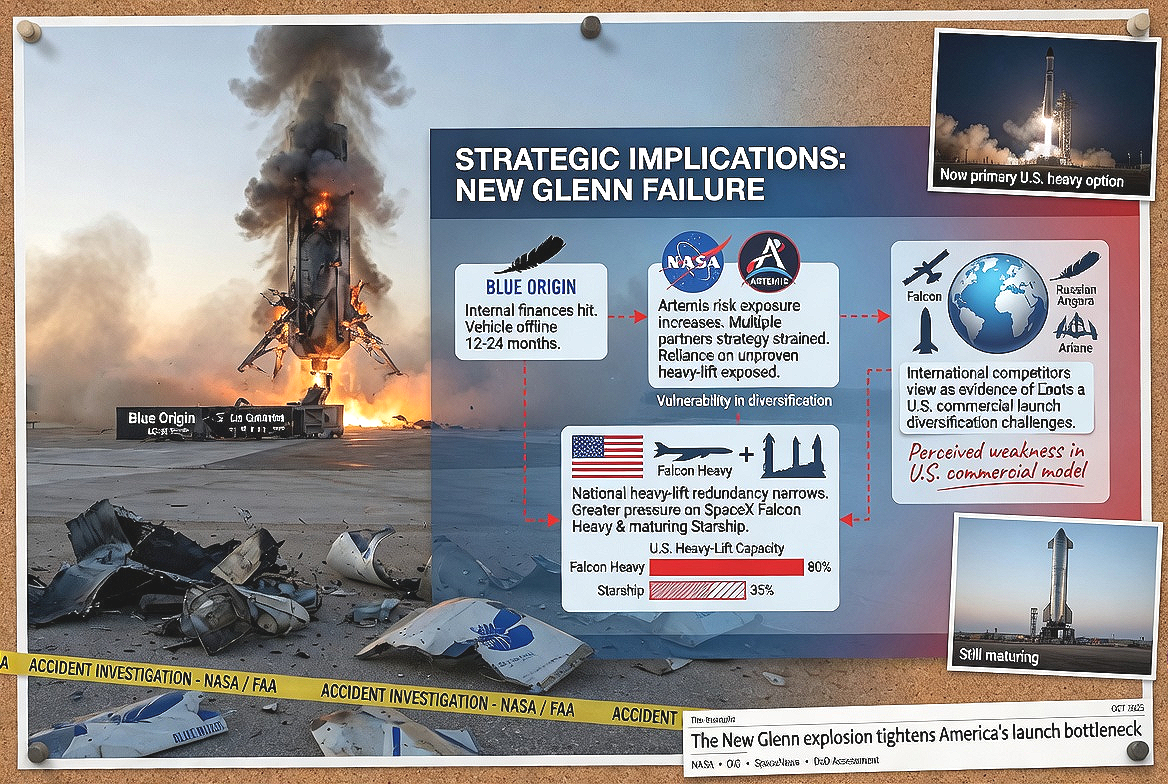
The strategic implications of the explosion extend beyond Blue Origin’s internal finances. NASA’s reliance on multiple commercial partners for Artemis was designed to mitigate risk, yet the New Glenn failure highlights the vulnerability inherent in depending on unproven heavy‑lift systems. The United States’ national launch capability is similarly affected. With New Glenn offline, the nation’s heavy‑lift redundancy narrows, placing greater pressure on SpaceX’s Falcon Heavy and the still‑maturing Starship architecture. International competitors will undoubtedly interpret the event as evidence of the challenges facing U.S. commercial launch diversification.
In sum, the New Glenn explosion is not merely a technical failure but a multidimensional event with consequences across engineering, regulation, economics, environmental safety, and national strategy. It illustrates the inherent volatility of heavy‑lift development, the necessity of robust self‑insurance frameworks, and the cascading effects that a single catastrophic failure can impose on the broader space ecosystem. As Blue Origin undertakes the long process of rebuilding Launch Complex 36 and restoring its launch cadence, the incident will likely serve as a case study in aerospace risk management for years to come.
Bibliography
Associated Press. (2026, May 29). Blue Origin rocket explodes during test at Cape Canaveral; no injuries reported. Associated Press News.
Associated Press. (2026, May 29). Blue Origin’s New Glenn rocket destroyed in explosion during test at Cape Canaveral. Associated Press News.
NewsNation. (2026, May 29). Blue Origin rocket explodes during test at Cape Canaveral; no injuries reported.
USA Today. (2026, May 29). Blue Origin’s New Glenn rocket explodes during test at Cape Canaveral.
Yahoo News. (2026, May 29). Blue Origin’s New Glenn rocket destroyed in explosion during test.
Federal Aviation Administration. (2026). Statement on Blue Origin New Glenn static‑fire anomaly.
U.S. Space Force Eastern Range. (2026). Public safety advisory following New Glenn test‑stand explosion.
NASA. (2026). Artemis program integration notes: Blue Moon Mark 1 launch dependencies.
Brevard County Emergency Management. (2026). Incident update: Launch Complex 36 explosion.
Marsh Aerospace Risk Division. (2024). Ground‑up loss modeling and risk‑retention strategies in aerospace operations.
Perr & Knight Actuarial Services. (2023). Self‑insurance feasibility and reserve modeling for high‑risk industries.
MIT Space, Policy & Society Research Group. (2025). Environmental and atmospheric impacts of launch‑vehicle emissions.
Caltech Graduate Aerospace Laboratories (GALCIT). (2024). Detonation physics and high‑energy propulsion failure modes.