The FBI Profiler Myth: How Accurate Is Criminal Profiling in the Hunt for Serial Killers?
"... hair blonde, eyes pale blue. He'd be about thirty-five now. He said he lived in Philadelphia, but he may have lied. That's all I can remember, mum, but if I think of any more, I will let you know. Oh, and Senator, just one more thing: love your suit!"

Abstract
Few investigative techniques have captured the public imagination as completely as FBI criminal profiling. Popular books, documentaries, and television dramas portray profilers as investigators capable of reconstructing the personality of an unknown serial killer from little more than a crime scene photograph. In reality, criminal profiling is neither clairvoyance nor pseudoscience. It is a behavioral investigative technique that attempts to infer characteristics of an unknown offender through the systematic analysis of crime scene evidence, victimology, offender behavior, forensic findings, and patterns observed across multiple offenses. Since the creation of the FBI's Behavioral Science Unit during the early 1970s, profiling has contributed to numerous serial homicide investigations while simultaneously attracting sustained criticism from psychologists, criminologists, and forensic scientists regarding its scientific validity and measurable accuracy. The available evidence suggests that criminal profiling is most effective when used as one component of a multidisciplinary investigation rather than as a standalone method of identifying offenders. When properly applied, profiling can help prioritize suspects, guide interviews, anticipate offender behavior, and link seemingly unrelated crimes. When misapplied or overinterpreted, however, it can misdirect investigations, reinforce investigator bias, and delay the identification of the true offender. The historical record demonstrates that FBI profiling has achieved notable successes but has also produced significant failures, revealing both the promise and the limitations of behavioral analysis.
Introduction
Serial murder presents one of the most difficult challenges faced by modern law enforcement. Unlike domestic homicides or crimes committed for obvious financial gain, serial murders frequently involve offenders with no prior relationship to their victims, minimal physical evidence, and motives rooted in complex psychological needs rather than practical objectives. Investigators often begin with little more than an unusual crime scene and a growing body count.
It was within this investigative environment that criminal profiling emerged. Rather than asking only who committed the crime, profilers attempt to answer what kind of individual could have committed it. Behavioral evidence—including victim selection, methods of approach, control techniques, body positioning, postmortem mutilation, trophy-taking, forensic awareness, and geographic movement—is analyzed to construct an offender profile that can assist investigators.
Contrary to popular belief, profiling is not designed to identify a specific individual. Instead, it seeks to narrow investigative focus by estimating characteristics such as age, sex, criminal history, occupation, education, personality traits, relationship status, mobility, and likely future behavior. The central question is whether these behavioral inferences possess sufficient accuracy to justify their use in criminal investigations.
The Development of FBI Profiling
Modern criminal profiling developed during the early 1970s with the establishment of the FBI's Behavioral Science Unit at Quantico, Virginia. Early pioneers including Howard Teten and Patrick Mullany believed violent offenders displayed recurring behavioral characteristics that reflected underlying psychological patterns.
The field expanded dramatically through the work of John Douglas, Robert Ressler, Roy Hazelwood, and their colleagues, who interviewed dozens of incarcerated serial killers and sexual murderers. These interviews sought to identify common developmental histories, fantasy lives, victim preferences, escalation patterns, and post-offense behaviors.
The resulting observations formed the foundation of behavioral profiling. Rather than relying exclusively on psychiatric theory, FBI profilers built their methods from investigative experience, offender interviews, crime scene analysis, and comparative case studies.
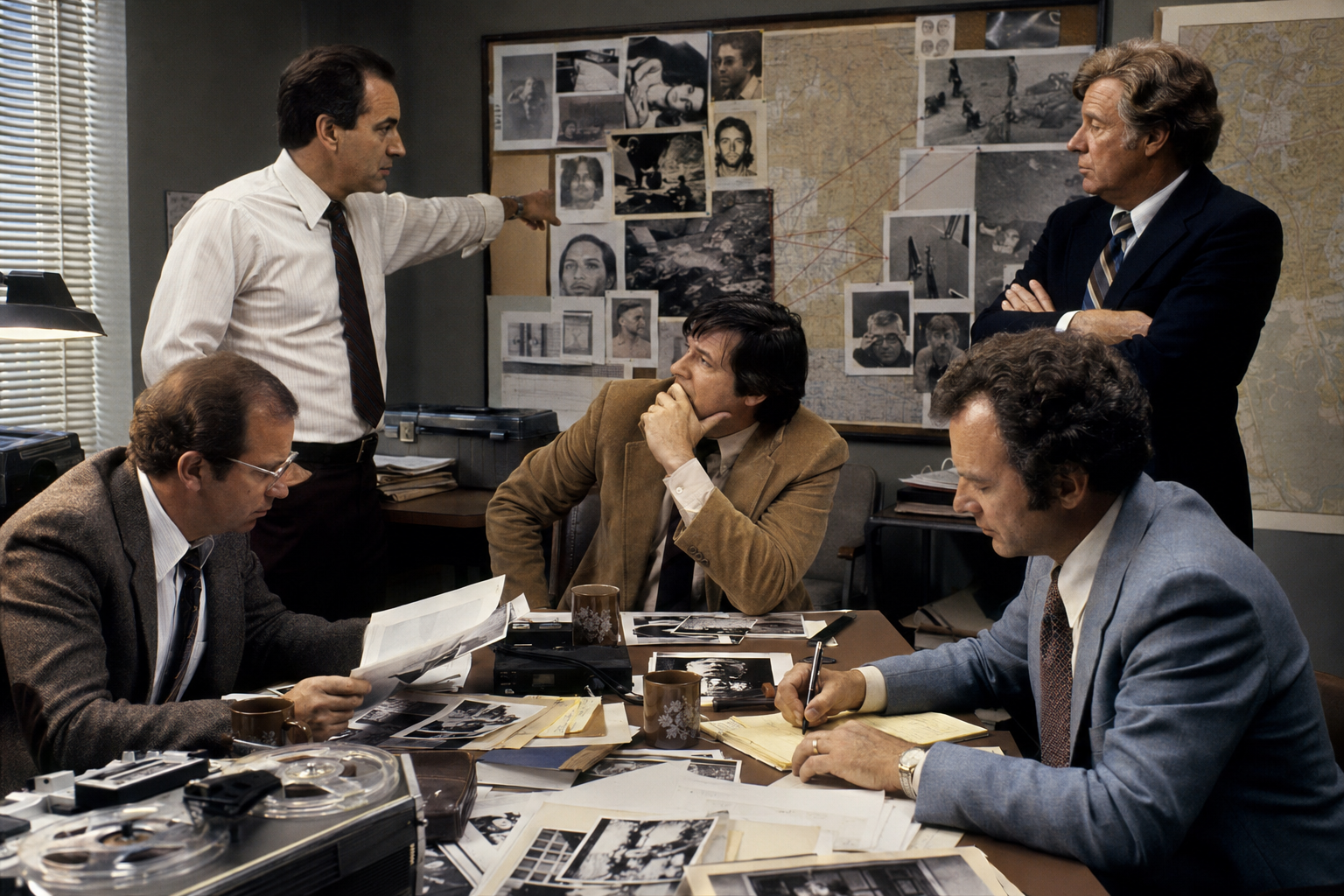
Although these interviews provided valuable insight into offender psychology, they were not conducted as controlled scientific experiments. The offenders represented a relatively small and highly selective sample consisting almost entirely of captured offenders willing to cooperate with investigators. Consequently, many psychologists later questioned whether conclusions drawn from these interviews could be generalized to all serial killers.
The Scientific Foundations of Profiling
Behavioral profiling rests upon a relatively simple premise: people behave consistently, and their behavior reflects enduring psychological characteristics.
Serial killers frequently exhibit behavioral repetition. Victim selection often follows recognizable patterns involving age, sex, occupation, physical appearance, or vulnerability. Methods of control may remain remarkably stable across years of offending. Some offenders bind victims in identical ways, leave bodies in similar environments, remove the same personal items, or engage in distinctive postmortem rituals.
Psychologists distinguish between modus operandi and signature behavior. Modus operandi refers to practical actions necessary to commit the crime successfully and avoid capture. These behaviors may evolve as offenders gain experience. Signature behavior, by contrast, fulfills psychological needs rather than practical necessities. Ritualistic posing, trophy collection, excessive mutilation, or specific methods of humiliation often reflect fantasies unique to individual offenders and tend to remain relatively stable.
Victimology represents another critical component of profiling. Understanding why particular victims were selected frequently provides insight into offender motivation. Victims are rarely chosen completely at random. Their occupations, lifestyles, physical characteristics, or daily routines often correspond to offender fantasies or opportunities.
Crime scene reconstruction integrates forensic evidence with behavioral observations. Bloodstain patterns, body positioning, defensive wounds, weapon choice, transportation methods, and concealment efforts collectively provide investigators with a behavioral narrative of the offense.
Measuring Accuracy
The greatest controversy surrounding FBI profiling concerns its measurable accuracy.
Unlike DNA evidence, fingerprints, or ballistic analysis, profiling does not produce objective identification. Instead, it generates probabilistic hypotheses. This distinction makes empirical evaluation considerably more difficult.
Several academic studies have compared profiler performance with that of experienced detectives, forensic psychologists, clinical psychologists, and university students. The results have been mixed.
Experienced profilers generally outperform untrained participants when describing crime scene dynamics, offender motivations, and behavioral characteristics. However, their advantage is often modest rather than dramatic. Many studies report accuracy rates substantially below those portrayed in popular culture.
Research also demonstrates that certain profile elements are considerably more reliable than others. Predictions regarding offender experience, forensic awareness, criminal sophistication, victim selection, geographic familiarity, and escalation tendencies often perform reasonably well.
Predictions involving intelligence, occupation, marital status, education, personality disorders, or specific demographic characteristics tend to be much less reliable.
Academic reviews consistently conclude that profiling performs best when focused on observable behavior rather than speculative psychological diagnosis.
Successes in Serial Killer Investigations

One frequently cited success involves the investigation of the BTK Killer, Dennis Rader. Behavioral analysis correctly identified the offender as someone likely maintaining an outwardly conventional lifestyle while privately harboring elaborate violent fantasies. Investigators accurately anticipated that the offender would seek recognition and eventually communicate with authorities, a prediction fulfilled decades later when Rader resumed correspondence with police and the media. His overconfidence ultimately contributed to his identification through digital forensic evidence.
The Green River investigation also benefited from behavioral consultation. Profilers concluded that the murderer would likely possess intimate familiarity with the local area, maintain stable employment, revisit body disposal sites, and demonstrate socially competent outward behavior despite profound psychological abnormalities. Gary Ridgway ultimately matched many aspects of the behavioral assessment. Nevertheless, profiling alone did not identify him. DNA evidence eventually established his responsibility.
Edmund Kemper provided investigators with invaluable insight into offender psychology through extensive post-arrest interviews. His explanations regarding fantasy development, victim selection, and emotional escalation substantially influenced later profiling methodology.
During investigations involving sexually motivated serial homicide, behavioral analysis has frequently assisted in linking offenses committed across multiple jurisdictions by identifying common behavioral signatures despite differences in forensic evidence.
Failures and Limitations
Profiling has also produced significant investigative failures.
One of the most notable examples concerns the Washington, D.C., sniper attacks committed by John Allen Muhammad and Lee Boyd Malvo. Early behavioral assessments emphasized a lone white male motivated by personal grievances or sexual inadequacy. The offenders were instead two African American males operating as a coordinated team with ideological and personal motivations. The inaccurate profile influenced public expectations and illustrates how behavioral assumptions can prove misleading.
The Yorkshire Ripper investigation in England, while not an FBI case, demonstrates similar dangers. Investigators relied heavily upon inaccurate behavioral assumptions regarding offender background, accent, and psychological characteristics while ignoring contradictory evidence. The resulting investigative errors prolonged the killing spree.
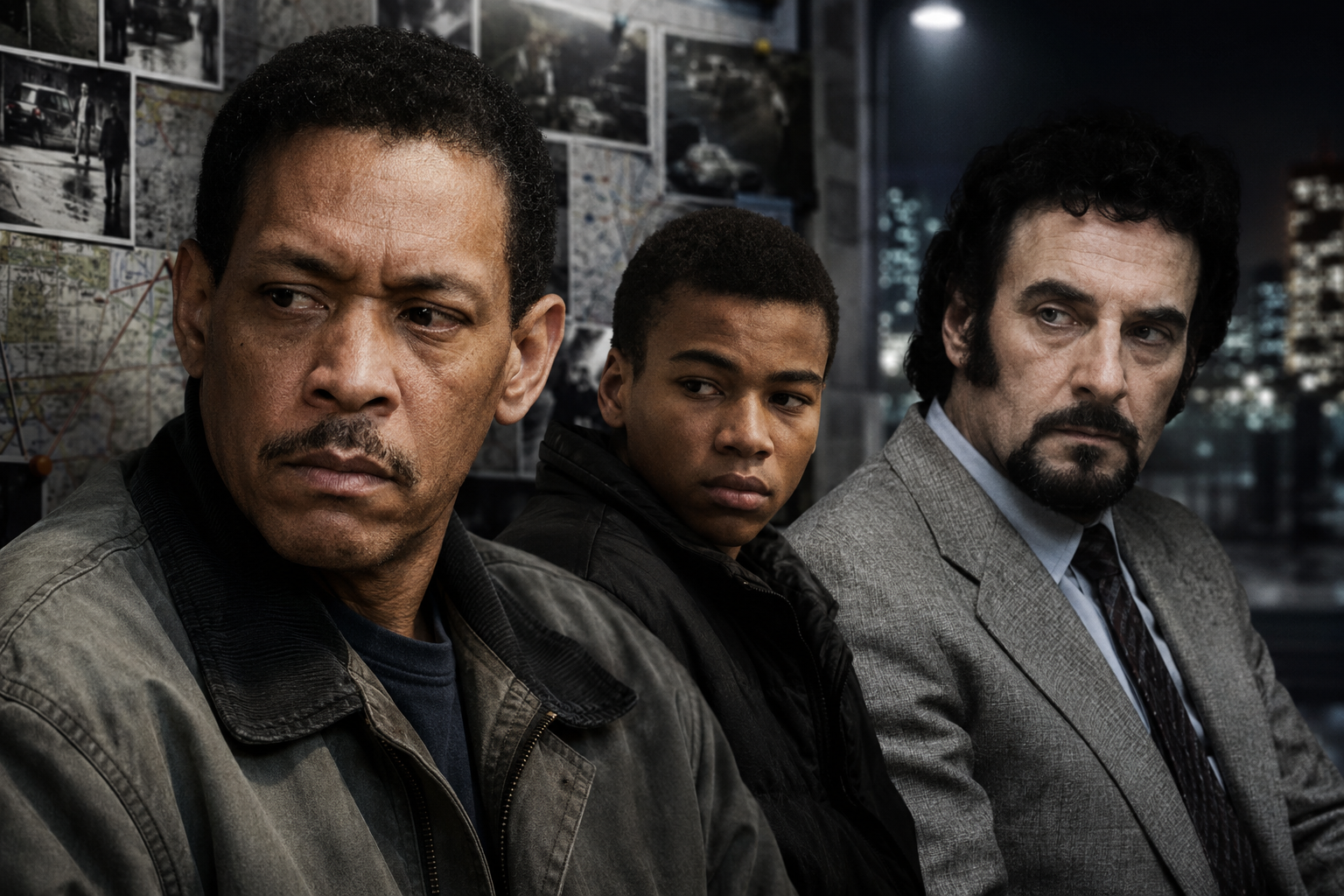
Several serial murder investigations have also suffered from confirmation bias. Once investigators become invested in a behavioral profile, they may unconsciously disregard suspects who fail to match expected characteristics even when physical evidence points elsewhere.
Academic critics argue that profiles frequently contain broad statements capable of fitting numerous offenders. Characteristics such as social isolation, troubled childhoods, relationship difficulties, or prior criminal behavior describe substantial proportions of violent offenders, limiting their practical value in narrowing suspect pools.
Scientific Criticism
Perhaps the strongest criticism concerns the absence of standardized methodology.
Different profilers examining identical evidence may produce substantially different profiles. Unlike laboratory sciences, profiling lacks universally accepted procedures capable of producing highly consistent results across independent analysts.
Psychologists also criticize retrospective validation. Successful profiles receive extensive publicity, while inaccurate profiles often disappear from public discussion. This selective reporting creates an inflated perception of profiling effectiveness.
The organized-versus-disorganized offender classification illustrates another limitation. Originally regarded as a cornerstone of FBI methodology, subsequent empirical research found that many serial killers display characteristics belonging to both categories simultaneously. Modern behavioral analysts increasingly view offender behavior as existing along multiple dimensions rather than fitting rigid classifications.
Another concern involves cognitive bias. Human beings naturally recognize patterns even where none exist. Investigators interpreting ambiguous behavioral evidence may inadvertently project expectations onto crime scenes, producing profiles that reflect investigator assumptions rather than offender reality.
Contemporary Behavioral Analysis
Modern FBI Behavioral Analysis Units employ considerably more sophisticated methods than those used during the 1970s.
Current profiling incorporates digital evidence, geographic information systems, forensic psychology, victimology, offender databases, behavioral threat assessment, statistical analysis, and advances in forensic science.
Geographic profiling has become particularly valuable. Rather than predicting personality characteristics alone, investigators analyze spatial relationships between crime scenes to estimate probable offender residence or operational areas. Many serial killers commit offenses within relatively predictable geographic comfort zones while avoiding areas too close to home or excessively distant.
Behavioral analysts now work alongside DNA specialists, forensic anthropologists, digital forensic experts, crime analysts, and intelligence specialists, reflecting the recognition that profiling functions best within multidisciplinary investigative teams.
The Real Value of Profiling
The greatest value of profiling may lie not in identifying offenders directly but in improving investigative strategy.
Profiles can suggest interview techniques tailored to likely offender personalities, identify overlooked victim populations, anticipate offender escalation, prioritize investigative resources, recognize linked offenses across jurisdictions, and generate new investigative hypotheses when conventional methods reach dead ends.
Experienced investigators generally view profiling as one source of information among many rather than definitive evidence.
Successful profiling depends heavily upon the quality of available crime scene evidence. Poorly preserved scenes, incomplete victimology, multiple offenders, or crimes driven primarily by opportunistic motives significantly reduce profiling reliability.
Serial sexual homicide remains the category in which behavioral profiling demonstrates its strongest performance because these offenders frequently display stable psychological signatures across multiple offenses.
Conclusion
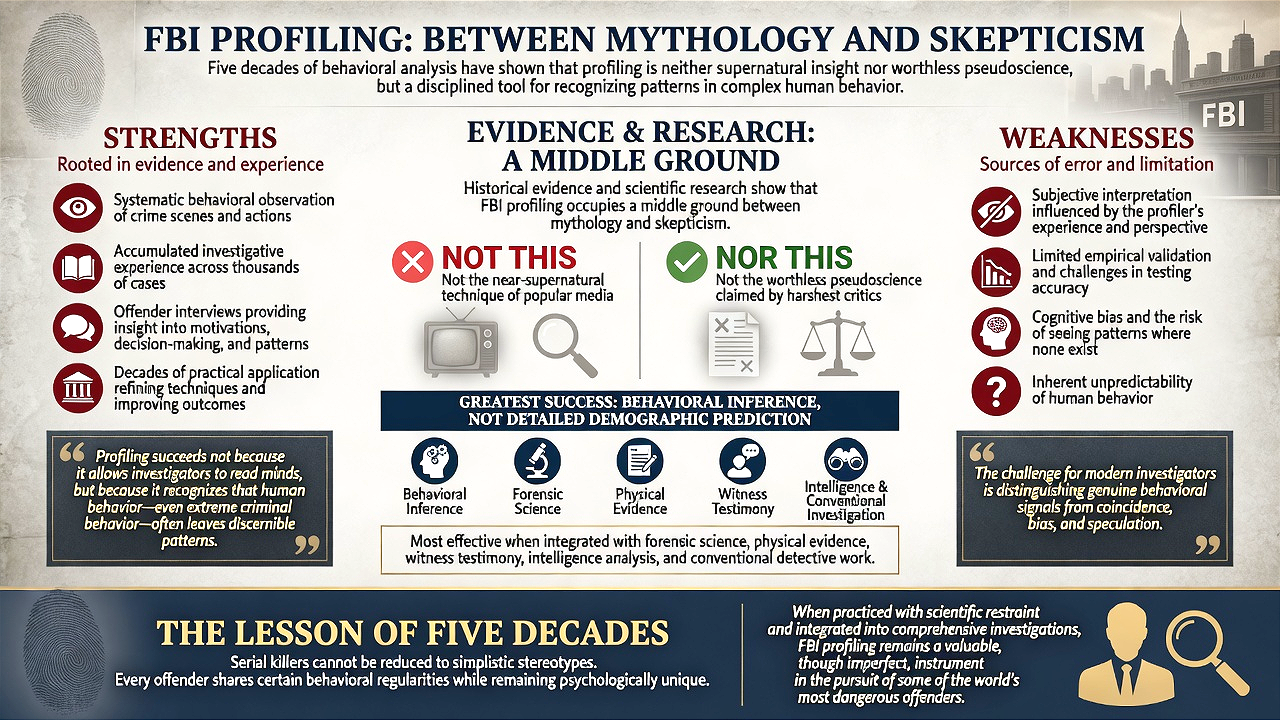
The historical evidence demonstrates that FBI profiling occupies a middle ground between mythology and skepticism. It is neither the near-supernatural investigative technique portrayed in popular media nor the worthless pseudoscience described by its harshest critics. Its strengths arise from systematic behavioral observation, accumulated investigative experience, offender interviews, and decades of practical application. Its weaknesses stem from subjective interpretation, limited empirical validation, cognitive bias, and the inherent unpredictability of human behavior.
Scientific research suggests that profiling achieves its greatest success when confined to behavioral inference rather than detailed demographic prediction. It performs best as an investigative support tool integrated with forensic science, physical evidence, witness testimony, intelligence analysis, and conventional detective work. The most effective profilers recognize uncertainty, express conclusions probabilistically, and continually revise their assessments as new evidence emerges.
Perhaps the greatest lesson learned over five decades of FBI behavioral analysis is that serial killers cannot be reduced to simplistic stereotypes. Every offender shares certain behavioral regularities while remaining psychologically unique. Profiling succeeds not because it allows investigators to read minds, but because it recognizes that human behavior—even extreme criminal behavior—often leaves discernible patterns. The challenge for modern investigators is distinguishing genuine behavioral signals from coincidence, bias, and speculation. When practiced with scientific restraint and integrated into comprehensive criminal investigations, FBI profiling remains a valuable, though imperfect, instrument in the pursuit of some of the world's most dangerous offenders.