Building the Intelligent Factory: How AI and Robotics Are Transforming Food Production
This report details how AI, robotics, and digital twins are transforming food factories—from AI vision and predictive maintenance to autonomous logistics and the emerging "dark factory" model of lights-out production.
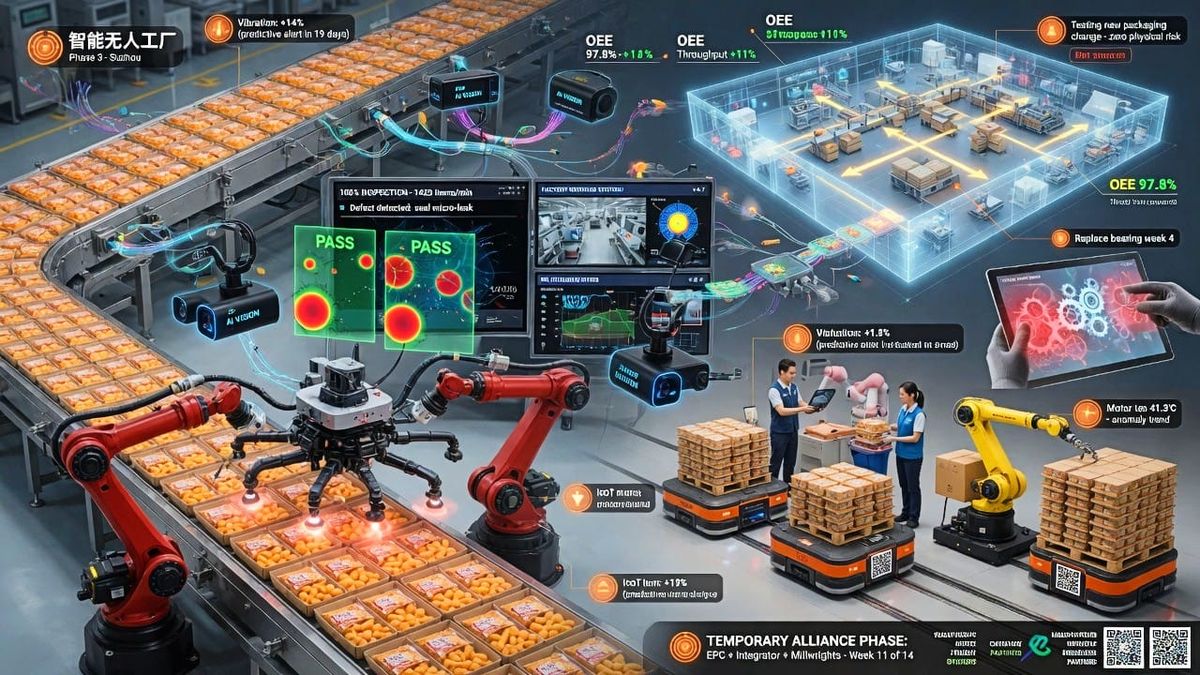
A Technical Report on the Design, Construction, and Evolution of Next-Generation Food Manufacturing Facilities
1. Executive Summary
The construction of a modern food factory is no longer a purely civil engineering endeavor. When Kraft Heinz pilots an AI agent to optimize ketchup production, when Kellogg's invests £75 million (USD 101,287,875.00) in AI-driven energy management at its Wrexham facility, and when ABB robots double production capacity while cutting costs by 40 percent, they are revealing a fundamental shift: the factory itself has become an intelligent machine [21†L15-L21].
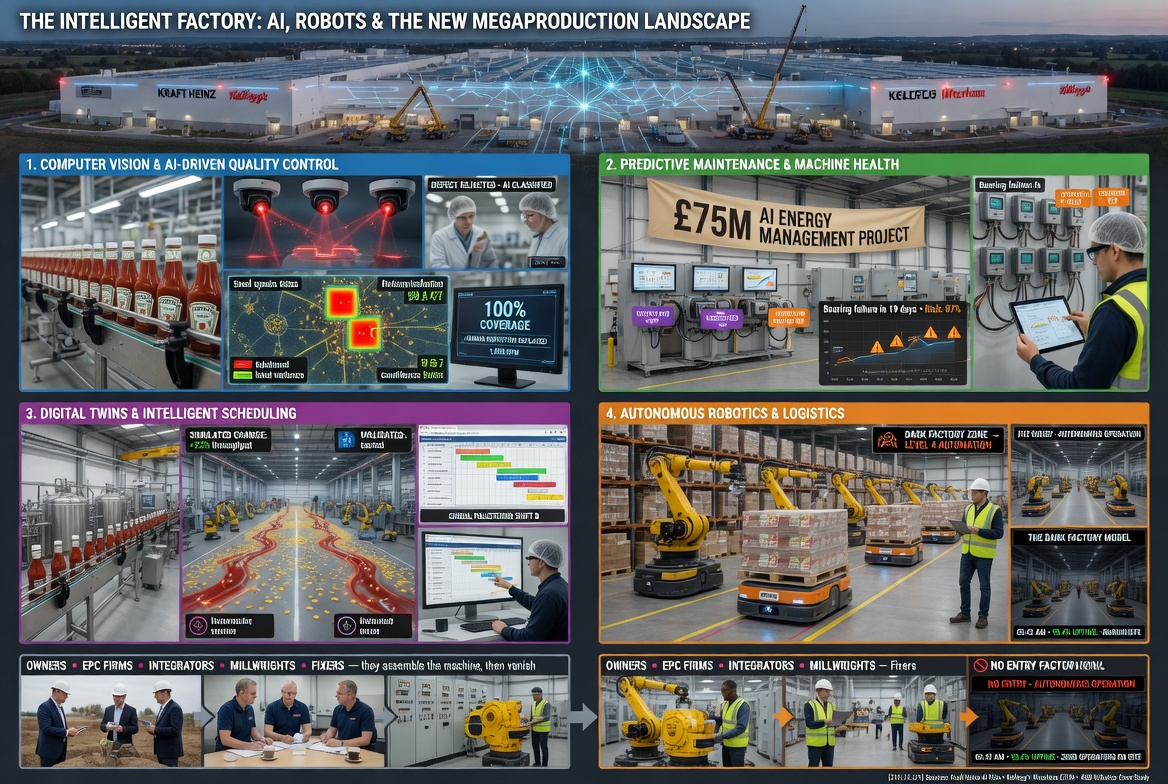
This report examines how mega-factories are built, evolved, and operated in the age of artificial intelligence and robotics. It covers four interconnected domains that define the intelligent factory:
- Computer Vision and AI-Driven Quality Control: How deep learning has replaced subjective human inspection with real-time, 100-percent coverage systems capable of detecting defects that human eyes cannot perceive.
- Predictive Maintenance and Machine Health: How IoT sensors and machine learning models forecast equipment failures weeks in advance, saving millions in unplanned downtime.
- Digital Twins and Intelligent Scheduling: How virtual replicas of production lines allow manufacturers to simulate, validate, and optimize changes before cutting a single piece of metal.
- Autonomous Robotics and Logistics: How fleets of palletizing robots and autonomous mobile robots (AMRs) handle materials with precision and speed far beyond human capability.
Alongside these technologies, the report describes the specialized ecosystem that builds these facilities—the owners, EPC firms, system integrators, millwrights, and emergency fixers who assemble, execute, and then dissolve back into the industry—and concludes with an examination of the emerging "dark factory" model, where fully automated facilities operate around the clock with minimal or no human presence.
2. The Four Pillars of the Intelligent Factory
2.1 Computer Vision: Smarter Eyes on the Line
For decades, quality control in food manufacturing meant human inspectors standing beside conveyor belts, manually checking products as they flew past. The method was subjective, inconsistent, and limited in speed. A human inspector can focus effectively for about twenty minutes before attention begins to wane; after an hour, defect detection rates drop precipitously. In high-speed production environments—where thousands of items pass per minute—manual inspection has always been more of a ritual than a reliable control.
Artificial intelligence has fundamentally changed this equation. Computer vision systems, powered by deep learning models, now inspect every single product passing through a line, operating at speeds no human could match while maintaining near-perfect consistency [0†L28-L33].
The technology works because AI models can be trained to recognize the difference between acceptable and defective products across enormous datasets. The same deep learning architectures that power facial recognition and autonomous vehicles can detect a missing seal on a yogurt cup, a label printed slightly off-center, or a crack in a chocolate bar's coating—all in milliseconds.
A 2026 systematic review published in Food Engineering Reviews examining AI applications in food processing concluded that AI-driven systems have demonstrated strong capability in analyzing complex datasets, detecting abnormalities, modeling food processes, improving decision-making, and enhancing food safety across the entire value chain. However, the review also noted that most reported applications remain at laboratory or pilot scale, with industrial-scale implementation still facing significant barriers including data quality, model robustness, and real-time integration [8†L7-L23].
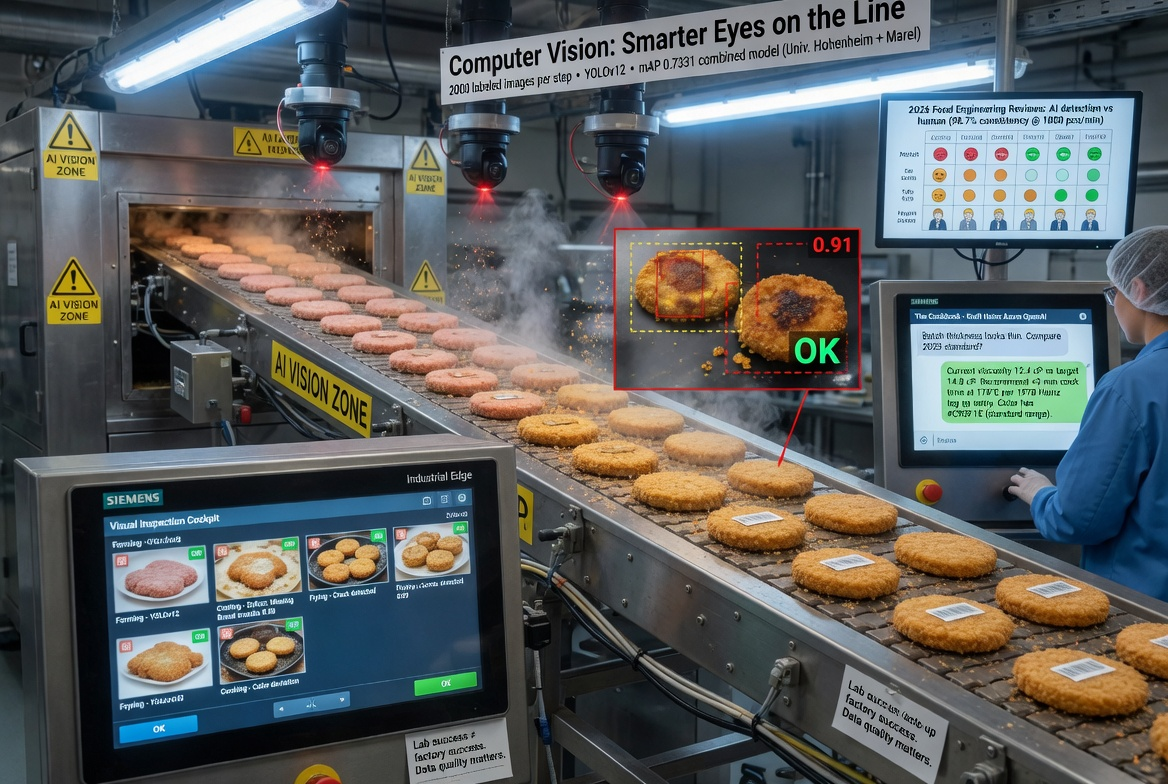
A compelling example comes from the University of Hohenheim's Department of Food Informatics, where researchers collaborated with the food processing equipment manufacturer Marel to evaluate object detection for in-line quality monitoring on a real production line for ready-to-eat chicken-type products. Overhead cameras captured images at four processing steps—forming, coating, frying, and cooking—with 2,000 images per step labeled across multiple classes of quality deviations. The researchers trained separate YOLOv12 models for each step and found that out-of-the-box detectors added practical value to industrial computer vision-enhanced quality control. Perhaps most significantly, a single model trained on a combined dataset from all steps achieved a peak detection accuracy of 0.7331 [9†L14-L32].
What makes this practical rather than academic is the convergence of advanced camera technology with edge computing. Siemens has documented how its Industrial Edge platform, combined with the Visual Inspection Cockpit application, allows manufacturers to perform AI-powered image processing directly on the production floor rather than sending data to a distant cloud server. With the platform, relevant information is available where it is needed, when it is needed, with short response times and no detours [10†L39-L50]. For a manufacturer of frozen baked goods, this approach successfully balanced high production speeds with consistently high product quality, accounting for natural product variations and a wide variety of baked goods [10†L35-L38].
Kraft Heinz has taken a different but equally revealing approach to AI deployment. Rather than using AI solely for defect detection, the company built an AI agent called "The Cookbook" using Microsoft's Azure OpenAI platform. The tool gives workers access to 150 years of accumulated expertise in ketchup production. Workers can ask questions about the thickness and color of a batch of Heinz Tomato Ketchup or request insights about production process efficiency, and the AI agent provides answers based on the company's institutional knowledge. The tool went from idea to prototype in fewer than three months, and Kraft Heinz has made clear that this is not its first or last AI agent: "We continue to explore integrated AI solutions that can drive scalability and connectivity across the organization, unlocking further value for the business, our people and consumers" [21†L15-L30].
2.2 Predictive Maintenance: Anticipating Failure Before It Happens
The single most expensive event in a 24/7 food plant is unplanned downtime. When a key piece of equipment fails without warning, production halts. Raw materials already in process are lost. Maintenance teams scramble to source parts that may take days to arrive. Consumers may never know about the disruption, but the financial impact is immediate and severe.
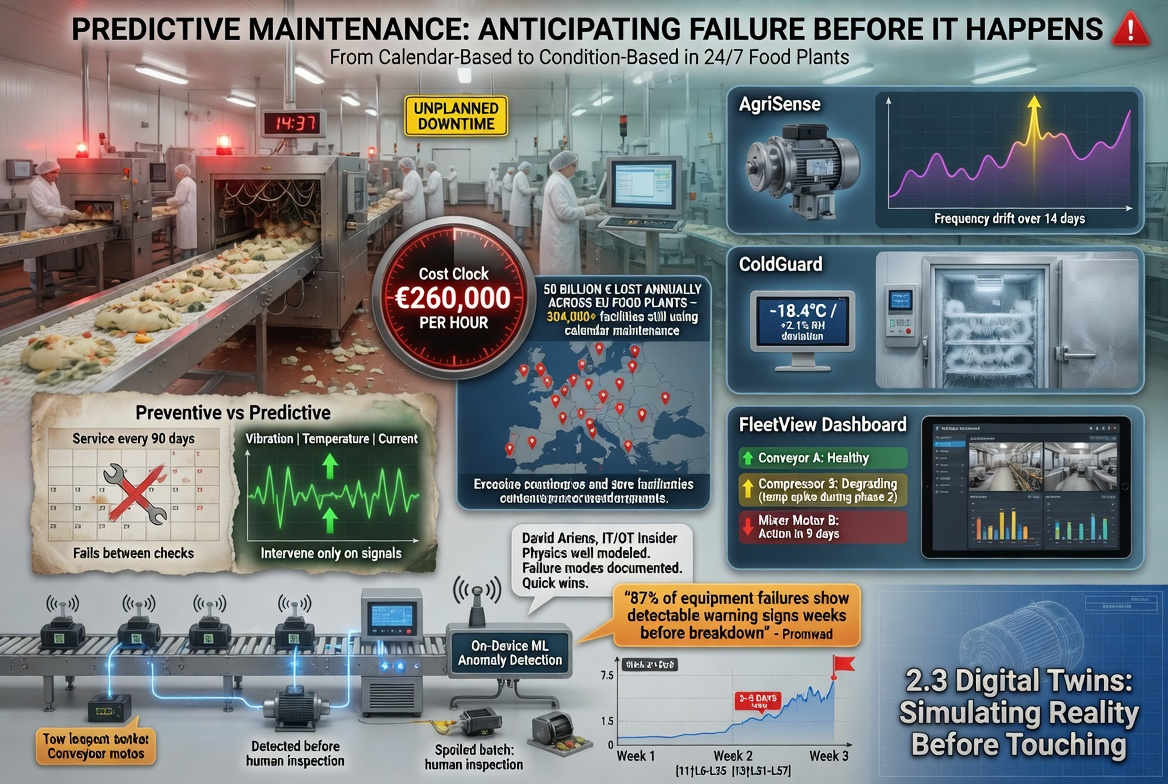
Across the European Union, food processing facilities lose an estimated 50 billion euros annually to unplanned downtime. Each hour of stoppage costs an average of 260,000 euros in lost production, spoiled product, and emergency repairs. Despite this staggering cost, the majority of the industry's more than 304,000 facilities still rely on calendar-based preventive maintenance and manual inspection rounds—an approach that leaves equipment unmonitored for hours or even days between checks [11†L11-L16].
The shift to predictive maintenance represents a fundamental change in maintenance philosophy. Preventive maintenance follows a fixed schedule: service every 30, 60, or 90 days regardless of actual condition. It reduces some risk but often results in unnecessary servicing or, worse, failures that occur between scheduled intervals [13†L17-L28]. Predictive maintenance, by contrast, uses real-time data from industrial IoT sensors to assess equipment health at any given moment, intervening only when data signals that something is about to go wrong.
The technology stack has matured considerably in recent years. A network of vibration, temperature, current, and acoustic sensors embedded throughout the facility continuously streams data to a centralized analytics platform. Machine learning algorithms are trained on historical data to define "normal" operational benchmarks for each machine under different production settings. When subtle anomalies emerge—a gradual change in vibration frequency over two weeks, a recurring temperature spike during a particular phase of operation—the system detects them long before a human would notice [13†L31-L57].
The data requirements for predictive maintenance are comparatively straightforward: vibration, temperature, and current draw, often from sensors already in place. "The physics are well modeled, the failure modes documented, and the business case is easy to articulate," notes David Ariens, founder at the IT/OT Insider. "That combination makes it fertile ground for quick wins" [12†L25-L28].
A concrete example comes from Promwad, which launched an Edge AI predictive maintenance platform specifically designed for food and beverage manufacturing equipment. The platform combines clamp-on industrial sensors with on-device anomaly detection to give plant operators continuous visibility into the health of motors, compressors, conveyors, mixers, and cold chain systems—without rewiring equipment or interrupting production. The system uses three integrated modules: AgriSense for vibration, temperature, and current monitoring; ColdGuard for continuous temperature and humidity monitoring of coolers and freezers; and FleetView, a unified dashboard that ranks every monitored asset by real condition rather than age [11†L6-L35].
The implications are clear: "Eighty-seven percent of equipment failures show detectable warning signs weeks before breakdown," the Promwad team states. "The problem isn't that failures are unpredictable. It's that most plants have no way to see degradation between scheduled inspections" [11†L17-L21].
2.3 Digital Twins: Simulating Reality Before Touching It
A digital twin is a virtual, dynamic replica of a physical asset, system, or process. It is not a static CAD model but a living simulation that evolves in real time alongside its physical counterpart. In the context of food manufacturing, digital twins represent one of the most powerful tools for optimization and risk reduction.
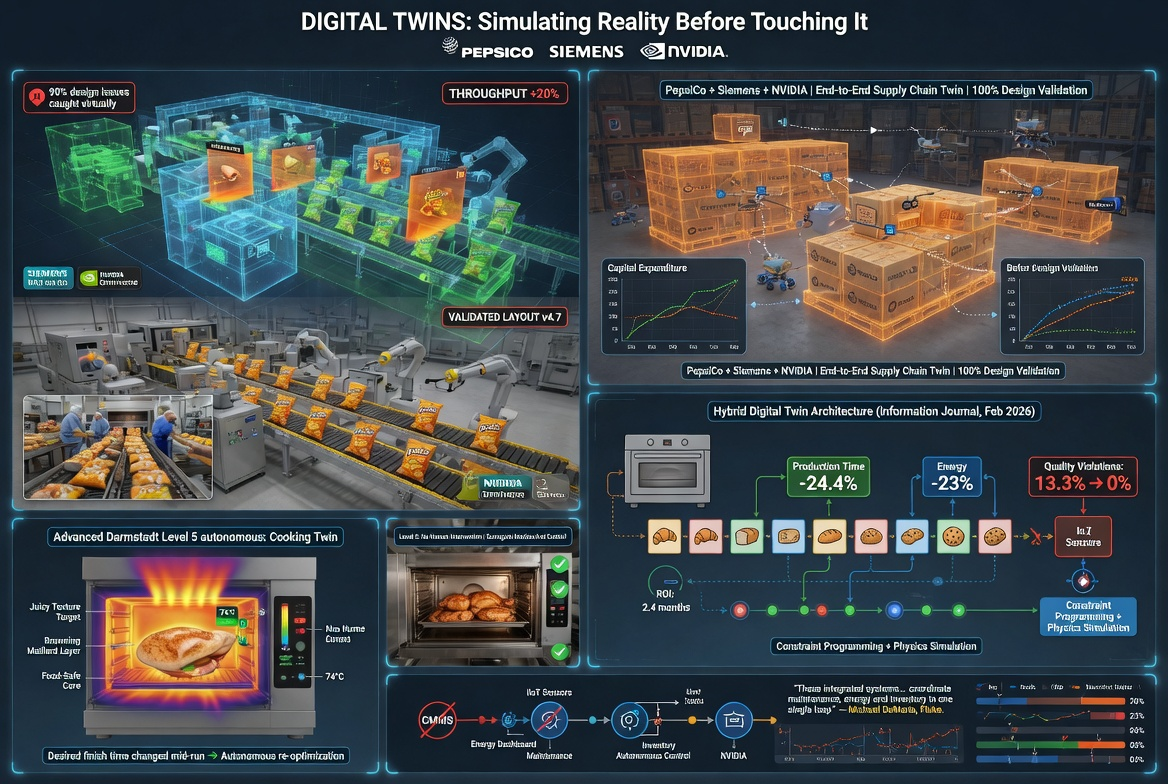
PepsiCo, in partnership with Siemens and NVIDIA, has converted selected U.S. manufacturing and warehouse facilities into high-fidelity 3D digital replicas. These virtual models establish a performance baseline for plant operations and the end-to-end supply chain. Teams then use these virtual environments to validate and test new configurations before any physical modifications occur. According to the companies, this approach allows PepsiCo to identify up to 90 percent of potential plant design issues before any physical modifications are made. Initial deployments have delivered a 20 percent increase in throughput, nearly 100 percent design validation, and a 10 to 15 percent reduction in capital expenditure [15†L21-L30].
The technology is not limited to layout validation. A Hybrid Digital Twin Architecture published in the journal Information in February 2026 demonstrated how simulation, constraint programming, and industrial IoT can be combined into a closed-loop system for energy-efficient scheduling in food manufacturing. Using a bakery model with 10 products, the system achieved a 24.4 percent reduction in production time, 23 percent energy savings, and complete elimination of quality time-window violations—reducing them from 13.3 percent of batches to zero. The return on investment was calculated at just 2.4 months [14†L16-L25].
Researchers at the Technical University of Darmstadt have taken digital twins even further, demonstrating Level 5 autonomous process control using a fully simulation-driven digital twin pipeline. In their system, demonstrated on an industrial cooking process, the oven can autonomously hit targets such as juicy texture, browning, and food-safe core temperature, even when the desired finish time changes mid-process. This is not a human-controlled simulation; it is a self-optimizing system that uses physics-based surrogate models and optimal control algorithms to manage the process with no human intervention [2†L26-L32].
Food manufacturers are increasingly pivoting away from isolated systems like Computer Maintenance Management Systems and instead focusing on connected systems that work together cohesively. "These integrated systems have the ability to do much more than act as an alert system," says Michael DeMaria, director of product management at Fluke. "They can help to coordinate maintenance, energy and inventory in one single loop" [12†L31-L35].
2.4 Autonomous Robotics: The Precision Muscle
The robots in modern food factories bear little resemblance to the caged, single-task machines of a decade ago. Today's industrial robots are increasingly autonomous, collaborative, and guided by AI-powered vision systems. They handle tasks ranging from high-speed picking of delicate products to palletizing heavy crates, and they do so with precision, consistency, and speed that exceed human capability.
The ABB IRB 660 is a 4-axis palletizing robot with a 3.15-meter reach and a 250-kilogram payload—ideal for stacking boxes, crates, and bottles at the end of a high-speed line. In one recent installation at a global seafood leader, two ABB IRB660 palletizing robots service eight production lines, using custom mechanical grippers capable of handling various crate types. The total combined speed reaches 10 crates per minute, with 17 pallets processed per hour through a fully automated stretch wrapping system [18†L8-L21].
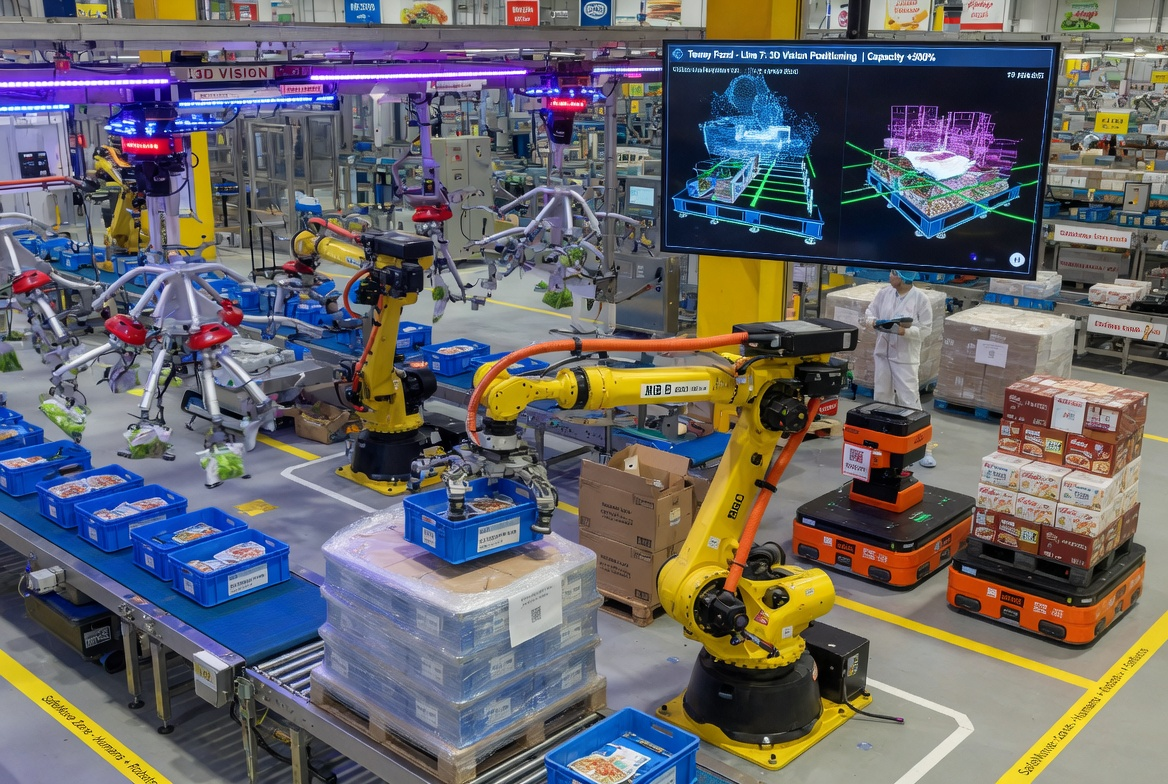
At the Teway Food intelligent factory in Chengdu, China, ABB Robotics and JCN provided a comprehensive automation solution comprising 65 IRB 360 delta fast-picking robots, 10 IRB 6700 robots, and three IRB 660 robots, together with a 3D vision system. The 3D vision algorithms offer flexibility and speed, allowing robots to handle complex and variable shapes, including pallets with loads stacked in random arrangements. Since the robots and vision system were introduced, single-line capacity has tripled, per capita efficiency has increased more than sixfold, and the manufacturing cost of a single product has decreased by nearly 40 percent. Teway Food became the first company in the industry to apply 3D vision-assisted robot positioning for feeding production lines [19†L27-L48].
The flexibility of these systems cannot be overstated. ABB's SafeMove technology allows large industrial robots to work safely alongside human workers without safety cages. At a Nestlé chocolate factory in Brazil, a compact collaborative palletizing cell using the IRB 660 and SafeMove technology increased shipping productivity by 53 percent while reducing the unit's footprint by 30-40 percent [4†L22-L26].
Robots are not confined to palletizing and packaging. Kellogg's uses packaging automation across its operations, from placing products into containers to filling unit loads and loading them onto trucks. "Our automation systems handle tasks such as placing products into containers and transporting them to the end of the line," says David Sosnoski, director of packaging engineering for salty snacks at Kellogg Co. "The product mostly remains untouched by human hands until it reaches the retailer" [23†L17-L24].
Kellogg's has deployed a diverse range of robotic solutions, from basic pick-and-place robots to advanced collaborative robots, or cobots. "Cobots are designed to replace repetitive human tasks that do not require a larger, fully automated solution," Sosnoski says. "They have proven valuable in filling the middle ground between tasks that are too complex for traditional automation but exceed human capabilities in certain areas" [23†L25-L33].
Even material transport within the factory has been transformed by autonomous mobile robots (AMRs). Swisslog's IntraMove AMRs, which can handle payloads up to 3,000 kilograms, use SLAM navigation with two laser scanners and AI algorithms to calculate the most efficient path to a destination while avoiding obstacles—without needing cables, strips, or tapes. The AMRs are connected to AI-based fleet management software via the VDA 5050 standard communication interface, enabling optimized route planning and assignment of transport orders [16†L14-L27]. At a fresh produce processing facility in the Netherlands, 112 Geek+ M200 autonomous mobile robots connected distinct processing areas across three floors, with a central AI system monitoring hundreds of robots simultaneously to optimize routes and reduce traffic congestion [17†L20-L28].
3. The Human Ecosystem: Who Actually Builds All This?
No single company builds these intelligent factories. The owners, EPC firms, system integrators, and craft workers who bring them to life form a temporary ecosystem that assembles, executes the project, and then dissolves back into the industry.
3.1 The Owner
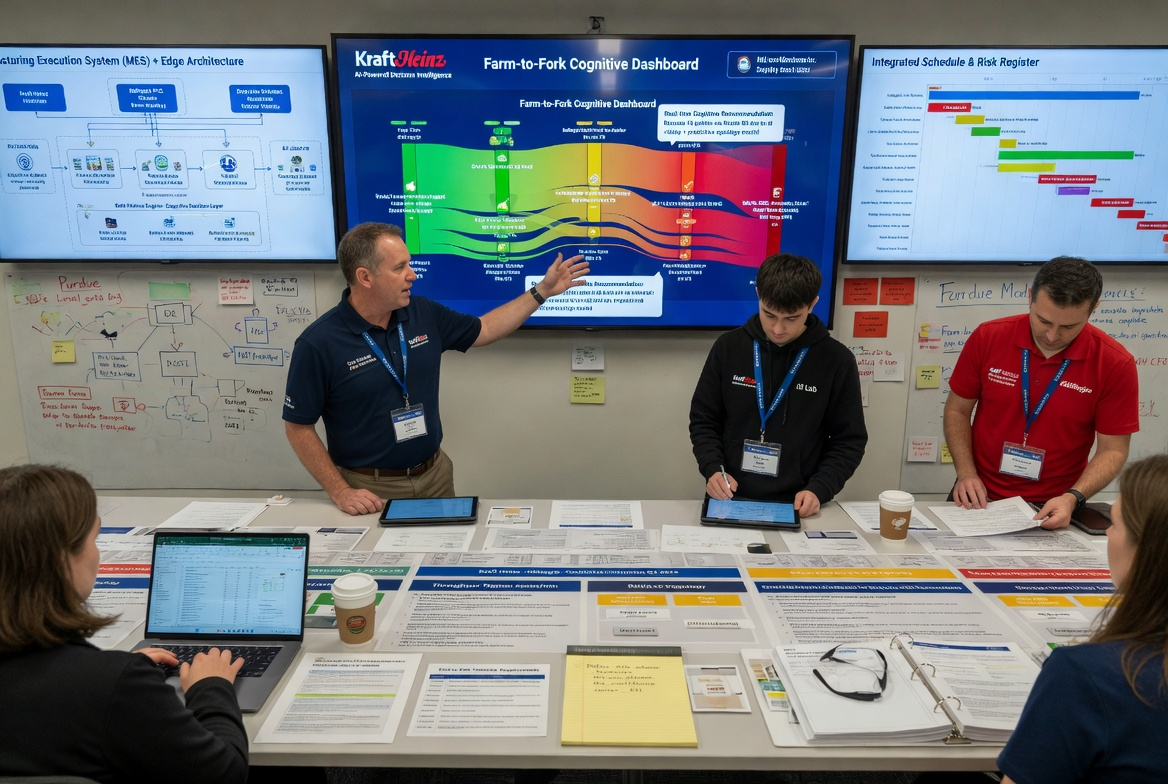
Kraft Heinz, Kellogg's, and other food manufacturers define the production throughput, safety standards, budget, and schedule. They hold ultimate financial risk. Increasingly, their engineering teams include data scientists and automation architects who define not just physical requirements but also data schema, network topology, and manufacturing execution system specifications. Kraft Heinz has doubled down on AI and machine learning to power real-time cognitive decision intelligence across its supply chain, with the goal of creating a fully integrated end-to-end supply chain with visibility from farm to fork [5†L31-L46].
3.2 The EPC Firm
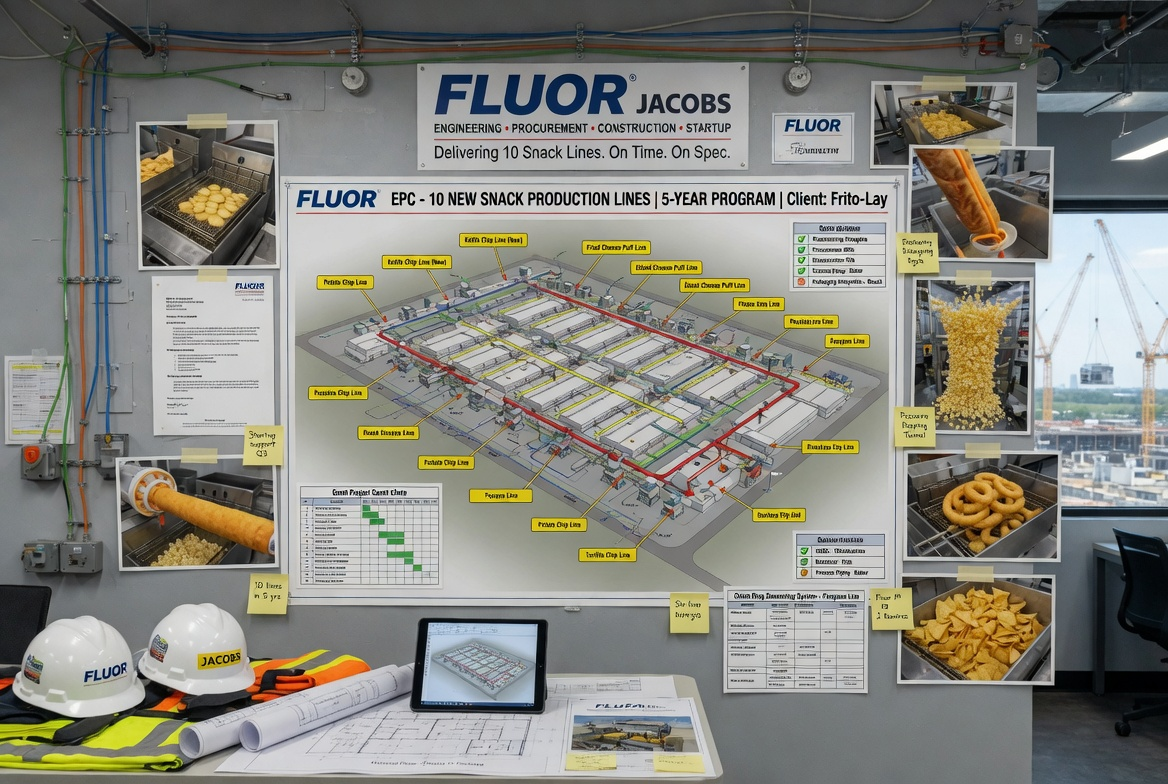
Engineering, Procurement, and Construction firms such as Fluor and Jacobs act as general contractors, designing the building, utilities, and material flow while managing all subcontractors. Fluor has provided engineering, procurement, construction, and startup services for ten new production lines over a five-year period, including a new kettle chip line, fried and baked cheese puff lines, a popcorn line, Funyuns line, and potato chip and tortilla chip lines [26†L4-L8].
3.3 System Integrators
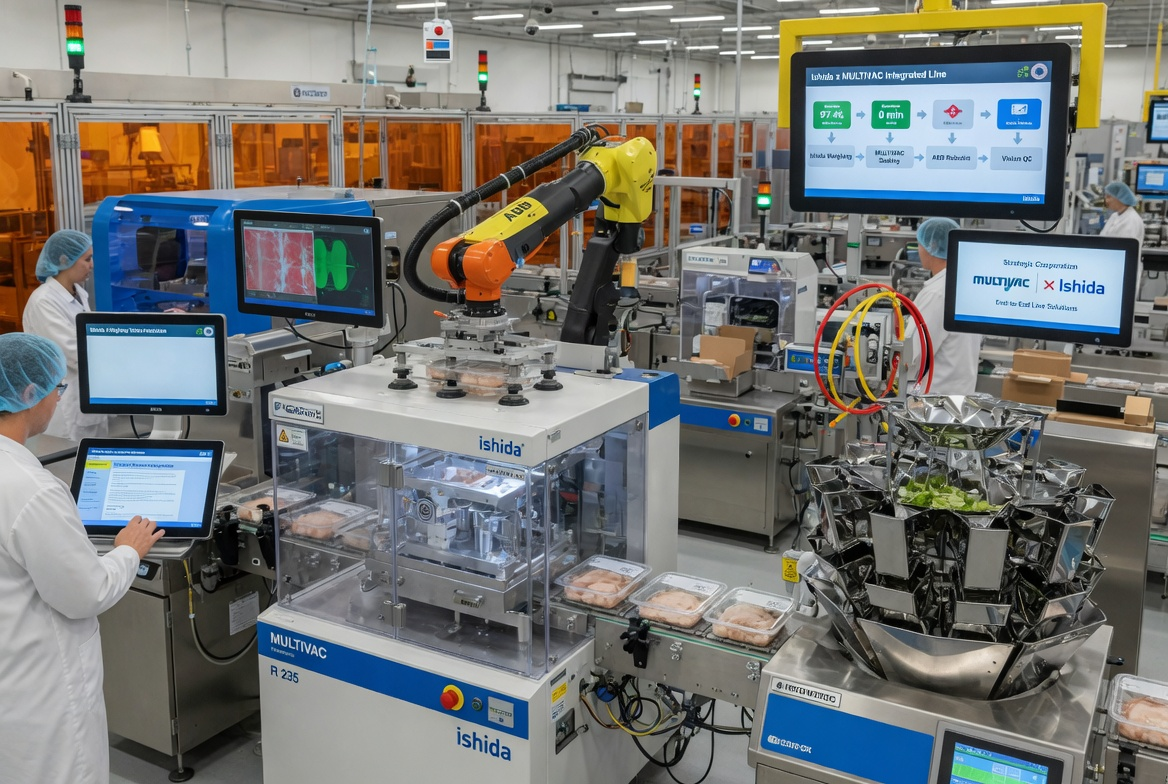
Companies like Ishida, MULTIVAC, ABB, and Festo provide the specialized vision systems, robots, and software platforms that make the intelligent factory run. Ishida's expertise in systems integration ensures that manufacturers receive tailored solutions designed to optimize performance, enhance productivity, and minimize downtime [27†L29-L34]. MULTIVAC and Ishida have entered a strategic cooperation to provide customers with fully integrated end-to-end line solutions, combining MULTIVAC's thermoformers and tray sealers with Ishida's weighing, inspection, and quality control equipment [27†L10-L14].
3.4 Millwrights and Rigging Gangs
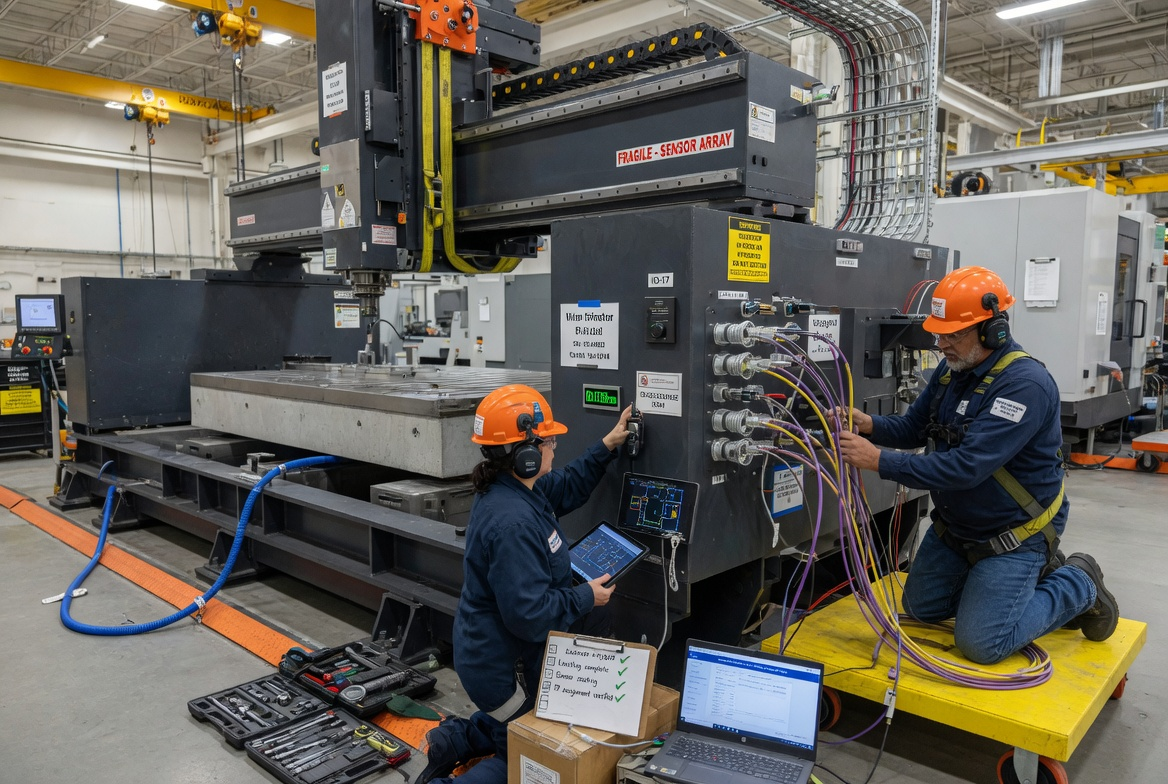
The skilled craftspeople who move multi-ton equipment into place with millimeter precision remain essential. Their work is now more complex than ever: they must ensure that sensors are connected, network drops are in position, and baseline data collection can begin as soon as equipment is powered on.
3.5 Emergency Fixers
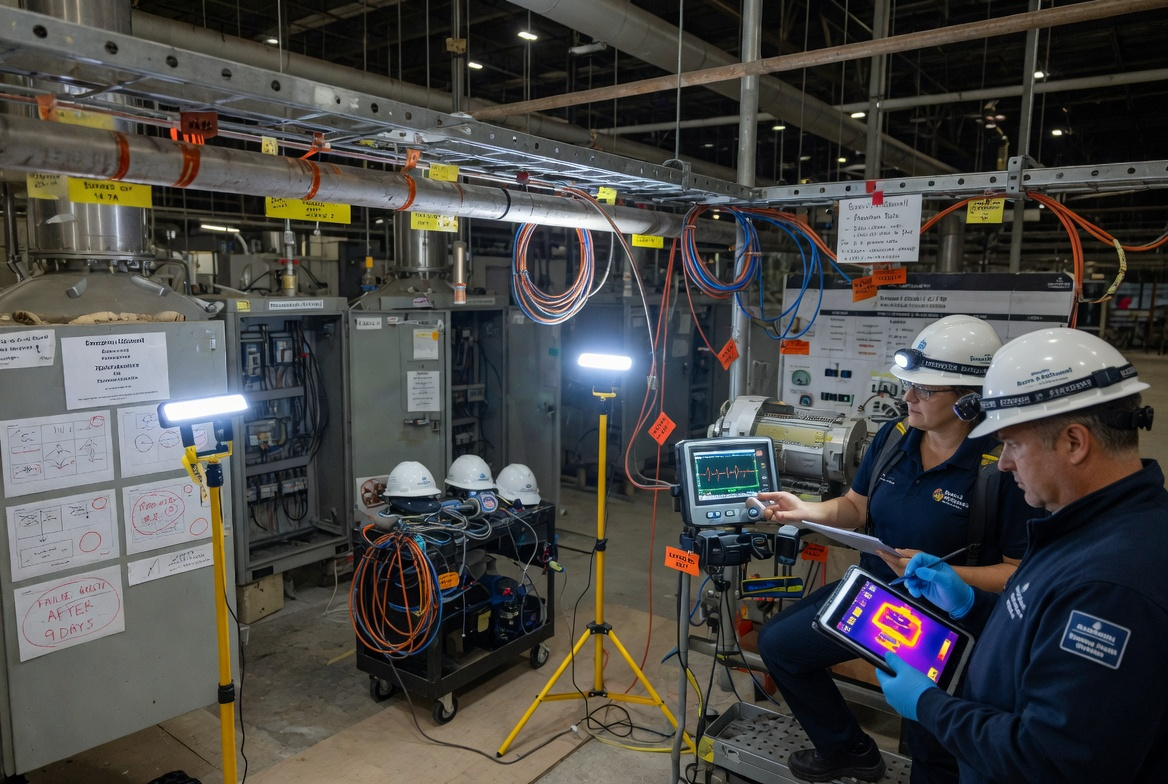
When newly installed lines fail after the original builders have moved on, firms like Burns & McDonnell or Emerson's machine health division are called in. They are paid premium rates to diagnose and resolve failures that could otherwise shut down production for days or weeks.
4. The Dark Factory: Toward Lights-Out Manufacturing
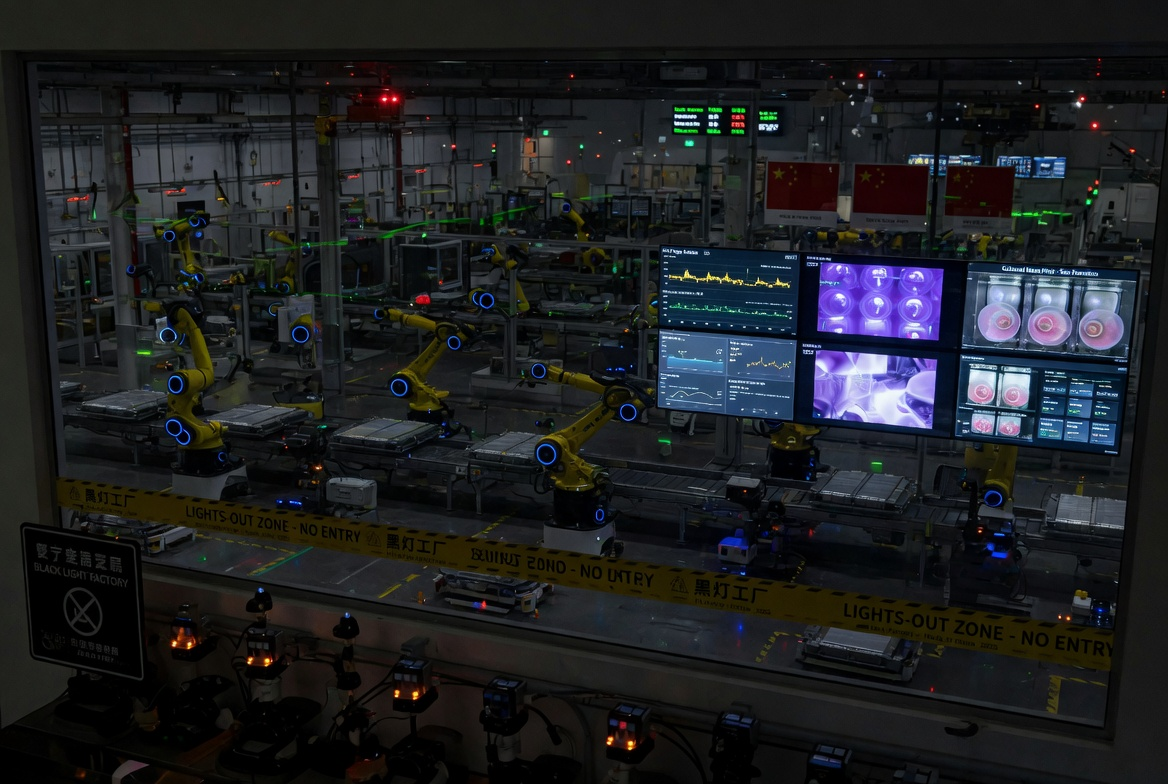
The logical culmination of these converging technologies is the dark factory—also known as the lights-out factory—a fully automated manufacturing facility that operates without human workers. The term "dark" refers to the literal absence of lighting, because no humans are present. These factories use robots, AI, and IoT devices to manage production 24/7, reducing labor costs by up to 80 percent while dropping error rates by 99 percent [25†L30-L36].
Industry is still some distance from true lights-out operation, but hybrid facilities—so-called "dim factories"—are already emerging. A San Francisco-based cultured meat pilot plant achieved significant progress toward lights-out manufacturing by automating cell cultivation with remote monitoring, capturing more than 100 PLC tags and enabling real-time visualization of critical parameters like temperature, pH, and dissolved oxygen during 28-day production runs. The system laid a foundation for higher uptime, tighter process control, reduced manual interventions, and lower energy consumption [24†L3-L14].
China has moved most aggressively in this direction as part of its "Made in China 2025" initiative. In 2023, half of all industrial robots installed worldwide were in China—a sevenfold increase since 2015 [25†L38-L42]. Chinese facilities, known as "black light factories," combine AI, machine learning, and big data analytics to achieve high efficiency, quality, and low cost with minimal human activity [7†L39-L40].
The dark factory represents the endpoint of a trajectory that began with mechanization, continued through automation, and now enters the age of autonomy. Whether that endpoint is reached in five years or twenty, its direction is already clear.
5. Key Takeaways
- The modern food factory is an intelligent machine, not a building. The integration of AI, computer vision, robotics, and IoT sensors transforms the physical plant into a data-driven nervous system.
- Computer vision enables 100 percent quality inspection. AI models inspect every product, detect defects human eyes cannot see, and operate at line speeds that manual inspection could never match.
- Predictive maintenance prevents costly downtime. IoT sensors and machine learning detect equipment degradation weeks before failure, shifting from reactive firefighting to proactive intervention.
- Digital twins allow risk-free simulation. Virtual replicas of production lines let manufacturers validate changes, train operators, and optimize processes without touching physical equipment.
- Autonomous robotics handles material movement. From delta pickers to heavy palletizing arms, from AMRs to collaborative cobots, robots handle tasks that once required intense human labor.
- The dark factory is the logical endpoint. Fully automated facilities operating without human workers are not science fiction; they are already emerging in China, with others following.
- An ecosystem of specialists makes it possible. Owners, EPC firms, system integrators, millwrights, and emergency fixers form temporary alliances that assemble, execute, and then dissolve—leaving behind factories that run for decades.
References
- Food Engineering Reviews. (2026). Exploring Trends and Future Developments in the Application of Artificial Intelligence in Food Processing and Preservation. Volume 18, Article 16. https://link.springer.com/article/10.1007/s12393-026-09445-w
- Einsiedel, D., Vita, M., Kaltenecker, F., & Krupitzer, C. (2026). *Automated Detection of Quality Deviations in Poultry Processing Using Step-Specific YOLOv12 Models*. Foods, Department of Food Informatics, University of Hohenheim.
- Siemens Blog. (2026, May 12). From sampling to 100% quality: How AI and edge computing are transforming bakery production. https://blog.siemens.com/2026/05/from-sampling-to-100-quality-how-ai-and-edge-computing-are-transforming-bakery-production/
- Promwad Engineering Company. (2026, April 23). Promwad Launches Edge AI Predictive Maintenance Platform for Food Processing Equipment. IPS News. https://ipsnews.net/business/2026/04/23/promwad-launches-edge-ai-predictive-maintenance-platform-for-food-processing-equipment/
- FoodReady.ai. (2026, April 6). AI-Powered Predictive Maintenance in Food Processing. https://foodready.ai/blog/ai-powered-predictive-maintenance-in-food-processing/
- Food Engineering Magazine. (2026, April 7). Digital Twins Support Predictive Maintenance. https://www.foodengineeringmag.com/articles/103626-digital-twins-support-predictive-maintenance
- Nurakhmetov, D., et al. (2026, February 13). Closed-Loop Digital Twin for Energy-Efficient Scheduling in Food Manufacturing Systems. Information, 17(2), 195. https://www.mdpi.com/2078-2489/17/2/195
- PackWorld. (2026, February 4). PepsiCo Pilots Digital Twins to Trial Plant Changes. https://www.packworld.com/home/article/22959934/pepsico-pilots-digital-twins-to-trial-plant-changes
- Technical University of Darmstadt. (2026, February 5). Level 5 Autonomous Process Control with Digital Twins. Journal of Food Engineering.
- Swisslog. (2025, August 13). Swisslog Introduces IntraMove AMR Series For Pallet Transport. Food + Beverage Technology. https://www.fbtech.co.nz/2025/08/13/swisslog-introduces-intramove-amr-series-for-pallet-transport/
- Geek+. (2025, June 26). Geek+ and Hessing Revolutionize Food Logistics with Robotics. https://www.geekplus.com/case-studies/geek-and-hessing-revolutionize-food-logistics-with-robotics
- Fibre King. (2024, October 16). Fibre King customises solution for seafood company. PKN Packaging News. http://www.packagingnews.com.au/automation-and-robotics/fibre-king-customises-solution-for-seafood-company
- ABB. (2023, January 12). ABB robots prove the right ingredient for improved efficiency for Teway Food. https://new.abb.com/news/detail/98760/cstmr-abb-robots-prove-the-right-ingredient-for-improved-efficiency-for-teway-food
- ABB. (2021, March 24). ABB robots boost productivity at Nestlé's Brazilian plants by over 50 percent. https://new.abb.com/news/detail/78754/abb-robots-boost-productivity-at-nestle-s-brazilian-plants-by-over-50-percent
- Snack and Bakery. (2023, September 18). Automated packaging tech helps streamline snack and bakery operations. https://www.snackandbakery.com/articles/109802-automated-packaging-tech-helps-streamline-snack-and-bakery-operations
- Szal, A. (2025, October 1). Kraft Heinz Deploys AI to Optimize Ketchup Production. Thomas Net. https://www.thomasnet.com/insights/kraft-heinz-ai-tool-the-cookbook/
- Supply Chain Dive. (2025, September 30). Kraft Heinz pilots AI agent to streamline ketchup production. https://www.supplychaindive.com/news/kraft-heinz-AI-agent-cookbook-ketchup-production/761254/
- Business News Wales. (2025, September 19). Kellogg's Unveils UK's Largest Weathervane at Wrexham Factory. https://businessnewswales.com/kelloggs-unveils-uks-largest-weathervane-at-wrexham-factory/
- Automation World. (2025, September 22). Cultured Meat Facility Moves Toward Lights-Out Manufacturing. https://www.automationworld.com/control/article/55317783/building-a-hybrid-factory-toward-lights-out-cultured-meat-manufacturing
- RoboHorizon. (2025, July 22). Dark Factories: The Future of Manufacturing Without Lights. https://robohorizon.uk/en-us/magazine/2025/07/dark-factories-the-future-of-manufacturing-without-lights/
- Haihe Dairy Co., Ltd. (2025, February 19). Dark Factory/Lights-out Factory Definition. https://www.haihedairy.com.cn
- Fluor Corporation. (n.d.). Engineering, Procurement, Construction and Startup Services. https://www.fluor.com
- Ishida Europe. (2025, March 18). Seamless Integration: Maximising Efficiency with Automation. https://www.ishidaeurope.com
- MULTIVAC. (n.d.). Strategic Partnership with Ishida. https://www.multivac.com