Desperate Times, Violent Measures: Victor Davis Hanson on Far-Left Fury and Trump’s Counterpunch
This article explores Hanson’s perspective on why far-left activists have turned to violence, how Trump’s confrontational style seeks to upend the status quo, and what these clashes mean for America’s future.
Introduction
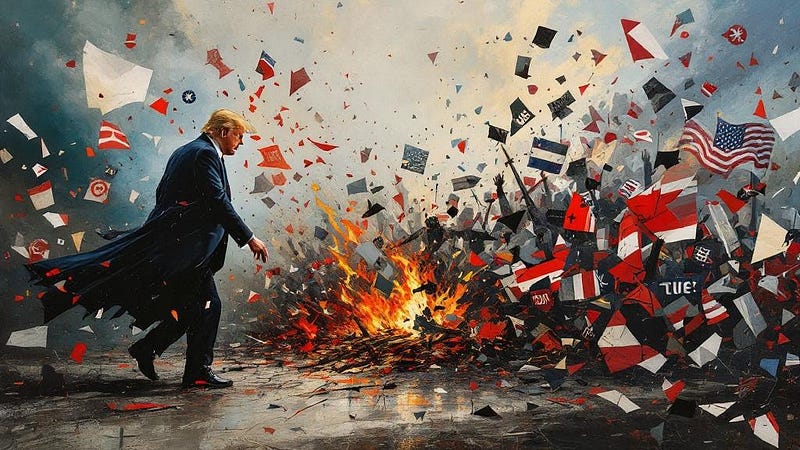
In a riveting interview, historian and political commentator Victor Davis Hanson paints a stark portrait of America’s current turmoil. From violent street clashes to unprecedented legal battles, Hanson argues that the United States is witnessing a dangerous convergence of political desperation and institutional breakdown. At the center of this storm, he places the far-left’s rising aggression — which he sees as a symptom of frustration and powerlessness — and former President Donald Trump’s unorthodox responses. The conversation spans from bloody incidents at home to peace deals abroad, offering a unique window into Hanson’s worldview. This article explores Hanson’s perspective on why far-left activists have turned to violence, how Trump’s confrontational style seeks to upend the status quo, and what these clashes mean for America’s future.
Far-Left Violence: A Desperate Bid to Force Change
Hanson opens the discussion with a blunt assessment of recent far-left violence, framing it as the expression of political despair. He cites shocking incidents — including the assassination of conservative activist Charlie Kirk and attacks on ICE officers — as evidence of a growing climate of left-wing aggression. According to Hanson, these acts are not random outbursts but strategic maneuvers born from desperation. He underscores that the far left’s violent tactics stem from “a lack of viable political pathways,” leading radicals to believe that “chaos can force systemic change.” In other words, having faced repeated electoral defeats and seeing their influence wane, some on the extreme left feel driven to ignite chaos in hopes of shattering the existing order and rebuilding power on their own terms.
This violence, Hanson notes, is often celebrated or excused within far-left circles — a chilling development he attributes to a belief that the ends justify the means. Yet, he contrasts this behavior sharply with how conservatives have responded to provocation. Even in the emotional aftermath of Charlie Kirk’s murder, the political right did not riot or seek revenge. Instead, Hanson points out, Kirk’s supporters channeled their anger into peaceful action — joining voter registration drives and urging engagement at the ballot box rather than in the streets. This restraint and faith-based forbearance among conservatives highlights, in Hanson’s view, a deep cultural divide: the right’s traditional respect for order and moral limits versus the left’s increasing willingness to embrace “by any means necessary” radicalism.
Moral Relativism and Collateral Damage in Pursuit of Utopia
Digging into the mindset behind the mayhem, Hanson argues that an unsettling moral relativism has taken root on the far left. Professor Hanson describes a hierarchy of virtue where leftist activists see themselves as so morally superior that almost any action is warranted if it advances their agenda. In their eyes, rival voices are not just political opponents but obstacles to a utopian vision — obstacles that can be removed with little remorse. Hanson suggests the far left justifies extreme measures and even violence as acceptable “collateral damage” on the path to what they imagine as heaven on earth. Believing they are on the “right side of history,” these activists rationalize attacks on opponents (and even harassment of opponents’ families) as unfortunate but necessary steps toward a greater good.
This utilitarian ethic — the idea that noble ends can excuse deplorable means — leads to what Hanson calls a dangerous erosion of democratic norms. When one faction believes its political mission is infallibly righteous, compromise and restraint fall by the wayside. Every norm can be bent, every opponent demonized, if it serves the higher mission. Hanson warns that this mindset is fueling America’s polarization, as trust in fair play evaporates and each side comes to view the other not just as misguided, but as an existential threat. By sanctifying their own cause and villainizing dissenters, far-left zealots risk dragging the nation into a spiral of ever-escalating conflict.
Historical Context: From Class Warfare to Identity Warfare
While political violence isn’t new to America, Hanson provides historical context for why the left’s revolutionary fervor looks different today. He notes that for much of U.S. history, class warfare rhetoric failed to spark a mass revolution. America’s unique culture of upward mobility and entrepreneurship gave the working class hope for a better life within the system, undercutting calls to overturn the system entirely. Unlike many European nations, the United States did not experience a sustained class-based uprising because even the poor often believed they or their children could climb the economic ladder. This cultural safety valve defused the appeal of Marxist-style revolts.
According to Hanson, the American left eventually shifted strategy when class struggle failed to gain traction. He observes that today’s left focuses on racial, ethnic, and identity grievances as the new fuel for revolutionary energy. By recasting the struggle in terms of identity groups — whether race, gender, or sexuality — the left found emotional levers to mobilize support where pure economic class arguments fell short. Hanson implies that issues like systemic racism or gender rights have become proxies for the old class struggle, re-energizing calls for radical change under a different banner. This shift has had profound implications: it has made politics more personal and emotionally charged, as identity-based conflicts cut to the core of people’s sense of self. In Hanson’s view, this transformation of left-wing activism — from class war to identity war — helps explain the intensity of today’s confrontations. The battle isn’t over paychecks or factory conditions anymore; it’s over personal identity and moral legitimacy, which are even more incendiary.
Trump’s Counteroffensive: Confronting Root Causes
Against this backdrop of left-wing turmoil, Donald Trump emerges in Hanson’s narrative as an unusually confrontational and pragmatic counterforce. Hanson contends that unlike traditional Republicans who often tried to coexist with or gently push back on progressive institutions, Trump went for the jugular of left-wing strongholds. Professor Hanson highlights Trump’s strategy of addressing root causes instead of symptoms. For example, rather than simply complaining about campus radicalism, Trump signed orders to hold universities accountable — threatening to pull federal funds if they trampled free speech or enforced racist admissions quotas. Instead of accepting military recruiting shortfalls, Trump openly challenged the Pentagon’s embrace of progressive social policies that might be driving away recruits. In immigration, rather than tolerating “sanctuary” loopholes, Trump empowered federal agents to enforce the law even when local Democratic leaders balked.
These moves amounted to a frontal assault on pillars of the left’s cultural power, from academia to bureaucracy. Hanson describes Trump’s approach as refreshingly pragmatic: if a policy or an institution wasn’t serving the national interest, Trump was willing to shake it up, regardless of whose feathers got ruffled. This no-nonsense attitude extended to Trump’s dealings with blue-state governors and big-city mayors. When left-leaning officials refused to cooperate on immigration enforcement or quashed dissenting voices in education, Trump didn’t shy away from a fight. He used federal leverage — funding, legal action, and public pressure — to challenge what Hanson calls “ideological fiefdoms” long dominated by the left.
The result, Hanson notes, was a string of tangible victories that delighted Trump’s base and infuriated his opponents. Universities began to reconsider speech codes and overly broad diversity mandates when federal dollars were on the line. Some cities saw their sanctuary policies legally challenged and, in places, pared back. To Hanson, Trump’s take-charge style proved that much of the left’s agenda could be rolled back with enough political will. But it also guaranteed a ferocious backlash, as those entrenched interests — academic elites, career bureaucrats, urban political machines — saw Trump as an existential threat to their authority. Hanson suggests this fierce pushback against Trump’s reforms only confirmed how effective those reforms were at hitting the left where it hurt most.
Nullification Revisited: When Cities Defy Federal Law
Hanson raises alarm about a deepening constitutional crisis brewing beneath these conflicts. Professor Hanson draws a striking parallel between today’s defiant progressive localities and the pre-Civil War era of “nullification,” when Southern states openly defied federal authority. In modern America, the flashpoints are different but the principle is the same: cities and states refusing to enforce federal law or court orders they dislike. Sanctuary cities, for instance, ignore federal immigration laws and court rulings by sheltering illegal immigrants from ICE. Likewise, during rioting and unrest, some progressive mayors and governors in 2020–2021 declined federal offers of assistance to restore order, effectively turning a blind eye as mobs targeted federal courthouses and property.
Hanson warns that this kind of localized insubordination threatens the basic framework of American governance. The United States relies on a balance between federal and state power — a balance now at risk if local leaders can choose which laws to honor. By comparing it to the Civil War’s lead-up, Hanson emphasizes just how serious he finds the situation. Back then, the clash over federal versus state supremacy led to national rupture. Today, he suggests, we’re not yet at that breaking point, but the echoes are there. If one political faction in charge of a city or state believes it can “nullify” federal law with impunity, the entire rule of law begins to unravel.
A vivid example Hanson provides involves the militant group Antifa. There’s been debate about labeling Antifa a domestic terrorist organization — a move Trump and conservatives have floated. But Hanson explains that such designations mean little if local authorities refuse to cooperate with federal law enforcement. Even if federal agencies identify ringleaders, they rely on local police and prosecutors to arrest and charge those individuals. In left-leaning jurisdictions where sympathy for Antifa runs high or where leaders are reluctant to crack down on what they see as “their side,” there is effectively a de facto sanctuary for violent radicals. This standoff — Washington branding protesters as terrorists, local DAs letting them off the hook — creates a perilous law enforcement limbo. Hanson’s point is that the Constitution and federal law are only as strong as our willingness to uphold them. If mayors and governors start acting as independent agents, selectively enforcing laws based on politics, America could face a governance crisis unlike any since the 1860s.
Violence as Political Theater: Does It Work?
One of the most provocative questions Hanson tackles is whether violence actually pays off as a political strategy in America. While he unequivocally condemns political violence, he notes with concern that recent episodes of left-wing aggression have in some cases yielded real political results. Professor Hanson recounts how violent protests, riots, and even threats have managed to cow some institutions and individuals into compliance or silence. For example, he suggests that in the face of sustained harassment and mob pressure, even prominent figures like tech entrepreneur Elon Musk felt compelled to distance themselves from Donald Trump. (Hanson alludes to incidents where Tesla facilities or interests were targeted by activists, implicitly pressuring Musk to sever ties with controversial political allies to protect his business.) In Hanson’s view, this is a disturbing sign that the “heckler’s veto” — or worse, the rioter’s veto — can shape national politics.
More gravely, Hanson points to outright acts of terror, such as the assassination of Charlie Kirk and even attempts on President Trump’s life, as the end of this violence spectrum. These aren’t just spontaneous crimes; in Hanson’s telling, they are calculated strikes aimed at decapitating the conservative movement and intimidating anyone who might stand in the left’s way. The fact that leaders and allies on the right had to worry about their personal safety — whether it’s a grassroots organizer like Kirk or the President of the United States — speaks volumes about the stakes of this struggle. Hanson argues that such tactics, horrific as they are, can indeed reshape the political landscape: allies grow fearful, movements lose figureheads, and the Overton window of acceptable ideas shifts under the pressure of intimidation.
However, Hanson also believes this is a perilous road for those who employ violence. Yes, violence can influence decisions in the short term — a company might change a policy to stop the protests, a politician might lay low after receiving credible death threats. But Hanson suggests that over the long term, these actions erode legitimacy and invite backlash. The more the far left is seen embracing violent extremes, the more moderate Americans may recoil and seek law-and-order alternatives (a dynamic that Hanson implies helped Trump and could do so again). In essence, Hanson sees political violence as a high-stakes gambit: it can bully people into temporary submission, but it can just as easily galvanize the silent majority to reject the chaos and those who enable it.
Antifa and the Echoes of History
No discussion of contemporary political violence is complete without examining Antifa, the loosely organized “anti-fascist” movement often at the center of street clashes. Hanson delves into the history behind the Antifa label, exposing what he views as a grand irony. The original anti-fascist forces of World War II were a motley alliance united against Hitler’s Axis — Americans, Brits, Soviets, and various partisan groups all fought fascism, though not always for the same reasons. Hanson notes at [00:43:53] that it’s a historical misconception to think of “antifascist” as synonymous with enlightened liberalism. After all, the Soviet Union only became “anti-fascist” when Hitler betrayed Stalin in 1941; before that, many communists were content to collaborate with Nazis under the Hitler-Stalin pact. In short, the history of antifascism is complicated and not the pure moral crusade some modern activists imagine.
Fast forward to today: modern Antifa activists have co-opted the heroic aura of WWII anti-fascism without the cohesive ideology or discipline of a traditional army. Hanson argues that today’s Antifa is a fragmented, decentralized movement — more a brand or banner for radical protest than a structured organization. They often dress in black, mask their faces, and engage in sporadic violence at protests, from Portland to Berkeley. Hanson’s critique is that while these activists claim to fight “fascism,” their definition of fascism tends to be so broad (encompassing mainstream conservative speech, for example) that it becomes a pretext for silencing any opposition by force. This behavior, he suggests, inverts the term’s meaning: by using street violence and intimidation, Antifa’s tactics ironically mirror the fascist brownshirts of the 1930s more than they do the soldiers of D-Day.
The “Antifa” label also poses challenges for law enforcement and public perception, Hanson notes. Because Antifa isn’t a single organization with a clear command, treating it as a terrorist group is like fighting smoke — difficult to pin down. Any college student or angry protester can pull on a black mask and claim the Antifa mantle. This amorphous quality lets sympathizers shrug off criticism (“Antifa is just an idea,” some politicians quip) and makes it hard for authorities to prosecute coordinated wrongdoing. Hanson warns that glorifying the Antifa brand — as some media and academics have done by likening them to freedom fighters — only muddies the waters further and emboldens those who would take to the streets in its name. By tracing the divergence between the historical anti-fascist alliance and its modern namesake, Hanson casts a skeptical eye on Antifa’s moral standing and urges a more clear-eyed acknowledgment of the group’s violent reality.
Deals over Dogma: Trump’s Middle East Breakthroughs
Shifting from domestic strife to international affairs, Hanson highlights one arena where Trump’s unconventional approach yielded undeniable results: the Middle East. Professor Hanson points to Trump’s “transactional diplomacy” as a new model that broke decades of stalemate. While previous administrations (both Republican and Democrat) often approached the Middle East with grand idealistic visions or moralistic lecturing, Trump’s style was refreshingly devoid of preachiness. He treated diplomacy like a business negotiation — identifying each nation’s interests and finding a deal that benefited all sides.
The most dramatic example was the string of peace agreements between Israel and several Arab states, famously known as the Abraham Accords. Under Trump’s tutelage, countries like the UAE, Bahrain, and Morocco openly normalized relations with Israel for the first time in their histories. Hanson emphasizes how unprecedented this was: these breakthroughs achieved more in a few months than the entire preceding quarter-century of U.S. Middle East peacemaking. Trump succeeded, Hanson argues, because he sidestepped the usual sticking points (like the intractable Israeli-Palestinian conflict) and instead forged practical alliances against common threats (such as Iran’s ambitions) and for mutual gain (trade, technology, security cooperation). In essence, Trump flipped the script — instead of insisting on a comprehensive peace plan built on utopian ideals, he clinched narrower, concrete deals that, cumulatively, changed the regional dynamic.
Hanson lauds this results-oriented approach as a welcome antidote to the failures of the past. He notes that previous presidents often handicapped themselves with lofty rhetoric about democracy or human rights in the Middle East, which, however noble, yielded little progress and sometimes backfired (for example, the chaos after the Arab Spring or the rise of ISIS following regime change efforts). Trump, in contrast, didn’t try to remake other nations’ internal politics; he simply asked, “What do you want? Here’s what we want,” and found a price that both sides could agree on. This realpolitik method not only delivered diplomatic gains but also built an image of America as a dealmaker rather than a lecturer.
Still, Hanson is not blind to the fragility of these gains. He acknowledges that the Middle East remains a powder keg of long-standing feuds and hatreds. The deals Trump struck, while historic, could face resistance from hardliners and may not hold if underlying issues aren’t eventually addressed. Also, a different U.S. administration might not prioritize or sustain the commitments made. Yet, Hanson’s main takeaway is optimistic: Trump demonstrated that engagement through respect and tangible incentives can accomplish what years of sanctimony could not. This, he suggests, is a legacy that even Trump’s critics in foreign policy might have to concede — a new template for peacemaking driven by common interests, not common values.
Lawfare: Weaponizing the Justice System
As the interview progresses, Hanson turns to a new kind of battlefront in American politics — one fought not with fists or guns, but with subpoenas and indictments. He addresses the phenomenon often dubbed “lawfare”: the weaponization of legal and judicial processes for political gain. In recent years, the United States has seen an unprecedented flurry of investigations and prosecutions entangling political figures, from the Russia-collusion probe and Trump’s impeachments to the myriad legal troubles facing Trump and his associates after leaving office. Hanson frames this as part of the same existential struggle convulsing the nation’s life: when one side cannot defeat the other at the ballot box, it seeks to delegitimize or incapacitate opponents through the courts.
Hanson notably defends Trump’s own legal counteroffensives in this arena. He argues that Trump’s willingness to fight back — whether by contesting dubious charges, suing media outlets for defamation, or pledging investigations of his political rivals — is a justified response to left-wing attempts to criminalize him. From Hanson’s perspective, once the left broke the seal by aggressively using the FBI, courts, and special counsels against Trump, it opened a door that can’t easily be closed. Republicans like Trump have little choice but to push back in kind if they don’t want to be permanently under siege. Hanson acknowledges this tit-for-tat escalation is extraordinary and concerning in a republic, but he sees it as the only way to restore a semblance of fairness: if only one party plays by Marquis of Queensberry rules while the other fights a street brawl, the outcome is a foregone conclusion.
This cycle of political prosecution and retaliation, Hanson warns, is a perilous path — yet a path America seems fated to walk for now. He points out that trust in neutral arbiters (like the DOJ or the mainstream media) has eroded, so each side believes only a hard-nosed fight will protect them from the other’s abuses. The hope, according to Hanson, is that by giving the left a taste of its own medicine, it might deter further abuses. In other words, if progressive politicians and activists know that any legal novelty they unleash on their foes could boomerang back on them, they may think twice before launching the next investigation or indictment. Ultimately, Hanson doesn’t celebrate this new reality; he simply observes that it may be a necessary evil to correct what he views as a lopsided assault on Trump and conservatives. The rule of law, in his view, will either be mutually enforced or mutually torn apart — the days of one-sided restraint are over.
Trump’s Character: Pragmatism, Forgiveness, and Redemption
Throughout the conversation, Hanson weaves in a surprisingly nuanced portrait of Donald Trump the man, as opposed to Trump the caricature seen in headlines. While Hanson doesn’t sugarcoat Trump’s flaws, he highlights qualities in the former president that many critics overlook. At [01:01:56], Hanson reflects on Trump’s profound concern for human life and aversion to needless conflict. Despite Trump’s brash rhetoric, Hanson notes, this is a president who notably avoided starting new wars and spoke often about wanting to “stop the killing” in long-running conflicts like Afghanistan and Syria. Hanson suggests that Trump’s instinct was always to seek deals or solutions that minimized loss of life — an impulse not commonly emphasized in analyses of his tenure.
Another aspect Hanson emphasizes is Trump’s remarkable ability to let grudges go in pursuit of a deal or a goal. Politics is a field known for vindictive rivalries, yet Hanson points out that Trump, for all his feuds and insults, would frequently forgive and work with people who had opposed or even betrayed him, if it suited the larger objective. This transactional forgiveness — where yesterday’s enemy could be today’s partner — struck Hanson as unusual in the political arena. It’s a trait that many might find hard to believe, given Trump’s reputation for fiery tweets and calling out disloyalty. But Hanson provides examples: Trump welcomed former rivals into his fold (think of how quickly he embraced someone like Ted Cruz after their bitter primary battle) and even entertained dialogue with sworn enemies of the United States (for instance, meeting North Korea’s Kim Jong-un or talking of meeting Iran’s leaders). Hanson interprets this as evidence that Trump, deep down, was more deal-maker than ideologue — always keeping his eye on the prize of what could benefit American interests, even if it meant setting ego aside at times.
This discussion culminates in Hanson hinting at the possibility of redemption and growth. He muses about Trump’s experiences perhaps deepening his appreciation for faith and morality. In surviving constant attacks and the crucible of the presidency, Trump might have developed a more introspective side, Hanson suggests. The notion of Trump seeking or deserving redemption is bound to be polarizing, but Hanson presents it as a genuine consideration: even a man as polarizing as Trump could find a higher purpose beyond himself, especially if he sees his mission as saving a nation in peril. In the end, Hanson paints Trump not as a saint but as a singular figure with a mix of coarse pragmatism and underlying conscience — a man capable of great bluntness and great mercy, sometimes in the same breath. It is this complex blend, Hanson argues, that explains Trump’s enduring appeal to millions of Americans who view him not just as a political leader but as an almost mythic champion who might, flaws and all, deliver them from a corrupt status quo.
Conclusion
Victor Davis Hanson’s commentary presents a sweeping and passionate narrative of an America on the brink, where political extremism and unorthodox leadership collide with history’s weight. He portrays the current crisis — from street violence to constitutional showdowns — as the latest chapter in a long struggle for the soul of the nation. Hanson’s insights, filtered through his background as a historian, remind us that America has faced internal strife before, yet today’s blend of identity-driven anger and institutional decay feels perilously unique. He makes the case that the far left’s turn to violence and absolutism is a sign of deep desperation — an admission that they are losing ground through normal politics and thus seek to rewrite the rules by force. On the other side of the ledger, Donald Trump’s rise is depicted as more effect than cause: a reaction to the excesses and failures of the political class, with Trump’s rough-hewn pragmatism and bold strokes offering a last-minute course correction for a country veering off track.
In highlighting Trump’s successes (like Middle East diplomacy) and his pugilistic pushback at home, Hanson suggests that unconventional problems require unconventional solutions. Whether it’s defying political correctness in academia or brokering peace through deals instead of doctrines, Trumpism in Hanson’s eyes was a dramatic intervention aimed at saving an America that elites were in danger of losing. Yet, Hanson does not promise a rosy ending. The turbulence of the past few years, he implies, could either be the darkness before a new dawn or just the beginning of a longer storm. The path forward, he intimates, rests in the balance of restoring order and reciprocity — making sure that violence is punished, not rewarded, and that political warfare through legal means is checked by an equally strong deterrent.
Ultimately, Hanson’s perspective is a call to recognize reality: to see the cultural civil war for what it is, to understand why one side is willing to burn down the system and why the other felt the need to elect a disruptor to fix it. Agree or disagree, his analysis forces readers to confront uncomfortable questions about how far Americans will go to fight for their vision of “the good.” It also leaves us with a measure of hope wrapped in an appeal to conscience. Hanson hints that even figures like Trump can grow in wisdom and even grace under fire — and if such a controversial man can seek redemption, perhaps the country as a whole can find redemption too, before it’s too late. In the end, Hanson invites us to reflect on our own role in this saga: Will we allow rage and fear to dictate our future, or can we step back from the brink and rebuild a common American project? It’s a challenge that transcends politics, calling on each citizen to reject the lure of hate and instead, in Hanson’s words, to “redirect their lives toward peaceful political engagement.”