Michael Savage and the Death of Charlie Kirk: A Thought Experiment
Savage would view Kirk’s death not as an isolated incident, but as a tragic and inevitable symptom of a nation in deep cultural and spiritual decline.
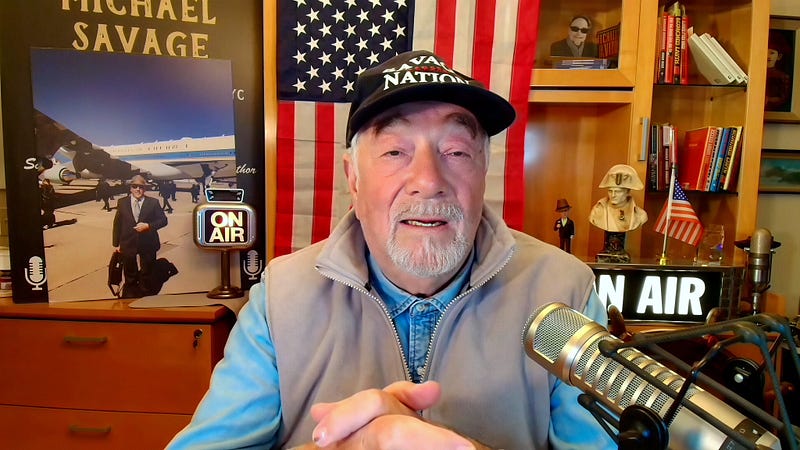
The assassination of Charlie Kirk, the prominent right-wing activist and founder of Turning Point USA, has sent shockwaves through the American political landscape, eliciting a range of responses from across the ideological spectrum. Among the voices that would undoubtedly offer a potent and uncompromising perspective is that of Michael Savage, the veteran conservative talk radio host known for his fiery rhetoric and deeply held beliefs. While a direct statement from Savage on this specific tragedy is not available in the provided search results, his long-established worldview and past commentary provide a clear framework for understanding how he would likely interpret this devastating event. Savage’s philosophy, often summarized as “borders, language, and culture,” and his history of condemning political violence and left-wing rhetoric, suggest he would view Kirk’s death not as an isolated incident, but as a tragic and inevitable symptom of a nation in deep cultural and spiritual decline.
Michael Savage, a seasoned commentator with a career built on confronting what he perceives as the erosion of traditional American values, would likely see the assassination of Charlie Kirk as a brutal validation of his darkest warnings. For years, Savage has argued that progressive ideologies and the demonization of conservatives have created a toxic environment where violent rhetoric can fester and escalate into action. He would probably connect this act to a broader “cult of death” he believes has infiltrated American society, a theme hinted at in the title of a related Facebook video. In Savage’s view, this cultural decay, which he often links to attacks on Christianity, national sovereignty, and free speech, creates the conditions where political violence becomes thinkable. The fact that Kirk was killed on a university campus, an institution Savage has frequently criticized as a hotbed of leftist indoctrination, would only deepen this conviction. He would argue that the constant drumbeat of anti-conservative sentiment in academia and mainstream media effectively dehumanizes figures like Kirk, making them targets for those predisposed to violence.
Furthermore, Savage would almost certainly place direct blame on the language and tactics used by progressive critics and media figures. He has long maintained that there is a direct line from hateful speech to hateful actions, a concept echoed in the controversial remarks made by an MSNBC analyst following the shooting, for which the network later apologized. Savage would likely point to this incident as a prime example of the irresponsible rhetoric that contributes to a dangerous climate. He would argue that the constant labeling of conservatives as “fascists,” “Nazis,” or “racists” — charges often leveled against Kirk for his staunch positions on immigration, gender, and gun rights — is not merely political hyperbole but incendiary propaganda that can motivate unwell individuals to commit atrocities. In Savage’s worldview, the assassination would be framed as the ultimate consequence of what he sees as the Left’s abandonment of civil discourse and its embrace of a win-at-all-costs mentality that justifies any means to silence opposing voices.
In responding to this tragedy, Michael Savage’s commentary would likely extend beyond blame to encompass a grim reflection on Charlie Kirk’s legacy and the future of the conservative movement. Savage, who himself has been a controversial and polarizing figure, might find a certain kinship with Kirk, despite their generational differences. Both built massive audiences by fearlessly engaging in the culture wars, and both were relentlessly criticized by the Left for their provocative styles. Savage would probably eulogize Kirk as a martyr for free speech, a young warrior who was struck down for daring to defend American values on the hostile terrain of a modern university. He would vehemently reject any attempt to link the shooting to Kirk’s own controversial statements, such as his view that some annual gun deaths were an acceptable price for protecting Second Amendment rights. For Savage, this would be the height of victim-blaming, a twisted justification for an unjustifiable act of political terrorism.
Ultimately, Michael Savage’s probable views on the assassination of Charlie Kirk would be a powerful synthesis of grief, anger, and a grim prophecy fulfilled. He would see it as a catastrophic milestone in America’s ongoing cultural civil war, a moment that exposes the violent potential simmering beneath the surface of political disagreement. His commentary would serve as a stark warning that the nation is teetering on the brink and that the rhetoric of hatred and division has real and deadly consequences. While calling for justice for the killer, his broader message would be a call for a national awakening — a return to what he considers foundational principles of respect, faith, and patriotic unity to prevent further bloodshed. In the face of this tragedy, Savage’s voice would emerge as one of unvarnished condemnation, not just of a lone assassin, but of the entire cultural ecosystem he believes made such an assassination possible.