Sweetness from the Shoals: The Small Yellow Croaker’s Biology, Flavor, and Future
The small yellow croaker’s appeal and vulnerability form a single system: its biology enables abundance, its flavor drives demand, and its future hinges on chefs, buyers, and consumers who choose verified sourcing, making stewardship the decisive variable.
Introduction
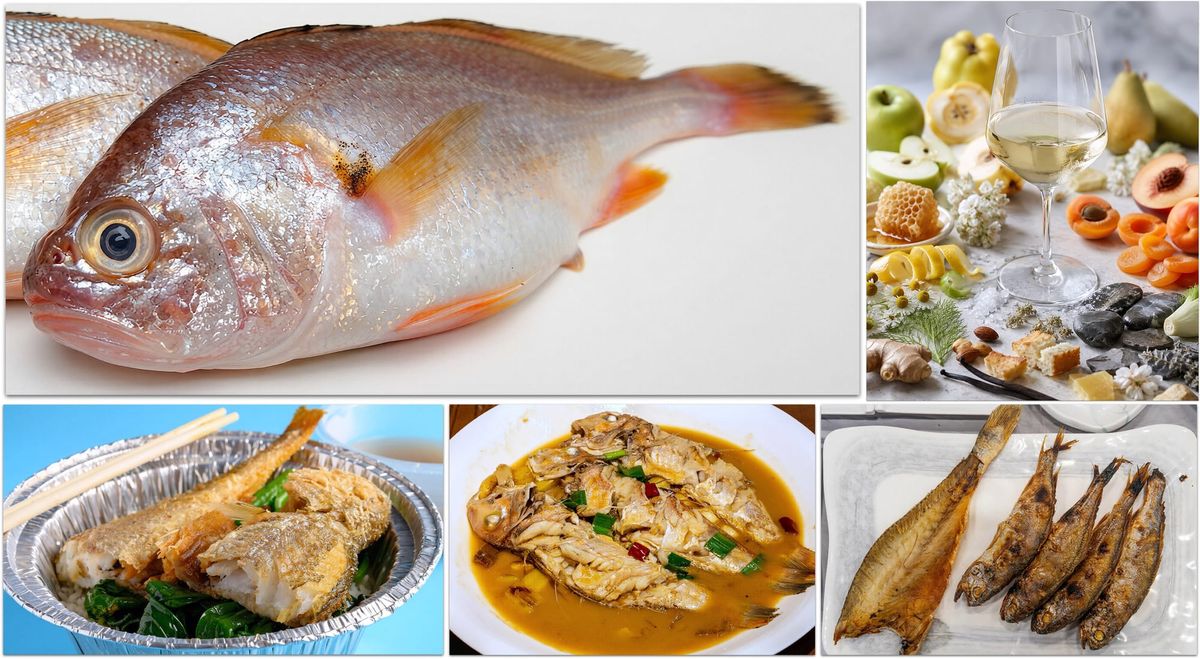
In the chill of a pre-dawn auction at Incheon’s fish market, stacks of Styrofoam boxes yield a treasure of small, glistening fish whose bellies carry a blush of copper and whose flanks gleam a soft, buttery gold. The fish is Larimichthys polyactis, the small yellow croaker, a species that has flavored the coastal cuisines of East Asia for centuries and now sits at a critical intersection of culinary desire, ecological recovery, and buyer responsibility. Its flesh, delicate and almost improbably sweet, anchors countless family meals and banquet tables from Shanghai to Busan, yet its wild populations reflect decades of intense fishing pressure. Today, this diminutive drum fish offers a compelling case study in how a deep understanding of biology, coupled with mindful sourcing, can keep an irreplaceable seafood on the plate without emptying the sea.
Taxonomy and Names
Small yellow croaker belongs to the family Sciaenidae, the drums and croakers, a group renowned for the sonic prowess of its members. Within this family, the genus Larimichthys holds two commercially paramount species, often confused in historical records: the large yellow croaker (Larimichthys crocea) and the small yellow croaker (Larimichthys polyactis). The species epithet polyactis, meaning “many rays,” refers to the elevated count of soft dorsal fin rays that helps distinguish it from its larger cousin. In everyday English it is known as small yellow croaker, little yellow croaker, or redlip croaker, a nod to the vivid reddish-orange lining of its mouth. Vernacular names anchor it firmly in regional food cultures: xiǎo huáng yú in Mandarin, kiguchi in Japanese, and cham jogi in Korean, where the salted-and-dried form is celebrated as gulbi. Early taxonomic placements sometimes filed the fish under the now-defunct genus Pseudosciaena, but molecular and morphological work has since solidified its current standing.
Biology and Adaptations
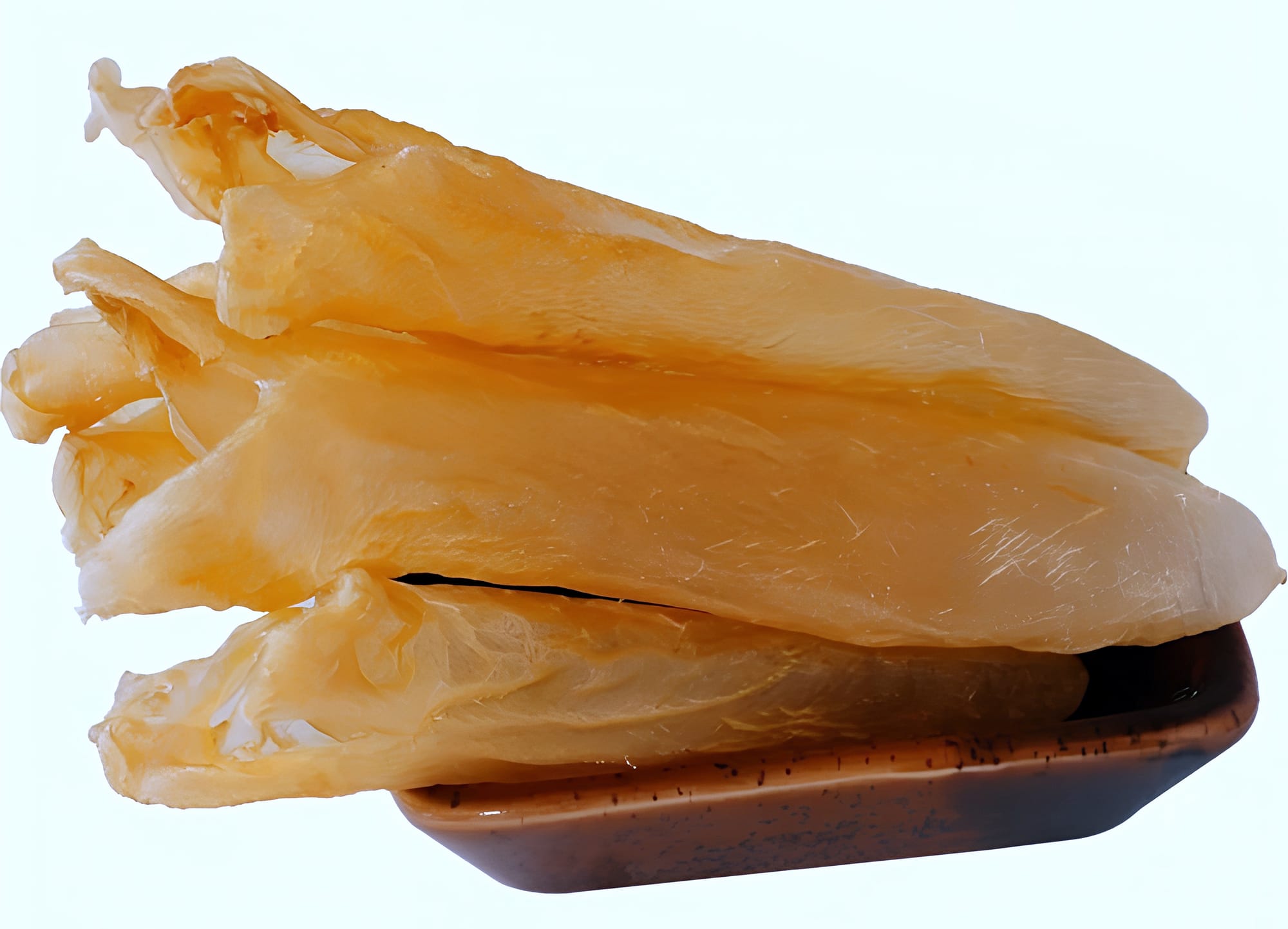
Like other sciaenids, L. polyactis is built for life on the continental shelf, with a moderately compressed body, a terminal mouth suited to snapping up small prey, and the trademark otophysic connection—a set of modified vertebrae and specialized muscles that drum against the gas-filled swim bladder to produce a rolling chorus of croaks during spawning aggregations. The swim bladder itself, valued in dried form as fish maw, is a prominent organ that also serves as a prized culinary by-product.
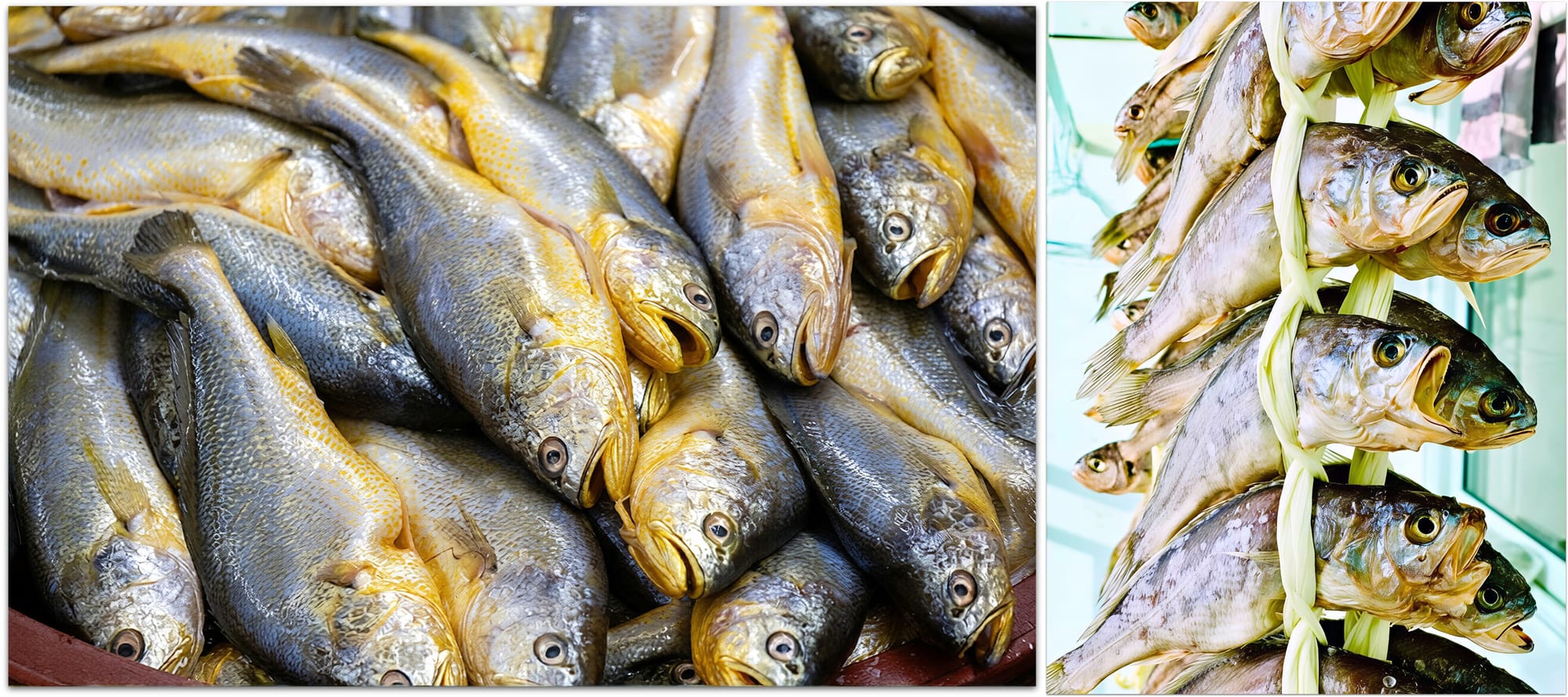
The species is fast-living and relatively short-lived, often reaching sexual maturity at age one or two. Spawning takes place in spring and early summer, when fish migrate from offshore wintering grounds into shallower coastal waters, moving from depths of around 80 meters (262 feet) to less than 20 meters (66 feet). A mature individual typically measures between 15 and 25 centimeters (6 to 10 inches) in total length, though the maximum recorded size approaches 40 centimeters (15.7 inches). In markets, a typical whole fish weighs roughly 150 grams (5.3 ounces), a size that allows it to be cooked whole—a format central to its culinary identity. The bright yellow sheen of the body, which fades soon after death, arises from pigment cells that likely play a role in intraspecies signaling; the precise adaptive value remains an area of scientific inquiry, but the visual cue has become synonymous with freshness for discerning buyers.
Ecology, Range, and Sustainability
The small yellow croaker ranges across the temperate waters of the Northwest Pacific, occupying the Yellow Sea, the East China Sea, the Bohai Sea, and the southern reaches of the Sea of Japan. It is a demersal species that prefers muddy and sandy bottoms, where it feeds on small crustaceans, cephalopods, and forage fish. This ecological niche places it directly in the path of bottom trawls and stow nets, the gears that have historically defined the fishery.

The sustainability story of L. polyactis is one of steep decline followed by cautious, patchy recovery. As stocks of the large yellow croaker collapsed dramatically in the late twentieth century, fishing pressure shifted to the small yellow croaker, and its own abundance dipped dangerously. Management responses have since diverged across national waters. In the Yellow Sea, particularly in Korean fisheries, science-based catch limits, seasonal closures, and mesh-size regulations have enabled a robust rebound, culminating in Marine Stewardship Council (MSC) certification for the Korean offshore small yellow croaker fishery—a powerful signal for sustainable sourcing. In the East China Sea, however, the population remains heavily exploited, and stock assessment data indicate that recovery there is far more fragile.
For chefs, food buyers, and consumers who want to enjoy small yellow croaker without contributing to overfishing, a few concrete criteria prove practical. Seek fish with the blue MSC label, which currently traces back to well-managed Korean vessels. When certification is not visible, inquire about country of origin; fish from Korean waters carry a markedly stronger sustainability narrative than product from unassessed or data-poor fisheries elsewhere in the region. Favor fish caught during the main season, after spawning, to reduce pressure on reproductive aggregations. And consider a direct substitution: farmed large yellow croaker (L. crocea), widely available and cultivated in China’s extensive mariculture systems, can fill the same culinary role with a slightly fleshier texture, easing demand on wild small yellow croaker until aquaculture of this smaller species becomes commercially viable.
Culinary Profile and Kitchen Reality
In the kitchen, small yellow croaker is a study in delicacy. The raw flesh, when impeccably fresh, offers a translucent ivory hue with a clean, sweet taste reminiscent of a sea scallop kissed by brine. Cooked, the fillet transforms into pearly white flakes that part under the slightest pressure of chopsticks, delivering a mild umami underpinning and a distinct mineral sweetness that lingers on the palate. The edible skin, thin and gelatinous when steamed, turns satisfyingly crisp when pan-fried or grilled, contributing a whisper of nuttiness.
The whole fish is the standard unit of preparation. Steaming is perhaps the most revered approach: a whole cleaned fish of about 200 grams (7 ounces) is nestled on a bed of julienned ginger and scallions, placed in a steamer basket over roughly 2 liters (0.5 gallons) of vigorously boiling water at 100 degrees Celsius (212 degrees Fahrenheit), and cooked for just under eight minutes until the dorsal fin pulls free cleanly. A sizzling spoonful of hot oil, heated to around 180 degrees Celsius (350 degrees Fahrenheit), poured over a final garnish of fresh scallions and soy sauce, awakens the aromatic oils and punctuates the flesh’s subtlety.
Deep-frying offers a different, equally compelling experience. Smaller specimens, dusted in seasoned starch and plunged into oil at 180 degrees Celsius (350 degrees Fahrenheit), emerge with bones softened to an edible crackle, the entire fish consumed from head to tail with a squeeze of lemon or a dip of pepper-salt. In Korea, the time-honored transformation of small yellow croaker into gulbi involves a precise salting and air-drying process that concentrates the fish’s umami and gives the flesh a dense, almost meaty chew; when grilled over charcoal, the salted skin blisters and perfumes the air with a heady aroma that demands cold soju or a steamy bowl of rice. A braised preparation, known as hongshao, takes the fish into richer territory: a sauce of light and dark soy, Shaoxing wine, rock sugar, and star anise simmers gently at around 85 degrees Celsius (185 degrees Fahrenheit), reducing to a glossy, mahogany lacquer, with about 250 milliliters (1 cup) of liquid coaxing the fillets to fall-off-the-bone tenderness. For those who encounter extraordinary, sushi-grade small yellow croaker, the Korean hoe tradition presents the fish raw, sliced thinly and served with a piquant cho-gochujang sauce, a preparation that lays bare the animal’s intrinsic sweetness.
Nutritionally, the small yellow croaker is a lean, high-quality protein source, with a typical 100-gram (3.5-ounce) fillet delivering only modest calories while supplying meaningful amounts of selenium, vitamin D, and long-chain omega-3 fatty acids. The frozen supply chain dominates global trade: the fish are often individually quick-frozen at sea at temperatures as low as minus 40 degrees Celsius (minus 40 degrees Fahrenheit) and held at a steady minus 18 degrees Celsius (0 degrees Fahrenheit) until they reach the display freezer, a practice that preserves the delicate texture remarkably well. No CITES restrictions govern its trade, but the legal origin and cold-chain integrity remain the buyer’s most reliable quality filters. Should a sustainable source prove elusive, substituting with U.S. Atlantic croaker or European whiting can approximate the texture, though the singular, sweet-mineral top note is distinctly its own.
Wine Pairings
A whole steamed small yellow croaker, dressed with ginger, scallions, and a shimmer of hot oil, demands a white wine of precision and saline lift. Pour an Alvarinho from the granitic soils of Monção e Melgaço in Portugal. The wine’s taut acidity and whispered stone fruit echo the fish’s sweetness, while its mineral backbone stands up to the aromatic ginger oil without overwhelming the delicate flakes.
For the deeply savory, salted-and-grilled gulbi, where umami and char converge, a dry Furmint from Tokaj in Hungary makes a riveting companion. Grown on volcanic slopes, this Furmint expresses smoky flint, preserved lemon, and a subtle bitter-almond grip that cuts through the richness of the salted skin and refreshes the palate after each unctuous bite.
When the fish is braised in soy, rock sugar, and star anise, its richness calls for a wine with both unctuous texture and bracing energy. Reach for an ouillé Savagnin from the Jura in France. Its notes of bruised apple, hazelnut, and a faint wisp of curry leaf harmonize with the caramelized soy, and the whipcord acidity keeps the glossy sauce from feeling heavy, creating a seamless bridge between the sweet fish and the aromatic broth.
Conclusion
The small yellow croaker’s path from seafloor to table traces a tight loop through sensory pleasure and ecological consequence. Its biology—a quick-maturing, sonorous creature of muddy shelves—has made it a resilient species but not an invincible one. Its flavor, at once modest and unforgettable, has carved a permanent place in the culinary lexicons of multiple nations. The future of Larimichthys polyactis in global cuisine will not be decided by accident; it will be shaped by the quiet daily decisions of chefs who specify certified sources, of buyers who ask hard questions about origin, and of eaters who recognize that the sweetness of a perfectly steamed croaker carries with it the weight of the water it came from. With attentive stewardship, this golden little fish can continue to shimmer on the market tables of Incheon, Ningbo, and beyond for generations.