The Gilded Flatfish: Biology, Cuisine, and Sustainability of the Korean Golden Flounder
The Korean Golden Flounder moves from benthic oddity to culinary treasure; its genetics and delicate flavor demand disciplined sourcing and responsible aquaculture—choosing traceable or substituted supply decides whether rarity endures or becomes a fleeting trophy.
Introduction
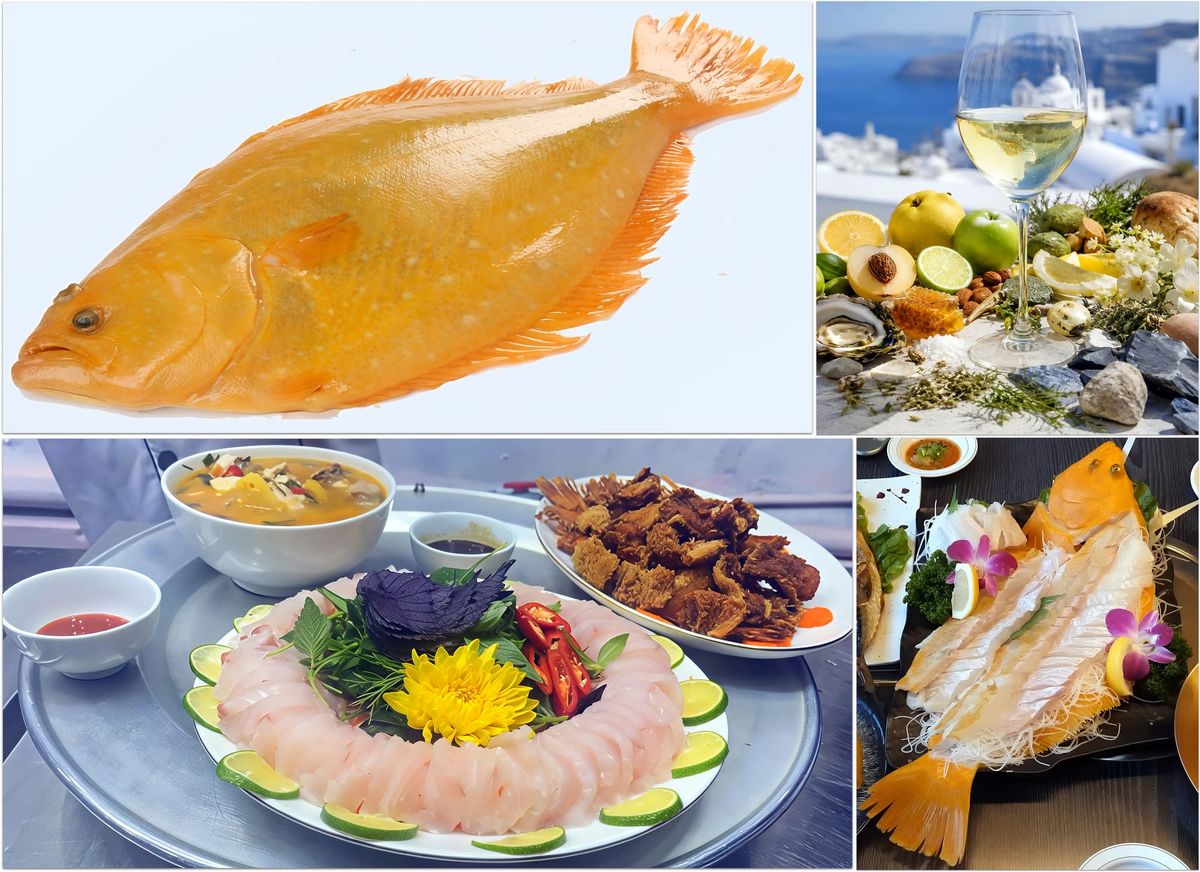
At Seoul’s Noryangjin wholesale market, a single fish resting on a bed of crushed ice can stop seasoned buyers mid-stride. Its body gleams a luminous amber-gold, as though brushed with turmeric and saffron, and its price tag—often exceeding the equivalent of a month’s grocery bill for a family—announces an ingredient that exists at the intersection of genetic rarity and culinary obsession. This is the Korean Golden Flounder, a xanthic colour morph of the olive flounder Paralichthys olivaceus. Far more than a market curiosity, the golden flounder has emerged as a powerful lens through which to examine flatfish biology, the cultural weight of Korean raw-fish cuisine, and the delicate tension between gastronomic desire and ecological responsibility. For biologists, it illuminates pigment-cell development in a commercially vital species; for chefs and food buyers, it delivers a canvas of texture and understated luxury; and for sustainability-minded consumers, it poses a sobering question about how rarity should be sourced.
Taxonomy and Names
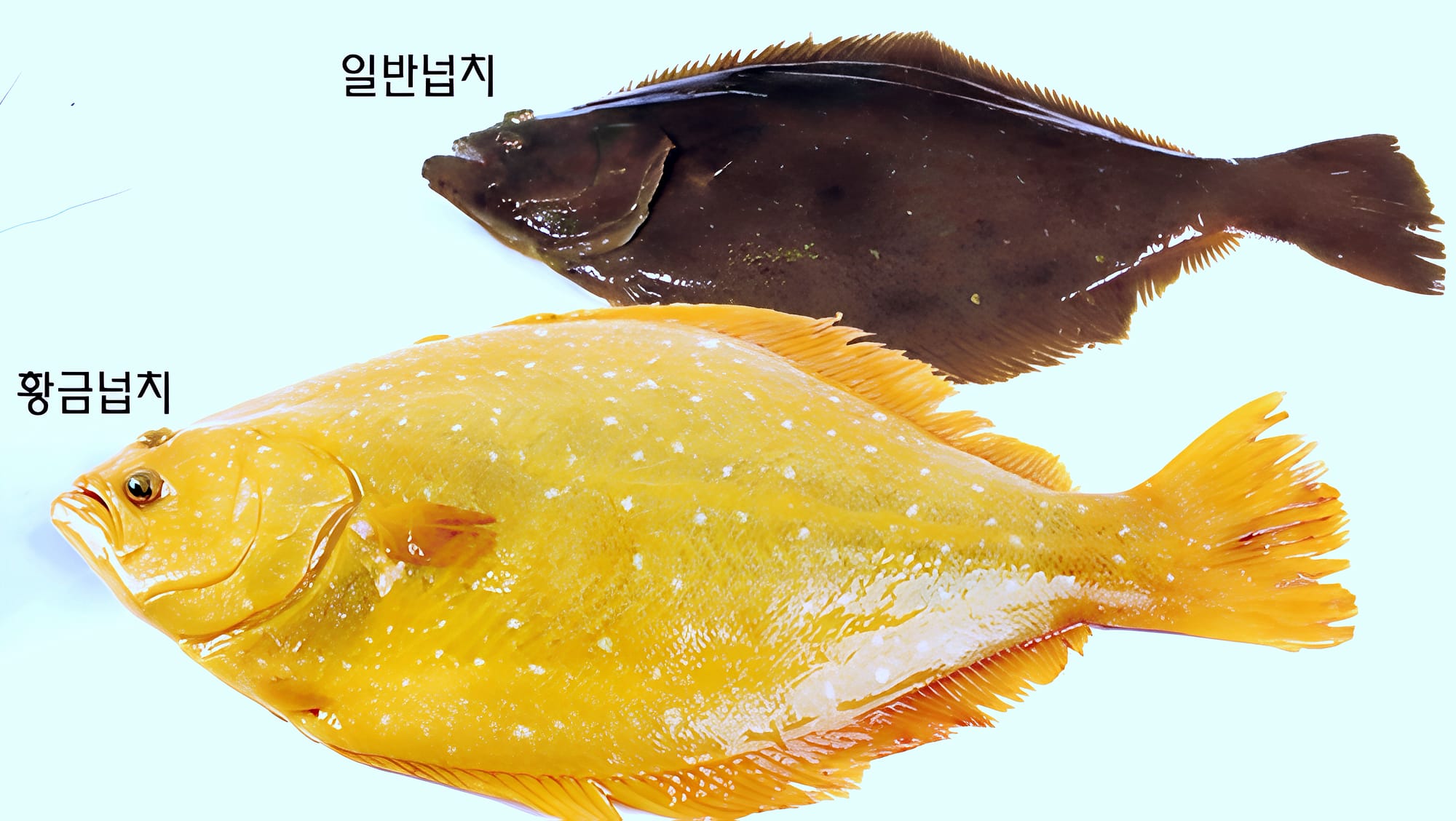
The Korean Golden Flounder is not a separate species but a naturally occurring, pigmented variant of Paralichthys olivaceus, a member of the family Paralichthyidae within the large-tooth flounders. This family clusters sinistral flatfishes—meaning both eyes migrate to the left side of the head during metamorphosis. The species was first described by Temminck and Schlegel in 1846 and ranges across the Northwest Pacific. In English it is commonly called the olive flounder, Japanese flounder, or, in dated fishery literature, the bastard halibut. Korean vernacular names the typical brown-mottled fish gwang-eo (광어) and the golden morph hwanggeum gwang-eo (황금광어), literally “golden flounder.” In Japan it is hirame (ヒラメ), with the golden individuals sometimes labelled as kogane hirame. Scientific and commercial sources consistently treat the golden variant as taxonomically identical to the olive flounder; the shimmering coat arises from an alteration in chromatophore expression, not from hybridisation or geographic isolation.
Biology and Adaptations
Like all flatfishes, Paralichthys olivaceus begins life as a bilaterally symmetrical larva swimming upright in the water column. At a size of roughly 15 mm (0.6 in) the right eye begins its slow trek over the dorsal midline, and the young fish settles to the benthos, left side down. The species is a master of cryptic camouflage: normally pigmented individuals deploy a dermal palette of melanophores, xanthophores, and iridophores that continuously adjust to match sand, mud, or pebble. The golden phenotype disrupts this scheme. Instead of a dark olive background with diffuse spotting, the ocular side of the fish appears uniformly golden-yellow with orange-red flecks, while the blind side remains unpigmented white. The prevailing view among fish geneticists is that a recessive mutation impedes melanin deposition, allowing yellow-orange pteridine pigments and reflective iridophores to dominate. This hypothesis has not been mapped to a specific gene in peer-reviewed studies, but the observation that golden offspring sometimes appear spontaneously in hatchery cohorts supports a simple Mendelian inheritance pattern with very low allele frequency.
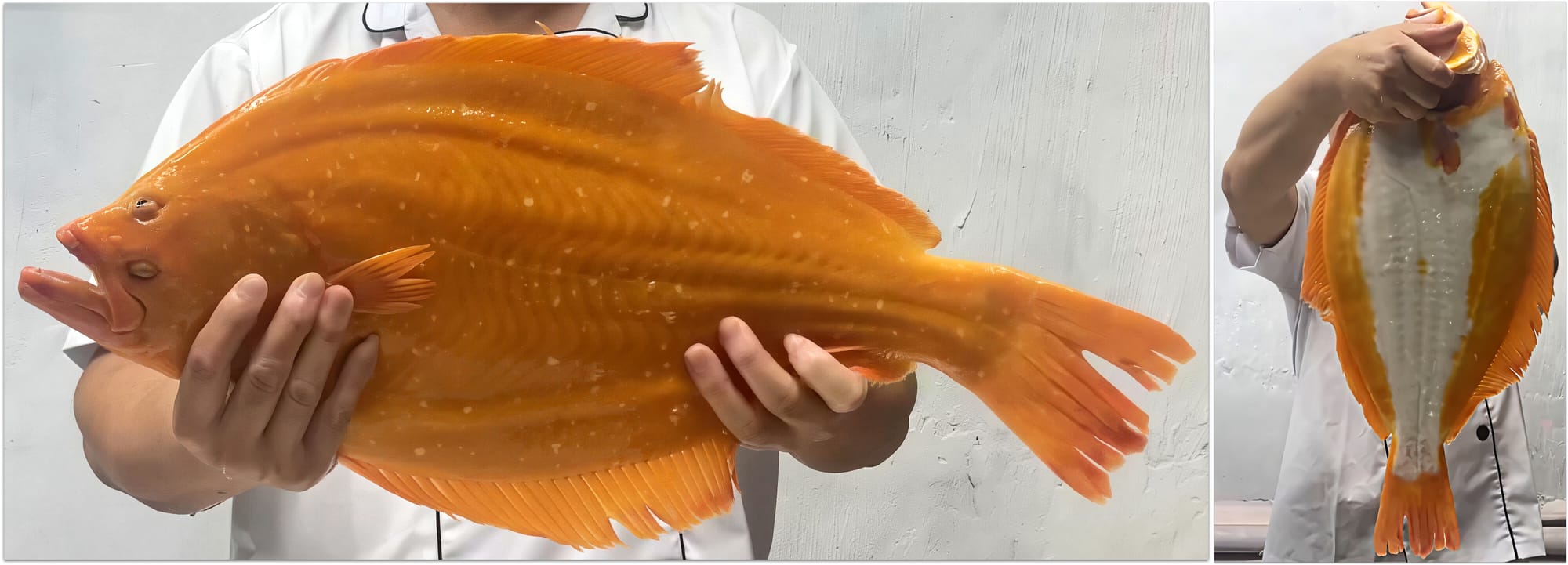
Life-history traits of the golden morph mirror those of the wild-type olive flounder. Spawning typically occurs in coastal waters from late winter through early summer, with females releasing millions of buoyant eggs. Larvae feed on zooplankton before shifting to epibenthic crustaceans and eventually to fish after settlement. Wild individuals can attain a total length of 1 m (3.3 ft) and a weight exceeding 10 kg (22 lb), though such specimens are increasingly rare. In aquaculture settings, fish are harvested at a modest market size around 1.2 kg (2.6 lb), a size reached in approximately eighteen months under optimal water temperatures of 18–22 °C (64–72 °F). Hatcheries report that golden flounder appear at frequencies loosely estimated at fewer than one in ten thousand eggs, making each viable golden juvenile a noteworthy event for producers.
Ecology, Range, and Sustainability
The native range of Paralichthys olivaceus stretches from the Russian Far East and the Sea of Okhotsk down through the Korean Peninsula, the Yellow Sea, the East China Sea, and the coastal waters of Japan. The fish occupies sandy and muddy bottoms from the surf zone to depths of about 150 m (492 ft), where it ambushes smaller fish, shrimps, and cephalopods. This role as a mid-tier predator links benthic invertebrate communities with larger piscivores. Wild olive flounder stocks have faced heavy fishing pressure for decades; South Korean and Japanese landing statistics show fluctuating but generally declining catch-per-unit effort in several regions, although comprehensive stock assessments are patchy. The bulk of the flounder reaching markets today—well over 40,000 metric tonnes annually from South Korea alone—originates from aquaculture, much of it concentrated on Jeju Island.
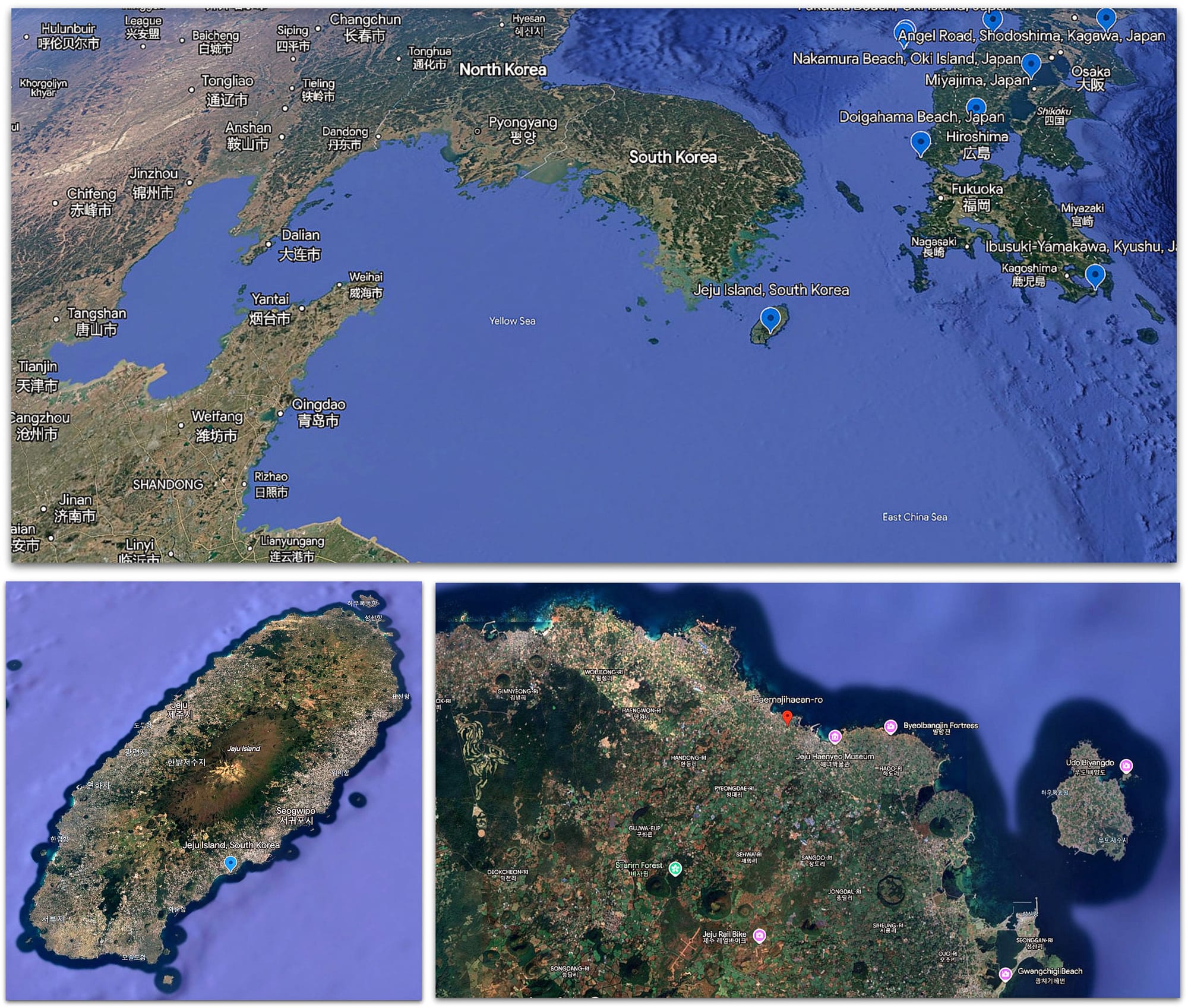
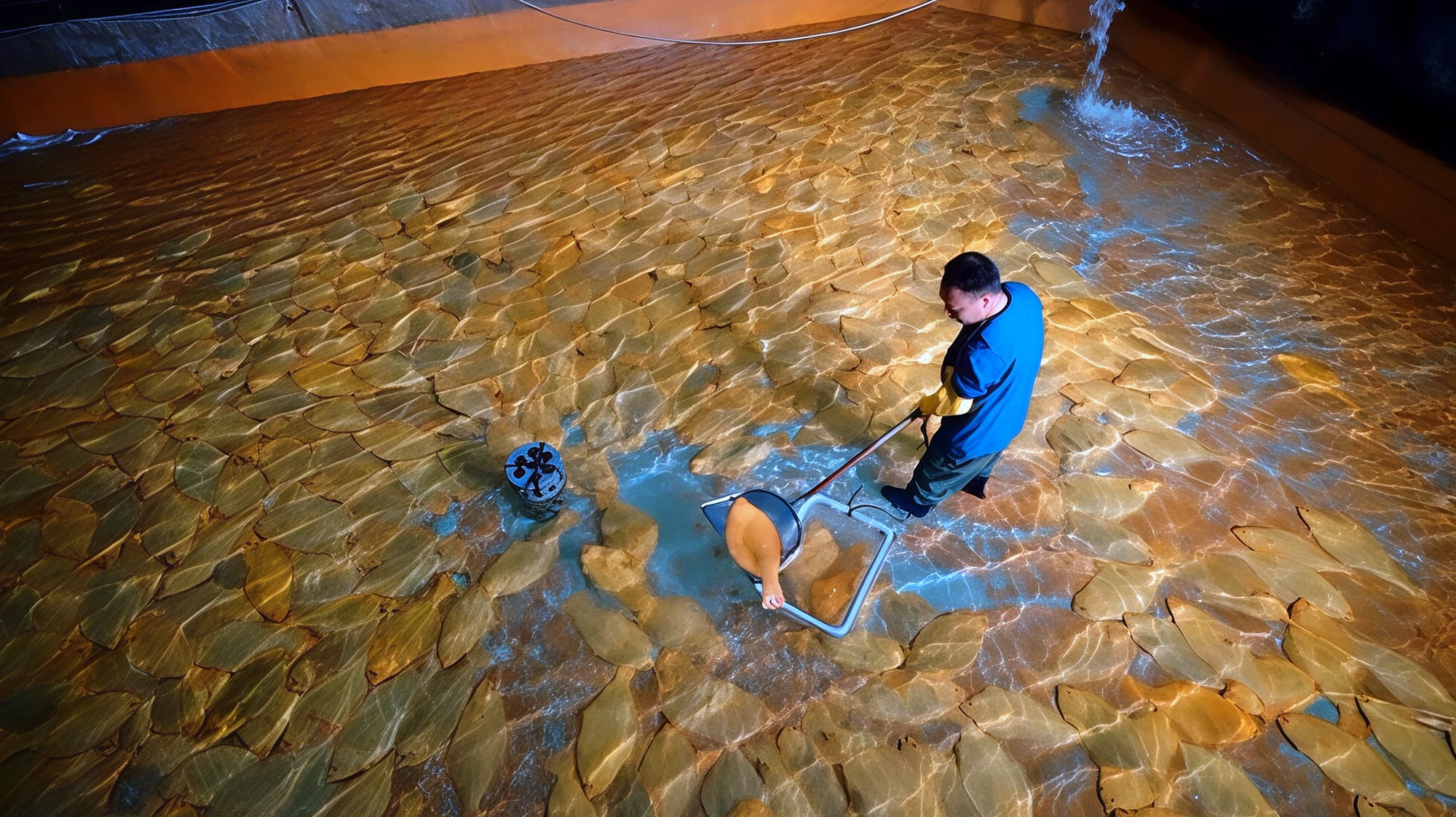
The golden flounder introduces a specific sustainability calculus. Wild-caught golden individuals are so uncommon that a directed fishery for them would be both economically impractical and ecologically reckless. Their rarity in the wild makes each wild capture a potential loss of a unique genotype from the breeding pool, and incidental bycatch in trawl nets damages benthic habitat. Fortunately, farmed golden flounder now supply most of the luxury trade. Land-based recirculating systems and flow-through tanks in Jeju can produce a small but steady number of golden fish without the environmental costs associated with wild extraction. Responsible sourcing criteria for buyers are therefore reasonably clear: ask suppliers for traceability back to a registered hatchery, favour producers with Aquaculture Stewardship Council or Best Aquaculture Practices certification, and request documentation that the individual was farm-raised. When provenance is ambiguous, buyers may substitute the abundantly farmed standard olive flounder, which delivers a nearly identical edible product and carries none of the conservation baggage tied to the wild golden morph. At auction, a cultured golden flounder of 1.5 kg (3.3 lb) can command prices near KRW 150,000 per kilogram, equivalent to about US$115 per kg (US$52 per lb), a premium that reflects both the scarcity of the phenotype and the cost of raising a fish over multiple seasons to a presentable size.
Culinary Profile and Kitchen Reality
In the kitchen, the golden flounder is treated with a reverence that matches its price. The fish yields several prized edible parts: the firm, translucent fillets; the fatty belly meat; the frilled edge muscle known in Japanese kitchens as engawa; the collagen-dense skin; the cheeks; and the bones and head for stock. The core flavour of the raw flesh is mild, clean, and gently marine, with a distinct sweetness that lingers without cloying. Texture is the real hallmark—a crisp, resilient bite that relaxes into a buttery smear after a few moments of chewing. Chefs who work regularly with the golden variant describe a slightly finer muscle grain and a whisper of almond-like richness compared with standard olive flounder, though no published analytical data yet confirm a significant difference in lipid profiles. It is possible that the visual impact of the golden skin influences perceived flavour intensity, but until chemical analyses and blind sensory panels are conducted, claims of superior taste deserve restrained phrasing.
Preparation methods in Korean gastronomy revolve around freshness. For hwareo, or sliced raw fish, the flounder is dispatched with ikejime, spiked at the brain, and bled immediately to preserve translucence. Fillets are often dry-aged at 2 °C (36 °F) for twenty-four to forty-eight hours, a step that allows proteolytic enzymes to tenderise the muscle and deepen umami. The fillet is then sliced across the grain into pieces exactly 5 mm (0.2 in) thick—thick enough to provide satisfying chew, thin enough to melt on the tongue. A typical individual portion weighs about 150 g (5.3 oz). The slices are commonly arranged on a chilled platter with shiso leaves, sliced garlic, and a dipping sauce of sesame oil touched with salt and gochujang. The golden skin is often left on for sashimi, its amber edge framing each piece. Beyond raw applications, the fish excels in maeuntang, a spicy soup simmered with radish, red chili paste, and watercress. A simmer temperature around 85 °C (185 °F) keeps the chunks of fish succulent without toughening the protein. A serving bowl typically holds 300 ml (10 fl oz) of broth, a generous lunch portion. Grilling over binchotan charcoal brings out the richness of the collar and belly; cooks often pull the flesh when the core temperature reaches 52 °C (126 °F), leaving it just translucent at the center. Nutritional highlights align with other lean white fish: a 100 g (3.5 oz) portion supplies about 19 g of protein, modest fat concentrated in the belly, and a meaningful dose of selenium, vitamin B12, and long-chain omega-3 fatty acids.
Sourcing legality is straightforward. The golden flounder is not listed under CITES, and domestic aquaculture in Korea and Japan operates within well-established regulatory frameworks. Export of live or chilled farmed golden flounder to North America or Europe requires standard health certificates; no special permits are tied to the colour morph itself. For restaurant operators and home cooks unable or unwilling to pay the premium, the ordinary olive flounder serves as an impeccable substitute. Hirame from Japanese waters or even farmed turbot can approximate the texture, though the nuanced crisp-sweet profile of raw Paralichthys olivaceus remains distinctive.
Wine Pairings
Raw golden flounder sashimi dressed with yuzu juice, shiso, and a flake of sea salt calls for a wine with saline thrust and vertical acidity. Assyrtiko from Santorini, Greece, grown in the island’s volcanic pumice soils, delivers a mouth-coating minerality and notes of lemon peel and wet stone that magnify the fish’s sweetness while keeping the palate refreshed between bites.
When the golden flounder is swirled into a bubbling maeuntang with radish greens and soft tofu, the chili heat and umami depth demand a white with aromatic lift and a touch of residual sugar. A dry to off-dry Scheurebe from Rheinhessen, Germany, answers with explosive pink grapefruit, passionfruit, and a silky texture that wraps around the capsaicin, softening the burn without dulling the soup’s complexity.
For the charred collar, its skin blistered and crisp and its flesh juicy, served with a dollop of fermented ssamjang and perilla leaves, a light red with earthen restraint is ideal. Poulsard from the Arbois region in the Jura, France, exhibits delicate red berry, white pepper, and an earthy undercurrent that harmonises with the smoky, savoury notes of the grill, its gentle tannins never colliding with the fish’s residual oiliness.
Conclusion
The Korean Golden Flounder traces an arc from benthic oddity to gilded centerpiece, encapsulating the artistry possible when biology, culture, and careful husbandry converge. Its existence sharpens our understanding of chromatophore genetics in flatfish, while its flavour—subtle, refined, and wrapped in silk—continues to entrance the kitchens that can access it. Yet the very rarity that grants it mystique also imposes a duty: without disciplined sourcing and the continued expansion of responsible aquaculture, the golden morph could drift into a category of ingredients whose luxury endangers the heritage it represents. When a chef or home cook chooses a farmed golden flounder with traceable origins—or consciously substitutes its abundant olive sibling—that choice ripples through supply chains, reinforcing a model where a genetic treasure becomes a durable delicacy rather than a fleeting trophy. In this sense, the future of the golden flounder on global plates will be written not by its shimmering colour alone, but by the collective restraint and curiosity of those who savour it.