Venus Tuskfish: From Reef Alchemist to Culinary Treasure and the Stewardship Imperative
The Venus tuskfish links reef ecology to the plate; its slow‑maturing biology demands informed, traceable, size‑aware sourcing so appetite strengthens—not depletes—populations, turning the dish itself into a tool for conservation.
Introduction
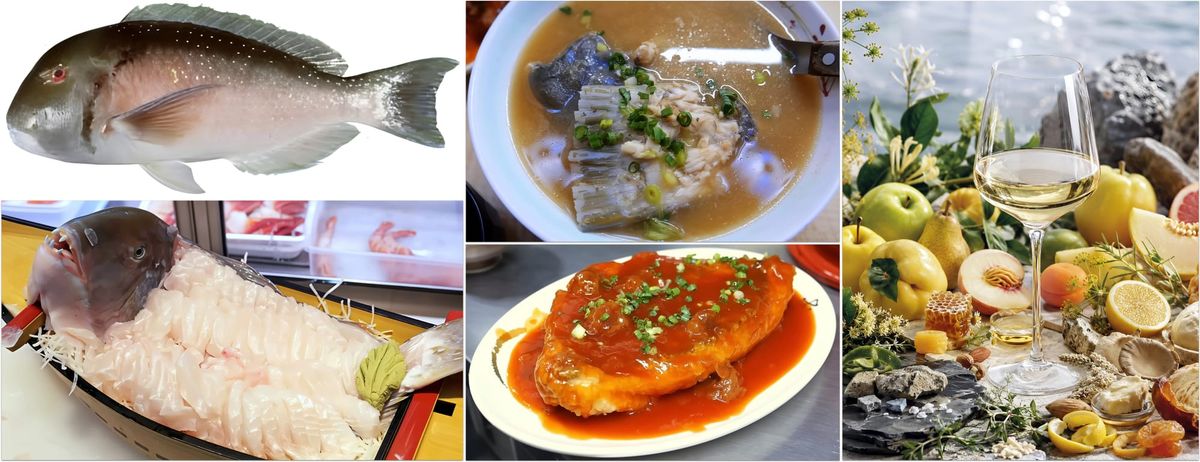
A fillet of Venus tuskfish, gently laid in a hot pan, releases an aroma that flickers between the sea’s ozone freshness and the faint, warm sweetness of freshly picked crab meat. This fleeting perfume is a direct echo of the fish’s own diet, a life spent crunching through crustaceans and urchins on Australia’s subtropical reefs. The Venus tuskfish has quietly transitioned from a well‑kept secret among east‑coast anglers to a darling of thoughtful kitchens. Its growing prominence rests on a rare intersection of biological intrigue, exceptional eating quality, and an urgent conversation about how we source reef fish. For chefs, consumers, and biologists alike, this wrasse has become a compelling case study in what it means to bring a wild, ecologically significant animal to the plate with intelligence and restraint.
Taxonomy and Names
The Venus tuskfish belongs to the wrasse family Labridae, one of the most species‑rich fish families on the planet, and sits within the genus Choerodon, a group collectively known as tuskfishes. Its full scientific name is Choerodon venustus. The species was described in the early twentieth century from specimens taken off Queensland, and its epithet venustus—Latin for charming or beautiful—reflects the delicate pink and blue blush that washes across its flanks. Among English‑speaking fishers and fishmongers, the accepted common name is Venus tuskfish, though it is sometimes loosely called blue tuskfish, a label that more properly belongs to its close relative Choerodon cyanodus. Another vernacular name occasionally encountered in Australian markets is “black‑spot tuskfish,” a nod to the prominent dark blotch on the anterior dorsal fin, though this too invites confusion with Choerodon schoenleinii, the true black‑spot tuskfish of Indo‑Pacific waters. In regional parlance, fishos might simply call it a “bluebone” or “tuskie,” but the precise identity matters enormously for anyone monitoring catch composition or seeking a specific gastronomic experience.
Biology and Adaptations
The most immediately arresting feature of the Venus tuskfish is the set of four canine teeth that protrude from the front of its jaws, giving the fish its common name and a distinctly purposeful expression. These tusk‑like incisors are not decorative; they function as chisels and pry bars, allowing the fish to wrench snails, crabs, and sea urchins from crevices and then crush their hard shells with powerful pharyngeal jaws located in the throat. This dual‑jaw apparatus is a hallmark of the Labridae and underlies the tuskfish’s role as a reef‑scape engineer, capable of controlling populations of grazing invertebrates.
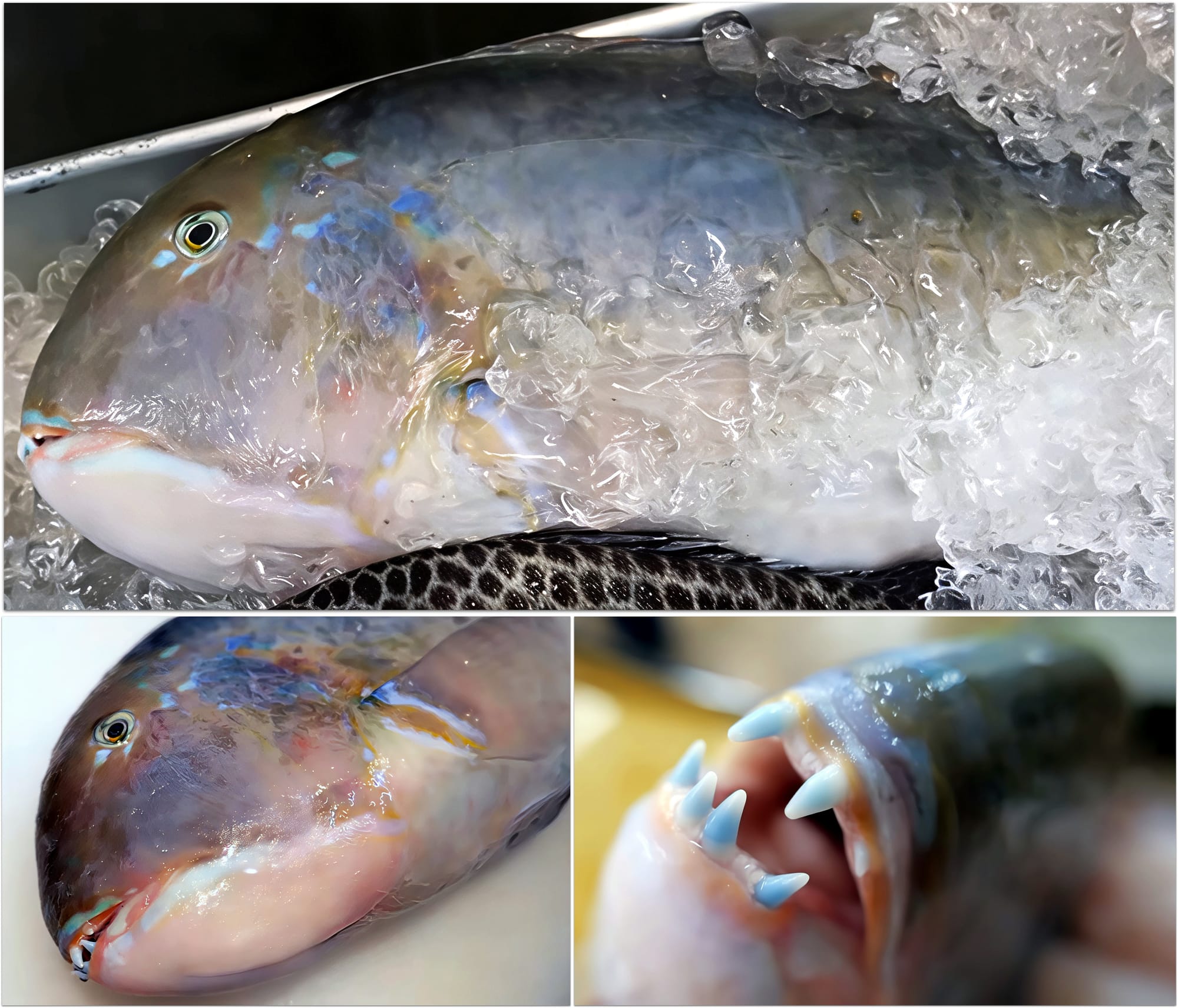
Like many wrasses, Choerodon venustus is a protogynous hermaphrodite. Individuals begin life as females, with some later transitioning to males as they grow larger and socially dominant. The switch typically occurs at a fork length of around 30 to 35 cm (12 to 14 in), a size reached after several years of growth. Maximum total length for the species approaches 60 cm (24 in), and exceptional individuals can weigh up to 4 kg (8.8 lb). Studies on related tuskfishes suggest a life span that may extend beyond two decades, though direct age validation for C. venustus remains sparse, making longevity estimates plausible rather than definitive. The body is compressed and streamlined, the colouration a palette of pale green to sky blue on the upper body, grading to pearlescent pink or silver on the belly, with electric blue scribbles across the cheek and a signature black spot on the soft dorsal fin. This vivid livery fades quickly post‑mortem but is a reliable field mark for divers and line fishers.
Ecology, Range, and Sustainability
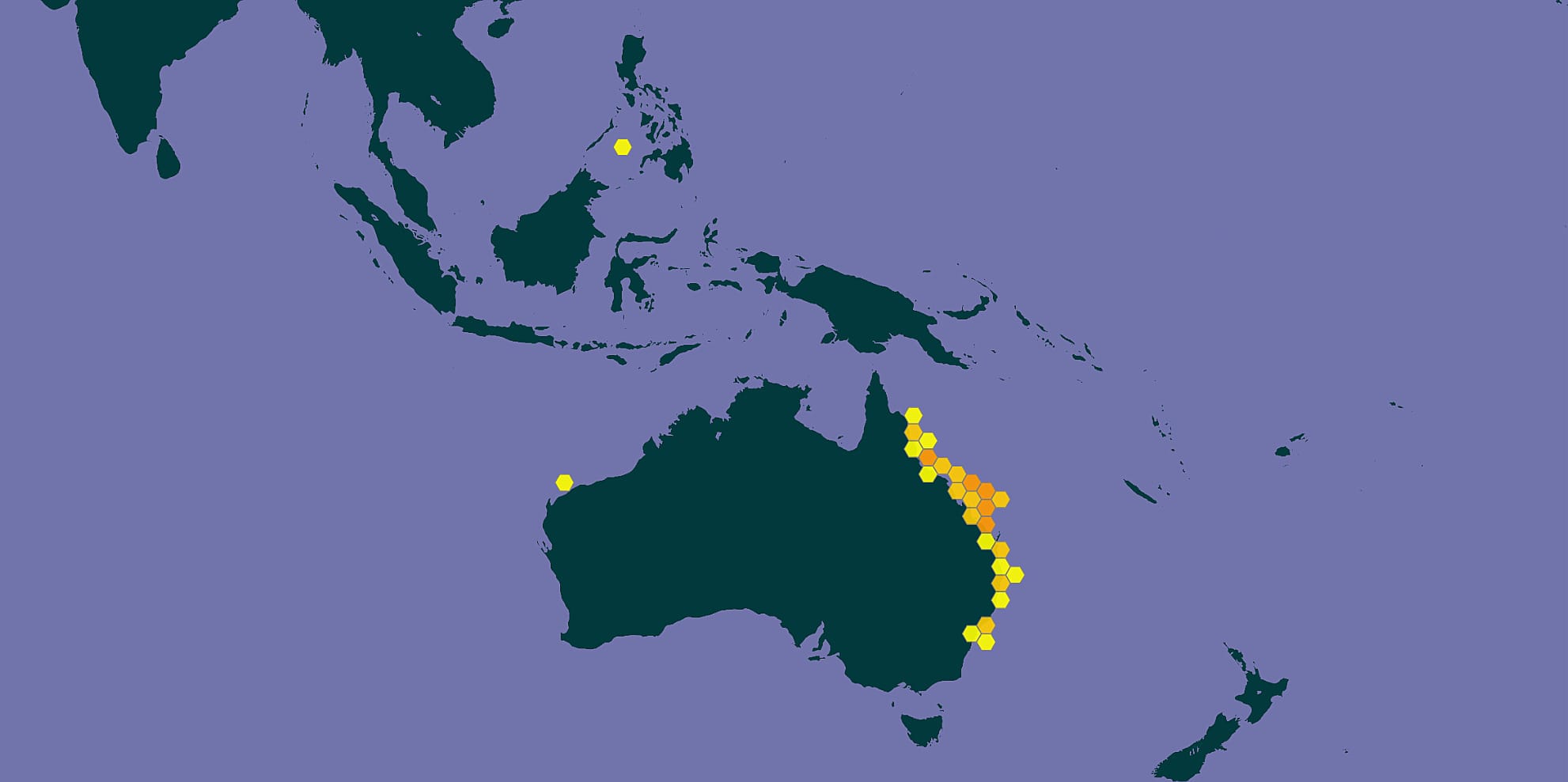
The Venus tuskfish inhabits the warm, current‑swept waters off eastern Australia, from the Capricorn‑Bunker reefs in southern Queensland southward to the rocky inshore grounds of northern New South Wales, with occasional records from Lord Howe Island. It favours coral rubble, kelp‑fringed ledges, and offshore bommies, moving confidently from shallow reef flats as little as 5 m (16 ft) deep down to deeper structured terrain exceeding 30 m (98 ft). The environment it calls home sits within the East Australian Current’s influence, where surface water temperatures often range from 20 to 26 °C (68 to 79 °F). Within these habitats, the tuskfish serves as an important mesopredator, keeping sea urchin and small crab populations in check and thereby helping to maintain the balance between algal growth and coral recruitment.
Sustainability concerns around Choerodon venustus stem less from industrial‑scale extraction than from the species’ inherent life‑history vulnerability. Protogynous hermaphroditism means that the largest, most fecund individuals are males, and size‑selective fishing that disproportionately removes these large fish can skew sex ratios and depress reproductive output. Coupled with what is believed to be a fairly slow growth rate and a long generation time, the population does not bounce back quickly from heavy fishing pressure. In Australian state waters, management is enacted through minimum size limits—commonly 30 cm total length in Queensland—recreational bag limits, and some area‑based spawning season closures. Stock assessments are limited, and the precautionary principle carries weight. For the responsible buyer or chef, a practical sourcing checklist is straightforward: favour fish that clearly exceed the minimum size limit, ideally those above 35 cm (14 in) that have had a chance to spawn as females and possibly transition; ask for line‑caught specimens from well‑documented local fisheries; and avoid fish during the late spring to summer spawning window when aggregations can be targeted. Supply chains that can name the vessel, landing port, and method of capture give the market the transparency it needs without moralising. The Venus tuskfish remains a domestic specialty, rarely entering large international live‑reef‑fish trade flows, which keeps its footprint comparatively small if local demand is informed.
Culinary Profile and Kitchen Reality
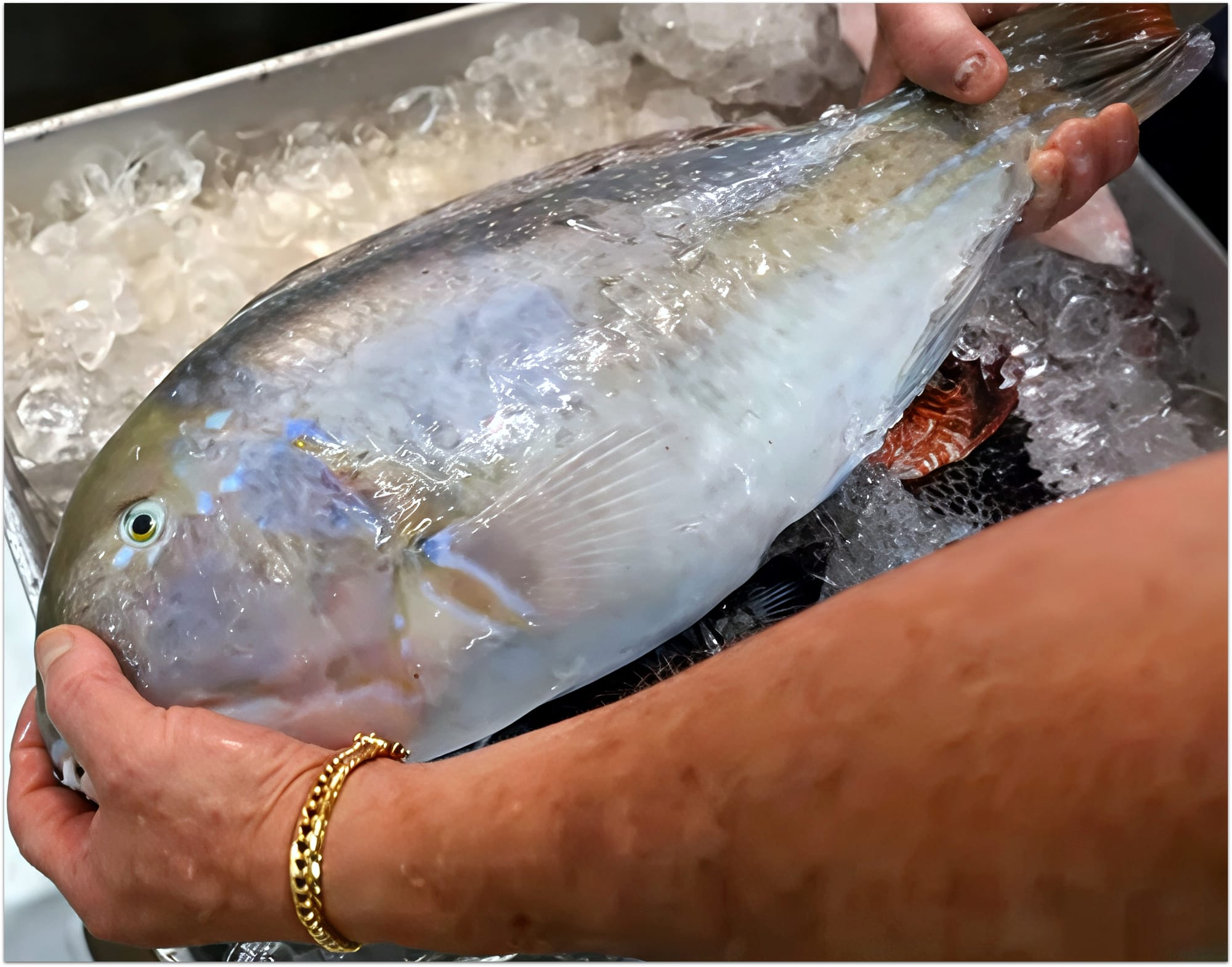
The flesh of the Venus tuskfish is one of Australia’s quiet luxuries. Raw, the fillet glistens with a pearlescent white translucency, firm to the touch but giving way to gentle pressure. Its flavour is fine and clean, often described as hovering between the sweet minerality of a top‑shelf snapper and the faint crustacean richness of a crab claw—a direct inheritance, many chefs suspect, of a diet dominated by shellfish. The fat content is modest, placing the fish in the lean category, yet the muscle fibres hold moisture exceptionally well during cooking, resulting in large, silky flakes that part easily under a fork.
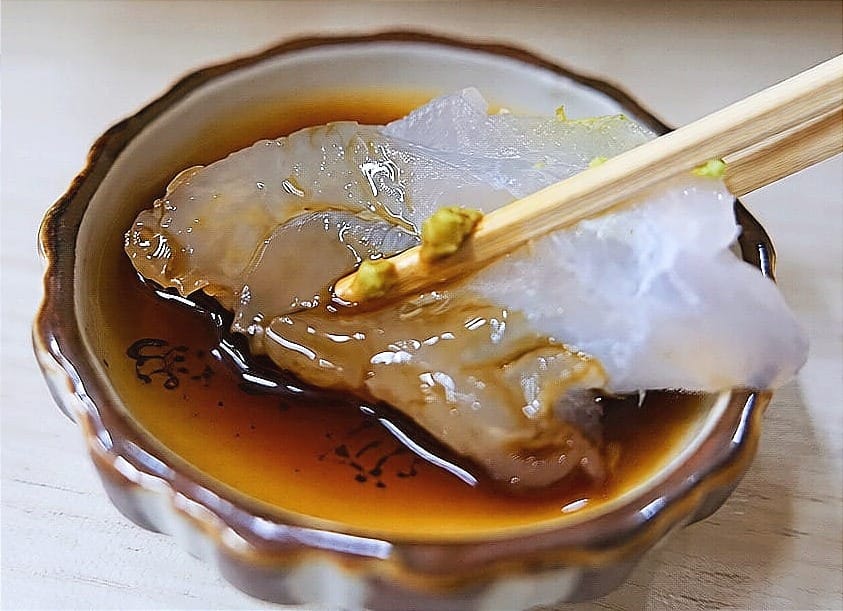
In the kitchen, the tuskfish is remarkably versatile. Pan‑searing a skin‑on fillet is perhaps the most honest tribute: just 15 ml (0.5 fl oz) of a high‑smoke‑point oil in a pre‑heated pan, the fillet laid skin‑side down until the skin crackles into a glassy amber crisp, then flipped to finish gently until the core reaches an internal temperature of 50 to 52 °C (122 to 126 °F). This low internal finish safeguards the flesh’s tenderness, delivering a centre that is just set and glistening. Steaming a whole fish of about 1.5 kg (3.3 lb) Cantonese‑style, with slivers of ginger and scallion, highlights the plump sweetness of the cheek meat and the gelatinous quality of the skin. The wings and frame, too often discarded, yield a stock of great delicacy that can lift a bisque or risotto. As a raw preparation, tuskfish sliced thinly for ceviche—cured in citrus, laced with chili and coriander—shows a capacity to absorb bright flavours while retaining its own identity. A standard serving of 150 g (5.3 oz) of cooked fillet provides roughly 30 grams of high‑quality protein, along with selenium and vitamin B12, without significant saturated fat. Chefs and home cooks who cannot source Venus tuskfish can look to other Choerodon species such as the blue tuskfish (C. cyanodus) or to coral trout (Plectropomus leopardus) as substitutes that carry a similar firm‑flaked, sweet‑fleshed character, though the tuskfish’s faint shell‑cracker nuance remains singular. Always confirm that the fish has been taken legally, above local minimum sizes, and through traceable channels; a trustworthy fishmonger will welcome the question.
Wine Pairings
For a crisp‑skinned pan‑seared fillet finished with nutty brown butter, capers, and a squeeze of lemon, a white with textural breadth and an almond‑edged acidity proves transformative. Verdicchio from the Marche region of Italy, particularly a Verdicchio dei Castelli di Jesi classico, brings a subtle bitter‑almond note and a vibrant saline streak that mirrors the capers while slicing through the butter. Its medium body cradles the flaky flesh without overwhelming it. When the fish is steamed whole with ginger, spring onion, soy, and a whisper of sesame oil, a wine of stony minerality and assertive citrus backbone is called for. Assyrtiko from Santorini, Greece, grown in volcanic ash, delivers an almost smoky flintiness alongside lemon zest and a bracing, palate‑cleansing finish that lifts the umami of the soy and the fragrant heat of the ginger. For a ceviche where the tuskfish is dressed with lime, habanero, avocado, and coriander, Godello from Valdeorras in north‑western Spain steps into the frame with its waxy texture and flavours of white peach and wet stone. The wine’s ripe stone fruit rounds out the chili’s edge, while its fresh acidity extends the citrus cure, creating a seamless arc from glass to plate.
Conclusion
The Venus tuskfish embodies a full‑circle narrative that begins in the interstices of coral rubble, where a set of tusk‑like teeth pries a living from the reef, and ends on the table as one of Australia’s most refined eating fish. Its biology—hermaphroditic, slow‑maturing, ecologically woven into the fabric of inshore habitats—demands that our appetite for its flesh be tempered with knowledge. Every purchasing decision, whether made by a chef writing a menu or a consumer choosing a fillet, casts a vote for the kind of supply chain we want to sustain. If the market continues to reward transparent, size‑conscious, and seasonally aware sourcing, the Venus tuskfish can graduate from a regional treasure to a celebrated fixture on the global culinary stage without sacrificing the very populations that make that celebration possible. The plate, in the end, becomes a powerful conservation tool, connecting the reef’s alchemy with the future of our seafood culture.