The Aniconic Icon: Deconstructing the Paradox of Islam’s Sacred Stone ٱلْحَجَرُ ٱلْأَسْوَد
The Black Stone, or al-Hajar al-Aswad (Arabic: ٱلْحَجَرُ ٱلْأَسْوَد), is a highly sacred relic in Islam, located at the southeastern corner of the Kaaba in Mecca, Saudi Arabia. This site is the center of prayer for Muslims around the world.
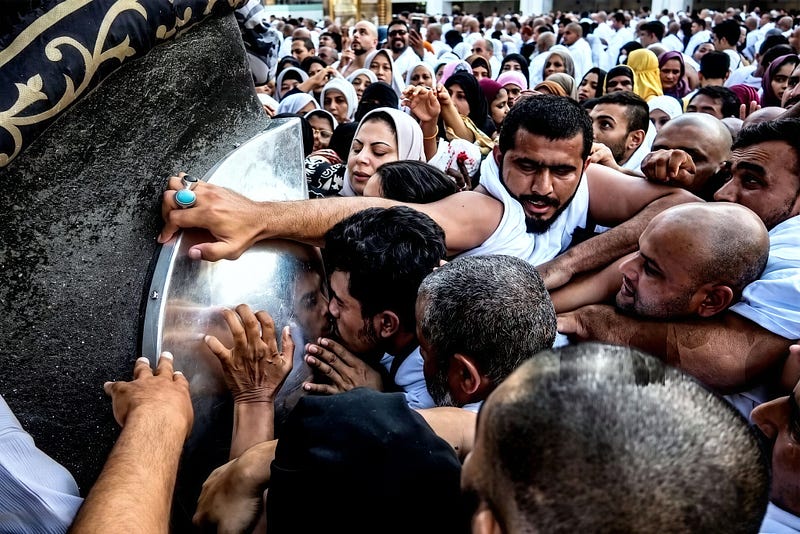
The Black Stone, or al-Hajar al-Aswad (Arabic: ٱلْحَجَرُ ٱلْأَسْوَد), is a highly sacred relic in Islam, located at the southeastern corner of the Kaaba in Mecca, Saudi Arabia. This site is the center of prayer for Muslims around the world. Islamic tradition holds that the Black Stone was sent from Paradise and originally was pure white. It turned black due to the sins of humanity, symbolizing the impact of human actions throughout history. The stone was said to have been placed in the Kaaba by Prophet Abraham and his son Ishmael, who received it from the Archangel Gabriel as part of constructing the holy structure.
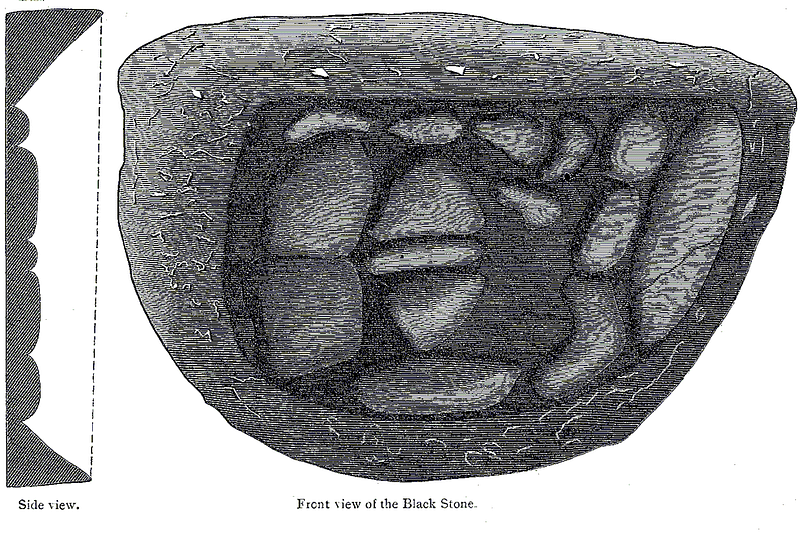
Today, the Black Stone is not a single piece but a collection of fragments resulting from damage over time, including an incident in 683 CE when it was hit during a siege. Currently, it consists of seven to eight visible pieces that are housed in a protective silver frame. The stone’s exposed surface has been worn smooth by the touches of countless pilgrims and appears dark with reddish-brown undertones underneath.
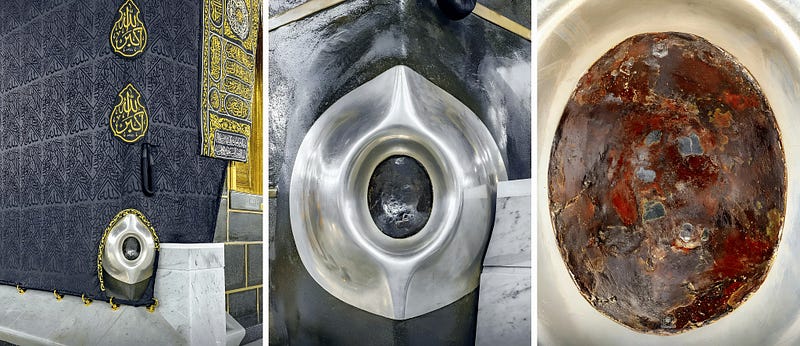
The Black Stone is a vital part of the Hajj and Umrah pilgrimages, marking the starting and ending point of the Tawaf, where pilgrims circle the Kaaba. While many try to kiss or touch the stone, this is not mandatory due to the large crowds. Instead, pilgrims can point to the stone during their rounds, linking them to prophetic traditions. It is believed that prayers made at the Black Stone carry special weight, and on the Day of Judgment, it will testify in favor of those who have revered it.
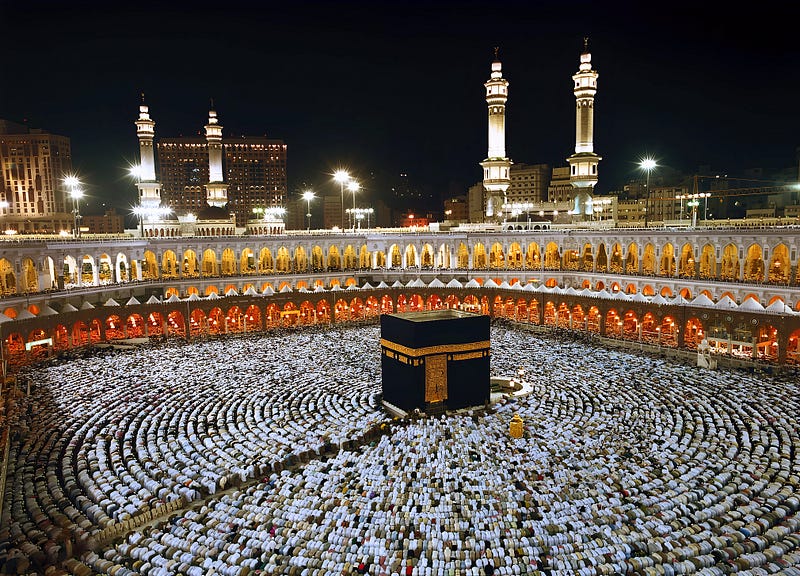
The Black Stone has experienced historical events, including being stolen in 930 CE by the Qarmatians, an extremist group. They attacked Mecca, killing many pilgrims and taking the stone to Bahrain, where they attempted to disrupt the Hajj. The stone was returned after 23 years, but it was broken into pieces that needed to be framed in silver.
The composition of the Black Stone remains a mystery, with various theories suggesting it might be a meteorite, volcanic rock, or natural glass. An account from 951 CE mentions it was recognized upon its return for its ability to float in water, which has led to speculation about its true material, potentially ruling out many common types of rock.
Beyond its physical aspects, the Black Stone symbolizes the connection between human worship and divine purpose in Islam. Its change from white to black serves as a metaphor for human sin and the need for forgiveness. The stone embodies unity among Muslims as they come together from various backgrounds to honor it. Importantly, Islamic theology teaches that the stone does not hold divine power and is not an object of worship. This sentiment is echoed in remarks by historical figures like Umar ibn al-Khattab, emphasizing its role as a symbol of faith rather than an idol.
The Black Stone draws millions of pilgrims each year, linking current believers to the foundational events of their faith while maintaining its enigmatic origins and enduring spiritual importance.
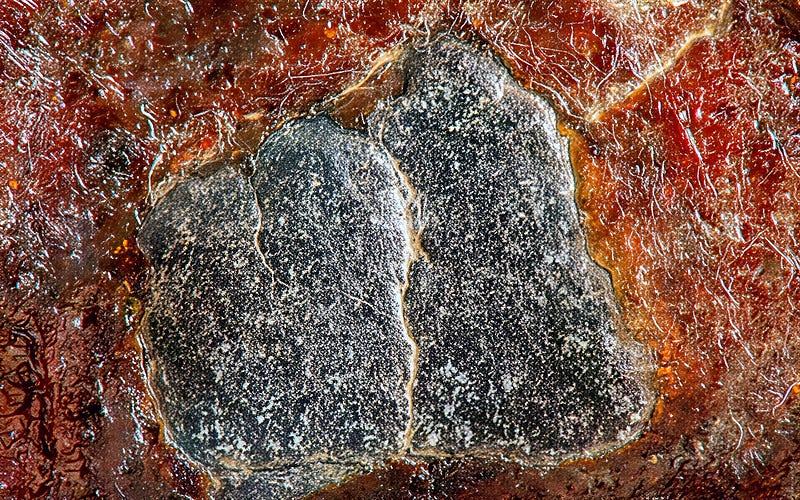
The al-Hajar al-Aswad, or the Black Stone, mounted within the silver frame on the southeastern corner of the Kaaba in Mecca, presents one of the most profound and enigmatic subjects in the archaeology of religion. It is an object that defies simple categorization, simultaneously a venerated relic, a cosmological anchor, and a theological paradox. A scholarly examination of its religious philosophy reveals a complex layering of pre-Islamic Arabian tradition, Abrahamic prophecy, and distinctly Islamic metaphysical principles that negotiate the delicate balance between transcendence and immanence, aniconism and ritual embodiment. The stone is not an idol but an axis mundi, a point of convergence between the divine command and human devotion, whose significance is performed rather than merely explained.
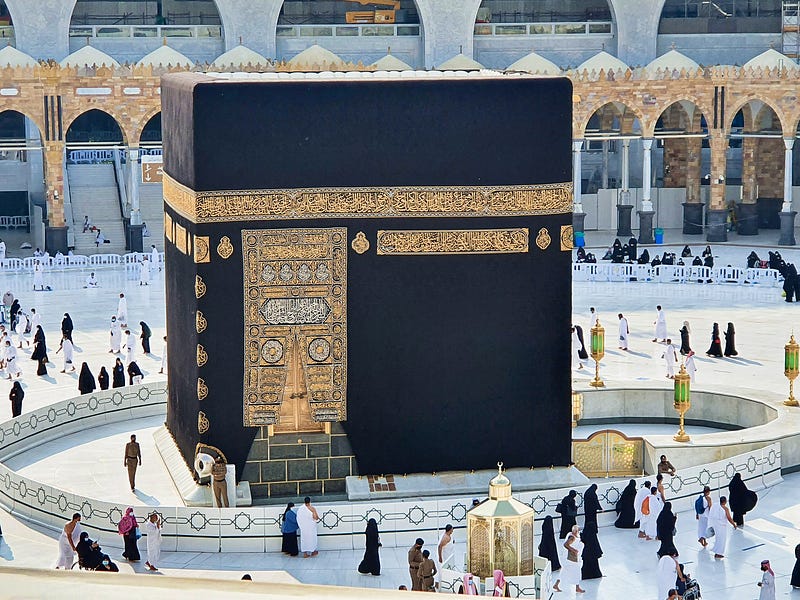
The foundational Islamic narrative imbues the Black Stone with a celestial origin, describing it as a relic from Paradise, sent down to earth as a guide for humanity. This etiological myth immediately elevates it beyond mere mineralogy, framing it within a cosmic history of revelation and fall. Its transformation from a radiant white state to its current blackened condition, attributed to the absorption of human sin, is a powerful metaphor for the human condition itself — a fall from primordial purity that nonetheless retains a connection to its divine origin. This philosophy positions the stone as a tangible link in a chain of prophecy, believed to have been set in place by the patriarch Ibrahim and his son Ismail during the construction of the first House of Worship dedicated to the one God. The stone thus sanctifies the Kaaba, transforming it from a local Arabian shrine into the universal axis mundi of Islamic monotheism, the geographical and spiritual pivot toward which all prayer is directed.
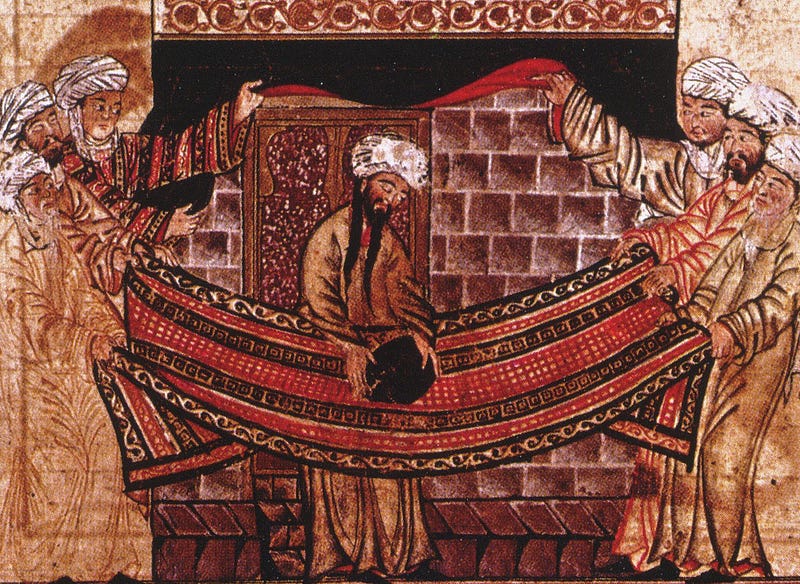
The ritual engagement with the stone during the tawaf, the circumambulation of the Kaaba, is where its religious philosophy is most acutely performed. Pilgrims strive to kiss or touch the stone, emulating the practice of the Prophet Muhammad. This act, however, exists within a precise theological framework that rigorously denies the stone any inherent power. The Caliph Umar ibn al-Khattab is famously reported to have stated, “I know that you are a stone, you do not cause benefit or harm; and if it were not that I had seen the Messenger of Allah kiss you, I would not have kissed you.” This statement encapsulates the core Islamic doctrine of tawhid, the absolute oneness of God, and serves as a definitive disavowal of idolatry. The veneration is not for the stone itself but for the divine command and prophetic example it symbolizes. The ritual becomes a physical enactment of submission, a reaffirmation of a covenant that is historical, spiritual, and ethical all at once.
The fragmented physical state of the stone, pieced together and bound by a silver band, is itself a rich text for philosophical interpretation. Its fractures are the scars of a tumultuous history, including sieges, fires, and most notably, its abduction in the tenth century by the Qarmatians, an event that profoundly shocked the Muslim world. These trials are not seen as diminishing its sanctity but are instead interpreted as a metaphor for the resilience of faith. The broken yet bound-together stone mirrors the condition of the Muslim ummah — a community often fractured by history and internal division yet perpetually called back to unity by its shared orientation toward a single divine center. The silver that holds the fragments is a symbol of divine mercy and communal care, a beauty that emerges from repair and collective memory.
Furthermore, the stone’s history as an object of veneration in pre-Islamic Arabia highlights Islam’s complex philosophy of cultural and religious continuity. The Kaaba was a pan-tribal sanctuary housing numerous idols, yet the Black Stone was not destroyed but was instead incorporated and re-consecrated into the new Islamic paradigm. This represents a process of theological transformation and sublation, where a pre-existing sacred element is stripped of its polytheistic associations and reinvested with a monotheistic meaning that traces its lineage back to the pure religion of Ibrahim. The stone, therefore, embodies a philosophy of history that does not simply reject the past but critically engages with it, purifying and redirecting its devotional energy toward the one God, Allah. It stands as a silent witness to the belief that the divine message, though periodically obscured, is continually restored and reaffirmed through prophecy.
In the contemporary era, the philosophy of the Black Stone continues to evolve. Advanced technologies, such as high-resolution digital imaging, now allow millions to scrutinize its surface, democratizing access to this sacred object. This modern engagement demonstrates the enduring dynamic between an ancient, physical relic and the timeless, spiritual quest it facilitates. It remains the focal point of a ritual that dissolves boundaries of race, nationality, and class, unifying humanity in a single, rotating motion around a divine center. The Black Stone endures not as a thing to be worshipped, but as a signpost on the journey of return, a polisher of the heart worn smooth by the tides of devotion, and a perpetual challenge to understand the relationship between the material and the transcendent in the human pursuit of the divine.