The Myth of Systemic Racism in the United States
The myth of systemic racism persists not because it is supported by evidence, but because it serves powerful political and psychological functions, offering a moral framework that simplifies a complex world, absolves individuals of responsibility, and justifies ongoing political mobilization.
Abstract
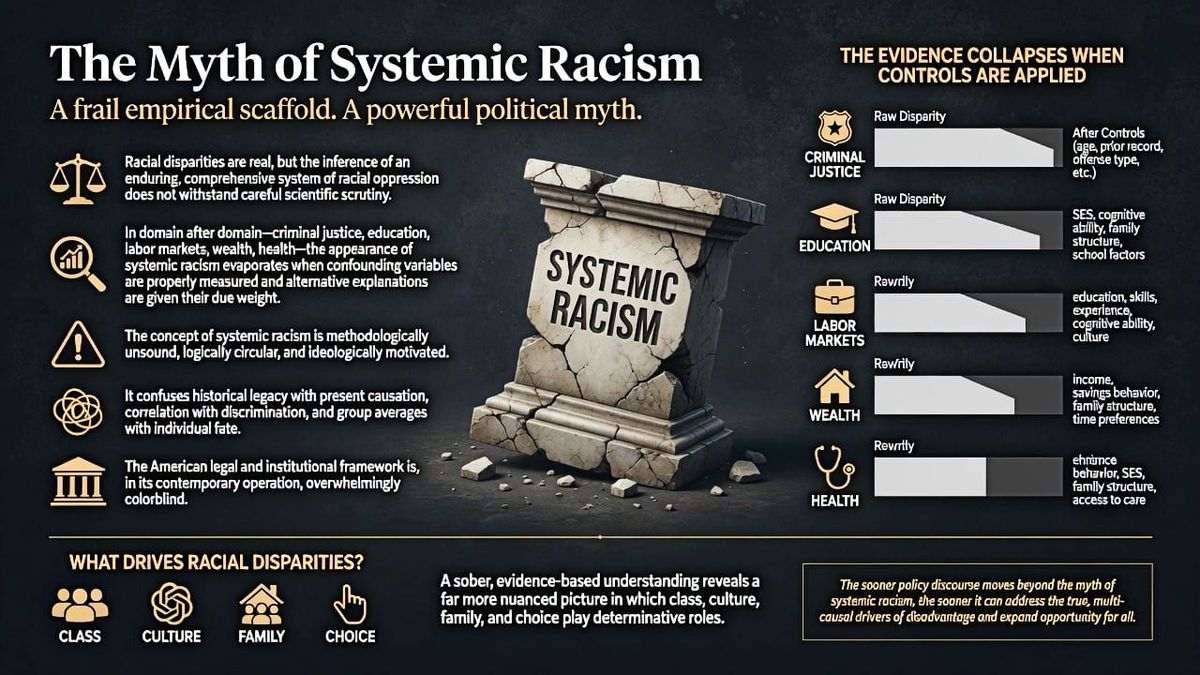
The claim that the United States remains pervasively structured by systemic racism has become a dominant narrative in academic and public life. This report subjects that claim to rigorous conceptual, empirical, and methodological scrutiny. It begins by interrogating the definition of systemic racism, arguing that the term has been stretched beyond operational utility to become an unfalsifiable explanatory framework. The report then traverses the major domains commonly cited as evidence of systemic racism: criminal justice, education, employment, wealth, and health. In each case, it demonstrates that racial disparities diminish substantially or vanish entirely once relevant confounding variables such as class, family structure, individual behavior, and pre-existing risk factors are properly controlled. The persistent invocation of systemic racism ignores the dramatic legal and social transformations since the 1960s, misinterprets correlational data as proof of causation, and selectively disregards outcomes that contradict the narrative, such as the success of numerous immigrant groups and the existence of a growing Black middle class. Further, the report evaluates alternative explanations for observed inequalities, including cultural orientations toward education and work, differences in crime commission rates, and the intergenerational transmission of human capital, showing that these provide more parsimonious and predictive accounts. The methodological flaws endemic to systemic racism research, such as confirmation bias, the ecological fallacy, and the neglect of within-race heterogeneity, are examined. The analysis concludes that while racial disparities exist, they are not systematically produced by a racist social order, and the concept of systemic racism is better understood as a political and ideological construct than as a scientifically valid description of American institutions. The myth is not the reality of inequality, but the assertion that it is driven primarily by racialized systems rather than by a complex interplay of class, culture, and individual agency within a predominantly colorblind legal and institutional framework.
Introduction
Over recent decades, a narrative has coalesced that positions systemic racism as the central organizing principle of American society. According to this view, virtually all racial disparities in outcomes—from incarceration to homeownership to health—are the direct or indirect product of institutional discrimination woven into the fabric of everyday life. This narrative has been institutionalized in university curricula, corporate diversity training, and governmental policy. Yet a careful examination of the scientific evidence reveals profound weaknesses in its foundations. This report takes the opposite view: that systemic racism, as defined by its proponents, is a myth. It does not deny that racism exists in interpersonal forms or that historical injustices occurred. Rather, it argues that the contemporary United States is not characterized by systems that discriminate on the basis of race, and that the explanatory power attributed to systemic racism collapses under the weight of rigorous empirical analysis. The report proceeds by clarifying definitions, dissecting the primary empirical claims domain by domain, identifying methodological and logical errors, and presenting alternative frameworks that better account for the data. The goal is to provide a thorough academic refutation of the systemic racism thesis, demonstrating that it fails to meet basic standards of scientific validity.
Defining Systemic Racism and Its Conceptual Problems
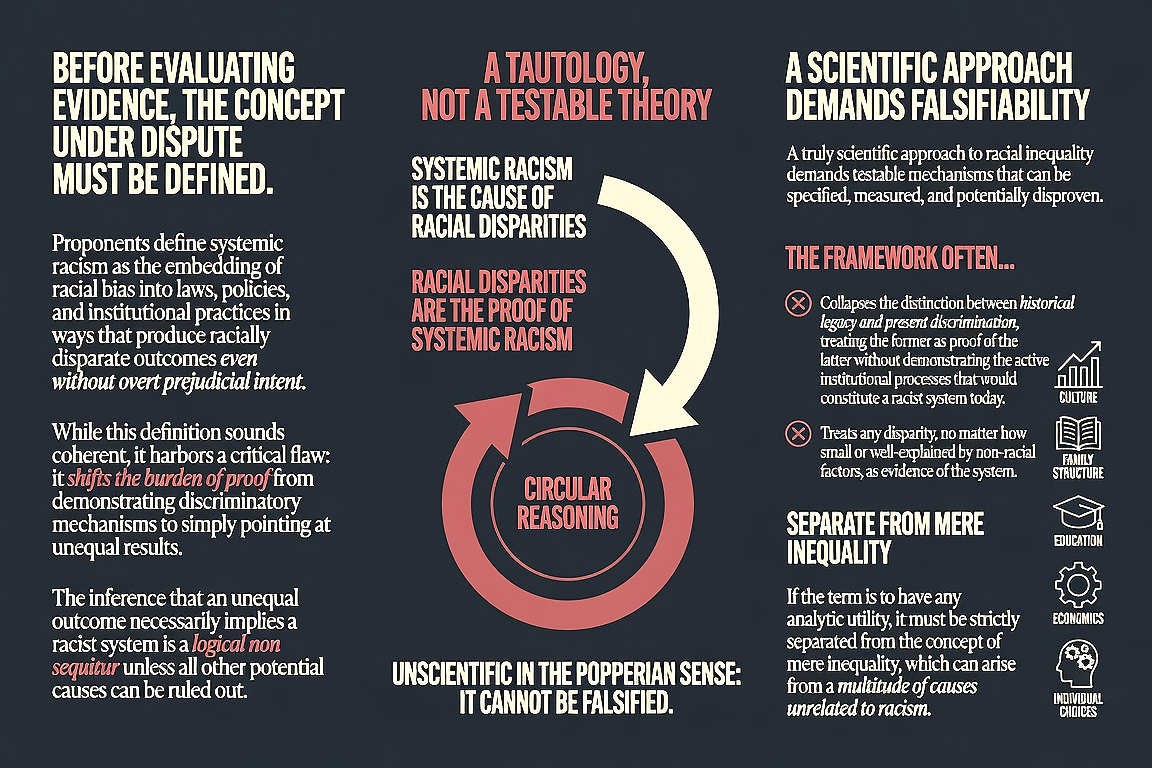
Before evaluating evidence, the concept under dispute must be defined. Proponents define systemic racism as the embedding of racial bias into laws, policies, and institutional practices in ways that produce racially disparate outcomes even without overt prejudicial intent. While this definition sounds coherent, it harbors a critical flaw: it shifts the burden of proof from demonstrating discriminatory mechanisms to simply pointing at unequal results. The inference that an unequal outcome necessarily implies a racist system is a logical non sequitur unless all other potential causes can be ruled out. In practice, systemic racism is frequently invoked as an all-purpose explanation that is immune to disconfirmation, because any disparity, no matter how small or well-explained by non-racial factors, is reinterpreted as evidence of the system. The concept thus becomes a tautology: systemic racism is the cause of racial disparities, and racial disparities are the proof of systemic racism. This circular reasoning makes the theory unscientific in the Popperian sense, as it cannot be falsified. A truly scientific approach to racial inequality demands testable mechanisms that can be specified, measured, and potentially disproven. The systemic racism framework, by contrast, often collapses the distinction between historical legacy and present discrimination, treating the former as proof of the latter without demonstrating the active institutional processes that would constitute a racist system today. If the term is to have any analytic utility, it must be strictly separated from the concept of mere inequality, which can arise from a multitude of causes unrelated to racism.
The Limits of the Historical Foundation Argument
Advocates of the systemic racism thesis frequently ground their claims in the history of slavery, Jim Crow, and discriminatory federal policy. There is no serious dispute that such policies existed and created severe racial inequalities. However, the leap from recognizing historical racism to asserting that present institutions are systemically racist depends on an unproven assumption: that the past’s effects persist in a deterministic, unbroken chain that overrides all other social forces and individual agency. This assumption neglects the substantial changes in law, policy, and social norms. The Civil Rights Act of 1964, the Voting Rights Act of 1965, the Fair Housing Act of 1968, and subsequent legislation dismantled the formal architecture of discrimination. Institutions that were once explicitly racist have undergone decades of reform. Affirmative action, diversity initiatives, and anti-discrimination enforcement have actively reshaped hiring, admissions, and government contracting to favor underrepresented minorities. To maintain that systemic racism endures despite these transformations requires an account of how it persists through colorblind laws and procedures, an account that often relies on vague notions of implicit bias or structural inertia that are difficult to measure and even harder to link causally to specific outcomes. The historical argument also ignores the fact that many of the most disadvantaged communities in America experienced, in the same decades that supposedly entrenched permanent inequality, the arrival of new immigrant populations who did not share that history of slavery and Jim Crow yet often faced better opportunities. In short, history provides background but cannot by itself prove the contemporary existence of a racist system without a clear demonstration that current mechanisms are actively producing racial inequality in a manner not explained by other variables.

Criminal Justice Disparities Are Not a Product of Racist Systems
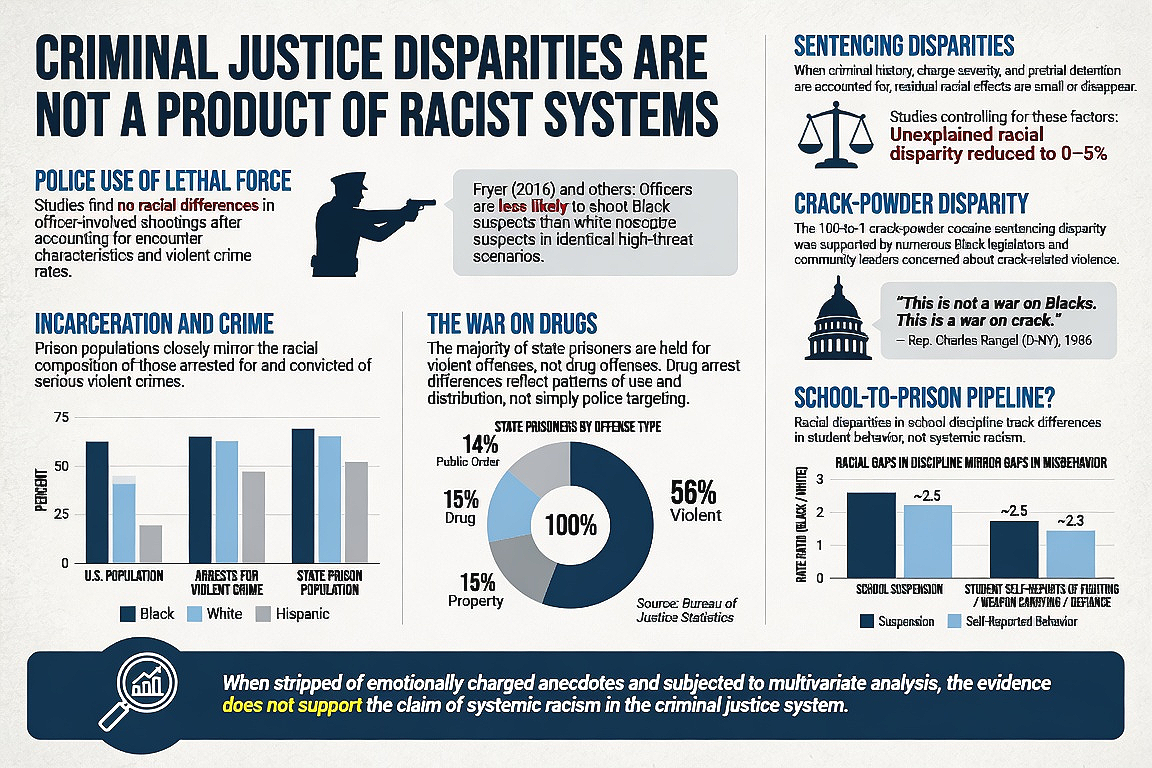
The criminal justice system is the most commonly invoked example of systemic racism, with activists citing disproportionate incarceration rates, police shootings, and sentencing differences. A detailed review of the evidence, however, reveals that racial disparities in the justice system overwhelmingly reflect differences in criminal offending, not systemic bias. Research on police use of lethal force, most prominently the work of Roland Fryer and others, finds no racial differences in officer-involved shootings after accounting for encounter characteristics and violent crime rates. In fact, some studies find that officers are less likely to shoot Black suspects than white suspects in identical high-threat scenarios. The perception of a systematic war on Black bodies is driven by viral videos and media amplification rather than by a representative accounting of all police-citizen encounters.
Regarding incarceration, the racial composition of prison populations closely mirrors the racial composition of those arrested for and convicted of serious violent crimes, as documented by victim surveys and arrest data. The assertion that the war on drugs is the primary engine of racial mass incarceration is overstated; the majority of inmates in state prisons, where most incarceration occurs, are held for violent offenses, not drug offenses. Moreover, racial differences in drug arrest rates reflect differences in patterns of use and street-level distribution, not simply police targeting. Sentencing studies that initially reported racial bias often failed to control adequately for criminal history, charge severity, and pretrial detention, and when these are included, the residual racial effect becomes very small or disappears. The federal crack-powder cocaine sentencing disparity, often cited as a smoking gun of racism, was supported at the time by numerous Black legislators and community leaders concerned about crack-related violence, illustrating that even policies with racially disparate impacts need not be motivated by racism nor constitute a racist system. The idea of a school-to-prison pipeline similarly collapses when student behavior and school safety are taken into account; racial disparities in school discipline closely track differences in rates of physical fighting, weapon carrying, and defiance, as self-report surveys confirm. Thus, the criminal justice domain, when stripped of emotionally charged anecdotes and subjected to multivariate analysis, does not support the claim of systemic racism.
Education Outcomes Reflect Factors Outside School Systems
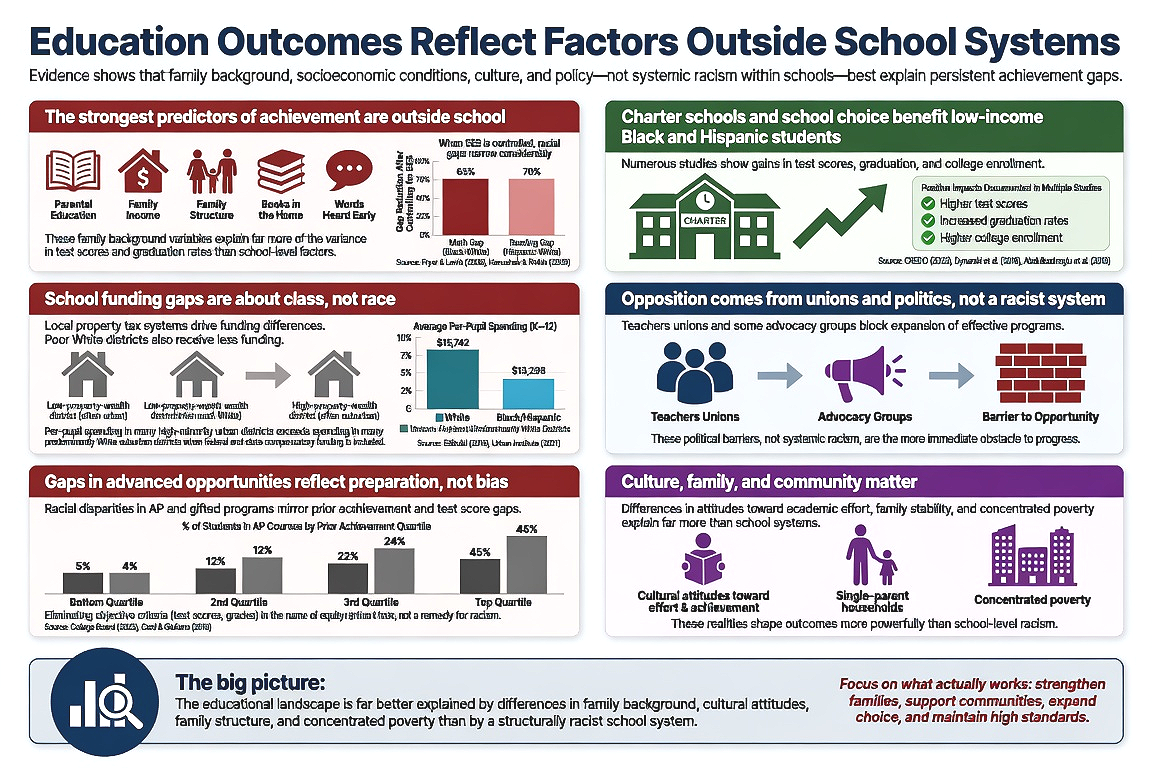
Evidence from education is frequently misinterpreted. The fact that Black and Hispanic students score lower on standardized tests and graduate at lower rates is undeniable, but the attribution of these gaps to systemic racism within schools is poorly supported. The most powerful predictors of academic achievement are family background variables, including parental education, income, family structure, and the quantity of words and books in the home. When socioeconomic status is controlled, the racial achievement gap narrows considerably. Moreover, the racial funding gap is largely a function of local property tax systems that are class-based, not race-based; poor white districts also suffer from underfunding. The claim that predominantly nonwhite schools are systematically deprived of resources is complicated by data showing that federal and state compensatory funding often results in per-pupil spending in urban, high-minority districts that exceeds spending in many predominantly white suburban districts.
Charter schools and school choice programs, which are often demonized as racist by systemic racism proponents, have been shown in numerous studies to significantly benefit low-income Black and Hispanic students, raising test scores and college enrollment. The opposition to these programs from teachers unions and some advocacy groups, rather than from a racist system, is a more immediate barrier. Additionally, racial gaps in advanced placement and gifted programs can be explained by differences in prior academic preparation and test scores, not teacher bias. When admissions criteria rely on objective measures, racial disparities emerge that mirror the test score gap. The push to eliminate such criteria in the name of equity is itself a political intervention, not a correction of racism. The overall educational landscape is far better explained by differences in cultural attitudes toward academic effort, the influence of single-parent households, and the effects of concentrated poverty than by a structurally racist school system.
Employment and Economic Disparities Are Overwhelmingly Class-Based
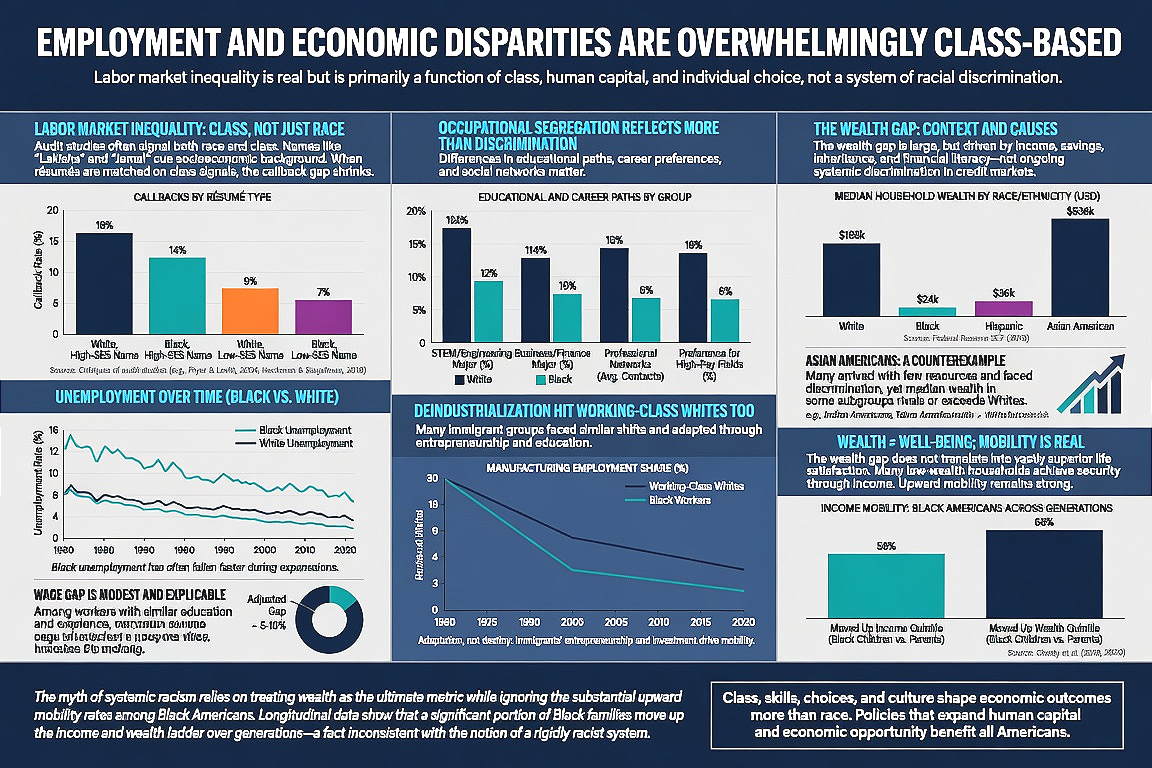
Labor market inequality is real but is primarily a function of class, human capital, and individual choice, not a system of racial discrimination. Audit studies, often cited to prove employment discrimination, have been subject to significant methodological critiques. Many such studies use names that not only signal race but also signal social class; names like “Lakisha” and “Jamal” may cue employer assumptions about socioeconomic background rather than race per se. When résumés are matched more carefully on class signals, the callback gap shrinks. Furthermore, in the actual labor market over the past several decades, Black unemployment has often fallen faster than white unemployment during economic expansions, and the Black-white wage gap among workers with similar education and experience is modest and largely explicable by differences in occupation, hours worked, and geographic location. Occupational segregation is not exclusively a story of discrimination; it also reflects differences in educational paths, career preferences, and social networks. The deindustrialization argument attributes Black economic difficulties to structural changes in the economy but fails to note that working-class whites also suffered severe dislocation, and that many immigrant groups faced similar structural shifts and adapted through entrepreneurship and educational investment.
The wealth gap is the most frequently cited statistic, with the median white household holding many times the wealth of the median Black household. However, this gap is largely a function of differences in income, savings rates, inheritance patterns, and financial literacy, not ongoing systemic discrimination in credit markets. Asian Americans, many of whom arrived in the United States with few resources and faced historical discrimination, have median wealth levels that in some subgroups rival or exceed those of whites, demonstrating that the wealth gap is not a predetermined outcome of American racism. Moreover, the wealth gap does not translate into vastly superior life satisfaction or well-being in the manner often assumed, and many low-wealth households nonetheless achieve economic security through income. The myth of systemic racism relies on treating wealth as the ultimate metric while ignoring the substantial upward mobility rates among Black Americans. Indeed, longitudinal data show that a significant portion of Black families move up the income and wealth ladder over generations, a fact inconsistent with the notion of a rigidly racist system.
Health Disparities and the Limitations of the Racism Explanation
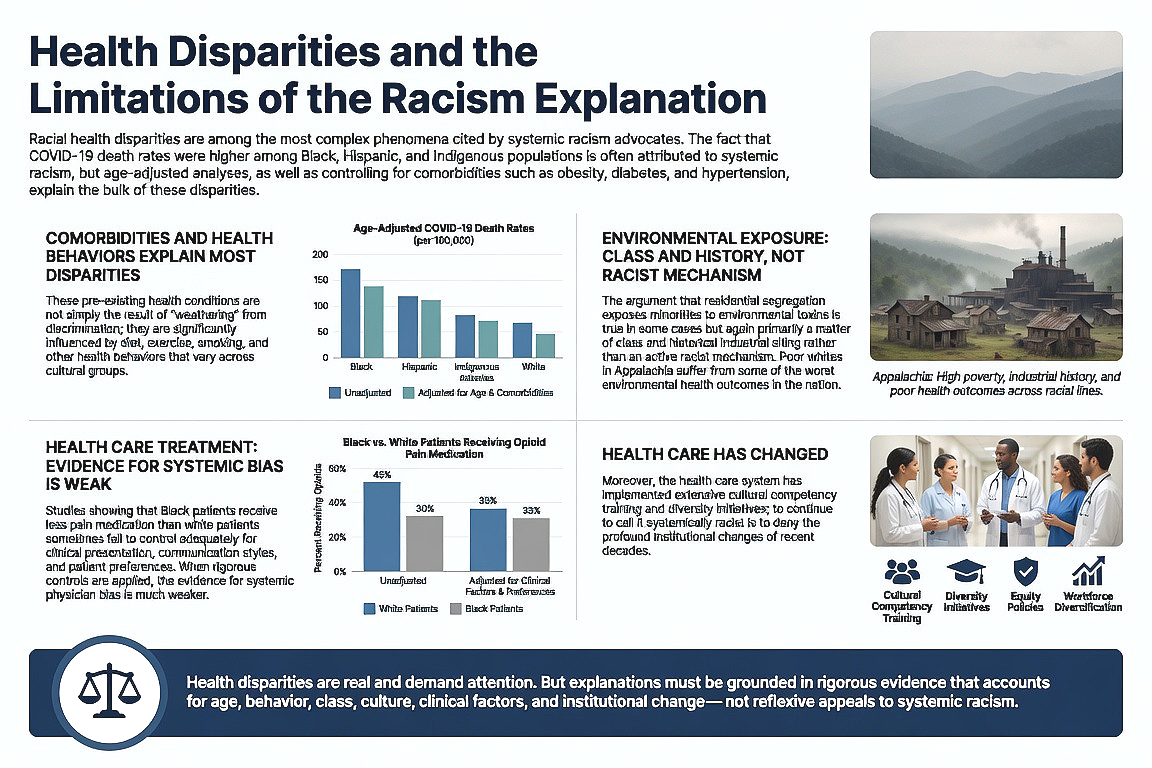
Racial health disparities are among the most complex phenomena cited by systemic racism advocates. The fact that COVID-19 death rates were higher among Black, Hispanic, and Indigenous populations is often attributed to systemic racism, but age-adjusted analyses, as well as controlling for comorbidities such as obesity, diabetes, and hypertension, explain the bulk of these disparities. These pre-existing health conditions are not simply the result of “weathering” from discrimination; they are significantly influenced by diet, exercise, smoking, and other health behaviors that vary across cultural groups. The argument that residential segregation exposes minorities to environmental toxins is true in some cases but again primarily a matter of class and historical industrial siting rather than an active racist mechanism. Poor whites in Appalachia suffer from some of the worst environmental health outcomes in the nation. Within the health care system, studies showing that Black patients receive less pain medication than white patients sometimes fail to control adequately for clinical presentation, communication styles, and patient preferences. When rigorous controls are applied, the evidence for systemic physician bias is much weaker. Moreover, the health care system has implemented extensive cultural competency training and diversity initiatives; to continue to call it systemically racist is to deny the profound institutional changes of recent decades.
The Ideological and Methodological Critique
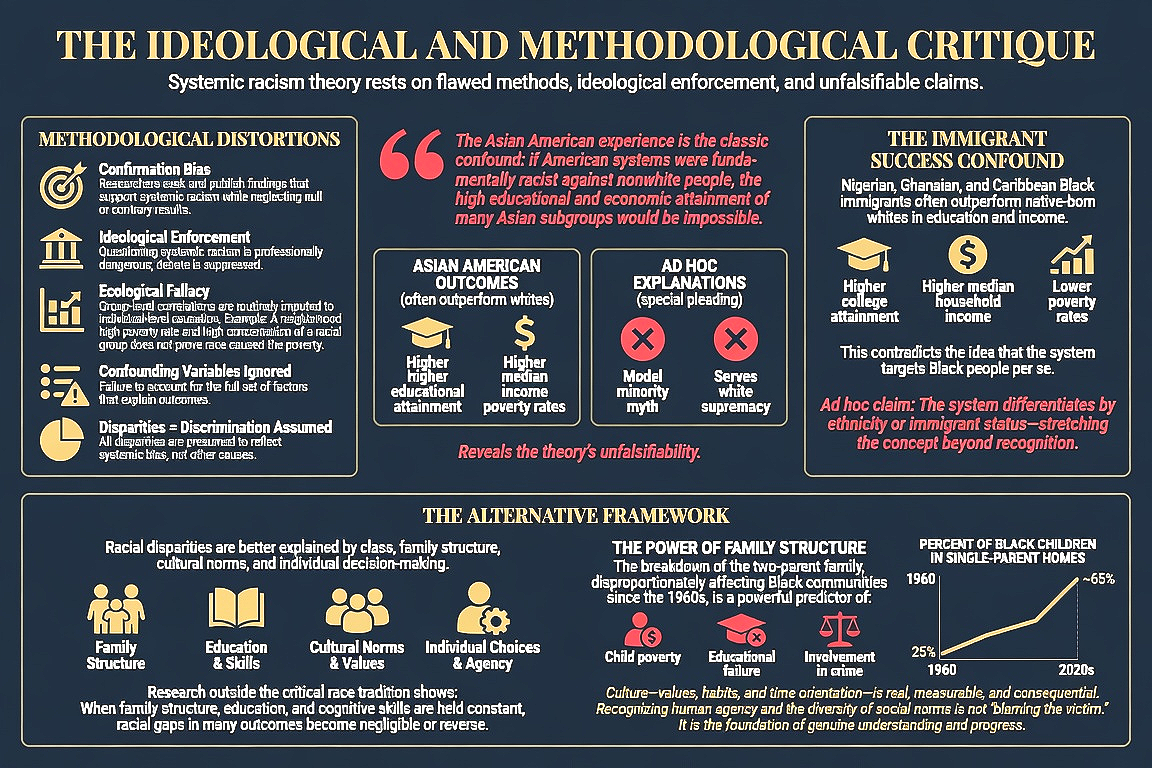
The systemic racism thesis does not merely misread data; it is underpinned by methodological practices that systematically distort findings. Confirmation bias leads researchers to seek out and publish findings that support systemic racism while neglecting null or contrary results. Journals and academic departments have created an ideological environment in which questioning systemic racism is professionally dangerous, suppressing the kind of robust debate that science requires. The ecological fallacy, in which group-level correlations are imputed to individual-level causation, is pervasive. For example, the fact that a neighborhood has a high poverty rate and a high concentration of a racial group does not prove that race caused the poverty, yet such reasoning is routine.
Other critical methodological errors include the failure to account for the full set of confounding variables, the assumption that all disparities constitute discrimination, and the neglect of within-race variation that contradicts the notion of a monolithic system. The Asian American experience is the classic confound: if American systems were fundamentally racist against nonwhite people, the high educational and economic attainment of many Asian subgroups would be impossible. Defenders of systemic racism explain this away with the model minority myth or by claiming Asian success serves white supremacy, special pleading that reveals the theory’s unfalsifiability. Similarly, the disproportionate success of Nigerian, Ghanaian, and Caribbean Black immigrants, who often outperform native-born whites in education and income, contradicts the idea that the system targets Black people per se. Systemic racism theory must then rely on the ad hoc claim that the system differentiates by ethnicity or immigrant status, further stretching the concept beyond recognition.
The most important alternative framework is one that treats racial disparities as primarily reflecting class, family structure, cultural norms, and individual decision-making. The breakdown of the two-parent family, which has disproportionately affected Black communities since the 1960s, is a powerful predictor of child poverty, educational failure, and involvement in crime. This variable alone explains a large portion of outcome gaps, yet it is often dismissed by systemic racism scholars as an effect of racism rather than an independent causal factor. Research by economists and sociologists outside the critical race tradition consistently finds that when family structure, education, and cognitive skills are held constant, racial gaps in many outcomes become negligible or reverse. The role of culture—values, habits, orientation toward the future—is real and measurable, and it varies across groups in ways that affect life outcomes. Acknowledging this does not entail “blaming the victim” but rather recognizing human agency and the diversity of social norms.
Conclusion
The narrative of systemic racism rests on a frail empirical scaffold. Racial disparities in American society are real, but the inference that they are produced by an enduring, comprehensive system of racial oppression does not withstand careful scientific scrutiny. In domain after domain—criminal justice, education, labor markets, wealth, health—the appearance of systemic racism evaporates when confounding variables are properly measured and alternative explanations are given their due weight. The concept of systemic racism is methodologically unsound, logically circular, and ideologically motivated. It confuses historical legacy with present causation, correlation with discrimination, and group averages with individual fate. The American legal and institutional framework is, in its contemporary operation, overwhelmingly colorblind. While individual acts of prejudice still occur, they do not constitute a system, and they are condemned by the vast majority of institutions. The myth of systemic racism persists not because it is supported by evidence, but because it serves powerful political and psychological functions, offering a moral framework that simplifies a complex world, absolves individuals of responsibility, and justifies ongoing political mobilization. A sober, evidence-based understanding of racial inequality reveals a far more nuanced picture in which class, culture, family, and choice play determinative roles. The sooner policy discourse can move beyond the myth of systemic racism, the sooner it can address the true, multi-causal drivers of disadvantage and expand opportunity for all.