The Reward of Control: Inside the Neurological Compulsion to Capture, Violate, and Destroy
This story seeks to describe the profound and overwhelming compulsion that drives certain individuals to commit acts of heinous violence…

This story seeks to describe the profound and overwhelming compulsion that drives certain individuals to commit acts of heinous violence: the desire to abduct, dominate, sexually violate, and ultimately kill another human being. This is not a simple discussion of criminality but an exploration of the deep-seated psycho-neuro-criminological framework that defines the psychopathic, or more accurately, the psychopathic predatory killer. The act itself represents a horrific culmination of distinct neurological dysfunctions intersecting with a fractured psychological architecture.
The neurological correlates of this behavior point to a brain fundamentally different in both structure and function. Central to this profile is a triad of key neural systems operating in catastrophic imbalance. The prefrontal cortex, particularly the ventromedial and orbitofrontal regions, is often impaired. This area is the seat of executive function: moral reasoning, impulse control, empathy, and the ability to foresee consequences. Its diminished activity or structural deficit effectively removes the brain’s ethical brake pedal, allowing violent and taboo impulses to proceed unchecked.
Simultaneously, the limbic system, specifically the amygdala, which processes fear and emotional responses, shows abnormal functioning. In a typical brain, the amygdala would generate aversive reactions to thoughts of causing harm or suffering. In the compulsive violent offender, this emotional alarm system is muted or fails to activate appropriately. The result is a profound emotional poverty, where the suffering of another does not register as a deterrent but may instead be perceived as a point of curiosity or even stimulation.
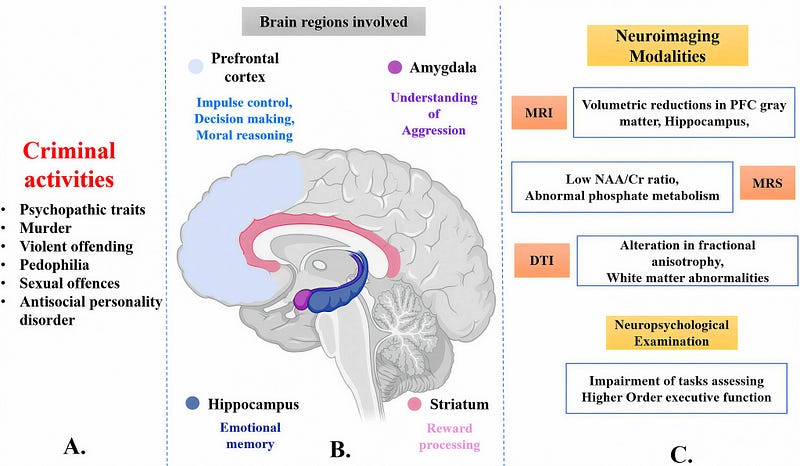
Perhaps most critically is the role of the brain’s reward circuitry, the mesolimbic pathway, which is fueled by dopamine. In the psychopathic killer, this system is perverted. The meticulous planning, the act of domination, the exertion of ultimate power, and the violation itself are not processed as morally reprehensible acts but as enriching experiences. The anticipation and execution of the crime provide a potent neurochemical reward, reinforcing the behavior and cementing the compulsion. This is not a crime of passion but a crime of cold, calculated desire for a specific and pathological form of gratification.
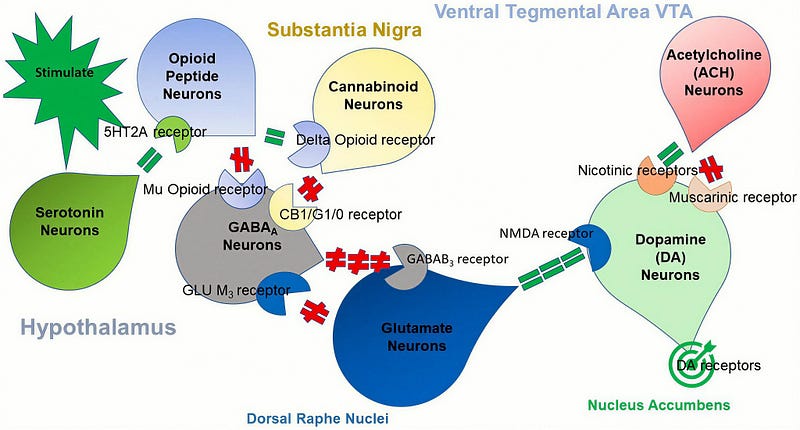
The psycho-neuro-criminology of this offender profile is the synthesis of these broken components. It is a psychology of absolute predation, where other people are not conscious beings but objects to be used for internal satisfaction. The overwhelming desire is not merely for sex or killing in isolation, but for the complete orchestration of terror and absolute control over another’s existence and death. This desire is neurologically underpinned by a brain where the centers for planning and reward are hyper-engaged while the centers for empathy and restraint are disengaged. The individual is driven by a deep, reward-seeking compulsion, pathologically pursuing a feeling of power and dominance that their neurology is wired to crave and their psychology is devoid of the capacity to morally regulate.
The Neurochemical Aftermath: Crash, Withdrawal, and the Cycle of Re-offending
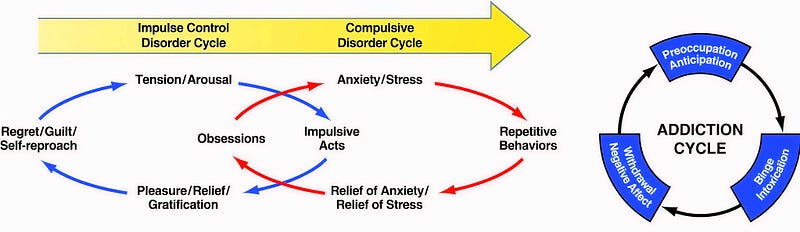
Building upon the established neurological framework, the aftermath of the violent act is a critical phase in understanding the cyclical nature of these crimes. The completion of the act represents the peak of the pathological reward sequence, a potent surge of neurochemical stimulation that satisfies the deep-seated compulsion. However, this peak is inevitably followed by a severe neurobiological crash. This post-act period can be characterized as a state of profound dysphoria, an emotional and physiological hangover directly resulting from the depletion of neurotransmitters like dopamine that were flooded during the planning and execution of the crime. The brain’s reward system, having been driven to an extreme high, plummets into a deficit state. This is not guilt or remorse in an emotional sense, but a biochemical letdown. The offender experiences a crushing emptiness, boredom, and anhedonia — an inability to feel pleasure from everyday stimuli. The world seems grayer and less stimulating by orders of magnitude compared to the intense neurochemical firestorm of the crime.
This depressive state constitutes a cooling-off period, not born of satiation but of neurological exhaustion. The impaired prefrontal cortex, which already struggles with impulse control and long-term planning, is further handicapped by this dysfunctional state, making the individual less organized and capable of immediately initiating another complex criminal sequence. However, the underlying psychological drivers remain unchanged. Over time, the brain’s reward system recalibrates, and the memory of the intense gratification — the power, control, and dominance — begins to re-emerge as the primary solution to the pervasive feelings of emptiness and dysphoria. The desire to alleviate the negative state of withdrawal becomes a powerful motivator itself. The cycle then repeats: the deepening dysphoria fuels the obsessive fantasy, the fantasy promises relief and reward, the planning begins anew to secure that neurochemical payoff, culminating in the act itself, which starts the cycle over again. This is not a cycle of desire leading to action, but rather of action temporarily alleviating a pathological need, only for that need to return more intensely, demanding an even more potent and reinforcing stimulus.