The Unseen Chasm: Why the Incompetent Are Blinded by Their Own Confidence
The Dunning-Kruger effect represents a profound and often frustrating paradox of human psychology, where a lack of knowledge or skill in a particular area creates a double curse. Not only are individuals unskilled, but their incompetence robs them of the very metacognitive ability to recognize it.
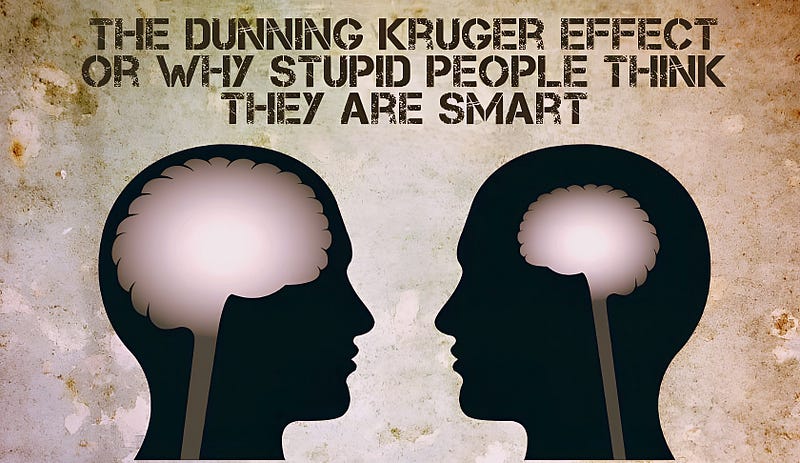
The Dunning-Kruger effect represents a profound and often frustrating paradox of human psychology, where a lack of knowledge or skill in a particular area creates a double curse. Not only are individuals unskilled, but their incompetence robs them of the very metacognitive ability to recognize it. This leads to inflated self-assessments where they mistakenly believe their abilities are superior to those who are actually more competent. This cognitive bias manifests in countless everyday situations, revealing the gap between perception and reality.
Consider a person shopping for furniture who confidently selects a vinyl-covered chair, convinced it is a perfect, cost-effective replica of genuine leather. They pride themselves on their shrewdness and savings, completely unaware that the difference in quality and appearance is immediately obvious to a more discerning eye, making their supposed savvy appear naive. This overconfidence extends to the professional realm, such as in a business meeting where an individual with superficial industry knowledge passionately proposes ideas that seasoned professionals instantly identify as unworkable or fundamentally misguided, yet the proposer leaves the meeting feeling undervalued rather than informed. In the kitchen, a novice cook, armed with enthusiasm and a few successful simple dishes, insists on preparing an elaborate gourmet meal for an important dinner party. They dismiss concerned advice from a trained chef, only to present undercooked, overseasoned, or poorly executed dishes, their confidence shattered by the tangible evidence of their failure.
The domain of home improvement is particularly ripe for this effect. An amateur DIY enthusiast embarks on complex renovation projects, from plumbing to electrical work, fueled by online tutorials and the belief that professional help is an unnecessary expense. The result is consistently poor workmanship, often creating more problems and expenses than they originally sought to avoid. Similarly, a person with no formal training in automotive repair decides to fix their car’s complex issue themselves. Convinced that mechanics overcharge for simple solutions, they proceed with a flawed diagnosis and repair, ultimately causing more severe damage to the engine while remaining certain their approach was logically sound. This self-assuredness even extends to giving advice, as an untrained individual confidently offers financial guidance to friends. They feel their personal investment strategies are revolutionary, unaware that their advice is riddled with risk and factual errors, standing in stark contrast to the prudent, evidence-based recommendations of a certified financial planner.
This false expertise is not limited to technical fields. In gardening, a person with minimal understanding plants a variety of trees and flowers with the expectation that they will all thrive equally. They assume gardening is intuitive and requires no specific knowledge of soil pH, sun exposure, or watering needs, leading to a garden of unhealthy, struggling plants despite their unwavering belief in their green thumb. In the digital world, someone with basic tech skills attempts to configure a sophisticated computer network for a small business. They dismiss concerns from an IT professional about security protocols and bandwidth management, only to create a network that is both inefficient and vulnerable to cyber attacks. Further, an individual with a casual interest in fitness begins coaching others, truly believing they understand physiology and nutrition better than certified trainers and dietitians, potentially leading others toward ineffective or even harmful routines.
In some cases, the Dunning-Kruger effect can lead to dangerously overambitious projects. An individual with no architectural background whatsoever attempts to design a house from the ground up, disregarding critical input from engineers and architects about load-bearing walls, foundation depth, and building codes. The result is a design that is both structurally unsound and impractical to live in, yet they see it as a masterpiece of efficiency and innovation. This is echoed in a simpler project, like a person deciding to lay a concrete foundation for a garden shed without any knowledge of mixing ratios, reinforcement, or curing times. They are certain the task requires no special skill, only to discover months later a network of cracks and an uneven, unstable base, a silent testament to the gap between their confidence and their capability.
The insidious nature of the Dunning-Kruger effect lies in its self-perpetuating cycle. The very skills needed to produce a correct answer are the same skills required to recognize competence, whether in oneself or in others. When an individual lacks those skills, they not only make mistakes but also fail to see those mistakes. This creates a vacuum of self-awareness where confidence is built on a foundation of ignorance. The individual is not consciously being arrogant; they are trapped in a cognitive blind spot where their limited knowledge appears sufficient and complete. This is why feedback from true experts often feels unjustified or overly critical to the unskilled person — they literally cannot comprehend the gap between their performance and the standard being applied.
In conclusion, the Dunning-Kruger effect is a universal and humbling reminder of the limits of self-assessment. It teaches that a sense of certainty is not a reliable indicator of competence. True expertise is often accompanied not by unwavering confidence, but by a cautious awareness of all that one does not know. The journey from incompetence to mastery involves a painful but necessary dip in confidence as one gains enough knowledge to finally see the vastness of their own ignorance. This metacognitive awareness — the ability to think about one’s own thinking — is the key that unlocks the door to genuine competence and wisdom.
A stark warning emerges from this phenomenon: in a world increasingly driven by self-expression and self-proclaimed expertise, the Dunning-Kruger effect poses a significant threat to rational discourse and sound decision-making. It is the engine behind much of the misinformation and poor advice that circulates freely. The most dangerous person is not always the one who knows they are wrong, but the one who is wrong and is utterly convinced they are right. This makes them immune to correction and capable of causing immense damage, whether in personal finances, public health, or social relationships. The antidote is a culture that values humility, critical thinking, and respect for verified expertise over unearned confidence. The first step to overcoming this bias is to entertain the terrifying possibility that you might be the one in the grip of it.