Western Education’s Silent Ideological Conditioning
Western educational systems, while designed to foster enlightenment and social progress, increasingly face accusations of producing a phenomenon of student “culticization” ...
Every child in America should be acquainted with his own country. He should read books that furnish him with ideas that will be useful to him in life and practice. As soon as he opens his lips, he should rehearse the history of his own country; he should lisp the praise of liberty, and of those illustrious heroes and statesmen, who have wrought a revolution in her favor. — Noah Webster, 1788
Western educational systems, while designed to foster enlightenment and social progress, increasingly face accusations of producing a phenomenon of student “culticization” — a process in which students are subtly initiated into specific cultural, ideological, or socio-political paradigms rather than encouraged to develop independent, critical thought. This trend manifests through rigid curricular frameworks, pedagogical biases, and institutional structures that prioritize conformity over creativity, ultimately shaping students into adherents of predefined worldviews rather than empowering them as autonomous learners.
The roots of this phenomenon can be traced to historical foundations. Western education originated as a mechanism for social consolidation, often serving colonial, imperial, or nationalist agendas. In ancient Greece, education emphasized rhetoric and logic to prepare citizens for civic life, while also reinforcing social hierarchies. Similarly, during the colonial era, Western education was explicitly used as a tool to “civilize” populations, replacing indigenous knowledge systems with Eurocentric frameworks. This legacy persists in modern curricula that disproportionately emphasize Western achievements while marginalizing non-Western contributions. Such biases are not merely informational but ideological, conditioning students to internalize a specific cultural narrative as universal truth.
Teacher influence plays a significant role in perpetuating this dynamic. Educators, often unconsciously, transmit their own biases and perspectives to students. Many teachers were never trained in critical thinking themselves, making it difficult for them to foster it in their classrooms. The pressure to adhere to standardized curricula and high-stakes testing further limits teachers’ ability to encourage open-ended inquiry. Instead, they may prioritize compliance and repetition of accepted narratives, effectively stifling dissent and curiosity. As one analysis notes, schools sometimes avoid critical questioning because they fear students might challenge authority or disrupt the established order.
The consequences of this culticization are profound. Students subjected to such systems often exhibit limited critical thinking skills, struggling to analyze problems beyond binary frameworks. Educational research highlights that inquiry-based learning significantly enhances critical capabilities, yet many institutions resist such approaches. Instead, students are trained to reproduce information rather than engage with it critically, leading to a lack of intellectual autonomy. This deficiency becomes particularly evident in higher education and professional environments, where innovative thinking and adaptability are essential.
Beyond individual development, this trend exacerbates social fragmentation. By promoting singular cultural perspectives, schools inadvertently deepen societal divisions. Students from minority backgrounds may feel alienated by curricula that disregard their heritage, while majority-group students are often left unaware of systemic inequities. This dynamic fosters resentment, misunderstanding, and polarization. Moreover, the emphasis on competition and standardized achievement metrics pits students against one another, eroding communal values and collaboration.
The erosion of emotional and psychological well-being is another critical effect. The relentless focus on academic performance, coupled with the suppression of diverse perspectives, creates an environment where students feel unable to express their authentic selves. This leads to what some scholars term “educated myopia” — a narrowness of vision that limits students’ ability to engage with complex global challenges such as environmental crises, economic inequality, and cultural conflicts.
Education experts and social commentators have raised urgent concerns about these patterns. Scholars argue that Western education’s obsession with anthropocentrism, academicization, and standardization has resulted in a system that prioritizes conformity over creativity. Others call for a radical reimagining of pedagogy to emphasize cultural sensitivity, critical reflection, and inclusivity. As Michelle Connolly, an educational consultant with over 16 years of classroom experience, asserts, “Embracing cultural diversity prepares students not just for the classroom, but for the world.” Yet, achieving this requires dismantling structures that perpetuate ideological rigidity.
Ultimately, addressing the culticization of students demands a fundamental shift in educational philosophy. Moving away from one-size-fits-all curricula and embracing diverse perspectives can help create learning environments that nurture critical thinkers rather than passive adherents. Without such transformation, Western education risks becoming a mechanism for reproducing social inequalities and ideological constraints rather than a catalyst for individual and collective liberation.
The Unspoken Curriculum: When Education Becomes a Political Liturgy
A profound and often unspoken tension exists at the heart of Western educational systems: the thin, often blurred line between the noble pursuit of education and the coercive practice of indoctrination. This ambiguity gives rise to a generation of students who may be activists not by genuine conviction, but by institutional design, raising critical questions about the true purpose of schooling in a free society.
Education, in its purest form, is the cultivation of a mind. It is a process designed to equip an individual with the tools for intellectual autonomy: critical thinking, analytical reasoning, and a broad base of knowledge. A true educator presents a multitude of perspectives, including those they personally disagree with, and fosters an environment where questioning is encouraged and dissent is respected. The goal is to create a capable, independent thinker who can navigate the world’s complexity, form their own conclusions, and adapt their understanding in the face of new evidence. It is a process that values the journey of inquiry as much as the destination of knowledge.
Indoctrination, by contrast, is the imposition of a creed. It is a closed system that prioritizes specific outcomes over open-ended processes. Instead of presenting a range of ideas for evaluation, it presents a single ideology or set of beliefs as an immutable truth. Critical examination of these core tenets is discouraged or outright forbidden, often framed as dissent against a moral imperative. The goal of indoctrination is not to create a thinker but a disciple — someone who internalizes a prescribed worldview and defends it against challenge. It replaces intellectual curiosity with ideological conformity, using emotional pressure and social sanction to ensure compliance.
The modern classroom becomes a battleground where this distinction is tested. A biased curriculum that systematically excludes certain voices while canonizing others is a tool of indoctrination. A teacher who rewards students for parroting their own views and penalizes those who offer alternative interpretations is engaging in indoctrination. The danger is that this process is often invisible to those within it, masquerading as enlightened education when it is, in fact, the cultivation of a secular orthodoxy.
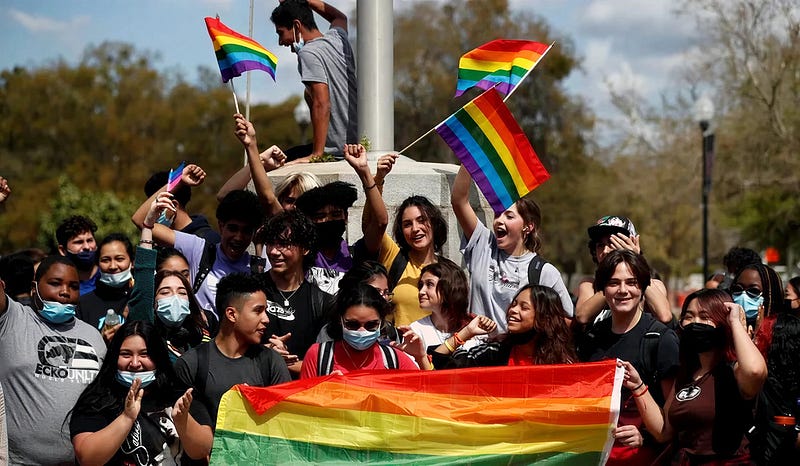
This leads directly to the phenomenon of student activism. When the line between education and indoctrination erodes, activism can cease to be a genuine organic movement and instead become a performance of acquired beliefs. Students may march and protest for causes they have been taught to champion without having undergone the rigorous process of questioning, debate, and personal discovery that forges authentic conviction. This type of activism is characterized by a rigid adherence to dogma, an intolerance for nuance, and a tendency to view opponents not merely as incorrect but as morally corrupt. It is a social posture learned in the classroom, a direct outcome of an indoctrinatory environment that values righteous sentiment over critical thought.
Conversely, authentic activism can be a powerful and legitimate expression of a well-educated mind. When students, armed with critical thinking skills, a deep understanding of history, and the ability to engage with opposing arguments, choose to advocate for change, their activism is rooted in personal conviction and intellectual rigor. This form of engagement is essential for a dynamic and progressive society. The crucial difference lies in its origin: it is a choice made by a free individual, not the programmed output of an ideological assembly line.
The central conflict within Western education today is not about the presence of politics in the classroom, but the methodology behind it. The question is whether schools are creating thinkers who may become activists or activists who can no longer think. The future of a pluralistic democracy depends on the answer, hinging on the system’s ability to recommit to genuine education — the difficult, messy, and ultimately liberating work of teaching young people how to think, not what to think.
On Remedying the Militarization of Thought in Education
The path to de-escalating the militarized climate within education and restoring legitimate diversity of thought requires a conscious, multi-faceted effort aimed not at achieving ideological victory, but at reclaiming the very purpose of learning. The remedies lie in a fundamental recommitment to pedagogical principles that prioritize process over dogma and human connection over political alignment.
The first and most crucial step is the intentional restoration of critical thinking as the central pillar of education. This moves beyond simply teaching students what to think about an issue and requires teaching them how to think. Pedagogy must shift from the passive absorption of information to active intellectual engagement. This can be achieved through the structured practice of Socratic dialogue, where students learn to dissect the underlying assumptions of any argument, including their own. Classrooms should become laboratories for intellectual experimentation, where students are tasked with defending viewpoints they personally disagree with. This rigorous exercise in empathy and reasoning builds the mental muscle to separate ideas from identities, allowing for disagreement without personal animosity. The goal is to foster intellectual humility — the understanding that the complexity of the world often defies simple, binary answers.
Concurrently, there must be a radical expansion of curricular pluralism. A curriculum that is truly diverse is not one that replaces one canon with another but one that intentionally engages with a clash of perspectives. This means reading conservative and liberal thinkers, religious and secular texts, and historical narratives from both victors and the vanquished. The objective is not to endorse every viewpoint but to expose students to the full spectrum of human thought and experience. This approach dismantles the notion that there is a single “correct” ideology and instead presents education as an ongoing conversation across time and cultures. By studying the strongest arguments from all sides, students learn to navigate ambiguity and appreciate the complexity of truth.
The role of the educator must also be reimagined. Teachers should be trained to see themselves not as facilitators of a specific outcome but as guardians of a process. Their primary duty is to model intellectual curiosity and create a space where civil disagreement is not only safe but celebrated. This requires professional development that moves beyond content delivery to focus on facilitating difficult conversations, managing classroom dynamics, and recognizing one's own biases. A teacher’s power should be exercised to protect the minority opinion in the room, ensuring that every student feels heard and that the marketplace of ideas remains vibrant and competitive. This transforms the classroom from a courtroom where ideas are judged into a forum where they are tested.
Finally, the entire educational ecosystem must champion a new culture of civil discourse. This involves explicitly teaching the principles of productive disagreement: listening to understand rather than to rebut, privileging evidence over emotion, and attacking ideas rather than people’s character. Institutions can adopt formalized debate structures and clear guidelines for discussion that reward intellectual rigor and civility. The language of warfare must be purged from academic settings; ideas are not to be “destroyed,” “canceled,” or “shot down,” but rather examined, understood, and critiqued.
Ultimately, remedying this crisis is not a matter of designing a perfect curriculum or finding the right political balance. It is about restoring a fundamental ethos: that education is the art of teaching people what they don’t know, not the business of confirming what they already believe. It is a slow, deliberate process of building trust and intellectual character, creating environments where it is once again safe to be wrong, to question, and to wonder without fear of retribution. By doing so, we can begin to dismantle the intellectual fortresses and nurture a generation of agile, empathetic, and truly free thinkers.
The Unthinking Hatred: How Education’s Failure Fuels the Oldest Prejudice
Antisemitism presents itself as a unique and persistent malignancy in the tapestry of human prejudice, and when examined through the framework of our previous discussions on educational indoctrination, it reveals itself not as a mere irrational hatred but as the ultimate failure of critical thought and a catastrophic case study in cultivated ignorance. It is the paradigmatic example of a worldview sustained not by evidence, but by a closed intellectual system that operates with the efficiency of a cult, immunizing itself against reason and flourishing in the absence of genuine education.
At its core, antisemitism often functions as a ready-made ideology, a prepackaged answer to complex worldly problems. For individuals who have not been taught to navigate ambiguity or to think critically, it offers a seductively simple narrative: a shadowy, powerful “other” to blame for societal ills, economic anxiety, and cultural change. This mirrors the very process of indoctrination we identified, where a singular, biased narrative replaces multifaceted truth. The antisemitic canon, with its contradictory tropes of both excessive power and pathetic weakness, of global conspiracy and cultural degradation, is not designed to be logically consistent. It is designed to be emotionally resonant and intellectually impervious, rewarding adherence with a sense of belonging and purpose within a group defined by its opposition to a manufactured enemy. This is the militarization of thought applied to bigotry, creating soldiers for a cause built on a foundation of lies.
The role of biased curricula and pedagogical failure is starkly evident here. For centuries, Western education itself was complicit, weaving Christian supersessionism and vile stereotypes into its very fabric while simultaneously excluding Jewish voices, history, and intellectual contributions. This was not an omission but an active construction of a worldview. Even as overt religious prejudice waned, new ideological frameworks found utility in the old hatred. Certain radical movements, both on the right and the left, have at times repurposed antisemitic motifs, folding them into critiques of capitalism, nationalism, or globalism. This is not education but its sinister inversion: a pedagogy of paranoia that teaches students what to hate and whom to blame, stifling any critical inquiry that might challenge the central dogma.
The effect on rational discussion is devastating. Antisemitism corrupts the language of debate itself. Criticism of the policies of the nation-state of Israel, a legitimate subject of political discourse, is often weaponized and manipulated, either to tar all critics as antisemites or, conversely, used by bad-faith actors as a thin veil for classic Jew-hatred. This creates a minefield for genuine discussion, silencing nuance and forcing participants into polarized camps. It destroys the possibility of legitimate diversity in thought on the issue, as the conversation is immediately pulled toward the magnetic poles of absolute condemnation or absolute acquittal. The space for thoughtful, critical, and specific analysis collapses, replaced by a performative activism — on all sides — that prioritizes solidarity over truth.
Therefore, the remedy for this ancient poison is the same as that for the broader crisis in education: an unwavering recommitment to intellectual rigor and moral courage. It requires an educational system that actively deconstructs conspiratorial thinking, teaching students how to identify the rhetorical patterns of prejudice. Curricula must be deliberately pluralistic, integrating Jewish history, philosophy, and literature not as a footnote but as an essential thread in the human story, giving students the tools to see Jews as they are, not as propaganda has depicted them. Educators must be equipped to facilitate painfully difficult conversations about prejudice, power, and history without retreating into simplistic or ideologically safe narratives.
Combating antisemitism is the ultimate test of our educational principles. It demands that we foster a generation that can hold complex, even contradictory ideas in their minds — that can advocate for justice without resorting to scapegoating, and that can criticize power without trafficking in ancient hatreds. It is about forging minds that are skeptical of simple answers and allergic to the seductive call of collective blame. A world that truly learns how to think will find it increasingly difficult to hate.